
Under-Eye Bags Without Surgery: What Can Help
In the morning you notice puffy pads under your eyes that shrink by evening. Or your “bags” persist regardless of sleep or rest, and you want to avoid surgery. Nonsurgical measures can often reduce temporary fluid swelling and sometimes improve skin quality or the transition between the lower lid and cheek. But persistent protruding fat cannot reliably be removed by cream, massage or an energy-based device. First establish what is creating the bulge. That determines whether to try home care, seek medical assessment or discuss aesthetic options with realistic limits.
Fluid swelling, fat bulge or shadow: how can you tell?
Compare your face morning and evening for several days, ideally with the same lighting, straight gaze and no camera filters. Puffiness that varies with lack of sleep, salty foods or allergy season suggests a fluid component. A constant bulge may reflect age-related weakening of support tissues and protruding lower-lid fat; inherited anatomy also matters. Sometimes thin uneven skin and a hollow cast a shadow that looks like a “bag” even when no excess volume is present.
A separate pattern is a raised fold lower down between the eyelid and upper cheek: malar oedema or festoons, in which skin, muscle and fluid are involved. These are not the same as protruding lower-eyelid fat and may respond unpredictably to treatments. Inflammation, allergies and some thyroid or kidney conditions can also cause swelling around the eyes. A photograph alone cannot reliably identify every cause.
| What you notice | Possible explanation | Sensible next step |
|---|---|---|
| Soft swelling on waking that changes over the day | Fluid, sleep pattern, excess salt or allergy | Gentle home measures; treat allergy if diagnosed |
| Persistent bulge just below the lashes | Protruding fat pads and weakened support tissues | Recognise nonsurgical limits; if desired, consult an oculoplastic surgeon |
| Dark band beneath a bulge without clear swelling | Tear trough, shadow or pigmentation | Assess contour and lighting rather than assuming it is a true bag |
| Ridge at the boundary of lower lid and cheek | Malar bags or festoons | In-person assessment; be wary of promises to remove it in one session |
What to try at home when fluid is the cause
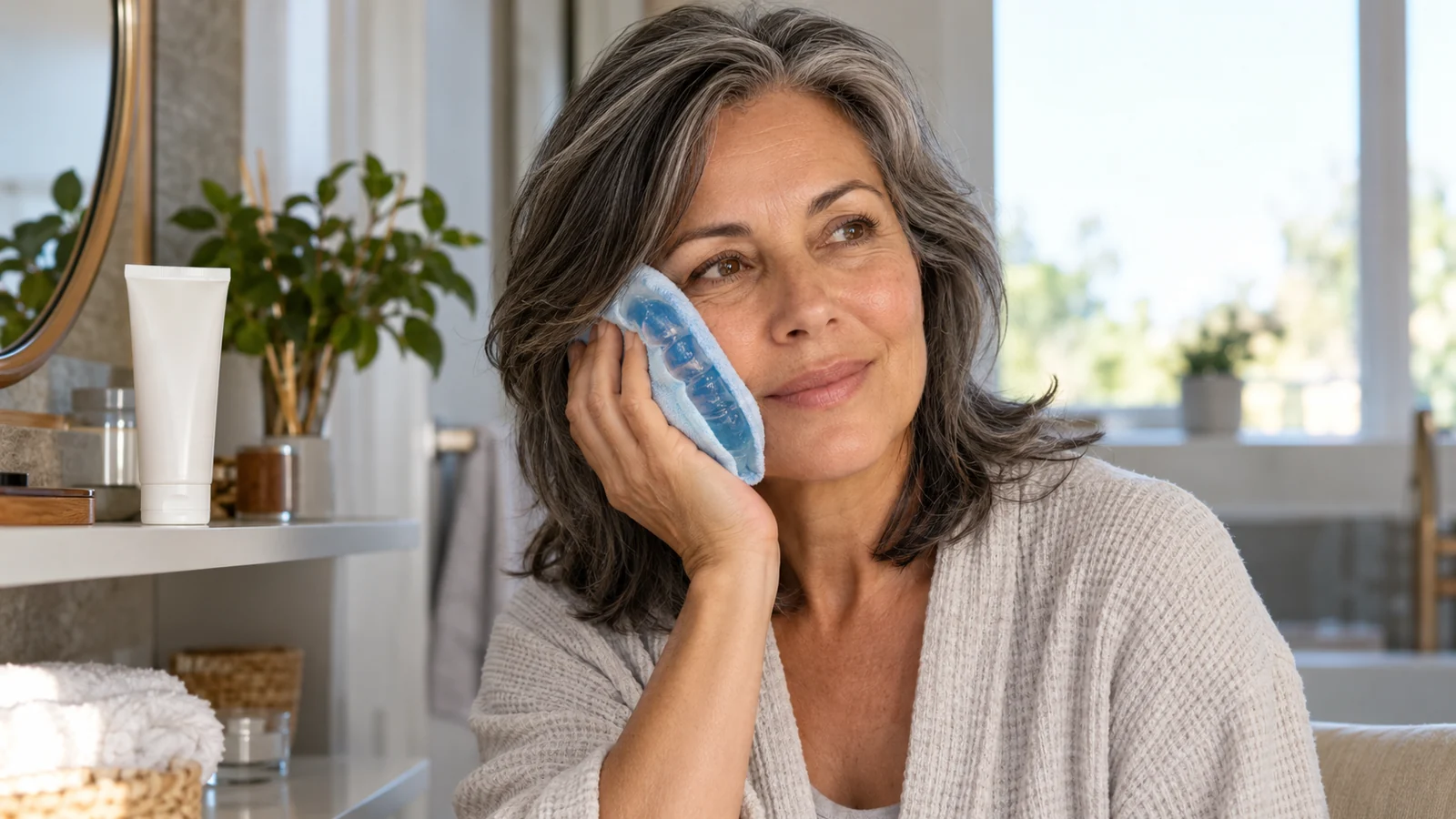
A cool, not icy, compress on closed eyelids for a few minutes may lessen morning swelling. Use a clean soft cloth and gentle contact; never press on the eyeball or put ice directly on skin. Temporary improvement is normal: a compress cannot reposition fat or change eyelid anatomy.
Aim for consistent sleep; most adults need about seven to nine hours. Slightly raising the head of the bed helps some people. If puffiness follows a very salty dinner, reducing excess salt may reduce fluid retention. Do not severely restrict water or take diuretics for cosmetic purposes: these can cause harm, particularly with illness or other medicines. Itching, sneezing, watery eyes or a link with cosmetics suggests discussing allergy with a clinician, not self-prescribing steroid ointments around the eyes.
Remove makeup gently and choose suitable products for sensitive skin to avoid adding irritation. Caffeine creams may occasionally make the area look temporarily less puffy, but there is no convincing evidence that they eliminate persistent anatomical bags. Makeup can reduce the shadow's contrast if applied to the hollow rather than piling bright concealer on the raised area. Avoid vigorous rubbing, home acid peels near the lashes and painful “drainage” massage.
Which nonsurgical treatments deserve consideration?
Lasers and other skin-renewal procedures may improve fine wrinkles, uneven texture or modest looseness under the eyes. They act mainly on skin, rather than physically removing protruding fat pads. More intensive laser treatment may cause redness, crusting, sensitivity and pigment changes; both the chosen method and protection of the eyes matter. People with darker skin phototypes need particular counselling about pigmentation changes. Work near the eyes requires a clinician trained to protect ocular structures, not a home-care approach.
Radiofrequency and certain other devices may modestly tighten skin in selected people, but evidence that they reliably eliminate true lower-eyelid fat bulges remains limited and technique-specific. Small clinical studies of periorbital appearance are not proof that fat was removed. Ask for quality evidence on the exact technology and indication behind any promise to “melt” fat without surgery. A tighter skin surface does not necessarily mean the underlying bulge is gone.
Fillers are sometimes placed to disguise the step between a tear trough and cheek, rather than injected into the bag itself, in carefully selected anatomy. They add volume, so in someone prone to swelling or with a prominent fat pad they can make the area heavier or puffier. Hyaluronic acid filler around the eyes can cause persistent oedema, a bluish cast, nodules or migration; a rare vascular injury can impair sight. The US FDA has approved specific fillers for improving under-eye hollows in adults (for example, Restylane Eyelight for people over 21), but not for removing protruding under-eye fat pads. US approval does not establish that a given product is registered or available in Armenia. The fact that some HA filler can be dissolved does not make injection risk-free or entirely reversible.
Botulinum toxin is sometimes suggested, but it does not remove lower-lid fat pads. In unsuitable anatomy, altering muscle action can destabilise the lower eyelid or change the smile. “Fat-dissolving” injections near the eyes without solid clinical and regulatory support are a reason to decline. The closer a procedure is to the eye, the more important an accurate diagnosis, qualified clinician and complication plan become.
How visible will recovery be, and what cannot be concealed?
Home treatment for fluid swelling needs no recovery time, though results may vary daily. Filler may leave punctures, swelling or bruising that makeup cannot reliably hide; oedema in this region can also persist longer than anticipated. After resurfacing, makeup may need to be avoided until the skin barrier has healed; redness may remain even once acute healing has ended. Duration depends on technique, intensity, skin phototype and individual response. Do not schedule your first treatment close to a wedding, public appearance or sunny trip.
As a rough guide, minor filler bruising and swelling often lessen over 7–14 days, but swelling under the eyes may last longer or develop later. Initial healing after intensive ablative resurfacing may take around 1–2 weeks, with residual redness lasting longer, sometimes weeks or months. None of these is a promised date when you will look as usual: ask about the specific technique and avoid scheduling treatment just before important photographs.
| Goal | Likely possibility | Main trade-off |
|---|---|---|
| Reduce morning puffiness | Temporary partial reduction is often possible | There must be a reversible cause; the benefit is not permanent |
| Improve fine lines and skin firmness | Modest improvement is possible with care or selected procedures | Time, irritation risk or visible healing |
| Soften the “bag-to-cheek” boundary | Optical camouflage is sometimes possible in selected patients | Extra volume and a risk of more swelling after filler |
| Remove protruding lower-eyelid fat | Nonsurgical methods do not reliably remove it | Accepting the limit or separately considering surgery may be appropriate |
When you need a doctor rather than cosmetic care
Swelling that starts suddenly, especially on one side, increases, is painful or comes with pronounced redness, warmth, fever or reduced vision needs prompt medical assessment; it is not a typical age-related pad. Sudden sight loss, severe eye pain or inability to move an eye is a medical emergency. Persistent puffiness alongside swollen legs, breathlessness, unusual tiredness or other whole-body symptoms also warrants medical assessment for an underlying cause.
If you have previously had fillers there, tell the clinician exactly what was injected and when: later swelling or uneven contour may relate to old treatment. Pain, pale skin or altered vision after any injection calls for emergency help. If the concern is cosmetic but the bags are permanent protruding fat, consulting an oculoplastic or plastic surgeon may help even if you firmly do not want an operation. It clarifies the limits of nonsurgical offers and may spare you ineffective interventions.
Five questions before a treatment under the eyes
- Is the problem retained fluid, a fat pad, a tear trough or festoons? How did you distinguish these?
- Will the method change skin, shadow or the actual bulge? What part of the bag will remain?
- What evidence supports this particular product or device, and what is its regulatory status in this country?
- What will I look like the next day and at work? What restrictions apply to makeup, sunshine and exercise?
- How will my eyes be protected, and who can respond to swelling, a vascular emergency or a change in vision?
You can take the gentlest path: first check sleep and allergies, then seek a diagnosis if needed, and only afterward consider procedures. Social media photos rarely match lighting, head position and tissue condition; “nonsurgical” never means “risk-free”. If your main concern is a hollow rather than swelling, our article on under-eye hollows addresses that different decision.
Frequently asked questions
Do tea bags help when placed on the eyelids?
There is no convincing evidence that tea bags work better than a clean cool compress. They may irritate sensitive skin, and anything excessively hot or cold can injure it. A clean cloth dampened with cool water is safer.
Why do the bags look worse in phone photographs?
Overhead or side lighting, a close camera, head angle and enhanced contrast emphasise the shadow beneath a bulge. Compare photographs with matching daylight and distance rather than drawing a conclusion from one shot.