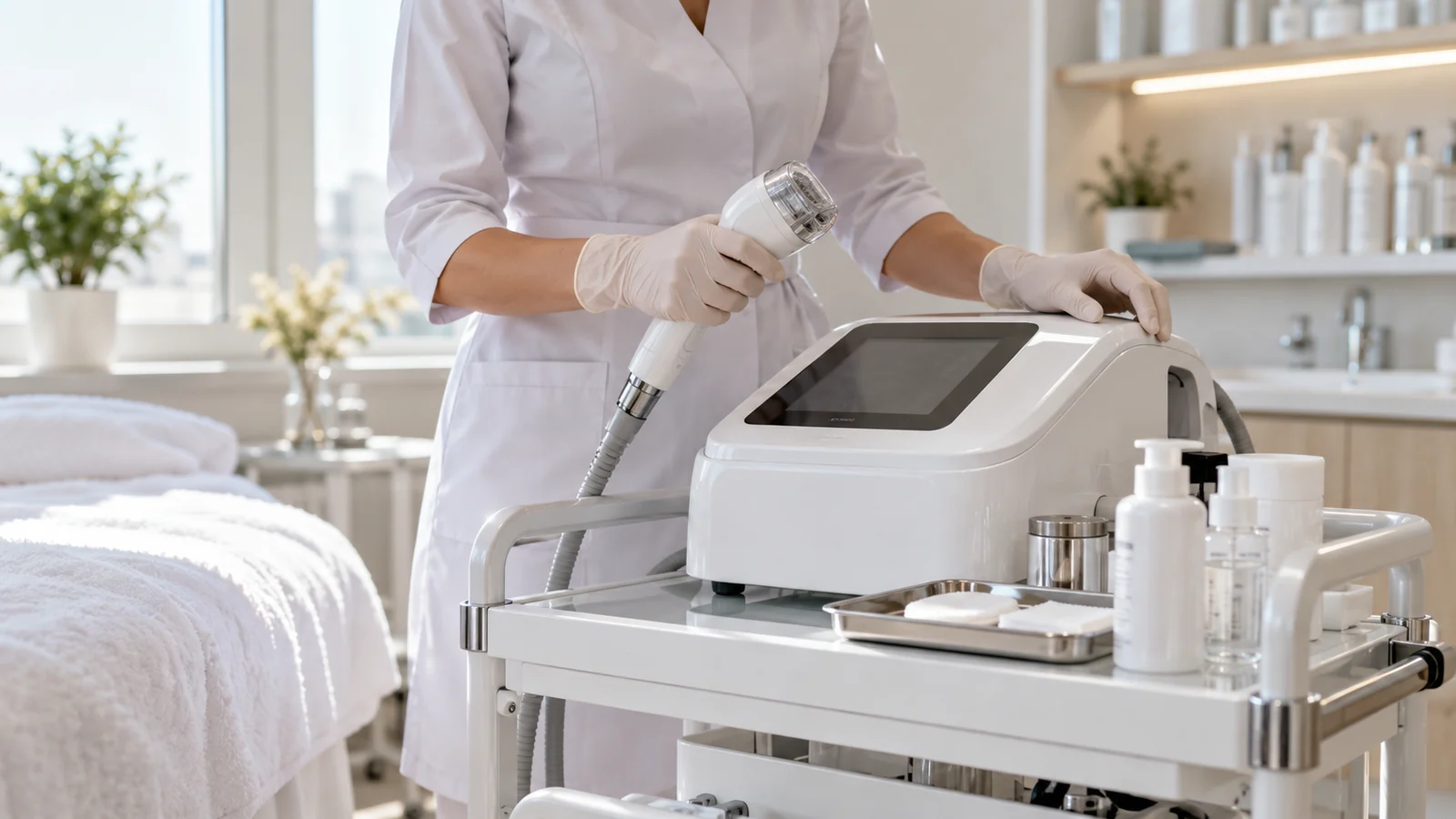

Morpheus8 RF microneedling: what it treats and its limits
Perhaps you have seen Morpheus8 results online and wondered whether your skin could look firmer without changing your facial features. Or acne scars bother you, but you cannot take extended time off. Morpheus8 is not a generic name for every RF treatment: it is a family of InMode applicators combining microneedles with radiofrequency energy. This approach may improve some aspects of texture and mild laxity, but it does not replace a surgical lift, promise to erase scars or suit everyone. What matters is the precise system, applicator, area and clinical objective proposed for you—not the popularity of the name.
What is Morpheus8, and what does FDA clearance actually mean?
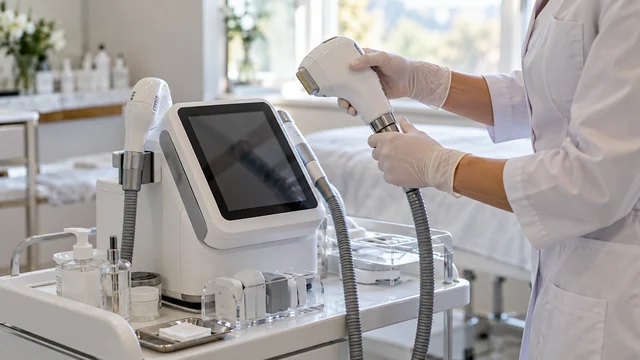
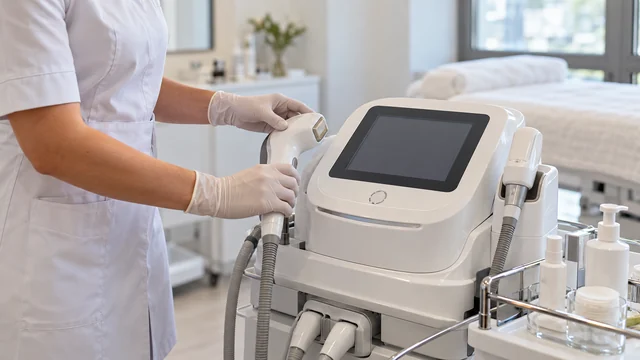
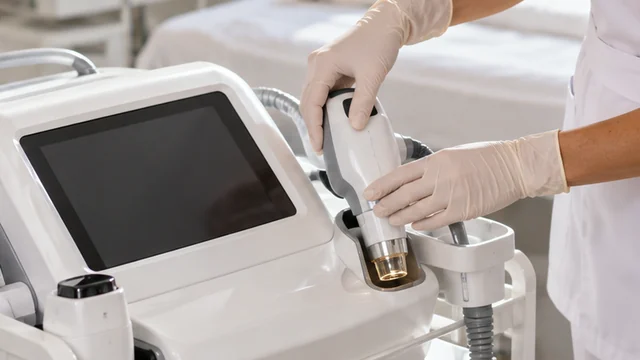
Radiofrequency (RF) microneedling combines two interventions. Fine electrodes enter the skin and deliver energy that heats tissue at selected depths. Controlled injury may trigger collagen remodeling. “Needling” means the skin is penetrated, making this a medical procedure, not ordinary home skincare. RF adds heat and therefore different potential benefits and risks compared with mechanical microneedling without energy.
InMode has several distinct device configurations. US FDA files include K200947 for the InMode System with Morpheus8 applicators and K240017 for the Morpheus8 90 applicator. K200947 specifies dermatological procedures requiring electrocoagulation and hemostasis (control of bleeding); K240017 also specifies coagulation or contraction of soft tissue, or hemostasis, for Morpheus8 90. These are exact US regulatory indications, not a blanket promise of “complete facial rejuvenation” and not evidence of authorization for any model in Armenia.
In K200947, the restriction to Fitzpatrick skin types I–IV at energy levels greater than 62 mJ per pin applies specifically to the Morpheus8 (Fractora) applicator; K240017 states the same restriction separately for Morpheus8 90. It must not automatically be extended to every tip or other device. This is not advice to select your own energy level, nor a claim that all RF microneedling is prohibited for darker skin: suitability depends on the specific applicator, indications and settings. The US 510(k) pathway permits marketing for specified indications on the basis of substantial equivalence; it does not prove every advertised cosmetic benefit or apply automatically in other countries.
What can this treatment change—and what cannot it change?
People most often ask about atrophic acne scars—small depressions in the skin—uneven texture or selected changes related to aging. Scars differ: some are narrow and deep, others broad with sloping edges, and some are tethered to deeper tissue. One protocol cannot treat them all alike. A dermatologist may suggest a combination, such as releasing a tethered scar before another method. Active inflammatory acne first needs appropriate disease treatment, rather than energy treatment to disguise its consequences.
| Your goal | A reasonable possibility | The limit |
|---|---|---|
| Uneven skin and acne marks | Gradual softening of some shallow or moderately depressed scars | Deep or tightly bound scars may require another treatment; complete removal cannot be promised |
| Fine lines and reduced firmness | Modest improvements in texture and perceived firmness for some people | It cannot predictably remove excess skin, pronounced sagging or unwanted volume |
| Pores and uneven texture | A possible visible improvement in skin surface | Pores cannot anatomically be “closed forever” |
| Pigmented spots or vascular redness | These are not universal primary indications for Morpheus8 | Establish the underlying cause first; other approaches may be more appropriate for pigment or blood vessels |
This is not an effectiveness ranking. Wrinkles, scar types, susceptibility to discoloration and the amount of subcutaneous facial fat all affect the benefit–risk balance. Deep treatment on a thin face deserves particular caution: loss of volume may be unwelcome even when smoother skin is the goal. A natural look is not something a brand guarantees; it follows from a modest objective, appropriate technique and accepting that improvement may be limited.
How reliable are the studies and before-and-after photographs?
A 2025 systematic review of RF microneedling as monotherapy for acne scars covered 16 studies and 481 patients; the literature search ran through July 2024. The authors found promising results but called for stronger studies and better determination of treatment parameters. Reviews on facial rejuvenation also highlight differences among devices, assessment methods, follow-up periods and combination therapies. Research on RF microneedling as a category is not a dedicated clinical trial of each Morpheus8 version or tip. When reading reviews, consider potential conflicts of interest too: some authors of a 2026 review work for a manufacturer of RF equipment. This does not automatically invalidate the research, but it makes scrutiny of the methods and independent evidence especially important.
Before-and-after images are useful only when taken under comparable conditions. Ask for unfiltered photographs with matching lighting, angles and facial expression, taken after recovery rather than while swelling is affecting the appearance. Find out whether injections, lasers, scar procedures or other care were used as well. One striking result does not predict how your skin will respond. In photos suggesting a lifting effect, it is especially important to distinguish early puffiness from later tissue change.
Who needs particularly careful assessment?
Before a decision, the clinician should examine your skin and ask about illnesses, medication, previous burns and any tendency to prolonged discoloration or prominent scarring. Postponement generally makes sense for active infection or inflammation in the area, open injuries or recent sunburn. During pregnancy or breastfeeding, it is sensible to defer an elective aesthetic procedure and discuss it individually, because there are insufficient specific data to promise safety. Do not stop prescribed treatment on your own.
Mention a pacemaker or other active electronic implant, implants in the treatment zone, poor healing, skin disease, immunosuppression and your medicines. The exact exclusions must be checked against the official instructions for the specific system and applicator; one model’s restrictions must not be indiscriminately transferred to another. If the consultation cannot clarify the exact model, the use of sterile single-use components and your risk of burns, you do not need to consent quickly.
What does it feel like, and what will your face look like afterward?
The clinician first chooses areas, evaluates tissue thickness, skin phototype and previous procedures, and may apply local anesthesia as appropriate. You may feel repeated pricks, pressure and warmth. Pain varies with sensitivity, area, extent and settings. Anesthesia may help, but it does not guarantee a pain-free procedure. You should be able to ask for an immediate pause if you feel sharp or unusual pain.
| When | What might be visible | How to plan |
|---|---|---|
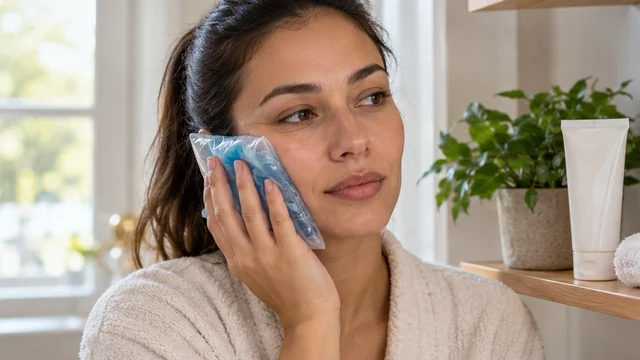
| Immediately and during the first day | Redness, warmth, swelling and pinpoint marks | Avoid scheduling a photoshoot or occasion requiring flawless makeup |
| Over the following few days | Redness and swelling may diminish; roughness and puncture marks can remain visible | You may return to work before all outward traces have disappeared |
| Once the initial reaction subsides | Skin may appear calmer, but final texture cannot yet be judged | Compare later with your baseline photographs |
| Over subsequent weeks and months | Tissue remodeling may continue, but its extent cannot be predicted | Do not prepay for a supposedly mandatory course before assessing your skin’s response |
This is a guide, not a guaranteed recovery schedule. Greater intensity, sensitive areas and individual skin responses may prolong visible changes. If you have client meetings or a wedding, discuss a realistic buffer rather than booking treatment just before the occasion. Timing for makeup, exercise, pools, saunas and strong sun exposure depends on treatment depth and the actual state of your skin: obtain personal written instructions. While skin is irritated, gentle cleansing and sun protection are generally preferred; avoid exfoliating acids and scrubs until your clinician agrees.
Which complications are important to understand?
Expected short-term effects include redness, tenderness, swelling and roughness. Scabs or pigment changes sometimes occur. More serious injury is also possible. In its safety communication dated October 15, 2025, the FDA described reports of burns, scarring, loss of fat tissue, nerve injury, disfigurement and medical or surgical treatment for complications associated with certain uses of RF microneedling. This is a warning about the device category, not proof that all models have the same event rates; positive reviews do not cancel it out.
Increasing pain, blistering or a burn, persistent numbness, muscle weakness, spreading redness, pus or fever require prompt assessment: contact your treating clinician the same day, and seek emergency medical help for significant neurological symptoms or rapid deterioration. Do not try to treat a burn with harsh skincare products. Before treatment, establish who will manage complications and how you can reach them.
How does Morpheus8 compare with similar procedures?
Conventional microneedling creates punctures without RF heating; some goals overlap, but risk profiles and tissue effects differ. Fractional lasers deliver light-based energy and may be useful for certain scars and photo-damage; they bring their own pigmentation and recovery considerations. Other RF microneedling platforms differ in electrodes, energy delivery and regulatory indications; a shared technology label does not make protocols interchangeable. Non-needling RF is a separate category, not “Morpheus8 without needles.”
For substantial tissue sagging, assessment by a plastic surgeon—or deciding against a device procedure—may make more sense. A single deep scar may benefit more from targeted scar treatment than a full-face procedure. Active acne needs inflammation control first. Start comparisons with your diagnosis and desired scale of change, not advertisements. Separate information addresses RF microneedling for the face and RF microneedling for the body; this page focuses on what Morpheus8 is and how to evaluate it.
What should you leave the consultation knowing?
- Ask for the exact system and applicator name, confirmation of the origin and single-use status of the needle tip, and an explanation of why its treatment range suits your anatomy. Do not choose settings yourself.
- Specify the actual target: scar subtype, texture or mild laxity. What would count as a modest success, and what is not achievable?
- Discuss your skin phototype, post-inflammatory pigmentation, baseline facial fat, previous treatments and device-specific restrictions.
- Request a realistic timetable for visible recovery, written aftercare, emergency contact details and an itemized explanation of cost without a fabricated “standard course.”
- Ask what evidence exists for this exact configuration, what findings are from other devices and which alternatives carry less risk for your goal.
A US FDA clearance for a particular configuration does not establish that Morpheus8 is available in Yerevan, legally authorized locally, being operated by a qualified professional or likely to work for you. These are separate checks. Waiting, documenting your skin with baseline photographs and returning to the decision later are perfectly reasonable choices.
Frequently asked questions
Could Morpheus8 change my facial shape by reducing fat?
Fat loss is among the serious events reported to the FDA for certain RF microneedling uses. It cannot be predicted for an individual from a photograph. On a thin face, ask the clinician specifically which depths and tissues they intend to avoid.
Do I necessarily need exactly three sessions?
No universally confirmed session count applies to all goals and applicators. It depends on scar types, skin response and device documentation. A proposed course should explain how progress will be assessed and allow you to stop.
If a clinic calls its device Morpheus8, is it necessarily genuine?
The advertising name does not verify the manufacturer, model, condition or consumables. Ask to see device identification, the precise configuration and local equipment documentation; visual similarity is not enough.