
Volnewmer: external RF device for skin firmness and contour
If Volnewmer interests you, you may be looking for somewhat firmer skin and a clearer contour without needles or recovery from surgery. Expectations should match what the device can physically do. Volnewmer is an external monopolar radiofrequency system: it applies controlled heat to tissues. Some people may gradually notice a modest improvement in mildly lax skin. But it does not reposition deep tissues as a surgical lift does, remove extra skin or guarantee the same result for everybody.
“Non-invasive RF tightening” refers to a family of treatments; Volnewmer is one particular CLASSYS system. Monopolar RF is not interchangeable with microneedling RF, whose needles penetrate the skin. Even non-needle machines vary in tips, cooling, operating modes and authorized uses. Establish the precise equipment configuration, not just the brand name, before discussing expected results.
How does Volnewmer work beyond the advertising diagram?
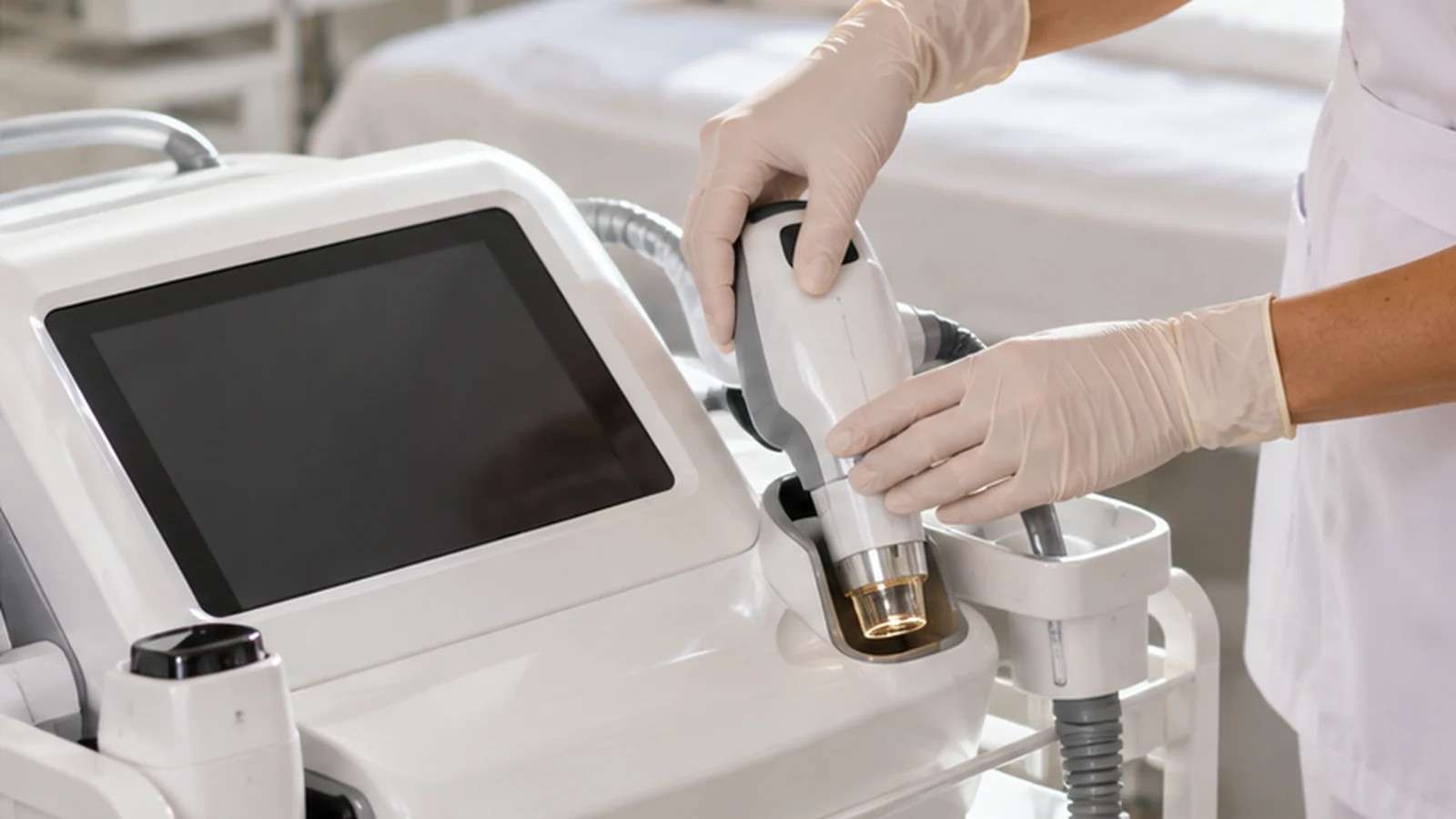
According to CLASSYS technical documentation, Volnewmer delivers monopolar RF energy at 6.78 MHz through a contact tip while conductively cooling the skin surface. Electrical energy is converted to heat within tissues. Cooling aims to reduce the thermal burden at the surface as energy reaches tissue below; it does not make burns impossible. Literature on monopolar RF discusses immediate effects on collagen structures and subsequent tissue remodeling, but clinical response varies with the starting condition and treatment technique.
Power settings, pulse counts and movement patterns are not something to select from blogs. They depend on the tip, area, model and manufacturer instructions, which trained professionals must follow. “Hotter means better” is a dangerous oversimplification. Report unexpected sharp pain or a burning sensation immediately instead of enduring it in hopes of greater benefit.
What does FDA clearance mean, and what does it not mean?
The FDA database records 510(k) decision K240248 for Volnewmer dated April 29, 2024. A later decision, K253504 of July 13, 2026, concerns a software Repeat Mode; the summary describes comparable core energy parameters and intended use. Both US entries specify use in dermatologic electrocoagulation and hemostasis of soft tissue—coagulating tissue and stopping bleeding. This is the exact scope of the 510(k) decisions, not a separate FDA approval for “face lifting”.
US 510(k) clearance establishes substantial equivalence for the stated use; it is not PMA premarket approval or proof of a long-lasting cosmetic result as advertised. Nor can US regulatory status be transferred to Europe or Armenia. If you are offered Volnewmer locally, request the model, documents establishing lawful use in that jurisdiction, practitioner information and maintenance arrangements. International product listings do not verify that a particular clinic owns the device.
How much lifting can you expect? Three very different situations
| What you notice | What external RF may realistically offer | When another option deserves discussion |
|---|---|---|
| Minor loss of firmness or early lower-face laxity | A modest improvement in skin firmness or appearance, possibly hard to see in photos. | RF alone cannot produce a specific major tissue lift. |
| Marked jowls, excess skin or deep folds | The machine cannot remove excess skin or replace surgery. | Consider anatomic assessment and other methods, potentially surgery. |
| Uneven pigmentation, acne scars or active inflammation | Volnewmer is not a universal treatment for color changes, scars or acne. | First obtain a dermatologic diagnosis and a plan for the underlying cause. |
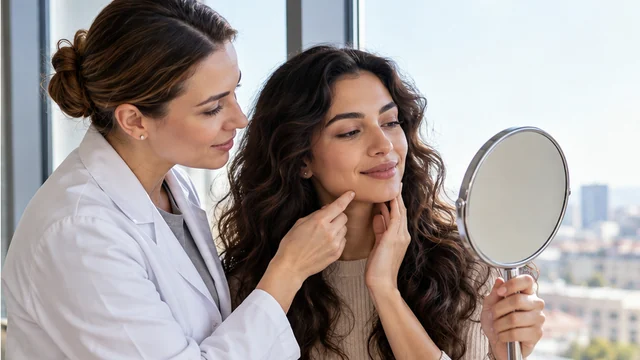
The lower face is shaped by more than skin: fat, ligaments, tissue volume, bone and expression all contribute. If heaviness around the chin comes primarily from volume distribution, modest skin contraction may hardly affect your reflection. Conversely, with early loss of firmness and a willingness to accept a subtle change, avoiding punctures may be a real advantage.
Do not treat millimeters of “lift” advertised for different systems as if the same endpoint was measured. Some studies use instruments to assess elasticity, others clinician-rated photographs or satisfaction questionnaires. These are distinct outcomes: a laboratory score cannot directly establish a visible change in facial features. A good consultation identifies the anatomical source of your concern before proposing an energy device.
Are there clinical studies of Volnewmer itself?
A small 2024 study specifically of Volnewmer recruited 50 people; 45 completed follow-up. It assessed changes in skin roughness immediately and one month after a session. These are device-specific data, but the lack of a proper control group and short follow-up do not establish surgical-type lifting, durability or superiority to other devices. A pilot protocol on cheek elasticity is registered; registration is not itself evidence of a favorable outcome.
A 2026 publication enrolled 25 women and examined repeated Volnewmer sessions and changes in midface soft tissues. It involved a specific body type and regimen; findings on volume preservation cannot automatically be extended to all faces, ages, techniques or a single treatment. Larger independent controlled studies, device comparisons and longer follow-up are needed for a precise forecast.
Another 2026 Volnewmer study followed 22 women to assess changes in facial contour, while the separate group of 25 received repeated low-energy sessions and was evaluated for midface characteristics. Neither small series justifies promising equal outcomes to everyone or safety in the presence of every implant and medical condition. Some studies measure tissue volume rather than a visible lift of the lower face; these are different endpoints.
“Stimulates collagen” may describe a plausible biological process, but it does not answer whether somebody looking at you will see a difference. Compare standardized, unfiltered photographs at equal angles, light and intervals. An immediate smoother feeling is not proof of lasting tightening. Claims of surgery-like results with no recovery warrant asking for a rigorous comparative study of that very model and indication.
What does treatment feel like?
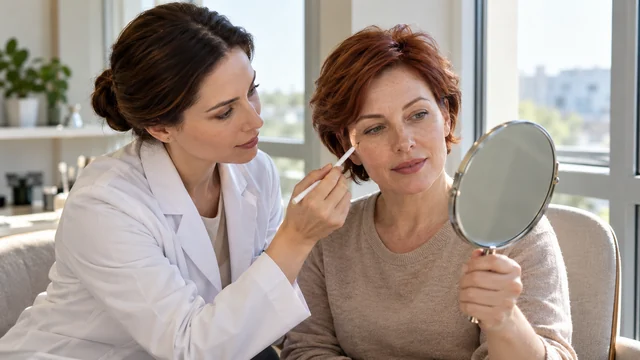
During assessment, the clinician checks your skin, concerns, implants and treatment history. Skin is prepared for contact energy, and the appropriate tip and coupling materials are used according to the instructions. Repeated warmth, sometimes uncomfortable, is to be expected; cooling is intended to improve tolerance. None of this makes treatment guaranteed painless. Sensitivity varies, while any anesthesia and acceptable intensity must be determined clinically.
You need not agree in advance to a package of all facial zones. Jawline, cheeks, neck and near-eye regions differ anatomically; whether a specific area can be treated depends on the machine's documentation and examination. You should be able to report excessive heat during the session and receive an immediate, clear response. Agree on stopping criteria before the first pulse.
When can you resume daily life and look like yourself?
| Timing | Possible reaction | Practical approach |
|---|---|---|
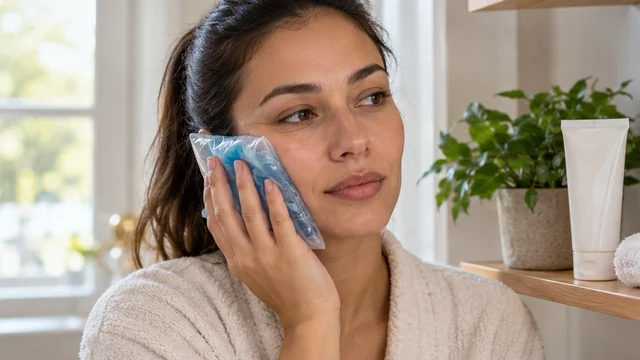
| Immediately afterward | Warmth, redness and slight swelling. | Let skin cool; do not assume you will be photo-ready without marks within the hour. |
| Over the following days | Visible reactions are brief for many, but some swelling, tenderness or patches may persist. | Agree on care and restrictions; seek advice if symptoms worsen rather than waiting for a routine review. |
| Over following weeks or months | If firmness changes, improvement may become more evident gradually. | Compare photos under consistent conditions, not on one isolated day. |
“No downtime” usually means there are no incisions, not that the skin will look perfect an hour later. Allow extra time before a wedding, photo shoot or holiday, and avoid trying a new energy treatment immediately before it. Ask for site-specific advice on exercise, hot showers, saunas, sun and active skin products. A blanket list of fixed-day restrictions cannot establish safety for your individual session.
When should you avoid or postpone RF treatment?
Tell the practitioner about pacemakers, implanted defibrillators and other electronic devices before treatment: RF energy can potentially interfere with them. Metal implants or fragments near the area also require checking against the exact model's instructions. FDA warnings for RF body-contouring technologies flag similar concerns. They prompt a compatibility discussion, not a universal Volnewmer contraindication list. A qualified practitioner must assess your case and the current device instructions.
Pregnancy and breastfeeding are sensible reasons to postpone elective cosmetic RF and review the product instructions: good evidence for these circumstances is lacking. Active infection, wounded or inflamed skin, impaired sensation, serious illness, medications and past injectables require individual review. Mention dental and other implants near the intended area; photographs are not a reliable way to decide whether metal is safe.
Risks of energy-based RF treatments include pain, burns, blisters, pigment changes and occasionally scars. After Volnewmer, persistent worsening redness, severe pain, blisters, substantial swelling or altered sensation should prompt rapid clinical contact; serious reactions require urgent examination. Do not put ice directly onto injured skin or use harsh products to hide a burn. Suspected thermal injury needs medical care, not cosmetic camouflage.
Small studies cannot quantify rare complications reliably. A few dozen participants with no serious recorded events do not establish zero risk. Instead of asking whether a machine “can ever burn”, ask how the clinician prevents overheating, monitors tip contact and responds to unexpected pain. These are practical safety questions, not an insult to the practitioner.
Volnewmer, another RF machine or a different approach altogether?
If gentle external tissue heating is your aim, compare non-needle devices using their model-specific indications, tips, cooling methods, independent studies and operator competence. Separate discussions of Thermage versus Volnewmer and Volnewmer RF can address brand comparisons in depth. Here the essential decision is whether the non-invasive category suits your condition and can plausibly deliver the change you seek.
Microneedling RF is not simply “the same, only stronger”: its needles break the skin barrier and bring different risks and recovery. Ultrasound systems work differently and also demand anatomical assessment. With marked excess skin, a surgeon may offer a more realistic account of options even if you ultimately decline surgery. For texture, pigmentation or inflammation, diagnosis and a dermatology plan come before increasing energy.
Costs reflect the area, machine, tip configuration, time and work involved, practitioner qualifications and possible follow-ups. A single advertised price rarely shows what is included. Ask whether consultation, anesthesia, repeat treatments or care for complications are extra. Price alone—high or low—does not establish device quality.
Seven questions that put you in control
- Is this exactly Volnewmer, which hardware and software version, and what documents authorize it locally?
- What realistic change can I expect in my cheeks and lower face without surgery?
- Which independent data concern this model, and which only concern RF machines generally?
- Could my electronic or metal implants, skin conditions or medication change the plan?
- What sensation is normal, and when should treatment be stopped immediately?
- What might be visible at the date of my event, and who handles blisters, pain or burns?
- Which alternatives, including no procedure, suit my goal?
A useful response starts with a measurable goal, realistic limitations and a compatibility check—not a guarantee of lifting. Simple skin care, observation or declining treatment are all valid choices. Skipping an energy session does not mean neglecting yourself.
Additional questions
Does a tattoo containing metal particles in the treatment area matter?
Yes. FDA material flags metal in some RF treatment areas, including certain tattoo pigments, as a possible risk. You cannot reliably identify ink contents yourself. Tell the clinician about the tattoo and ask them to check the exact model's restrictions.
Does little or no redness mean the RF session “did not work”?
No. The degree of superficial redness is not a reliable measure of improved firmness. Results are assessed separately, and heat should not be increased just to produce more redness.
Sources
- FDA 510(k) K240248 — Volnewmer, 2024
- FDA 510(k) K253504 — Volnewmer, 2026
- FDA — RF and non-invasive body contouring safety
- Volnewmer — repeated-session soft-tissue study, 2026
- Volnewmer — registered pilot study protocol
- Kim, 2024 — Volnewmer study (50 enrolled, 45 completed)
- Volnewmer, 2026 — single-arm series, 22 women