
Trichologist in Yerevan: when to go and what a visit involves
Are you finding more hair in your brush, noticing a wider part, or discovering that your usual shampoo no longer helps an itchy scalp? A search for a “trichologist in Yerevan” often begins with these worries. The useful first step is not a package of procedures but understanding the cause. “Trichology” generally refers to the study and assessment of hair and scalp conditions. Medical disorders in this field should be diagnosed and treated by a suitably qualified dermatologist; calling someone a “trichologist” does not, by itself, establish medical qualifications.
Hair loss is not one disease. Gradual thinning, sudden shedding after fever, separate smooth patches, flaking and scalp pain require different approaches. Sometimes observation and addressing an identifiable trigger are enough; sometimes early treatment matters because follicles capable of producing hair may otherwise be permanently lost. Neither a device-based scan nor expensive hair care replaces medical examination when inflammatory or scarring alopecia is suspected.
Which symptoms deserve an appointment—and why can they be misleading?
| Your situation | What the doctor may need to rule out | A sensible next step |
|---|---|---|
| The part has widened over months and your ponytail feels thinner | Female-pattern hair loss and other causes of diffuse thinning | Magnified examination of hair and scalp; discuss long-term treatment |
| Heavy shedding months after illness, childbirth, stress or weight loss | Telogen effluvium; nutritional deficiencies or hormonal problems when clinically indicated | Reconstruct the timeline and review diet, medications and targeted investigations |
| A round bald patch appeared suddenly | Alopecia areata, fungal infection and other conditions | An in-person dermatology assessment rather than self-directed injections |
| Itching, oily or dry flakes, redness | Seborrhoeic dermatitis, psoriasis, eczema, contact reactions or infection | Examine the scalp; choose shampoo by diagnosis, not just hair type |
| Pain, burning, pustules, shiny smooth skin or a rapidly receding hairline | Inflammatory or scarring alopecia and infection | Seek dermatology assessment promptly because hair loss may be permanent |
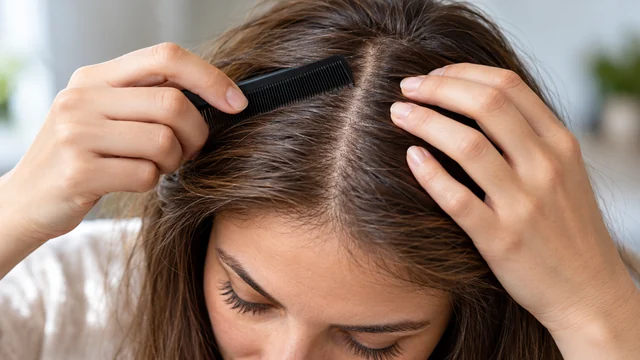
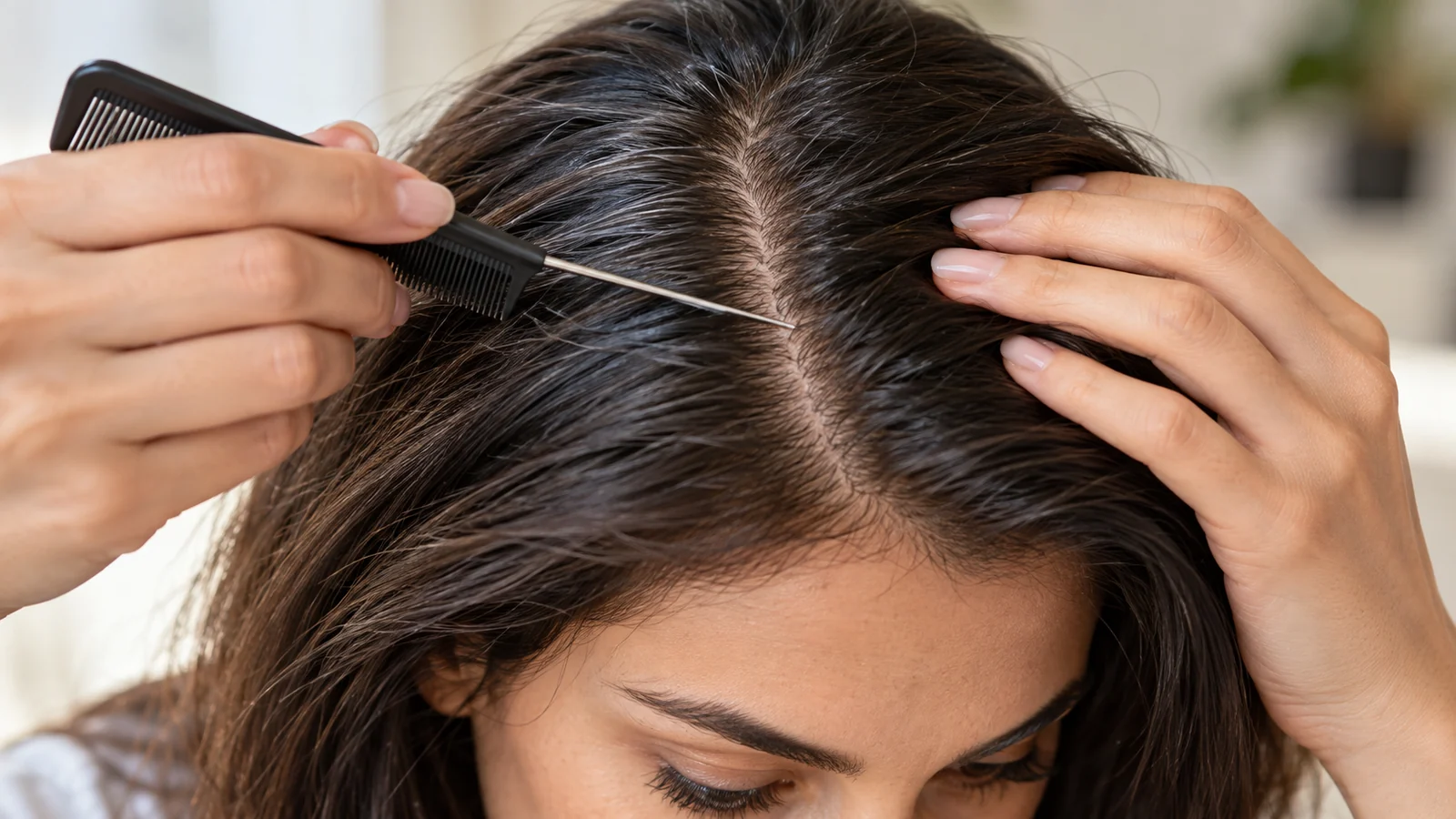
Do not judge what is “normal” solely by counting hairs in the drain: density, length, washing frequency and seasonal changes affect what you see. More useful questions are when it began, where the volume changed and how the scalp feels. A monthly photograph of the part under consistent lighting can show a trend; daily checks often create noise rather than information.
What does a useful first consultation include?
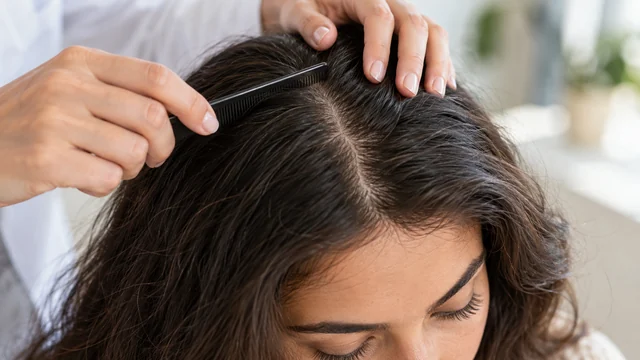
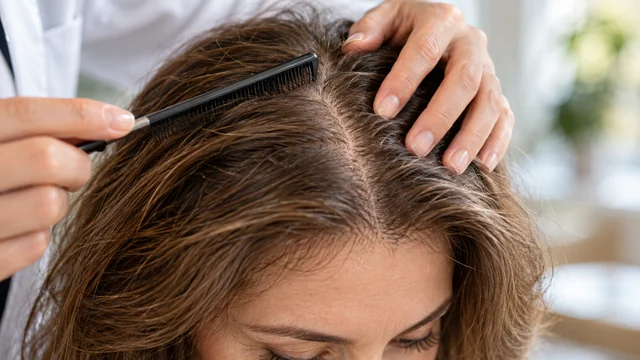
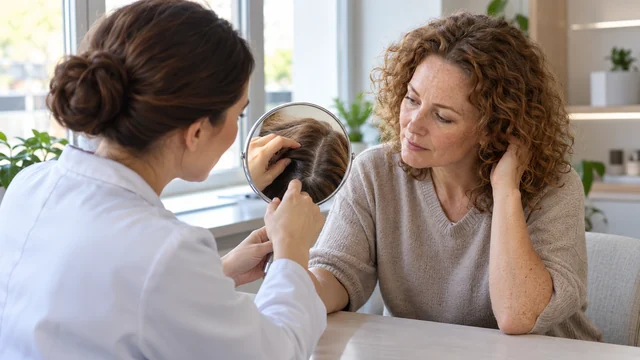
Expect questions about duration and pattern, recent fever or infection, pregnancy and the postpartum period, changes in weight or food intake, menstrual cycle, family history, new medicines and hair products. The doctor examines the scalp and hair, sometimes eyebrows and nails. If appropriate, a dermatoscope or trichoscope magnifies the hair and skin structures. An impressive magnified picture alone is not proof of a diagnosis.
Tests are selected from the symptoms and examination. Depending on the findings, this may mean checking iron-related markers, thyroid function or other measures. Everyone does not need a huge laboratory panel or a comprehensive “hormonal check-up.” Where the diagnosis remains uncertain or scarring alopecia is suspected, the doctor may recommend a small scalp biopsy for microscopic examination. Possible infection calls for an appropriate test rather than hiding the problem with a cosmetic serum.
If seeking care in Yerevan, look beyond the title “trichologist” to the clinician's medical specialty, experience with alopecia, ability to perform dermatological assessment and arrange follow-up. Ask who prescribes medicines, interprets tests and refers you for endocrine or other systemic concerns. Mentioning the city here is not verification that any particular clinic provides this service or employs a specialist with specific credentials.
Post-illness shedding is different from gradual pattern thinning
Telogen effluvium occurs when more hairs than usual enter the resting phase of their growth cycle. It often becomes evident about 2–4 months after major illness, childbirth, surgery, marked nutritional restriction or another trigger. If that trigger resolves, excessive shedding frequently settles over subsequent months, but density takes much longer to recover. Episodes can recur and can coexist with female-pattern thinning. That is why “it's only stress, just wait” is not always sufficient without examination.
In female-pattern androgenetic hair loss, hairs gradually become finer and shorter in characteristic areas, particularly along the central part. This is usually a chronic process. The goal is to slow progression and, where possible, improve density—not to promise every lost hair will return. Sudden menstrual changes, acne or increased facial hair may prompt an evaluation for additional hormonal causes, but tests should follow the clinical picture.
Alopecia areata is a distinct immune-mediated inflammatory disorder. Hair sometimes regrows spontaneously, but shedding may recur or spread. Treatment depends on the area affected, age and disease activity; one remedy is not right for all cases. With scarring diseases, hair follicles can be irreversibly destroyed. Early treatment may aim primarily to halt progression rather than promise full regrowth.
How do treatment options differ in purpose?
| Approach | When it may be discussed | Honest limitation |
|---|---|---|
| Addressing the established cause and observation | Telogen shedding, deficiencies, medication-related or hormonal factors | Hair grows slowly; rapid change in photographs cannot be guaranteed |
| Topical minoxidil | Often for female-pattern thinning after confirming the diagnosis | Benefit takes months to assess; treatment is generally ongoing; itching and irritation are possible |
| Anti-inflammatory or antifungal treatment | Certain dermatitides, infections, alopecia areata or scarring alopecia; medicines differ by condition | One medicated shampoo cannot treat every diagnosis; some conditions require prescription treatment |
| PRP platelet-rich plasma injections, light devices and mesotherapy | May be discussed as additional options for selected situations | Research quality and comparability vary; none replaces standard diagnosis and established treatment |
| Hair transplantation | For carefully selected patients with appropriately stable hair loss | Not a first response to active diffuse shedding or an inflamed scalp |
Do not choose minoxidil from an influencer's advice: formulation, treatment instructions and authorisation depend on country and specific product. Temporary shedding may increase at first. Response is generally assessed after around 6–12 months, rather than after two weeks, according to the follow-up plan. The benefit may fade if maintenance treatment stops. Topical minoxidil should be avoided during pregnancy, pregnancy planning and breastfeeding. Discuss tablets marketed for hair loss with a doctor instead of prescribing them yourself.
Hormone-active tablets and low-dose oral minoxidil require an individual assessment of contraindications, side effects, pregnancy plans and local authorisation. A drug used for hair loss in one country is not necessarily authorised for that indication in another. For PRP and other injections, ask about the studies relevant to your diagnosis, likely benefit, pain, total cost and complications—not promotional photos. Injections through the skin can cause pain, bruising and infection. “Natural, therefore safe” is not a valid safety claim. In its patient leaflet published in October 2024, the British Association of Dermatologists describes research on PRP specifically for female-pattern hair loss as too limited to establish reliably when or how it might help; this does not prove that PRP never works for any diagnosis or protocol.
What if the main problem is the scalp itself?
Dandruff, crusts and itching may occur with seborrhoeic dermatitis. With an appropriate diagnosis, a clinician or pharmacist might suggest a medicated shampoo, sometimes containing ketoconazole. Similar flaking can result from psoriasis, fungal infection or an allergic reaction to dye or other products. If skin is oozing or painful, pustules appear or hair is falling out in patches, avoid harsh exfoliation and irritating products; arrange an examination.
When scarring alopecia is suspected, repeatedly trying oils and masks for months while the affected area grows is risky. Smooth patches, loss of visible follicular openings, pain and inflammation justify quicker dermatology referral. In contrast, ordinary breakage after bleaching is damage to the hair shaft, not necessarily disease of the follicle; reducing physical and chemical damage and reviewing care may matter more.
How soon might anything change, and what will others notice?
| Situation | What may change first | What not to expect |
|---|---|---|
| Observation and management of telogen shedding | Shedding decreases first; volume may return gradually later | Full density within one week |
| Topical minoxidil | Sometimes increased initial shedding; evaluate response over months | A reliable conclusion after a few applications |
| Treating scalp inflammation | Itch and scaling may improve before hair changes | That removing dandruff automatically treats every form of alopecia |
| Trichoscopy, blood tests and routine consultation | Generally no significant visible recovery period | That minimal downtime makes subsequent injections risk-free |
A diagnostic consultation does not usually alter your hairstyle for long: the clinician may separate strands, photograph the part or take a few hairs for tests. Injections can leave tender spots or small marks, so discuss any planned procedure before scheduling an important event. A different parting, a low-tension style, a hat or a hairpiece can make daily life easier while you observe changes. These are practical choices, not evidence that treatment has failed.
What can you safely do before treatment?
- Record when the change began and events in the preceding months: illnesses, childbirth, dietary changes and new medicines.
- Photograph one or two areas in identical light and with the same parting; do not compare wet hair with dry hair.
- Avoid tight hairstyles, rough brushing and chemical burns from aggressive home remedies.
- Aim for adequate nutrition; take “hair supplements” only where there is a good reason, not because of packaging claims.
- Do not stop a medicine suspected of contributing to shedding on your own; ask your clinician to review the possibility.
- For rapidly expanding patches, pain, pus, inflammation or loss of eyebrow hair, see a dermatologist without waiting to finish a beauty-treatment package.
Questions that help you avoid buying an unnecessary package
Ask for the working diagnosis and the signs supporting it. Why is it more likely than other causes? Are tests needed, and how would their results change treatment? For each medicine or procedure, ask when to evaluate its effect, the full course cost rather than an invented package, side effects, alternatives and when to stop if it is not helping. If someone promises to restore every hair, offers everyone the same injections or cannot explain their medical qualifications, consider a second opinion.
Compare before-and-after pictures only when hair length, styling, light, parting and time interval are comparable. One successful case is not a probability estimate for your diagnosis. Cosmetic hair care may improve appearance and comfort, while the medical cause of loss still needs diagnosis. If immediate treatment is unnecessary, monitoring with a clear plan is also a useful outcome of a consultation.
Two other practical questions
Should I deliberately avoid washing my hair before an appointment?
Ask the clinician beforehand. Recent washing can affect how shedding and some tests are interpreted, but there is no universal rule requiring you to attend with an unwashed scalp.
Can I dye my hair while investigations are underway?
If your scalp is inflamed or painful, delay colouring until it has been assessed and irritation has settled. Otherwise the decision depends on skin sensitivity and the colouring method; damaged hair shafts need gentler care.