
Causes of Cicatricial Alopecia: What Is Known and What Is Not
You have noticed that your part is widening or a small smooth patch has appeared on your scalp, and you want to understand why. In scarring, or cicatricial, alopecia, hair can disappear because the hair follicles—the structures that produce hair—are damaged and replaced by scar tissue. Broadly, the causes are disorders that inflame the follicles themselves and injuries or diseases affecting the surrounding skin, such as deep burns, trauma and certain infections. For many primary forms, the precise initial trigger remains unknown. Rather than blaming a hairstyle on the basis of a photograph, it matters to identify active inflammation early, while some follicles may still be saved.
Why does a follicle stop producing hair?
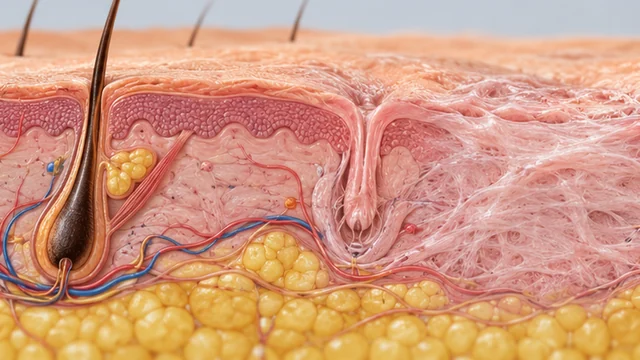
Ordinary temporary hair shedding does not necessarily mean a follicle has died. In scarring alopecia, inflammation or another injury damages parts of the follicle needed for future hair-growth cycles. As connective scar tissue replaces these structures, the openings from which hairs emerge may disappear. In a late-stage patch, skin may look smooth or shiny. That appearance deserves examination but is not enough for a diagnosis by itself.
The practical distinction is this: a follicle that has been destroyed will not usually be restored by a cosmetic serum; equally, a hairless patch does not necessarily mean the disease is still active. Treatment of a primary inflammatory condition aims mainly to limit further destruction and ease symptoms. Some hair may remain or regrow where follicles are still alive, but promising complete regrowth on established scar tissue would be misleading.
Which causes are established, and which are still being studied?
| Cause group | What happens | What needs particular clarification |
|---|---|---|
| Primary inflammatory disorders | Inflammation mainly targets follicles: examples include lichen planopilaris, frontal fibrosing alopecia, discoid cutaneous lupus and central centrifugal cicatricial alopecia (CCCA) | The origin of many forms remains unknown; detecting immune cells does not identify a single proven autoimmune cause |
| Inflammation with pustules and nodules | Disorders such as folliculitis decalvans or dissecting cellulitis/folliculitis of the scalp can cause scarring | Tests for an infectious component may be needed; bacteria do not necessarily explain the whole condition |
| Secondary injury to skin | Deep burns, injury, radiotherapy, some infections, tumours or infiltrative diseases damage follicles along with surrounding tissues | History of injury, the skin lesion, associated symptoms and targeted investigations of the underlying cause matter |
| Long-term mechanical tension | Tight hairstyles can cause traction alopecia, which may become permanent if it continues for long enough | Do not confuse the proven effect of chronic traction with an unsupported claim that every hairstyle causes every primary scarring alopecia |
These mechanisms are not interchangeable: distinguishing them changes which investigations and care might help. A separate page explains types of cicatricial alopecia. Here the question is why follicle damage develops and what should not be presented as a proven cause.
What causes central centrifugal cicatricial alopecia?
CCCA often begins around the crown of the scalp and may spread outwards. It is reported more often in women of African ancestry but can occur in other people. Researchers are studying genetic susceptibility, inflammation and possible associated conditions. However, an individual woman's cause usually cannot be identified by one genetic or laboratory test. Genetic associations have been found in some families, but that does not mean everyone with CCCA inherited it or will receive an answer from testing a single gene.
In the past, CCCA was often blamed entirely on heat styling, straightening or certain hairstyles. The American Academy of Dermatology points out that the contribution of specific grooming practices to the development of CCCA has not been proven; some affected people never used them. Gentle hair care still makes sense to avoid additional injury, and tight hairstyles can independently cause another disorder called traction alopecia.
Investigators are also examining associations between CCCA, type 2 diabetes and other diseases. An observational association does not prove that diabetes caused scarring or that treating diabetes will make destroyed follicles grow again. A doctor may recommend checks for associated health conditions based on your medical history rather than assuming several diagnoses at once.
Can menopause or stress be the only cause?
Frontal fibrosing alopecia (FFA) is diagnosed more often after menopause, often with thinning eyebrows and a receding frontal hairline. However, it also occurs before menopause and its mechanisms remain uncertain. Genetic, immune and hormonal influences are being investigated. The observed relationship with menopause does not make menopause alone an established direct cause.
Stress may accompany many kinds of hair loss, including reversible telogen shedding. A stressful event cannot, by itself, confirm scarring alopecia. If a difficult period is followed by itch, pain, loss of eyebrows or an enlarging smooth area, simply being told to rest until hair grows back is not sufficient. Not all post-stress shedding is scarring, but a potentially scarring process should not be missed.
What symptoms help guide the search for a cause?
Itching, burning, tingling, sensitivity when brushing, scale around individual hairs, redness, crusts, pustules or small painful nodules can be signs of active inflammation. In some people there is very little discomfort. Being pain-free does not rule out CCCA or another primary type; conversely, itching alone does not prove scarring, because dandruff and eczema may itch too.
Location offers clues rather than a definitive answer. Eyebrow loss together with a receding frontal hairline calls for an assessment for FFA; crown involvement can suggest CCCA among other conditions; persistent scaly discoloured plaques can suggest discoid lupus; pus and discharge warrant consideration of inflammatory follicular disorders or infection. Two forms of hair loss can coexist, for example female-pattern thinning and scarring alopecia.
How does a dermatologist investigate the cause, and what can tests not show?
- Take a history. Establish when thinning began, pain or itching, other skin diseases, trauma, burns, infections, procedures, medications, hairstyle changes and similar problems in the family.
- Examine skin and hair under magnification. Trichoscopy can show missing follicular openings, perifollicular scale or redness, hair tufts and other features, but may not identify the exact cause on its own.
- Consider a scalp biopsy if needed. A small specimen is commonly taken from an active edge where hair and inflammatory changes are still present, rather than only from the long-standing smooth centre; the dermatologist selects the site and method.
- Order targeted tests. A culture for pustules, assessment for associated conditions or other examinations may be appropriate depending on findings. There is no single universal blood test for scarring alopecia.
A biopsy uses local anaesthetic, can leave a small mark and sometimes gives an inconclusive result, especially in inactive skin. Ask why it is proposed, where the sample will come from and how the finding might change treatment. If inflammation is active, postponing assessment for months while trying shampoos or beauty treatments may mean losing follicles that could otherwise have been preserved.
What can you change now without treating yourself blindly?
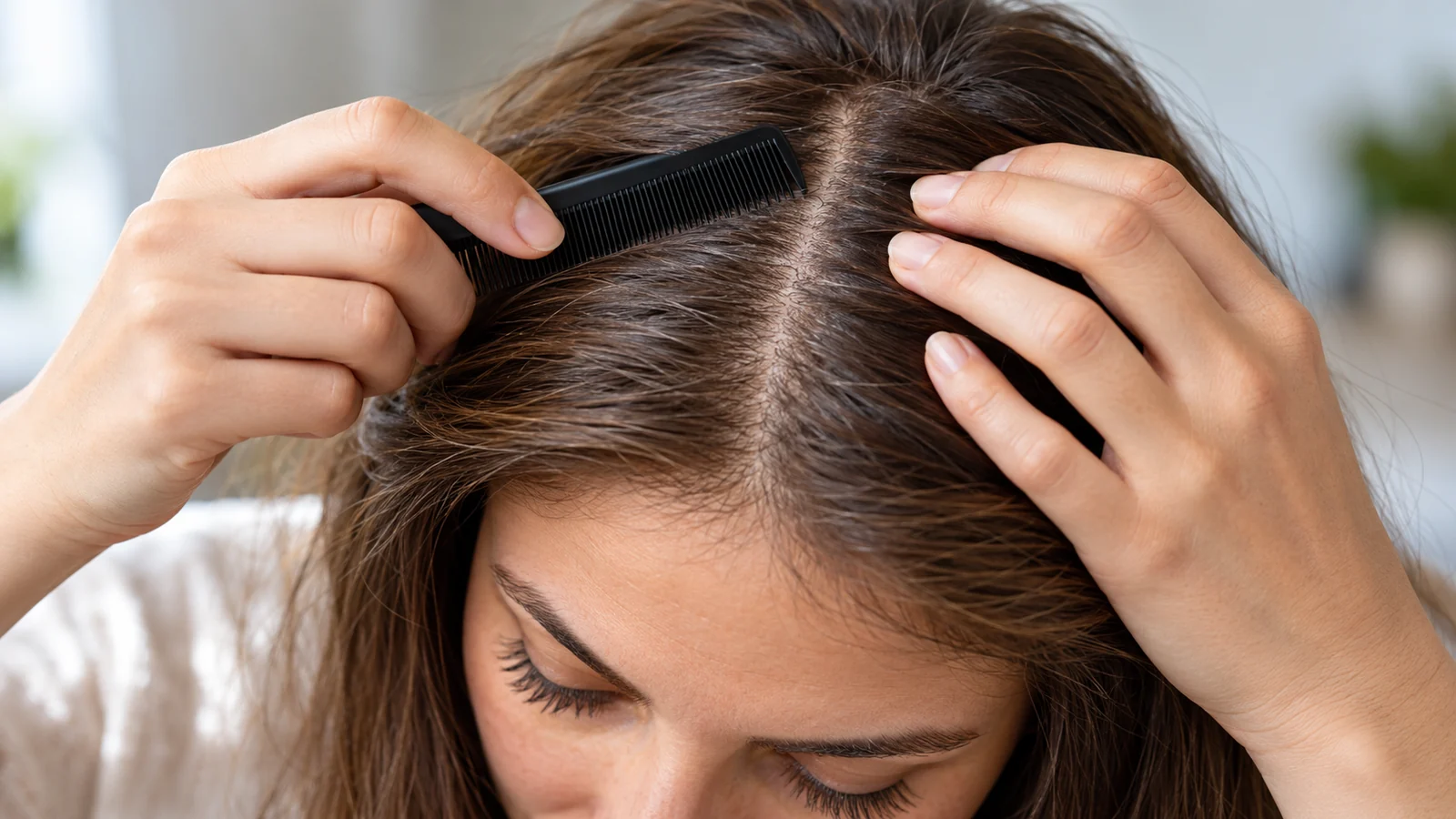
You do not need to overturn your whole routine before there is a diagnosis. Avoid hairstyles that tug painfully at the scalp, reduce friction and irritating treatments, and do not scratch or pierce inflamed spots. Note where patches developed and how symptoms changed; you may photograph your part and hairline in comparable light for the appointment. This is useful background, not a replacement for examination.
Minoxidil may be added for certain diagnoses but does not remove the inflammation that destroys follicles. Supplements, masks, platelet-rich plasma treatments and advertised “growth stimulants” should not replace establishing the underlying condition. Once disease is stable, you can discuss camouflage and, only in selected circumstances, reconstructive surgery. While inflammation continues, guarantees of regrowth are not credible.
If a bald patch is enlarging, the scalp is inflamed, painful pustules appear or eyebrows are being lost, arrange a timely in-person appointment with a dermatologist experienced in hair disorders. Rapidly spreading painful redness, high fever or severe deterioration requires urgent medical assessment. Finding the cause is not about assigning blame for your hair care. It is about protecting whatever follicles are still viable.
Further questions
Can two different causes of hair loss happen at the same time?
Yes. Scarring inflammation can coexist with inherited female-pattern thinning or temporary shedding after an illness. This is why a dermatologist examines the whole scalp, not only the most noticeable patch.
Do I need an extensive hormone panel whenever scarring alopecia is suspected?
No. Investigations depend on symptoms and the likely diagnosis. Blood tests may detect a concurrent condition, but usually cannot replace examination, trichoscopy and, sometimes, a biopsy.
Can I wear a wig or hairpiece while the diagnosis is being investigated?
Usually you can choose a piece that does not pull the hair, irritate inflamed skin or interfere with prescribed care. If the scalp is tender, wet or has pustules, discuss the method of attachment with your dermatologist.