
SMAS lifting and HIFU: which devices exist and what to expect
If you are thinking about “SMAS lifting” before a holiday or a photo session, or because your jawline seems less defined, start by asking which device will be used and what change you actually want. Very different ultrasound technologies are advertised under this name. Some may modestly firm and tighten tissue without incisions, but they cannot replace a surgical facelift or restore lost facial volume. Neither a familiar device name nor the word “SMAS” guarantees a result.
What HIFU means—and why SMAS is mentioned
HIFU means high-intensity focused ultrasound. Aesthetic devices focus ultrasound energy into small points at selected depths beneath the skin, though technologies vary. SMAS, the superficial musculoaponeurotic system, is a connective-tissue layer helping support facial soft tissues. “SMAS lifting” is a widespread marketing term, not the name of one officially standardized technique or device. Not every procedure sold under that label targets the same layer, and not every system documents its treatment depth.
Focused pulses generate small areas of controlled heat at a selected depth. Tissue responds partly by remodeling collagen, a protein that contributes to skin firmness. If an external change occurs, it therefore builds gradually. Unlike surgery, this does not physically reposition tissue; the effect depends on baseline laxity, anatomy, device model, treatment area, settings and operator technique. Ultrasound imaging and ultrasound treatment are distinct functions. An image on a screen can help locate tissue layers but does not mean every ultrasound system provides this guidance.
The device matters: verified indications versus promises
A useful concrete example is the Ulthera System / Ultherapy family. In the United States, the FDA has granted 510(k) marketing clearance to the Ulthera System for specified aesthetic indications: lifting the eyebrow and lax tissue under the chin and on the neck; improving décolleté lines and wrinkles; and, in US documents, improving the appearance of skin laxity on the abdomen and the front and back of the arms. The May 2026 FDA K260618 decision specifically added lax skin on the knees to this system’s indications; it does not constitute new evidence for treating the whole face. This is US regulatory clearance for a particular system, not authorization of every HIFU device and not proof of registration or availability in Armenia. Nor is it clearance for a full surgical-style facelift or removal of cheek fat.
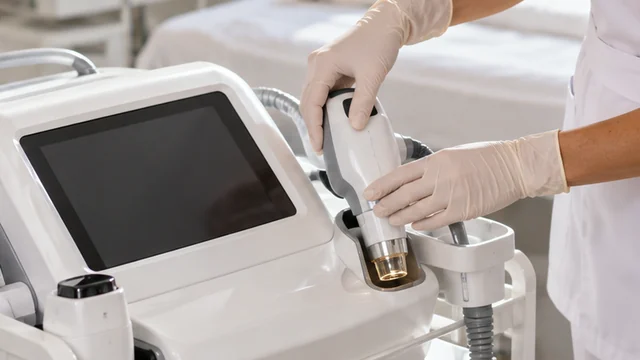
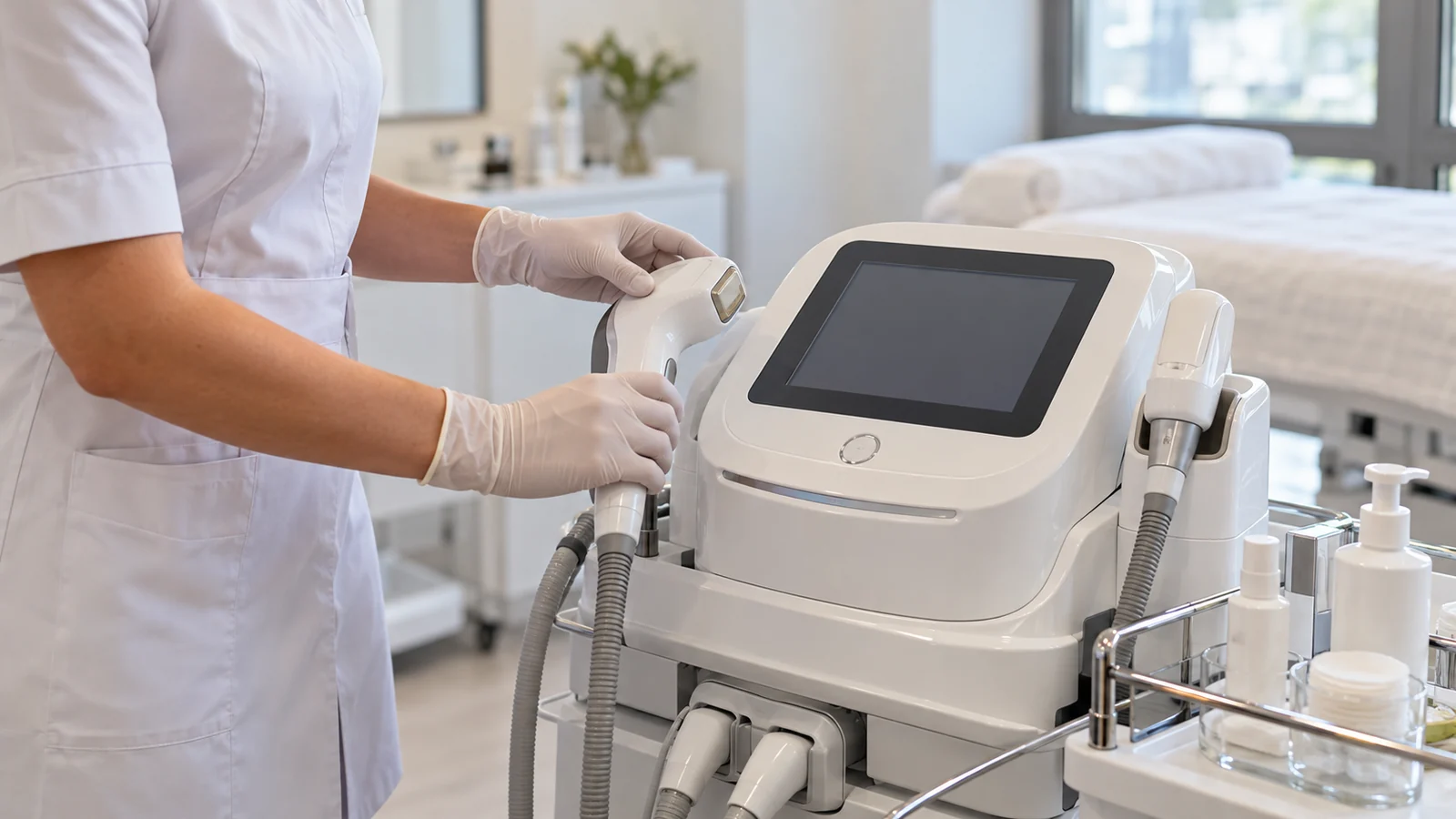
Ulthera's official instructions describe a control unit, handpiece, interchangeable transducers and DeepSEE tissue-imaging technology. FDA clearances involving Ulthera PRIME and additional anatomical indications must not be transferred to Liftera 2, Shurink Universe, Ultraformer III, Ultracel Q+, Sofwave or other devices. Their mechanisms, treatment depths, guidance and local documentation may differ. Even within one brand, check the specific model, software version and compatible consumables. Ask: “Can I see the manufacturer's exact device name, model, instructions for this version, and approved indications for my treatment area?”
| What the offer says | What it tells you | What it does not prove |
|---|---|---|
| “SMAS lifting / HIFU” with no model | Only the category used in advertising | Authenticity, depth, research, clearance or safety of the specific procedure |
| Ulthera / Ultherapy with verifiable labeling | Specific-system instructions and US indications can be checked | Armenian registration, suitability for you or identical results for everyone |
| “Real-time imaging” | Check whether this particular device actually displays tissue layers | Automatic safety or correct transducer placement every time |
| Before-and-after images and “ten years younger” | A marketing demonstration | Predictable lifting in another person |
What might actually change in the mirror?
For mild to moderate laxity, the reasonable aim is a small improvement in firmness and definition. According to the American Academy of Dermatology (AAD), modest changes after noninvasive ultrasound tightening are often assessed over 2–6 months. Systematic reviews of microfocused ultrasound with visualization (MFU-V) find evidence of clinical improvement, but variable study quality and methods limit individual predictions. Evidence for MFU-V cannot simply be treated as evidence for every product marketed as HIFU.
If an irregular outline is mainly due to excess skin, appreciably descended tissues or significant fat deposits, heating points beneath the skin cannot remove or reposition them like surgery. If hollow cheeks create a tired appearance, tightening does not replace their lost volume. For an already lean face, discuss possible unwanted changes to subcutaneous fat. Cases of localized fat atrophy have been reported, but available research cannot establish an individual's likelihood. If preserving softness and fullness is your priority, that uncertainty may be a good reason to decline.
| Starting situation | Is ultrasound worth discussing? | Realistic limit |
|---|---|---|
| Mild laxity with reasonably preserved facial volume | Discuss after in-person assessment | Modest, gradual change that may be difficult to see in photographs |
| Pronounced jowls and excess neck skin | Possible limited option, not a surgical substitute | Dramatic incision-free lifting cannot be promised; a plastic-surgery consultation may help |
| Hollow cheeks or very thin subcutaneous fat | Assess risks and alternatives first | Further loss of facial fullness could be unwelcome |
| Pigmentation, inflammation or comedones | A different clinical problem | HIFU does not treat these conditions |
What does the session feel like?
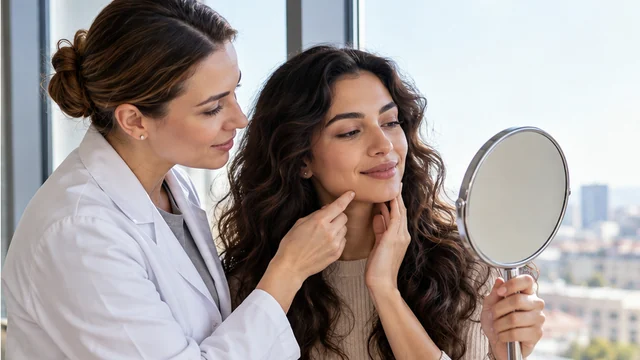
At consultation, the clinician asks about illnesses, implants, medicines, earlier injections and procedures; examines the skin; and maps areas that can be treated. On treatment day the skin is cleansed, coupling gel applied, and the transducer placed sequentially. Expect possible deep warmth, tingling or brief painful pulses, particularly near bony contours. It is misleading to call the treatment uniformly painless: an MFU-V meta-analysis found moderate average pain, although individuals and pain-relief strategies vary.
Duration depends on the area and the particular system's protocol; no fixed number of minutes or “one treatment for life” applies to everyone. Ask who operates the device, how discomfort is managed, how transducer-to-skin contact is checked, and what happens if pain becomes sharp. You do not need to tolerate intense burning to get a better result. More pain does not indicate greater efficacy; do not request higher energy merely to reproduce a social-media photograph.
When can you work or see people again?
There are no surgical incisions to heal, but “no downtime” does not necessarily mean “nothing visible.” Same-day redness, swelling and tenderness are possible, with occasional small bruises, raised linear welts or altered sensitivity. Ulthera's instructions describe effects that may persist beyond initial redness, including tenderness, numbness and temporary nerve-related weakness; their duration is not a universal timeline for other devices.
Many plan a prompt return to ordinary desk work. For close-up photography or an important event, leave a buffer: no clinician can guarantee the absence of swelling or bruises. Do not try this for the first time immediately before a wedding or interview if discretion matters. Day 1 might look normal or slightly puffy; on days 2–3 tenderness may be more noticeable; by the end of week one some people look normal while others still have marks. These are possible observations, not guaranteed deadlines. Get written, device- and skin-specific advice on exercise, sauna, strong sun and skin care rather than relying on a universal online timetable.
Do not judge effectiveness from early swelling or buy another session because your jawline looks unchanged at one week. Compare photographs with a neutral expression, equal lighting, camera angle and head position; check natural cheek fullness as well as outline. If little changes, choosing not to repeat the treatment remains reasonable.
Usual responses—and signs that need help
Temporary redness, moderate swelling, tenderness and bruising are reported for several devices. Burns or scars from incorrect technique, sensory changes, localized facial muscle weakness and reports of subcutaneous fat loss also matter. A review of published MFU-V studies and US incident reports found complaints including neurological effects and fat atrophy, but spontaneous reports cannot establish complication frequency and do not invariably establish causation. This supports an informed risk discussion; it does not mean every patient will develop these problems.
If you develop blistering burns, severe or increasing pain, persistent unexpected asymmetry, muscle weakness or lost sensation, contact the treating clinician and seek prompt in-person medical assessment rather than waiting for routine follow-up. Sudden facial drooping, speech difficulty or arm weakness may indicate a stroke: call emergency services immediately rather than attributing these signs to cosmetic treatment. Increasing swelling with breathing difficulty is also an emergency.
Who should postpone or avoid the treatment?
Ulthera's specific instructions list open wounds or lesions in the treatment area, severe or cystic acne there, active implanted devices such as pacemakers, and metal implants in the treatment area as contraindications. Separate precautions concern existing fillers, anticoagulants, keloids, certain illnesses and anatomical structures; treatment near the eyes and thyroid is particularly restricted. The system has not been evaluated in pregnancy or breastfeeding, so postponing an elective session is prudent. These are instructions for one system: other devices require their own manuals.
Tell the clinician about autoimmune or neurological disease, clotting problems, diabetes, skin infections, herpes, surgery, dental or facial implants and any relevant medicines. Never stop prescribed medication on your own for a cosmetic session. If nobody asks about your health or previous injections, that is incomplete assessment, not proof of an advanced quick treatment. You may decline a particular area or the entire procedure after consultation.
Alternatives are not a contest for maximum power
Radiofrequency (RF) also heats tissue to promote tightening, but uses a different physical mechanism and treatment-depth profile; brands within either category differ. Microneedling RF penetrates the skin with needles and involves different recovery. Fillers add volume and change contours, but cannot universally tighten excess skin and have vascular risks of their own. A surgical lift can physically reposition tissue, but entails an operation and longer recovery. Choosing no intervention for a small contour change is equally valid.
Avoid reducing the question to “Is Ultherapy better than Thermage?” That is a separate comparison of two specific technologies. This page's decision is whether the exact ultrasound device has appropriate indications, documented risks and a plausible benefit for your face. Advertising photographs of a sharply defined jawline can also reflect lighting, head position, makeup and selective examples.
Seven questions before consenting
- Who manufactures this device, and what are its model and transducer? Can I see documents and regulatory status for the country where treatment happens?
- Which indications cover my exact treatment area, and what would be outside the manufacturer's or local regulator's stated indications?
- How much improvement is realistic for my skin and cheek volume, and what will not change?
- Who will operate it, what is their training, and how will they protect nerves, vessels and other sensitive structures?
- What changes if I have fillers, implants, an illness or regular medicines?
- What is the plan for burns, numbness, muscle weakness or an unsatisfactory outcome? How do I get help afterward?
- What does the fee include, will there be follow-up, and when would you advise me not to have the treatment?
If answers consist only of “completely safe,” “suitable for everyone” or “ten years younger,” take time to reconsider. A calm appraisal of your aims is more useful than prepaying for a course.
Further questions
Does ultrasound inevitably destroy facial fat?
No. Subcutaneous fat loss is neither a guaranteed nor a desirable goal of aesthetic ultrasound lifting. Nevertheless, reports of atrophy exist, so people with lean faces should discuss that uncertainty separately.
Can SMAS lifting and fillers be combined in one area?
That depends on the exact device, filler location, timing and formulation. Ulthera instructions, for example, do not recommend treating directly over dermal filler without appropriate assessment. There is no universally safe waiting interval covering every combination.
Why might two specialists predict different results?
They may judge tissue laxity, volume and acceptable risk differently, or use different machines. Ask them to explain what will stay unchanged; that is often more useful than comparing strangers' before-and-after photos.
Sources
- FDA: Ulthera System, US 510(k) K260618 and indications.
- Ulthera / Ultherapy PRIME: instructions, precautions and adverse effects.
- AAD: realistic outcomes of skin tightening.
- Systematic review and meta-analysis of MFU-V, Aesthetic Surgery Journal, 2025.
- MFU-V adverse-event review, Dermatologic Surgery, 2025.