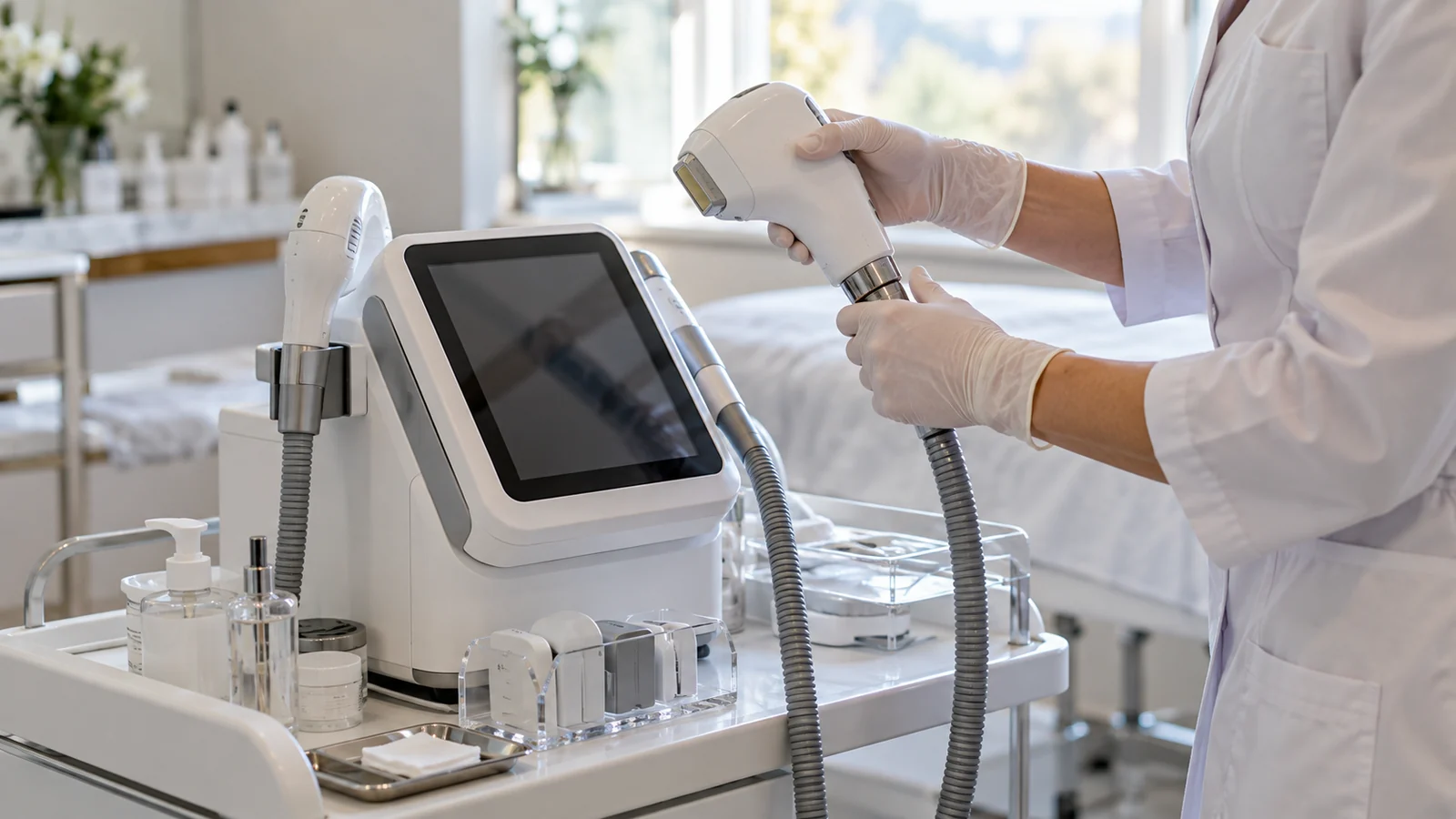

ATTIVA and Endolift: how the RF system differs from laser
You may be offered “Attiva endolifting” for the lower face or neck, with the promise of tightening and barely visible marks. The first question is not how many sessions you need. ATTIVA is a radiofrequency (RF) system, whereas Endolift/EndoliftX is a distinct laser technology. Their energy sources, devices, instruments and safety documents differ. Words such as “endo” or “non-surgical” do not make them interchangeable. Before comparing cost or results, request the exact system name and proposed technique in writing.
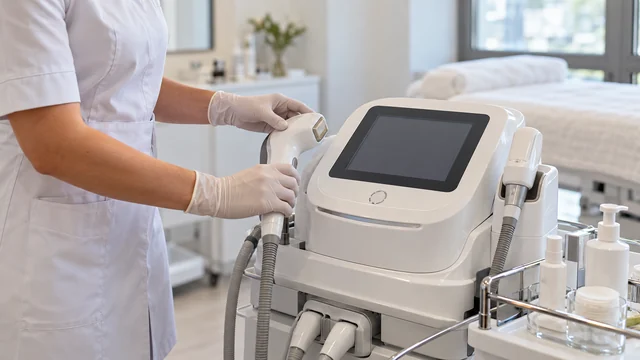
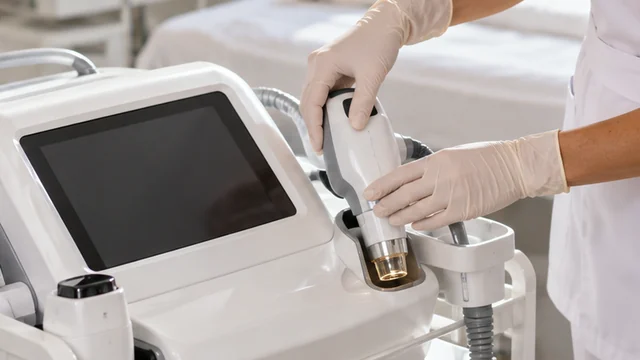
ATTIVA can be used with a thin instrument introduced into tissue to produce controlled heating beneath the skin. Its manufacturer also describes other modes and applicators, whose availability differs by market. This is not an ordinary facial, nor an automatic substitute for a surgical facelift. Independent studies of cosmetic results specifically with ATTIVA remain limited and small; the scale and duration of improvement cannot be guaranteed.
ATTIVA, Endolift and EndoliftX: one procedure or different technologies?
ATTIVA uses radiofrequency electrical energy, heating tissue through electrodes. The manufacturer calls its approach S.I.H., or Subdermal Induced Heat: controlled heating in layers beneath the skin. Marketing may also call it “endodermal RF,” “endolifting” or “Attiva iRF.” None of these terms establishes a model, device generation, region of registration or authorized indication. Even when a clinic displays a logo, ask about labeling, the precise model and the system's components.
Endolift and EndoliftX belong to a laser platform using optical microfibers. The official EndoliftX site identifies Eufoton's LASEmaR 1500 system; its manufacturer specifies a 1470 nm diode laser. A laser fiber delivers light energy, not radiofrequency electricity. EndoliftX instructions or studies are not evidence for ATTIVA, and vice versa. “Endolift minimally invasive” can be a broad search phrase, but mixing brands when discussing safety is unacceptable.
Evidence for laser-based Endolift is mixed as well. A 2024 systematic review included 23 studies and reported promising findings, while calling for larger controlled trials. A separate 2025 systematic review selected seven studies and found high risk of bias, inconsistent treatment protocols and inadequate adverse-event evidence; its authors considered firm claims about effectiveness and safety premature. Both reviews concern laser Endolift, not RF-based ATTIVA, and neither establishes the benefit or complication rate of ATTIVA. Decisions about a particular treatment require evidence specific to the device and its intended use.
| Name | Main energy source | What to verify |
|---|---|---|
| ATTIVA / S.I.H. | Radiofrequency; in the endodermal version a thin instrument is placed under the skin | Exact model, mode, applicator and regional documents |
| Endolift / EndoliftX | Laser light delivered through an optical fiber | Exact laser platform, fiber type and instructions for that generation |
| External RF tightening | Radiofrequency applied over intact skin | Do not confuse with inserting an instrument; sensations and risks differ |
| RF microneedling | Radiofrequency delivered via multiple small needles | A different device with its own safety warnings, not “the same ATTIVA” |
What is actually cleared? Why “FDA approved” does not prove a lifting benefit
The FDA's 510(k) database records device ATTIVA, applicant Italian Engineering S.R.L., K220505, with a decision dated February 9, 2023. The US indications are electrocoagulation and hemostasis in adults—in plain terms, coagulating tissue and helping control bleeding. This is a regulatory fact, not an FDA clearance for jawline lifting, eliminating eye bags or replacing plastic surgery. A 510(k) substantial-equivalence decision concerns the listed indications; it does not validate every marketing use.
The European ATTIVA website describes a CE-marked model and RF medical use for controlled tissue heating. The manufacturer itself says its website describes the European model, not the US market; some external and gynecologic applicators are certified only for Europe. Do not transfer one country's accessory list to another country automatically. Armenia's rules, lawful supply of a particular device and actual local services must be checked separately. An internet search does not establish availability in Yerevan.
For consent, this distinction matters. A clinician may discuss an aesthetic application but should explain how it fits applicable local documentation and which studies directly address that goal. “FDA approved for facelift” without the decision number and precise indication is a reason to ask for documents, not a sufficient reason to proceed.
Can ATTIVA meaningfully lift the face without surgery?
The proposed aim of subdermal RF is controlled tissue heating, changes in collagen structures and later remodeling—that is, gradual changes in connective tissue. Studies of RF systems as a category have described improvement in some features of laxity, but their outcomes cannot simply be transferred between devices. Results depend on skin thickness, fat distribution, ptosis (drooping tissue), age, prior procedures and area treated.
A small S.I.H. histology pilot published in 2025 examined tissue samples from the abdomen, buttocks and inner thighs of five women after treatment. Its authors described structural skin changes. That does not establish substantial cosmetic lifting of faces, complication frequency in a large population or benefits lasting for years. General RF evidence and limited brand-specific histology must be considered separately.
When slight contour softening and skin-quality changes bother you, a less invasive approach may be worth discussing. Pronounced excess skin, major tissue drooping, deep folds or heavy fat pads make surgery-level results unrealistic. Aggressive treatment that reduces fat volume can change familiar facial features, not always in a desirable way. If you want a natural appearance, decide in advance what change you would welcome and what you would not accept.
| Starting situation | Reasonable discussion | What cannot be promised |
|---|---|---|
| Mild skin laxity | Possible moderate improvement with suitable anatomy | A guaranteed sharp jawline or equal results for everyone |
| Marked sagging or excess skin | Assessment of alternatives, possibly a surgical opinion | Replacement of surgery with one RF session |
| Thin face with little facial fat | Particular caution about treatment depth and heating | That additional tissue shrinkage always improves appearance |
| Unexplained mass, asymmetry or pain | Medical investigation first | Fixing an underlying medical problem with “lifting” |
What happens in a subdermal session, and will anaesthetic be needed?
The protocol varies by model and area. When an instrument is introduced below the skin, the clinician needs to identify safe anatomical planes, prepare the skin and give appropriate anaesthesia, then control energy delivery and temperature. The manufacturer describes local anaesthesia and temperature monitoring. These are risk-reduction measures, not proof that no harm can occur. Ask whether there will be punctures, which applicator is used and who is responsible for the procedure.
You may feel pressure, instrument movement, warmth or discomfort in sensitive spots despite anaesthetic. Later there can be tenderness, tightness and uneven puffiness. “Virtually painless” should not prevent a discussion of the anaesthetic plan, possible drug reactions or what happens if severe unexpected pain occurs. Do not consent if nobody can explain what is going beneath your skin.
If an advertisement says there are no punctures and offers only an external applicator, do not assume it is subdermal ATTIVA. Clarify the mode and expected outcome again. Duration depends on area and technique; a shorter appointment does not prove greater safety. Assessment, preparation, anaesthesia and post-treatment observation also take time.
How long will marks show? Medical recovery versus social downtime
Minimally invasive does not mean recovery-free. Instrument entry may leave puncture sites, bruises, local pain, swelling and temporary asymmetry from tissue reaction. The manufacturer advertises optimistic recovery periods measured in hours or days, but these are not an individual prediction. Site, treatment intensity, anaesthesia, tendency to swell and combined procedures matter.
| Stage | What may show | What to allow for |
|---|---|---|
| Day of treatment | Swelling, tenderness, entry points and residual anaesthetic effects | Do not plan close-up photos or flawless makeup that day |
| First days | Bruises may appear or deepen, swelling may be uneven | Leave room before public events and important meetings |
| Following weeks | Some people may still feel tenderness, firmness or contour changes | Judge the outcome only after reactive swelling has settled |
These are possible phases, not a fixed healing calendar. If discretion is essential, avoid booking your first invasive procedure just before a wedding, flight, public appearance or active holiday. Request written, procedure-specific guidance on puncture care, washing, makeup, exercise, sauna, massage and sun exposure; instructions for external RF are not interchangeable.
Heat-related risks and symptoms that should not be ignored
Heat can burn tissue when depth or energy is inappropriate. Instrument insertion also carries risks of infection, bleeding, injury to neighboring structures, painful lumps, uneven contour and unwanted volume loss. Sensation changes or nerve injury are possible; large, high-quality studies do not establish how often each problem occurs specifically with ATTIVA for different cosmetic uses. Brief small series cannot establish zero risk.
Separately, the FDA warned in October 2025 of serious adverse events reported with some uses of RF microneedling: burns, scars, fat loss, disfigurement and nerve damage. That warning concerns RF microneedling; it is not an ATTIVA complication rate or device-specific warning. It illustrates possible thermal tissue injury but does not replace reviewing your system's own instructions and evidence.
Seek urgent medical care for rapidly increasing severe pain, signs of a deep burn, fever with hot painful swelling, heavy bleeding, visual problems, sudden facial muscle weakness or severe general illness. Persistent asymmetry, new hard lumps or lasting loss of sensation warrant in-person review even without fever. Get the clinician's contact information and emergency-care plan before treatment.
Who needs a particularly careful contraindication check?
ATTIVA manufacturer materials list pregnancy, fever and infection of skin in the treatment area among situations in which the system should not be used. The precise additional restrictions need verification in the instructions for the regional model and applicator. Safety data for elective procedures while breastfeeding are inadequate; discuss postponement with your treating clinician.
Disclose a pacemaker or other implanted electronic devices, metal implants in the intended area, healing problems, scarring tendency, blood thinners, active inflammatory skin disease and earlier surgeries. Not every factor means the same automatic prohibition for every version, but compatibility and risks must be assessed; specialist input may be necessary. Do not stop prescribed medicines on a sales consultant's advice.
An unexplained lump, changing symmetry or neurological symptoms need investigation and treatment before any aesthetic plan. If external pressure makes you want to “remove age” immediately, give yourself time to compare options without agreeing on the spot. Consent makes sense only if you understand both possible benefit and how it could change the features you recognize as your own.
When can the result be assessed, and how long does it last?
An early feeling of tightness may reflect immediate heat effects and postoperative tissue response, so a photograph from the treatment room is insufficient. The manufacturer markets gradual improvement over months and long duration, but those timelines are not guaranteed by large independent studies of every face and area. Persistence depends on baseline anatomy, technique and personal factors; natural aging continues.
Agree before treatment when to assess standardized photographs with the same lighting, head position and expression. Define a satisfactory change and whether you may stop without additional passes. If several sessions are proposed, ask about the evidence for that course and cumulative risks. Higher temperatures and more passes do not automatically mean a better lift.
How to compare alternatives fairly
External RF tightening does not involve inserting an instrument under the skin, but differs in treatment depth and likely effect. RF microneedling creates many small entry points and has its own side-effect profile. HIFU uses focused ultrasound and likewise needs a discussion of limits and risks. Evidence for one device category cannot be mechanically applied to another.
With pronounced ptosis, a surgical consultation may give a more realistic picture of possible correction, although an operation involves a very different decision and recovery. With mild laxity, you can choose skincare, sun protection or observation only. Treat ATTIVA before-and-after images critically: camera angle, time after swelling settles, lighting and absence of simultaneous injections matter more than promotional claims.
What to request before consent: documents, questions and permission to decline
- What are the exact trade name, manufacturer, model, generation, mode and applicator: ATTIVA, EndoliftX or something else?
- Where is the exact device legally registered, and what official indications apply to this model where I would be treated?
- Which studies examined this specific system in my facial area, and which concern RF generally or a different laser?
- Will an instrument enter beneath the skin? What are the plans for anaesthesia, temperature monitoring and protection of nearby structures?
- What results are realistic for my anatomy? Could there be unwanted volume loss, and may I choose not to proceed?
- What marks may be visible, and who would assess a burn, infection, asymmetry or altered sensation?
- What does my individual plan include, and what additional procedures or checkups might be needed?
Consent is meaningful only after clear answers. If a practitioner cannot distinguish RF from laser treatment or offers a marketing clip instead of official indications, postponement is sensible. An appropriately qualified clinician should assess anatomy, risk and evidence, not promise somebody else's photographed outcome.
Further questions about ATTIVA
Does European CE marking authorize every cosmetic claim?
No. Check the actual documents, model, permitted applicators and stated intended purpose; CE marking does not validate every promotional promise.
Can this be performed after a thread lift?
Not without assessment. The thread material, position and time since placement, scar tissue and proposed heating area all matter; there is no universally safe waiting interval.
Is a product advertised as Attiva iRF definitely the FDA K220505 device?
A marketing name alone cannot prove that. Request manufacturer details, model identifier, labeling and supply documentation for the particular country.
Can unwanted volume loss from heating be corrected?
Recovery depends on the injury and tissue involved; reversal is not guaranteed. Seek an in-person assessment by someone experienced with complications before considering any further heating.
Does “one session instead of plastic surgery” make sense?
Not as a universal claim. The scope, durability and risks differ; if tissue excess is substantial, discuss surgical and non-surgical approaches separately.
Documents and limits of the evidence
Regulatory indications, manufacturer instructions and a small clinical study address different questions and cannot replace one another.
- FDA K220505: US decision and official ATTIVA indications.
- FDA 510(k) record: applicant and decision date.
- ATTIVA / Tema Medicina: European model, marketed effects and restrictions.
- Aesthetic Medicine, 2025: S.I.H. pilot histology study.
- EndoliftX: separate laser platform, according to its developer.
- FDA: RF microneedling safety warning, not directly an ATTIVA warning.
- Aesthetic Plastic Surgery, 2024: systematic review of laser Endolift calling for better trials.
- 2025: separate Endolift systematic review identifying high risk of bias and safety-evidence gaps.
- ATTIVA: manufacturer cautions on pregnancy, fever and infection at the treatment site.