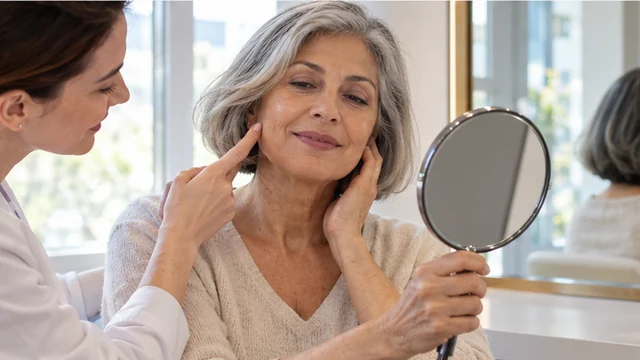

Carbon Peel Before and After: What the Photos Show
You are looking at “carbon peel before and after” pictures and wondering whether your skin will look smoother, pores less obvious and the fact that you had a treatment unnoticeable. Some improvement in visible texture or acne signs is possible, but an attractive pair of photos does not prove what caused a change or how long it lasted. Light, camera distance, makeup, expression and even temporary redness can substantially alter appearances. It is better to focus on one specific goal and compare it under consistent conditions.
A carbon peel usually means applying a carbon suspension followed by laser treatment, often with a 1064 nm Nd:YAG device. It is not deep resurfacing designed to remodel pronounced scars, nor a universal way of erasing visible blood vessels, melasma, deep wrinkles or naturally large pores. There is a limited clinical evidence base for acne and the appearance of pores, but outcomes depend on the precise protocol and the starting skin condition.
What might change in photographs, and what can they not prove?
| What you compare | Realistic interpretation | Common source of error |
|---|---|---|
| Oiliness and skin surface | The skin may subjectively feel smoother and less oily. | Mattifying powder, different skincare and side lighting alter appearance more than expected. |
| Comedones and inflamed spots | Some small studies observed fewer acne lesions. | Acne fluctuates naturally; medication may have been used at the same time. |
| Visibility of pores | Pores may look less apparent with changes in texture and lighting. | Pores cannot be permanently “closed” or removed as skin structures. |
| Marks left by acne | Some change in skin tone is possible, but predictability is limited. | Editing, tanning, inflammation or different cameras can distort the comparison. |
| Deep scars, wrinkles or laxity | A single gentle treatment cannot reasonably be promised to correct these markedly. | Facial expressions, camera angle and skin tension can create an illusion of smoothing. |
In a randomised trial involving 22 people, a particular combination of Nd:YAG laser pulse modes with carbon suspension reduced inflammatory and non-inflammatory acne lesions compared with the untreated half of the face. That small group and specific protocol do not establish what any online photograph represents. In another study of 20 women, adding carbon to a defined laser regimen did not significantly improve outcomes compared with treatment without carbon; adverse events were more frequent on the carbon-treated side. The word “carbon” is not evidence of superiority.
Of the 22 people enrolled in the first study, 20 completed it; the regimen involved three sessions two weeks apart, not one treatment. The pore study used five sessions at two-week intervals, so its findings should not be presented as the outcome of a single visit.
When should you photograph your skin so a reaction is not mistaken for a result?
An “immediately after” image mostly shows the skin's response to treatment: it may look pink, dry, temporarily smoother or more irritated. It cannot tell you whether improvement will last. Pictures several days later are better for assessing ordinary day-to-day recovery. Later follow-up is needed to judge whether breakouts have become less frequent and whether another treatment plan is needed. There is no universal day for a final result: study schedules differ, as do people's skin responses.
| Time point | What to document | What not to conclude |
|---|---|---|
| Before the session | Lesions, shine, spots and texture without filters. | That one photograph represents the full history of your acne. |
| The same day | Redness, sensitivity and dryness. | That short-lived “glow” means a durable result. |
| Several days later | Whether the skin looks normal again, and any peeling or new marks. | That the absence of crusting excludes other complications. |
| At an agreed follow-up visit | Change in the chosen concern under comparable conditions. | That the peel alone caused improvement if other treatment continued. |
How to take honest photos for yourself and your consultation
Choose one spot beside a window with diffused natural light and photograph at roughly the same time of day. Keep camera distance, head position, facial expression and camera settings consistent. Take an overall image and a close-up of the relevant area, rather than relying on your most flattering angle. Avoid foundation, retouching, filters and automatic face-enhancement settings. If you used flash beforehand, do not compare that image with an after-photo taken without it.
Record the date, number of sessions, changes in your home routine, whether you had breakouts that day and the phase of your menstrual cycle if it affects your acne. You do not have to publish the pictures; they contain personal and health information. When sending them remotely to a practitioner, use an agreed secure channel. The American Academy of Dermatology advises sharp, well-lit photographs without glare and harsh shadows, so true colours and skin detail remain visible.
A clinic may select its most successful examples. This is not necessarily dishonest, but a curated gallery cannot show the average response or everyone who did not benefit. Ask for cases with similar skin phototype and starting concern, clear photo dates and permission to publish, rather than just the most impressive picture. Even well-documented examples cannot replace an in-person assessment of your skin.
Will my face still look natural?
A carbon laser peel does not add volume and is not usually intended to change facial features. But “natural” does not mean “no reaction”. Redness, warmth, tightness or dryness are possible; intensity depends on settings, the skin barrier, prior skincare and the tendency to become inflamed. If you have an important event the following day, asking only whether you can go back to work is not enough. Ask about visible marks in your situation and whether your normal makeup will be comfortable and permitted.
Do not book your first treatment directly before important pictures or prolonged outdoor sun exposure. Consider postponing if you have a fresh tan, sunburn, an active skin infection, marked irritation or an unexplained growth that warrants separate medical assessment. Mention medications, active skincare, previous laser treatments, a tendency to develop dark marks and cold sores. Sometimes treating active acne or restoring the skin barrier first is a better choice than immediately pursuing a cosmetic effect.
If you are pregnant or breastfeeding, disclose this before booking. Some laser treatments are used for medical indications during pregnancy, but that does not establish the safety of a particular elective carbon-peel regimen, the applied carbon lotion or any numbing medicine. Discuss the proposed treatment with a dermatologist and an obstetric clinician first; postponing a non-essential cosmetic procedure is reasonable.
Which after-treatment images should be a warning?
A photograph showing marked redness on treatment day does not, by itself, diagnose a complication. But increasing pain, substantial swelling, blisters, burn-like areas, pus, spreading redness or new persistent light or dark patches call for medical contact rather than waiting for a scheduled photo. Changed vision or severe eye pain after treatment near the eyes needs urgent care. Lasers can cause burns, infections and pigment changes; post-inflammatory darkening is a particular consideration in skin with more melanin.
While the skin is sensitive, follow personalised advice for gentle cleansing, moisturising and sun protection. Do not add scrubs or potent active ingredients on your own to “improve” the after-photo. If you are unsure whether your skin looks normal on day two, take a well-lit picture and contact the practitioner; red-flag symptoms require in-person care rather than relying only on messages.
How does a carbon peel compare with alternatives for your particular goal?
If the priority is fewer new inflammatory spots, discuss an acne diagnosis and treatments with a stronger evidence base, including topical options prescribed or recommended by a dermatologist. Persistent scars require assessment of their depth and shape; a superficial carbon-assisted treatment is not equivalent to fractional scar-resurfacing techniques. If you simply want a smoother feel before an occasion, changes to your skincare may be enough without any device. These options differ by which problem mechanism they address, not by how prestigious they sound.
Before consent, ask which feature is expected to change, how strong the evidence is for the proposed settings, why they suit your skin phototype and when photographs should be compared objectively. Ask what the price includes, whether a review visit is needed and who will examine you if there is a complication. Promises to erase pores permanently, cure all acne or show dramatic results with no photo dates or conditions deserve more questions or refusal.
The most useful “before and after” is not someone else's perfect pair of photographs, but your clearly defined goal, repeatable conditions and permission to acknowledge even a small or absent response. Choosing not to have a treatment now is also reasonable, particularly with sensitive skin or expectations the evidence for this technique cannot support.
Frequently asked questions
If I lost my “before” photo, can one “after” picture prove the outcome?
No. Without a comparable baseline image, you cannot reliably measure the size of the change. Note any symptoms and skincare changes, save a current image as a new baseline, and ask your clinician which signs to follow from here.
An app says my pores have shrunk by a percentage. Is that proof?
Not without checking the method. Automated scores depend on lighting, image quality, the algorithm and the patch of skin measured. Ask whether conditions were matched and the tool was validated; an on-screen number is not a substitute for a clinical assessment.
Can pictures from different treatments prove that one treatment is better?
Only with considerable caution. Different baseline conditions, products, settings, session counts and photo timings mean that two promotional pictures cannot support a reliable comparative conclusion.
Sources
- Jung et al.: исследование carbon-assisted Nd:YAG при акне, JAAD (2012) .
- Randomized comparison of enlarged-pore treatments, Dermatologic Surgery (2010) .
- Laser Carbon Peel: New Armamentarium for Inflammatory Acne, JCAS (2023) .
- American Academy of Dermatology: how to take pictures of your skin .
- American Academy of Dermatology: laser indications and cautions .
- Health Canada: cosmetic laser treatments and adverse effects .
- AAD: acne clinical guideline (2024).
- American Academy of Dermatology: acne treatments and lasers during pregnancy.