
Medical spa: how to check licensing, products and safety
You may be searching for a medical spa because you want an aesthetic treatment in a comfortable setting without compromising medical safety. The name alone guarantees neither medical supervision nor appropriate licensing nor the skills of the person treating your face. Instead of judging the décor or follower count, check four things: who will actually perform the procedure, whether the establishment is authorised to offer it, which product or device it uses, and what happens if something goes wrong. It is perfectly reasonable to decline treatment even after a good consultation.
What does the term “medical spa” actually mean?
The English-language term generally describes a setting that offers medical aesthetic interventions alongside beauty and skin-care services. There is no single internationally recognised “medical spa” designation that automatically certifies quality. One venue may mainly offer massage and gentle facial care; another may provide injections, energy-based treatments or procedures that break the skin. Their risks and the qualifications they require are not the same.
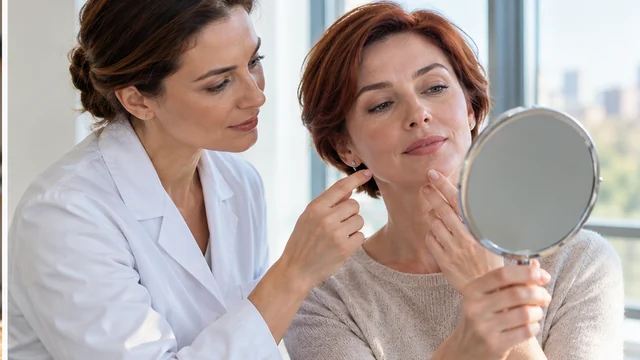
Dermatology and plastic-surgery professional bodies emphasise that a medical procedure remains medical even in an attractive spa. For safety, you need to know more than the job title used in advertising: ask about actual education, legal scope of practice, experience with the specific technique and access to medical supervision. A receptionist can arrange an appointment; they cannot replace clinical assessment with “it will definitely suit you.”
If you are choosing a facility in Armenia, you can begin with the official Unified Electronic Register of Licences of the Republic of Armenia. Compare the legal name, address, current status and authorised type of activity. If details differ, ask the provider and the competent authority to clarify. A registry entry does not by itself establish every employee's competence or permission to perform every advertised procedure.
Start with the procedure type: that determines what to check
The word “cosmetology” covers procedures with very different levels of intervention. When comparing two places, the more useful question is exactly what will be done. Combination sessions need particular care: putting several techniques in a branded “signature programme” does not remove their individual risks.
| What is being offered | What else to check | Why it matters |
|---|---|---|
| Non-invasive skin care | Hygiene, ingredients, allergies, contraindications and realistic claims | Even gentle care can irritate skin and does not replace diagnosis or treatment of a skin disease |
| Botulinum toxin or filler injections | Injector qualifications, precise product name and provenance, sterile practice and a plan for urgent help | Drug reactions, vascular and other complications are possible; a short-course certificate alone does not establish competence |
| Laser and light-based treatments | Device model, operator training, eye protection, skin phototype, recent tanning and medications | Incorrect settings or patient selection can result in burns and pigment changes |
| Deep or aggressive peels and invasive device procedures | Treatment depth, medical oversight, infection control, healing plan and follow-up visits | Recovery time and risks of infection, scarring and altered skin colour matter beyond the first sensations |
For a more detailed assessment of an individual clinician, see our guide to choosing an aesthetic-medicine doctor; for the particular expertise needed with lasers, see the laser-treatment practitioner guide. This page asks a wider question: can the establishment be trusted with the entire process, from assessment to help after treatment?
What can you verify before booking?
First, legal transparency. Ask for the organisation's full registered name, the precise treatment address and evidence of authorisation for the relevant medical activity. A trading name may differ from the legal entity, so ask how they are connected. A blurred photograph of a diploma or the phrase “everything is official” is not an adequate answer.
Second, the person doing the treatment. Ask for their name in advance, their education, current permissions under local rules, speciality and experience with your exact procedure. Who assesses contraindications? Who holds clinical responsibility? Who is present on the day? The words “under a doctor's supervision” mean little unless that doctor is genuinely accessible if a problem occurs.
Third, the treatment environment. A proper assessment, a private discussion of your health, a clean work area, hand hygiene facilities, single-use items where needed and safe handling of sharps and waste all reflect an organised process. Sterilisation cannot be judged by appearances, so it is reasonable to ask how reusable instruments are processed and who monitors infection prevention.
Fourth, records and contact arrangements. You should receive a clear explanation of what is proposed, limitations and alternatives, written aftercare instructions and a way to reach a healthcare professional afterwards. Ask who responds in the evening or at weekends, and what to do when symptoms call for immediate medical attention. No credible follow-up system is a valid reason to look elsewhere.
What should a consultation feel like when the decision is yours?
A thoughtful appointment starts with your concerns, not a price list or a preselected treatment package. You should be asked which changes you would welcome and which features you want to retain. Your medical history matters: earlier procedures, allergies, medicines, a tendency to scar, relevant conditions and possible pregnancy or breastfeeding in relation to the planned intervention. An examination should distinguish an aesthetic preference from a symptom requiring diagnosis first.
If you want to look like yourself, put your boundary into words: “I want to recognise my face in photos; I would rather have a modest effect than an obvious change.” A clinician should explain what the method will not correct. Lines driven by facial movement, lost volume and uneven skin texture call for different approaches. If they cannot explain why this technique was chosen, you can postpone consenting.
Agree in advance how results will be assessed: the same lighting and camera angle, the treated area and an appropriate review date. “After” pictures should show ordinary expressions, not just a flattering pose, if movement matters to you. A photograph taken from someone else's account or an advertising collage cannot establish what this particular provider will achieve for you.
Check where products and devices come from
For injections, request the exact brand, manufacturer, active substance or material, applicable regional authorisation documents, expiry date and batch number. The clinician should be able to show suitable packaging and record identifying details when relevant. This is more meaningful than descriptions such as “premium”, “Korean” or “exactly the same, just cheaper”. Activity units for different botulinum toxin brands must not simply be converted from one to another.
For device treatments, ask which exact model and accessories are used, who services it, what protection is provided and what signs would make the operator stop. You do not need technical settings for personal use: you need confidence that the operator evaluates risks and follows the instructions for the actual model.
If a provider will not explain what is injected or which machine is being used, defer payment. A “secret proprietary mixture”, an unlabelled product or a suggestion to buy the syringe yourself are significant warning signs, particularly for injections.
A complications plan needs steps, not vague reassurances
No technique eliminates every risk. Before filler injections, ask whether the team recognises impaired tissue blood supply, how urgent care can be accessed and whom to contact immediately for vision changes or unusual pain. For hyaluronic acid fillers, a clinician may consider hyaluronidase, but having it available does not make every outcome reversible or replace emergency treatment.
For botulinum toxin, find out where to seek help for unexpected severe weakness or trouble swallowing, speaking or breathing. With lasers, ask what the response would be to burns, blisters or unusual pain. There is no single “emergency kit” that covers every treatment. A competent team should calmly describe who assesses symptoms, what can be done at once and where a patient is referred if the problem is serious.
Seek emergency medical care for sudden visual disturbance, severe unusual pain with pale or grey-blue skin after filler treatment, stroke symptoms or difficulty breathing or swallowing. Do not wait for a message reply or the next working day. Worsening redness, hot skin, pus, fever or substantial deterioration also require urgent medical assessment.
Can you work or be photographed the next day?
There is no universal recovery time after a “medical spa visit”: it depends on the specific treatment, your response and how important it is that nobody notice a change. Gentle skin care may leave no visible trace; injections can leave puncture points, swelling or bruises; more intensive work may cause peeling, crusting and restrictions on sun or make-up. Being medically well enough for ordinary activities is not the same as looking entirely unchanged.
Discuss two calendars during the consultation: physical recovery and social visibility. Ask separately about meetings, exercise, swimming pools, saunas, sun exposure, make-up and photography. Advice should apply to the precise treatment rather than vague “post-spa care”. If an upcoming event does not leave room for possible temporary visible effects, postponing the treatment is a fully reasonable choice.
How do you compare two providers without rankings or marketing claims?
Make a short comparison sheet for each facility and seek the same five answers: legal authority to deliver the service; verifiable qualifications of the practitioner; an identifiable product or machine; meaningful informed consent; and a specific complications and aftercare pathway. Also note whether difficult questions received clear answers or were steered back to discounts. You need not pick the most expensive option, but prices cannot be compared fairly until you know what each quote includes.
Ask whether the quotation includes the consultation, procedure, type and amount of product, review appointment, extra visits, possible adjustment and care for an adverse reaction. Some needs cannot be predicted, so “perfect results, no risks and no additional fees” deserves follow-up questions. A finance or package offer is not medical evidence.
Reviews may reveal how appointments and communications are handled, but they cannot reliably measure rare complication rates. Look for dated, specific experiences; separate impressions of the décor from clinical care. Assess result photos for timing, angle, lighting, expression and signs of retouching. One successful photograph does not mean your anatomy will respond identically.
When is it better to wait or consult somewhere else?
If your concern involves a new skin growth, marked inflammation, unusual pain, a rapidly changing pigmented lesion or another unexplained symptom, seek medical diagnosis before cosmetic masking. Postpone treatment during an active infection in the area, and disclose chronic illnesses, medicines, previous complications, pregnancy or breastfeeding. Suitability depends on the particular intervention and personal circumstances.
Facility red flags include refusal to identify the practitioner, pressure to pay before examination, concealed product packaging, no explanation of contraindications, a request to sign an empty form, a promise of zero risk, a “today only” ultimatum and no clear way to access help afterwards. You can end the consultation calmly if any of these occur.
You do not need to prove that you are “ready for change”. Sometimes a good consultation ends with appropriate home care, referral to a dermatologist, a gentler option or no procedure for now. A trustworthy provider will respect that decision and leave you with usable information.
Additional questions
Should I request the informed-consent form before my visit?
Yes. Reading the risks and limitations without time pressure is sensible. The document does not replace a face-to-face discussion and must relate to the particular intervention proposed.
What if the provider offers a different product after the consultation?
Ask for fresh information about its name, local authorisation, likely effect, risks and price. Consent to one product is not automatically consent to another; you are entitled to delay your decision.
Does a medical licence guarantee that complications will not happen?
No. It helps establish whether certain activities are legally authorised, but does not remove individual risks or prove that every practitioner is skilled at every technique.
Sources
- American Academy of Dermatology — questions to ask before cosmetic treatment
- ASDSA — medical spa safety resources
- ASPS — medical spa practice and oversight resources
- FDA — dermal filler safety
- Armenia — Unified Electronic Register of Licences
- 2026 UK consensus — emergency care for filler-related visual loss