
Buccal fat removal: who it suits, results and risks
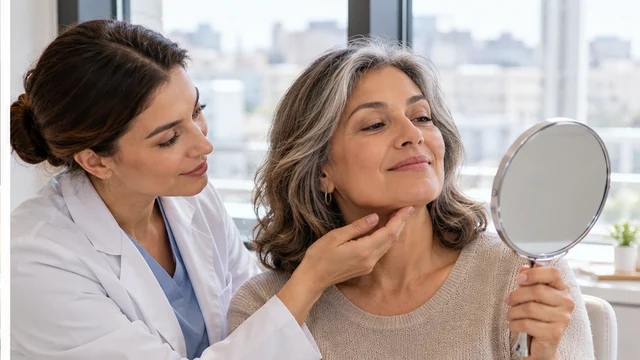
Soft sidelight defines the cheekbones in a photograph, while cheeks seem rounder in a normal mirror. Such comparisons may make buccal fat removal tempting. The real question is where the fullness originates and whether a deeper hollow will still suit you years later. Buccal fat removal removes part of a deep cheek fat pad through an incision inside the mouth. It can reduce middle and lower cheek fullness in selected people, but cannot replace weight loss, lift loose skin or give everyone identical cheekbones.
The effect is lasting: removed tissue does not simply return, and your face naturally changes with age. Narrow faces or existing hollows may look undesirably gaunt afterwards. A proper consultation starts with your anatomy, not a fashionable facial ideal, and includes the option of removing nothing.
What are Bichat's fat pads, and why aren't they all the “facial fat”?
The buccal fat pad is deep cheek fat contributing to facial volume and tissue relationships. It is not all the superficial fat visible in selfies or the sole factor determining the jawline. Cheekbones, muscles, superficial fat, salivary glands, the jaw, skin thickness, weight distribution and camera distortion influence fullness. Pad size varies between people and even between their two cheeks.
The surgeon accesses the pad through cheek lining, usually leaving no outside incision, and removes a planned portion. The parotid salivary duct and branches of the facial nerve lie nearby; this is not simply squeezing out harmless filler. How much to remove, which supporting tissues to preserve and what asymmetry to allow require individual surgical judgement.
Cheek shape may change with body weight while deep fat does not shrink to the same degree. Even at a stable weight, one photo cannot prove the pads are the cause. In-person assessment should compare frontal and side views, smiling and relaxed.
How can you tell whether deep cheek volume is the issue?
This is not a test of the “right face”, but a guide to different causes of apparent fullness. Use it to ask the clinician targeted questions, not to choose an irreversible operation for an unrelated concern.
| What you notice | Possible explanation | What to check before surgery |
|---|---|---|
| Full cheeks at stable weight, prominent cheekbones | Deep fat pad together with overall proportions | Examination should confirm the pad's contribution and discuss hollowing and asymmetry |
| Rounder face after weight gain | Superficial fat and overall volume distribution | Assess weight fluctuations first; buccal surgery does not replace this |
| Main concern is the jawline or double chin | Different anatomy: skin, subcutaneous fat, chin position | Deep buccal fat is not the direct target under the chin |
| Narrow face, obvious hollows or volume deficit | Little soft-tissue reserve or age-related changes | Often a reason to decline removal: more hollowing may be undesirable |
| Uneven swelling, pain or sudden enlargement of one cheek | Possibly dental, salivary or another medical condition | Seek a medical diagnosis before aesthetic surgery |
A youthful round face can mature without intervention. If a filter or recent trend prompted the decision, time to reconsider is not a missed chance. Postpone elective surgery during pregnancy, breastfeeding, unstable health or active oral inflammation; the clinician must assess individual contraindications.
What might the result look like, and could it seem unnatural?
Partial removal can deepen the cheek hollow and emphasise cheekbones, but does not lift sagging tissues. Expression, smiling and lighting change how the result appears. It may be minimal or deeper and more asymmetric than expected. Removed fat cannot simply be replaced in its original form; surgery to correct unwanted hollowness may fail to recreate previous contours.
Facial fat and soft-tissue volume often change with age. Some roundness may be your preferred balance, not a flaw. Professional groups caution against a gaunt appearance in thin faces. High-quality data cannot reliably predict one person's appearance decades later.
Research is heterogeneous. A 2026 systematic review (searches covering studies through December 2025) described predominantly favourable short-term outcomes but low-quality evidence and short follow-up. A 2025 complication review found a different frequency because it counted swelling, pain and difficulty opening the mouth and detected high heterogeneity. Neither produces an individual risk percentage or guarantee of satisfaction.
“You will look exactly like that photo in a month” is not a credible medical promise. Agree on a realistic magnitude of change and remember that somebody else's photograph is not your anatomical forecast.
What happens: access, anaesthesia and sensations
The surgeon explains the planned amount to retain. Depending on setting and combined procedures, local anaesthesia, sedation or general anaesthesia may be used. Through an incision inside the cheek, part of the pad is removed and the wound usually closed with stitches, often dissolvable. Other simultaneous operations introduce their own additional risks and recovery requirements.
Sharp pain is not expected under effective local anaesthesia, though pressure, pulling and unusual sensations can occur. Afterwards, soreness, full-feeling cheeks and restricted mouth opening may develop. Report significant pain; it is not a beauty obligation. Agree on permitted pain relief and allergies beforehand, not from social media tips.
If performed in an office, verify equipment for the proposed anaesthesia, sterility, monitoring and emergency arrangements. The surgeon's appropriate credentials and knowledge of cheek anatomy matter more than before-and-after videos. An impressive portfolio says nothing about emergency care.
If sedation or general anaesthesia is planned, arrange someone to accompany you home and organise transport in advance. Drive only when your care team clears you, not automatically on discharge.
When does swelling go away, and when will the final result appear?
Inside-mouth stitches do not mean recovery is unnecessary. You may be prescribed temporary liquid or soft foods, careful mouth hygiene, special rinses and limited exercise. Avoid self-selected alcohol-based rinses, touching stitches with your tongue or firm cheek massage without permission. Concurrent surgery changes the recovery instructions.
| Period | What is likely | Practical question |
|---|---|---|
| First days | Cheeks may look even fuller from swelling, with tenderness inside the mouth | What can I eat, how do I care for stitches, when is follow-up? |
| Following weeks | Swelling decreases gradually; mouth opening and healing speeds vary | When can I speak extensively, perform, exercise or see a dentist? |
| Following months | Contours continue evolving; the final effect may take several months | When is it fair to judge symmetry? |
Social downtime may exceed medical downtime: you could manage chores while still looking swollen. Do not plan filming or a celebration from someone else's day-seven photographs. Returning to public-facing work depends on swelling, bruises, your job and healing. Ask separately about speaking, facial expressions and strenuous activity.
Some pain, restricted mouth opening and swelling can be part of recovery, but deterioration must not be dismissed. Renewed or one-sided swelling, bad odour, pus, fever or increasing pain warrant prompt assessment.
Which complications matter more than attractive photographs?
Risks include bleeding, haematoma (a blood collection), infection, fluid collection, prolonged swelling, asymmetry, minimal or unwanted aesthetic change, altered sensation and revision surgery. The nearby salivary duct may be injured and impair saliva drainage. Facial-nerve injury may weaken expression muscles, occasionally for a long time. These events may be uncommon, but must be discussed before consent.
New pronounced one-sided facial weakness, rapidly expanding swelling, major bleeding, high fever or difficulty breathing require urgent medical help. Contact the surgeon promptly for a painful lump, wound drainage or suspected salivary problems. Chest pain, breathlessness or fainting after surgery also require emergency attention because surgery and anaesthesia carry general clotting and cardiopulmonary risks.
Reported complication percentages depend on whether expected swelling is counted, follow-up length and patient selection. No one internet figure predicts personal risk. Ask what the surgeon counts as a complication, how it is detected, and what happens if healing is asymmetric.
How is this different from losing weight, liposuction and adding volume?
If cheeks change with body weight, assess weight stability first. Lower-face liposuction targets other fat layers, not the deep buccal pad. Skin-focused devices do not predictably remove this deep fat. Sometimes cheekbone definition reflects surrounding facial proportions rather than tissue that ought to be removed.
Facial fat grafting goes the opposite direction, adding your own fat where volume is lacking. It cannot simply undo buccal fat removal: grafted fat survives incompletely and lies in different tissue planes. Neither removal nor grafting can replicate somebody else's facial proportions exactly.
Observation is a genuine alternative. If your wish follows every social-media trend, view your face for several weeks in neutral light, without filters, at a consistent camera distance. This is not diagnosis but helps distinguish a stable preference from a particular angle. Persistent distress about an almost invisible detail may merit talking through expectations rather than rushing into surgery.
Seven questions before agreeing, without pressure
- Show me how much deep buccal fat actually contributes to my cheeks and what will remain unchanged.
- How could natural ageing and volume loss affect my appearance? Why is removal suitable for my face?
- How much tissue will be removed? How will pre-existing asymmetry be addressed? Could you remove less, or could I decline?
- How do you avoid injuring the salivary duct or facial-nerve branches? What if injury occurs?
- Which anaesthetic, diet and oral hygiene, how many follow-up visits, and who is reachable after hours?
- When can I return to work, sport, dental visits and public events? What if pain or swelling worsens?
- May I see comparable results after meaningful follow-up in similar face shapes, normal lighting and expressions, including less favourable outcomes?
Examine before-and-after photos for camera angle, lens, light, expression, weight, retouching and recovery interval; shadows can exaggerate change. Ask what your entire face will look like at rest and smiling, not just the cheekbones. Evaluate the full written cost—anaesthesia, facility, follow-up, drugs and complication care—not a price “per two cheeks”; do not assume local prices without verification.
If a clinician promises perfect symmetry, immediate results or zero risk because the incision is inside the mouth, seek another qualified opinion. For some people, removing nothing is the most sensible aesthetic and safety decision.
Two further practical questions
Will buccal fat removal affect chewing?
Chewing and opening the mouth widely may hurt early on, so soft foods can be recommended. Permanent functional impairment is not intended; new muscle weakness or lasting difficulty opening the mouth requires medical evaluation.
Could one cheek shrink more than the other?
Yes. Pad anatomy and healing differ between sides, and swelling may exaggerate early asymmetry. Decide on correction only after examination and sufficient healing.