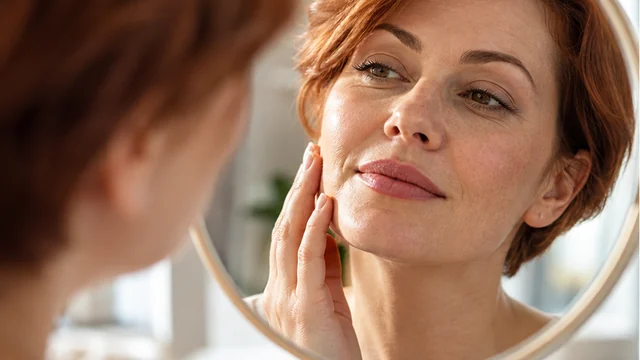

Double chin explained: causes, options and recovery
On a video call or a profile photo, you notice a fold below your chin that is hardly visible in the mirror. “Double chin” describes an outline, not a diagnosis and not necessarily excess weight. The area beneath the jaw can reflect a combination of fat, loose skin, the shape and projection of the bony chin, neck position and muscles. The first decision is to establish what creates the fullness: fat, skin, anatomy or a non-cosmetic lump. Only then does comparing procedures make sense.
If your profile has always looked like this and you are comfortable with it, there is nothing to treat. But if a bulge appears quickly, becomes painful, firm or one-sided, or comes with trouble swallowing, do not assume it is a stubborn fat pocket: see a clinician first. In particular, do not agree to fat-dissolving injections into an area that no one has examined.
What can be behind a “double chin”?
The submental area lies between the chin and upper neck. Its outline is shaped by skin, superficial fat, muscles, the position of the hyoid bone, the lower jaw and the bony chin. Two people of the same weight can have very different profiles. Genetics affects both fat distribution and bone structure. As we age, skin may lose elasticity and the platysma, a thin muscle over the front of the neck, may change how tissues are pulled.
Local subcutaneous fat usually creates a soft, diffuse fullness under the chin. It can be present with a stable weight within a healthy range. Excess or lax skin can create a fold without much fat, particularly after substantial weight loss. A less projecting bony chin changes facial proportions, so the transition into the neck can look less defined despite relatively little fat. Platysma bands and age-related muscle changes produce another pattern. Many people have several of these factors together.
Camera angle is a separate influence. If you bend your head towards a screen, hold a camera low and press your chin towards your neck, almost anyone can show a fold. A decision based on a front-facing camera or one unfavourable “before” image easily raises expectations too high. Assess your profile in a relaxed, neutral head and neck position without pushing the chin forwards.
When is it a cosmetic contour, and when should a doctor examine it?
Soft, symmetrical fullness that has been present for years and changes slowly is more often a tissue characteristic. But not every swelling is fat. Lymph nodes and salivary glands sit beneath the jaw; other neck structures, including the thyroid gland, are nearby. Enlargement or inflammation needs a different assessment. Even the FDA's official information for a submental fat medicine advises excluding other reasons for fullness, including enlarged thyroid and cervical lymph nodes.
Arrange a medical appointment if a lump is new, one-sided, firm, growing or persistent, or if it concerns you after an infection or dental treatment. Examination will determine whether ultrasound or another test is needed; routine ultrasound is not necessary for every person with a double chin. Fever, marked redness or escalating pain require quicker assessment. Breathing difficulty or rapidly increasing neck swelling is an emergency.
Which approach matches the actual cause?
First be clear about your goal: reduce fullness below the jaw, improve the transition from face to neck, or tighten loose skin? These are different tasks and should not all be promised by the same device. A useful starting point is to match the dominant feature to what a treatment can realistically change.
| Dominant factor | Options sometimes discussed | What not to expect |
|---|---|---|
| Moderate local fat with fairly elastic skin | Observation, overall weight change when medically appropriate, selected non-surgical fat-reduction treatments, liposuction | A fat procedure will not change bone shape or guarantee perfectly tight skin. |
| Significant loose skin, particularly after weight loss | Skin assessment; occasionally surgical neck lifting | Dissolving or removing fat may make excess skin more noticeable. |
| Limited chin projection | Assessment of bony proportions; a separate discussion of structural correction if desired | Reducing a small fat layer may not balance the profile. |
| Muscle bands and age-related neck changes | Assessment by a face-and-neck specialist and discussion of muscles and skin | A fat-dissolving treatment cannot reshape a muscle. |
| New local lump, pain or asymmetry | Medical diagnosis before aesthetic choices | Do not label a lump as subcutaneous fat without examination. |
Can a double chin be reduced without surgery?
Some people begin by addressing overall weight if it is above their comfortable or clinician-recommended range and there is a health reason to lose it. But exercises for the jaw, massage and creams have not reliably been shown to burn submental fat selectively. You can exercise muscles without demonstrating a reduction of the fat layer. Rapid weight loss does not guarantee a sharper profile; loose skin may show more. If your weight is already stable and comfortable, you do not have to force weight loss because of one camera angle.
Injectable deoxycholic acid. In the United States, Kybella has FDA approval to improve the appearance of moderate to severe fullness caused by submental fat in adults. It damages fat cells in a defined anatomical area: it is not a universal injection for cheeks or jowls. US approval does not establish that a particular product is registered or offered in Armenia. In September 2026, the FDA issued an additional warning about serious reactions when Kybella is used outside the area under the chin; its indication must not be transferred to other facial areas.
The US information allows a series of sessions at defined intervals, not simply one quick lunchtime injection; the permitted course depends on the label and the individual assessment. Swelling, pain, numbness, bruising and firmness are common. Important risks include damage to a facial nerve branch causing an uneven smile, swallowing difficulties, skin damage, infection, persistent nodules or localized hair loss. The FDA's 2026 warning adds that some nodules or masses may persist and require medical intervention. The injections are contraindicated if the intended treatment site is infected. Tell the clinician about swallowing problems, bleeding tendencies, surgery and previous neck procedures beforehand. The US label recommends avoiding Kybella in people with current or past swallowing difficulties. Evidence on use during pregnancy and breastfeeding is limited; postponing elective treatment and discussing it individually is reasonable.
Cryolipolysis uses a particular applicator to cool fat tissue in a controlled way. Whether it can treat the area under the chin depends on the device model, applicator and cleared treatment area, not simply the phrase “fat freezing”. Improvement is gradual and is not guaranteed. Temporary swelling, tenderness or numbness may follow. The FDA also describes rare paradoxical adipose hyperplasia, in which the treated fat area becomes larger and firmer instead of smaller, sometimes requiring surgery. Some technologies near the jaw also carry a nerve-injury risk that can temporarily change the position of a lip.
Other energy-based devices that heat tissue to change fat or surface contour are not interchangeable. Ask for the exact device and attachment, its intended site and outcome data specifically for the submental area. Equipment intended for the abdomen cannot automatically be used on the neck. Some devices target the look of the skin more than fat volume; the words “lifting” and “double-chin reduction” do not indicate the same clinical outcome.
When might surgery make more sense?
When fat predominates and skin remains sufficiently elastic, a plastic surgeon may discuss submental liposuction. It is surgery, not a treatment without recovery: assessment of health, anaesthesia, bruising, swelling, temporary numbness, infection, asymmetry, contour irregularities and possible revision are relevant. Skin does not tighten equally after fat removal in everyone. If laxity is significant, the surgeon may suggest another form of correction rather than taking out more fat.
With loose skin and substantial age-related changes, a neck lift is sometimes considered, occasionally with adjustment of the platysma. This can address tissues that fat-reducing medicines do not affect, but brings scars, postoperative care and a longer visibly noticeable recovery. It requires an in-person consultation with a qualified surgeon and an objective review of contraindications. A chin with limited bony projection is a separate question; an implant or bony procedure is not obligatory and is not a treatment for a fat fold. Detailed technique-by-technique comparison belongs on the double-chin treatment page; the decision here is to identify the source of the contour.
What does recovery look like in everyday life?
“Back to normal activities” is not a promise that nobody will notice anything. Fat-dissolving injections can initially make the under-chin area appear larger because of swelling. Firmness, tenderness, bruises or changed sensation can outlast the early swelling; timelines vary. If you have a photoshoot, public presentation or wedding in a week, you cannot count on having no visible marks. Even an effective procedure does not turn new swelling into a final result.
After cryolipolysis, redness, tenderness, bruising, altered sensation and temporary fullness can occur; the outcome should not be judged the following day. Liposuction may involve prescribed compression, activity restrictions and visible healing. Neck lifting adds follow-up visits, wound care and scar management. Your clinician should discuss separately when returning to work is medically safe, when the effects may be visually concealable and when comparing result photos makes sense. A universal “three-day social recovery” does not exist for all techniques.
Seek assessment without delay for worsening severe pain, spreading hot redness, drainage from a wound, a clearly uneven smile or trouble swallowing. Call emergency services for breathing problems. These are not routine cosmetic inconveniences to endure for a good outcome. If recovery concerns you, contact your treating clinician rather than relying only on social media advice.
What can change, and what will stay the same?
Reducing the fat layer can reduce local fullness in a suitable candidate, but it cannot undo jaw anatomy, normal neck movement or ageing. Some fat reduction may remain relatively long lasting while weight is stable, yet weight change, skin ageing and other factors can alter the contour again. No treatment offers a sound basis for lifelong guarantees or identical results in every person. Non-surgical treatments may require further assessment and a staged course; surgery may produce a larger change but with greater invasiveness and recovery.
A natural profile does not have to mean the sharp jaw-to-neck angle seen in advertising. Removing too much volume where the skin is weak may leave a less even outline. A good plan asks how much change is right for you and whether a conservative option is enough. If you like your face in everyday life and only dislike an unusual selfie angle, there is especially little reason for a medical procedure.
What should you bring to a consultation, and how do you check the promises?
Bring two or three ordinary, unfiltered photos with neutral head position and consistent lighting, plus a profile photograph. You do not need to choose your worst image to “prove” a problem. Ask the clinician to show which tissue is creating fullness and how the proposed method would affect it. For an injection, ask for the active ingredient, the product's authorisation in your country, its label, approved injection area, nerve-injury risks and a complication plan. For a device, ask for its exact model and whether under-chin use is permitted.
For surgery, consider the surgeon's qualifications and experience with face and neck procedures, the setting, anaesthesia support, recovery arrangements, postoperative access and management of complications. Discuss any quoted price alongside evaluation, number of sessions, anaesthesia, aftercare, return visits and possible additional correction. A cheap “price per injection” tells you little about the total cost or safety.
When reviewing before-and-after photos, compare camera angle, head position, body weight, lighting, time since the treatment and muscle tension. Reviews often leave out the swollen recovery period and starting anatomy. You have every right to pause or seek a second opinion, especially if someone urges treatment of an unexplained lump, guarantees a particular jaw angle or offers an unidentified “lipolytic cocktail”. Without a medical reason, doing nothing is valid: a double chin is not a measure of health, character or discipline.
Additional questions
Can better posture improve the look, at least in photos?
A neutral head position and a more flattering camera angle can certainly change how much of a fold is visible. That is perspective and tissue positioning, not proof that local fat has disappeared.
Why does my chin look less defined after weight loss?
As the amount of subcutaneous tissue decreases, looser skin may become more obvious. That is a reason to assess skin and anatomy, not to automatically repeat fat treatments.
Sources and medical references
- FDA — KYBELLA, prescribing information (2026)
- FDA — Kybella: safety communication, September 2026
- FDA — Non-Invasive Body Contouring Technologies
- American Society of Plastic Surgeons — Double chin liposuction and alternatives
- American Society of Plastic Surgeons — Neck contour options
- DailyMed — KYBELLA prescribing information (2026)