
BBL vs IPL: What They Share and Where They Really Differ
You are comparing BBL and IPL for redness or brown spots, yet descriptions can make them sound like entirely different technologies. BBL is Sciton’s branded form of broad-spectrum intense pulsed light, within the IPL family. There is therefore no honest brand-only answer to “BBL vs IPL—which is better?” The exact device, handpieces and filters, settings, skin concern, your skin characteristics and practitioner all matter. BBL HEROic is one particular Sciton system; “IPL” at another clinic could refer to many different models.
Either option may be considered for some diagnosed sun spots or visible blood vessels. Neither a prestigious brand nor a higher price guarantees superiority. With melasma, recent tanning or a more deeply pigmented skin phototype, the better choice may be diagnosis first, sun protection, medication or a different treatment entirely. This is a comparison of decisions, not a contest with a universal winner.
BBL and IPL: shared principles and real differences
IPL means intense pulsed light. A flashlamp emits a range of wavelengths; filters and settings help direct light energy to pigment (melanin) or blood-vessel haemoglobin. BBL is Sciton’s trade name for a system within this approach. It differs from a laser’s comparatively narrow wavelength, and it is not a mechanical face-lifting treatment.
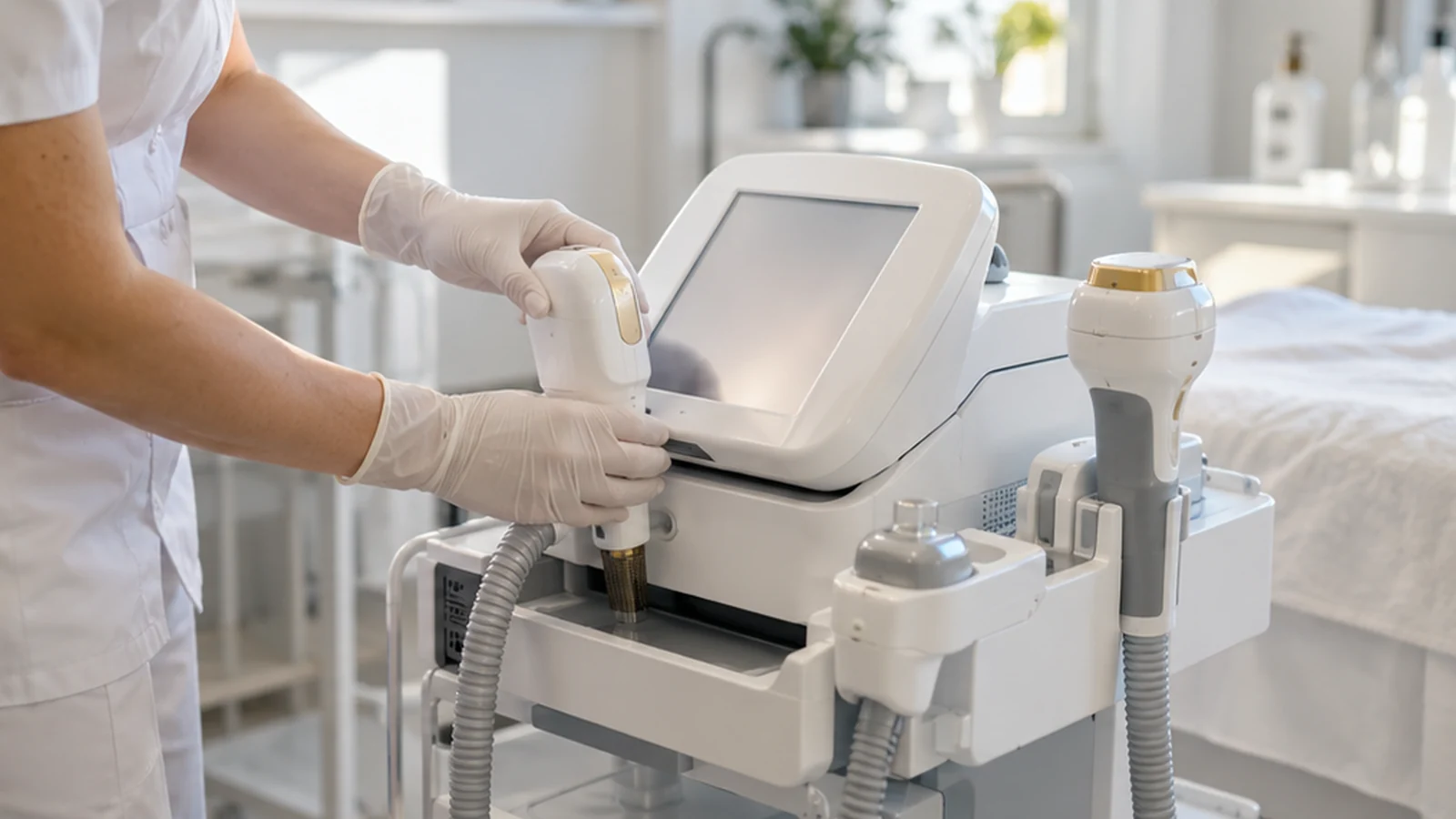
According to Sciton, HEROic includes Intelligent Control and Skin Positioning System features intended to help position and deliver pulses. That is the manufacturer’s device description; it would be an unsupported leap to say automation prevents all mistakes or burns. Before comparing it with another IPL brand, identify the competing model, supported protocols and the operator’s ability to adapt treatment to your skin.
| Factor | BBL / BBL HEROic | Other IPL systems |
|---|---|---|
| Physical principle | Broad-spectrum pulses; a branded platform | Broad-spectrum pulses; many makes and configurations |
| Choosing the exposure | Filter, protocol, model, skin and operator matter; HEROic adds its own automation | Filter, protocol, model, skin and operator matter; capabilities differ |
| Spots and blood vessels | Possible targets after diagnosis | Possible targets after diagnosis |
| Evidence of superiority | Studies of IPL in general do not establish that HEROic is always superior | Reviews of the treatment class do not select one best device for everyone |
| Pain and recovery | Depend on area, settings and response; no zero-risk guarantee | Same important variables; the label IPL does not mean longer recovery |
| Total cost | Depends on area, assessment, sessions and aftercare | Depends on the same factors; per-flash or per-visit fees are not the cost of an outcome |
How long results last, and whether changes are reversible. Neither BBL nor another IPL device offers the same duration of benefit for everyone. Spots and visible vessels may diminish, but sun exposure, hormonal factors or chronic rosacea can bring new changes. A light pulse cannot be “undone”: unwanted darkening, loss of pigment or a burn may need treatment, and some changes may persist for a long time. Ask how the clinician will assess the result and what the plan is if your skin reacts differently from expected.
Choose by your skin concern—or decide to postpone both
Individual superficial sun spots. Once the diagnosis is established, the clinician may discuss a light-based device. Effect depends on the pigment’s type and depth. Not every brown mark is sun damage. A new or changing mole needs dermatologist assessment and, if indicated, further testing before anyone attempts to lighten it.
Persistent redness and small vessels. IPL and BBL may reduce visible signs, but with rosacea, it matters whether inflammatory bumps, sensitivity or a need for medication are also present. A 2024 systematic review found encouraging IPL results in several studies but highlighted weak study methods. That supports an informed discussion, not a lifetime guarantee of no redness. A vascular laser may also be an option for particular vessels.
Melasma or a tendency to post-inflammatory dark marks. Here the “BBL or IPL” question may be the wrong one. Light-related heating may worsen pigment or be followed by relapse. Consider triggers, sun protection and topical or other medically guided treatments first. A more expensive device name does not cancel these risks.
Deep wrinkles, marked laxity or scarring. Even when skin colour improves, pulsed light does not replace treatments targeting other structures. If surgical-level lifting is promised, ask what actual change is expected and what independent data support it. A different treatment—or no intervention beyond considerate skincare—may be appropriate.
Tanning, phototype and medication: the safety questions both share
Melanin in the skin also absorbs light energy. More pigmented skin or a recent tan can therefore increase the risk of burns and colour changes when treatment is unsuitable. This is not a lifelong blanket ban on light therapy for people with darker skin. It does mean the plan must consider phototype, a history of post-inflammatory pigmentation and the operator’s relevant experience. Automation cannot replace that assessment.
Tell the clinician about medication that increases photosensitivity, recent cosmetic procedures, cold sores and other skin concerns. Elective aesthetic IPL is commonly postponed during pregnancy as a precaution; discuss individual restrictions with the treating professional. Do not discontinue prescribed medication to qualify for a procedure. Active infection or broken skin should be assessed and managed first, not exposed to flashes as “prevention.”
Eye protection matched to the specific device’s light spectrum is essential. Burns, blisters, worsening pain and persistent pigment changes are not required signs of success; contact the treating clinician promptly if they occur. Visual disturbance following a light procedure needs urgent medical evaluation.
What your face may look like afterward: work, meetings and travel
Temporary redness, heat, puffiness and tenderness can occur with either technology; treated pigmented areas may initially darken. Ordinary activities may resume quickly, but social downtime—when you feel comfortable seeing people without explaining your appearance—is not the same as medical recovery. Before a photo shoot or public event, avoid placing a first session immediately beforehand; discuss a suitable buffer.
BBL is sometimes said to feel more comfortable than “ordinary IPL” thanks to cooling and pulse control. Devices can indeed be built differently, but neither pain nor recovery can be predicted from the trade name alone. Sensation may be a short snap or wave of heat. Tell the operator straight away if pain feels unexpectedly sharp. Nobody can promise all patients zero discomfort or bruising.
After either light treatment, follow personalised advice on sun protection and skin recovery. Ask when makeup, gym workouts, swimming, sauna and active skincare can resume, based on how your skin responds. “Everything is fine after one day” is too crude to be universal. Recovery after a combined laser or peel treatment should not be presented as recovery from BBL or IPL alone.
What research shows—and what it did not compare
A 2021 systematic review of IPL photorejuvenation included varied devices, protocols and predominantly lighter skin phototypes, with heterogeneous methods and limitations in study quality. A 2024 review of IPL for rosacea also cannot identify the best brand for every person. These are relevant to the treatment category, not a direct test of HEROic against every competing IPL model. Within these reviewed sources, there is no basis for a universal superiority claim. Ask exactly what, in whom and under what settings was measured when a clinic claims one device is “several times better.”
Instead of asking for the “newest” device, ask what change is realistically expected for your diagnosed condition, how that will be measured and what happens if the treatment does not help. Good diagnostic practice and the option to decline an unnecessary protocol matter more than a glossy manufacturer chart.
How to compare two clinics or treatment offers
- Define one main goal: superficial spots, vessels or general redness—not vague “rejuvenation.”
- Ask for the precise device model and a protocol suited to your concern, not only the letters BBL or IPL.
- Find out who confirms the diagnosis and checks suspicious pigmented lesions.
- Request a risk plan for your phototype, tanning and medications.
- Discuss your likely appearance after treatment and what to do about an unusual reaction.
- Compare the entire budget: consultation, likely visits, care and follow-up—not one advertised price.
- Ask about alternatives, including skincare or no treatment, and do not decide under the pressure of a discount.
If you want the basics of the treatment family, see IPL / BBL phototherapy. If you have already narrowed the choice and want to understand personal accounts about one machine, see BBL HEROic reviews. The bottom line here is specific: compare actual devices and your skin—not two marketing labels. There is no universally safest or most effective winner.
Additional questions
Do I need to pay for a test pulse before a full course?
Whether a test area is appropriate depends on your phototype, past reactions, the area to be treated and the chosen device. Ask your clinician if a test spot makes sense for you, how it would be evaluated and why that plan is recommended.
Can “BBL plus IPL” be performed on the same day?
First clarify what is being proposed: BBL already belongs to the IPL family. Two names in a package do not necessarily mean two independent treatment types; ask for the exact devices, treated areas and combined light exposure.
Sources
- Sciton — BBL HEROic (manufacturer technology description)
- DermNet — IPL mechanism, uses and risks
- Systematic review of IPL photorejuvenation (2021)
- Systematic review of IPL for rosacea (2024)
- Review of light-based methods for rosacea in more pigmented skin (2024)
- DermNet — melasma and precautions with light-based treatment
- Clinical review of eye-injury prevention during light and laser procedures (2023)
- American Academy of Dermatology — checking a changing pigmented spot