
Lumecca (IPL/BBL): what it treats and what to expect
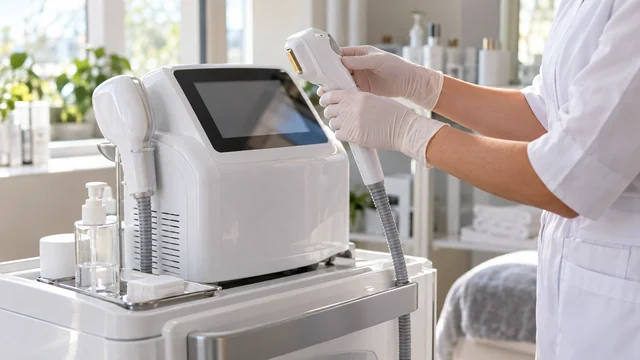
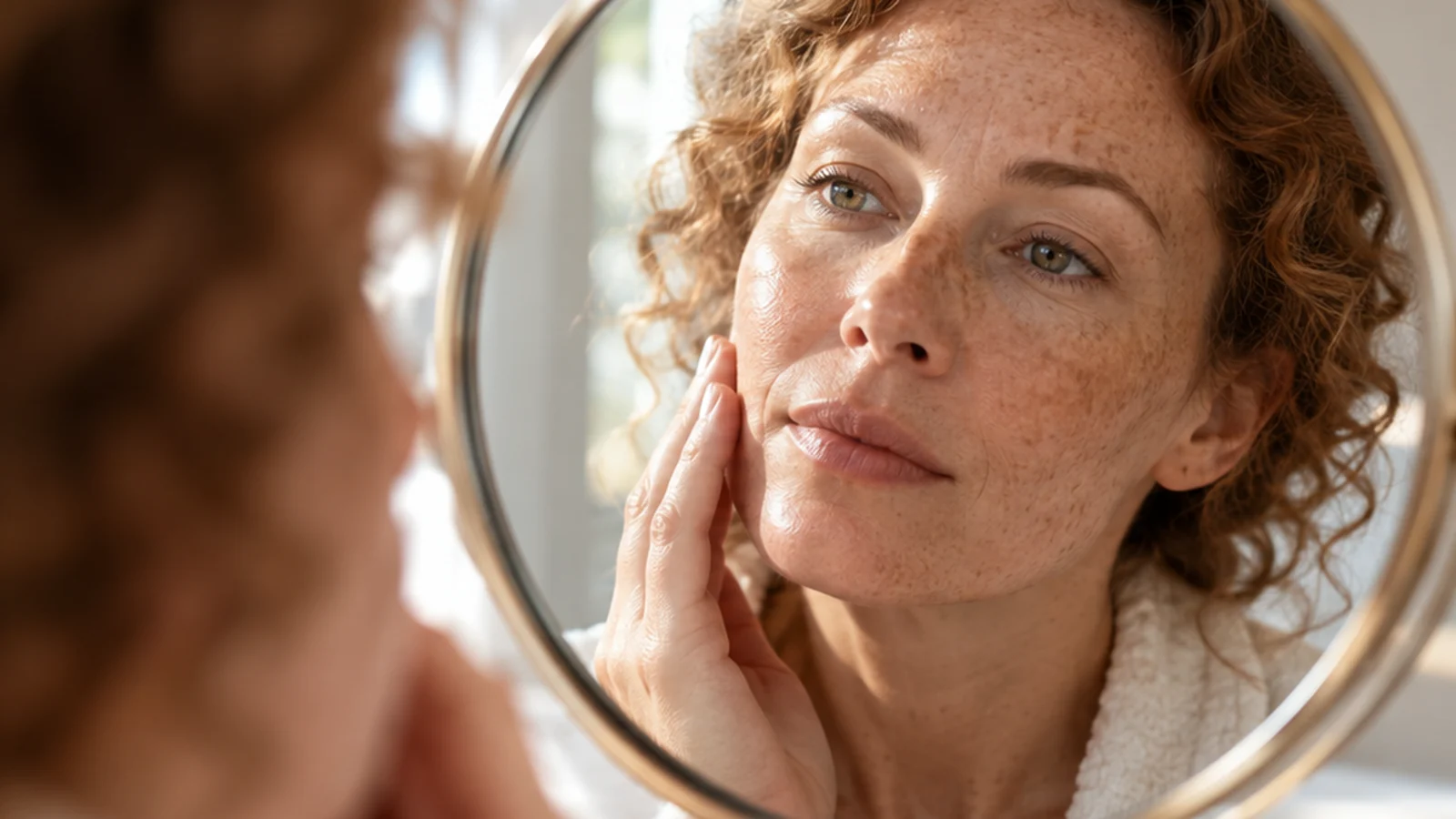
After summer, you may have noticed your freckles looking darker and fine red vessels appearing beside your nose. Search for Lumecca and you will see promises of a more even complexion after a few flashes. This is a real light-based technology, but the first question is what those marks actually are. Lumecca is an intense pulsed light (IPL) applicator made by InMode, used principally for certain superficial pigment changes and visible small vessels. It is not a universal treatment for every dark mark, a substitute for examining moles, or a way to lift sagging tissue.
If you want to reduce confirmed benign sun spots or small superficial vessels, IPL may be worth discussing. A changing lesion, melasma, a recent tan, or skin that darkens after irritation calls for a different level of caution. The decision depends less on an attractive device name than on the diagnosis, skin colour, chosen settings, practitioner expertise, and the amount of visible recovery you can accommodate.
What are Lumecca, IPL and BBL, exactly?
IPL means intense pulsed light: a lamp delivers short flashes across a range of wavelengths, and filters select a portion of that spectrum. Unlike a laser, it does not emit just one principal wavelength. Melanin in pigmented areas and haemoglobin in superficial blood vessels can absorb light and turn some of its energy into heat. This targeted heating is called photothermolysis. It helps explain both possible benefits and burns if the wrong tissue absorbs too much energy.
Lumecca and Lumecca Peak are not identical in every respect. InMode documentation distinguishes the original Lumecca applicator from the newer Peak version. Versions labelled 515 and 580 nm specify different lower cut-off points in the transmitted spectrum, not single laser wavelengths; they cannot be used interchangeably for every skin tone. Ask for the full platform and applicator names, model, and indications for that combination. Marketing that calls Peak “more powerful” does not establish that it is safer or better for you.
BBL, or BroadBand Light, is a name used for broadband pulsed-light technology by another manufacturer, Sciton. It belongs to the broader pulsed-light family but is not another name for Lumecca. Comparing “BBL versus IPL” on initials alone is unhelpful: the actual device, filter, cooling, settings and treatment target matter. “Phototherapy” here also does not mean a home LED mask or imply that all light treatments work alike.
Which skin changes might it help, and what should you not expect?
The manufacturer and US regulatory documents list benign superficial pigmented and vascular lesions among the indications for specific Lumecca Peak configurations, including freckles, dyschromia and certain rosacea-related redness. Melasma also appears in the regulatory indication list, but that does not make IPL a preferred choice for every person with melasma. Research on IPL as a class suggests possible improvement in some benign pigment and vascular changes; results from one device cannot automatically validate a newer Lumecca version. Both clinical results and advertising photographs depend on baseline skin and participant selection.
| Your concern | When IPL might be suitable | When another approach is needed |
|---|---|---|
| Separate brown spots following sun exposure | Light treatment may be considered after examination confirms benign superficial pigmentation. | A new, asymmetric, growing or bleeding lesion needs dermatological assessment before anyone attempts to lighten it. |
| Fine red vessels or widespread redness | Some superficial vascular changes may become less visible. | Rosacea may require diagnosis, skincare and treatment of inflammation; light cannot remove every cause of a flare. |
| Melasma: often symmetrical patches, sometimes associated with hormones | Light may occasionally be considered as an adjunct for carefully selected patients. | It can worsen pigment or lead to recurrence; light protection and dermatologist-prescribed treatment are often more important. |
| Deep wrinkles, lax skin or prominent scars | A more even colour may make the skin look smoother. | IPL cannot replace treatment aimed at surface texture, deep creases or the position of tissues. |
The mark must first be correctly identified. Freckles, solar lentigines, post-acne pigmentation and melasma can look alike but respond differently. Be cautious if no one asks when a mark appeared, how it changed or whether inflammation preceded it. A suspicious pigmented lesion requires a dermatologist's examination, with dermoscopy if appropriate, rather than cosmetic treatment with a light filter.
Who needs a more cautious approach or a postponement?
A fresh natural or artificial tan, upcoming strong sun exposure, and a tendency towards post-inflammatory hyperpigmentation affect risk. In deeper skin tones, melanin in surrounding skin absorbs some energy too, increasing the chance of unwanted dark or light patches, especially with unsuitable settings. A device advertised as suitable for dark skin is no personal guarantee: suitability must be assessed for the exact apparatus and its instructions.
Before deciding, mention light sensitivity, herpes or active eruptions in the area, skin conditions, previous burns and pigment reactions. List medicines and skincare products, including potential photosensitisers, as well as recent peels or other procedures. Never stop prescribed medication on your own for IPL; coordinate with your treating clinician. Elective light treatment is generally best deferred during pregnancy because reassuring safety data are insufficient and the intervention is not urgent, not because a particular fetal injury has been proven.
Active inflammation, a damaged skin barrier or a fresh injury also call for caution. If a skin disease is suspected or the reason for redness is unclear, get a diagnosis first. Treating the wrong problem can prolong irritation or cause lasting marks. An entirely appropriate outcome of a consultation is: “Not now.”
What happens during a session, and what does it feel like?
The clinician should first review the diagnosis and past light reactions, inspect the area and choose parameters according to the particular applicator instructions. Skin is cleansed; a contact gel and cooling may be used. Appropriate eye protection for both patient and operator is essential. Decline treatment if you are asked to look at the flashes without protection or if someone proposes treating an unidentified dark lesion.
Each flash can feel hot and like a quick rubber-band snap; that comparison does not promise you will find it comfortable. Sensitive areas, pigment density, settings and cooling change the sensation. Report severe or increasing pain immediately instead of enduring it to “make treatment work”. A small area may take relatively little time; a full session depends on the area and protocol. Do not accept a fixed number of passes just because “everyone gets them”.
A predetermined number of sessions must not be sold as a guaranteed package. Some superficial marks change after one treatment, while others need a series or a different method altogether. Standardised baseline photos are more useful than checking the mirror immediately afterwards. A lack of instant results does not prove failure, but a promise of perfect skin after one flash is equally unfounded.
What will you see in the mirror afterwards?
Medical recovery and feeling comfortable being seen at work are different things. Immediately after IPL, warmth, mild redness and swelling are possible. Treated brown patches may initially darken and then gradually flake away. The result can temporarily look like more obvious freckles or tiny dark dots after the initial redness has gone. Vascular treatments can have different visible reactions and rates of settling.
| Stage | Possible appearance | Practical planning |
|---|---|---|
| Treatment day | Heat, pinkness or local swelling, varying between individuals. | Avoid a photo shoot straight afterwards; ask about cooling and permitted skincare. |
| Following days | Patches may darken temporarily; flaking or sensitivity is possible. | Do not pick crusts or attempt to speed fading with scrubs or acids. |
| Once reactions subside | Some people see a more even complexion; residual marks may persist. | Compare photographs in the same light and consider further sessions only after assessing the skin. |
Some people can return to ordinary work the same day, but “zero downtime” is not a safe promise, especially when many pigmented marks are treated. Allow an unpredictable buffer before a wedding, important meeting, beach holiday or trip. Makeup is not always suitable immediately: ask whether the skin surface is intact and when familiar products are safe. Saunas, intense exercise, aggressive skincare and prolonged sun exposure are generally postponed until recovery, following individual instructions.
Which reactions are expected, and which need medical help?
Temporary redness, sensitivity, mild swelling and pigment darkening are common possibilities. Burns, blisters, crusts, altered pigmentation, persistent inflammation and scarring can also occur. The US FDA adverse-event reporting system includes serious burn reports associated with Lumecca. A single report cannot establish complication frequency, but it does disprove any claim of absolute harmlessness.
Seek prompt medical evaluation for marked pain, blisters, spreading redness, discharge or fever. Unexpected changes in vision require emergency care. Any suspicious rapidly changing pigmented lesion needs dermatology assessment regardless of your IPL plans. Do not burst blisters or apply strong acids or bleaching agents to injured skin on your own.
Afterwards, use gentle cleansing and the agreed care plan, avoid rubbing, and protect skin from ultraviolet light with clothing, shade and suitable broad-spectrum sunscreen. The precise routine depends on the reaction; if skin is broken, ask the clinician when cosmetics or sunscreen may be applied. Sun protection still matters once redness settles, because new marks may develop.
How good is the evidence for Lumecca itself?
There are three different layers of evidence. First, manufacturer claims: InMode describes the Lumecca and Peak applicators and their intended pigment and superficial vascular uses. Second, US regulatory records: the FDA cleared InMode Multi-system with original Lumecca 515/580 applicators under 510(k) K221571; a separate clearance, K251632 dated 26 June 2025, covers OptimasMAX with Lumecca Peak 515/580. The platform-and-applicator pairing matters. A 510(k) substantial-equivalence decision applies to particular indicated uses; it is neither proof of superiority nor an Armenian authorisation. Third, clinical literature: studies of IPL for benign pigment and vascular changes are encouraging but use different systems, methods and follow-up periods.
A study of another IPL platform does not establish identical results for the latest Lumecca version. Nor does a branded transformation video replace a controlled comparison. In Armenia, the exact applicator's presence, registration and permissible uses require documentary verification with the prospective healthcare provider; an international product website is not enough.
What should you compare before agreeing?
For isolated benign sun spots, ask a dermatologist how IPL compares with topical treatments or a targeted pigment laser for the depth of your pigment. A vascular laser may be preferable for some prominent vessels. With rosacea, managing chronic inflammation and triggers is important. For melasma, light protection and prescribed treatments often come first because aggressive light can make pigmentation worse. Scar texture or facial lifting is a different goal, not a reason to turn up IPL energy.
Before paying, ask for your actual diagnosis; the full platform and applicator model; why these settings suit your skin tone; the eye-protection plan; how to respond to blisters or unusual pain; whether a test area is appropriate if you have higher risk; how results will be assessed; and the plan if improvement is modest. You may request real photographs with comparable lighting and follow-up timing, but they are not personal guarantees. Price depends on area, number of visits, diagnostic work and aftercare; a local figure cannot responsibly be invented without an actual quotation.
A subtle, natural outcome generally means a few marks or vessels are less visible while your facial features and expression remain the same. IPL will not recreate an app's smoothing filter, nor should it have to. Choosing daily sun protection, adjusting skincare and monitoring with a dermatologist instead is also reasonable.
Two further questions
Could IPL affect eyebrow or eyelash hairs?
Hair pigment can absorb the light, and IPL can occasionally cause unwanted hair reduction in an exposed area. Agree on treatment boundaries, eye protection and excluding the eyebrows before the first flash.
Can Lumecca be used over tattoos or permanent makeup?
Tattoo pigment can also absorb light; flashing over it may cause heating, burns or colour changes. Tell the clinician about all tattoos and cosmetic pigmentation and have those areas excluded from treatment.
Sources and fact-checking
- InMode: product use and brand claims
- InMode SEC filing: Lumecca vs Peak, filters
- FDA 510(k): InMode Multi-system K221571
- FDA 510(k): OptimasMAX / Lumecca Peak K251632 (2025)
- DermNet: IPL indications, patient course and risks
- Journal of Cosmetic Dermatology 2024: IPL outcomes
- AAD: changes in pigmented lesions
- Randomized IPL side-effect study
- FDA MAUDE report: serious burn associated with Lumecca
- Sciton product family: BBL model distinction