
BBL HEROic Before and After: What Should Change in the Photos
BBL HEROic before-and-after pictures often show more even-looking skin, with certain sun spots, freckles or areas of redness less apparent. These are plausible targets for broadband-light treatment, but not a guarantee of a flawless complexion, removal of every spot or a tighter jawline. A picture does not tell you how long an improvement lasts or what was involved: there may have been several sessions, a skin reaction or additional treatment.
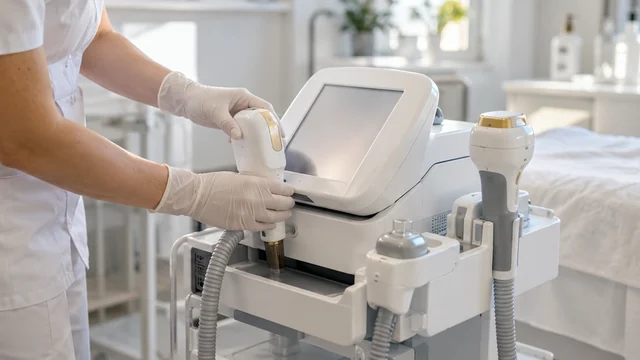
BBL HEROic is Sciton's branded broadband pulsed-light system, belonging to the IPL family. Strictly speaking, it is not a single-wavelength laser: filtered pulses contain multiple wavelengths. Light can be absorbed by skin pigment and by haemoglobin in small blood vessels, so different marks and kinds of redness may respond differently. What matters is a correct diagnosis of the colour change, appropriate treatment parameters and a realistic goal—not just the name on the device.
What may change in the photographs—and what may remain
Research on IPL as a category supports possible improvement in some benign pigmented changes and vascular redness, although reviews note variable study quality. Studies of older IPL devices cannot by themselves establish superiority of HEROic; the sources examined by October 2026 did not identify robust head-to-head evidence of its universal advantage. In a randomised IPL study, changes in pigmentation and small blood vessels were clearer than improvements in wrinkles. Light treatment should not be expected to reproduce a facelift or ablative laser resurfacing.
| Starting concern | What to assess in the “after” image | Important limitation |
|---|---|---|
| Flat sun spots or freckles | The contrast between particular pigmented areas and surrounding skin | Not every brown mark can safely be treated without diagnosis; pigmentation may recur |
| Visible small vessels and general redness | The amount of visible vascular patterning and background redness | Rosacea can flare again; light does not remove the underlying tendency |
| Melasma, involving pigmentation influenced partly by sunlight and hormones | Carefully assessed changes in tone after the diagnosis has been established | Light can sometimes make pigmentation worse; a freckles protocol cannot simply be copied |
| Deep wrinkles, scars or pronounced laxity | The overall visual background of the skin might change, but not deep skin topography | A photograph does not show that BBL HEROic replaces injectables, resurfacing or surgery |
If large pores, depressed acne scars or excess skin are your main concern, ask for alternatives designed for that specific goal. Less uneven colour can make a face appear fresher even when wrinkles barely change. This is a perceptual effect of colour, not evidence that facial volume increased or substantial lifting occurred.
Five details that make before-and-after photographs useful
- Consistent light. Side lighting in one shot and soft frontal lighting in the other can make redness and texture look different.
- Matching angle and white balance. Warmer or cooler camera settings change how broken vessels and brown patches look even with no actual skin change.
- A clear time interval. An immediate photo may capture redness and temporary darkening of pigment. Assess results at a planned follow-up once the early reaction has settled.
- All interventions disclosed. Was this one session or several? Were other BBL modes, MOXI or HALO lasers, topical treatments, peels or skin-care procedures used?
- Comparable skin. Phototype, tanning, diagnosis, pigment depth and sun protection influence the outcome. One successful case on fair skin predicts nothing certain for another phototype.
Sciton's official gallery contains selected cases on the face, chest and hands and shows different session counts. These are manufacturer-selected examples, not independent success statistics. Remember that not every online “BBL” photograph involves HEROic: earlier BBL generations, BBL HERO and combination treatments appear alongside it. Confirm the exact device and protocol before comparing.
Why might spots look darker in the first days?
With appropriately selected pigmented lesions, temporary darkening may come before gradual lightening. Warmth, redness and mild swelling can occur at the same time. Sciton describes these after BBL HEROic, and DermNet describes similar IPL-category responses. Peeling is not inevitable, and having no visible crust does not itself mean the treatment failed.
“Immediate return to normal activities” generally means a person with an uncomplicated treatment may not need medical leave. It does not promise camera-ready skin: dark specks, pink cheeks or blotchy areas can be more visible for close-up photos. For the detailed sequence, aftercare and event planning, see our BBL HEROic downtime guide. Here the key point is not to judge the final “after” image during early healing.
Do not schedule treatment directly before an important occasion if you need your skin to look even and unaffected. The needed buffer depends on your reaction and treated area, not a “zero downtime” slogan. Compare photographs later under consistent conditions with your clinician; renewed sun exposure can make pigmentation more noticeable again.
Who should be wary of photographic promises?
A diagnosis comes first. A new, growing, bleeding or colour-changing pigmented lesion should be assessed by a dermatologist before cosmetic light treatment. Fading a mark may conceal signs of skin cancer. The American Academy of Dermatology highlights asymmetry, irregular borders, several colours, evolving size and new symptoms. Even a picture resembling an ordinary freckle is not a diagnosis.
Phototype and tanning are another important part of the decision. Darker skin, previous post-inflammatory dark marks, recent tanning and melasma require extra caution; a different approach or avoiding IPL may be safer. Inappropriate light energy may cause burns, long-lasting darker or lighter patches, and rarely scarring. Research is heterogeneous, so promotional claims that the method “suits everyone” cannot define your individual risk.
Tell the clinician about photosensitising medicines, recent tanning, skin infections, herpes outbreaks and previous IPL reactions. It is reasonable to postpone elective cosmetic treatment during pregnancy or breastfeeding and discuss it with your clinician; this conservative approach should be agreed with your clinician using the instructions for the precise device. Never stop prescribed drugs yourself. Proper protective eyewear and a practitioner trained on the exact system are essential.
How to discuss results without pressure or inflated expectations
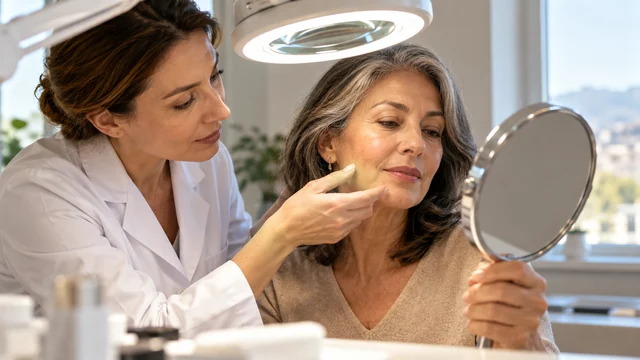
Ask the clinician to diagnose each type of mark and agree on the priority: reducing redness, individual brown spots or both. Then decide what observable sign would count as success—for example, comparing a defined area in matching frontal and side photos rather than saying “I look younger.” Discuss the level of risk you are willing to accept: could you tolerate several days of visible reaction or more sessions for a moderate improvement?
Confirm whether the plan uses only BBL HEROic or a combination with laser, topical medication or other procedures requiring different aftercare. A gallery result from two technologies cannot be promised from one. Ask who will help if pigmentation unexpectedly worsens, how quickly you can contact them and how starting lesions will be documented.
You may prefer a different route: regular sun protection and appropriate skin care for mild pigmentation; treating the underlying condition in rosacea or melasma; a different intervention for wrinkles or scars. Doing nothing for now is also reasonable. BBL HEROic is not an automatic answer to every skin change. See the general BBL HEROic technology overview or our BBL versus IPL comparison for those separate questions.
A good “after” photograph is not the smoothest one but the most candid: matching photographic conditions, stated diagnosis, area, time and all procedures. If these are clear and the improvement seems modest but useful for you, the conversation becomes meaningful. Otherwise an attractive image remains just an image.
Further questions
Can I evaluate results from pictures taken only with foundation?
No. Makeup conceals vascular redness, contrasts between pigment and surrounding skin, and fine texture. Comparisons require bare skin photographed in matching light.
Should I try to copy a blogger's result when their phototype differs from mine?
No. Pigment distribution, sensitivity to adverse effects and safe settings differ. Cases with a similar diagnosis and phototype, and full treatment details, are more informative.
Sources
- Sciton: BBL HEROic gallery and session counts.
- Sciton: BBL HEROic treatment and post-treatment reactions.
- DermNet: principles, effects and risks of IPL.
- Systematic review of IPL photorejuvenation (2021).
- Randomised IPL trial with blinded outcome assessment.
- American Academy of Dermatology: features of suspicious pigmented lesions.