
BBL HEROic Reviews in Russian: Which Ones Are Worth Reading
You are looking for “BBL HEROic отзывы” before booking and want to know whether your skin could become more even without an awkward surprise at work—or money spent for no benefit. Reviews alone cannot label HEROic invariably excellent or inevitably dangerous. They can tell you which questions to ask about outcomes, discomfort, recovery and the overall cost of a plan. They cannot decide who is suitable or measure the frequency of complications.
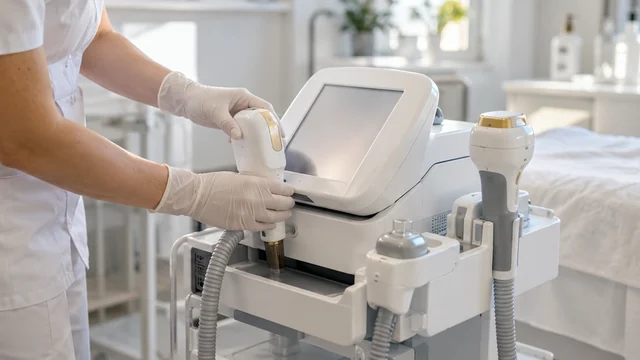
First check the name. Sciton describes BBL HEROic as a broad-spectrum pulsed-light system with automated pulse control and positioning. Broadly, it belongs to the IPL light-treatment family; it is not ablative laser resurfacing. Advertising terms like “smart,” “most powerful” and “no downtime” do not remove the need for skin assessment and a conversation about risk.
Which Russian-language reviews are worth reading?
Searches often bring up a foreign website, machine translation or an older BBL HERO listing instead of HEROic. Sometimes “BBL” is used loosely for any phototherapy. Elsewhere, “after BBL” describes a combination with MOXI, another laser procedure, skincare or cosmetic injections. Even a sincere reviewer may not know the equipment model. If that distinction matters to your decision, ask for documentation rather than drawing conclusions from a hashtag.
| Review statement | What it tells you | What it cannot tell you |
|---|---|---|
| “My freckles disappeared” | The writer noticed a pigment change | Whether lightening is suitable for you or whether the condition was melasma |
| “I went to dinner that evening” | The person continued normal activities | Whether the redness was visible or could be concealed |
| “My face swelled up” | The reaction was significant to that person | Whether it was expected or a complication without medical assessment |
| “One session was enough” | One individual was satisfied | How many visits you need or whether the effect will last |
| “I gave the clinic five stars” | Their service experience was positive | Whether their skin objectively improved |
| “I had BBL HERO plus something else” | Several procedures were combined | Which part of the outcome, if any, came from HEROic |
Do not combine scores from different sites into your own “average efficacy” figure. Some platforms collect reviews after confirmed appointments, others allow anyone to post; either can mix device generations. People with strong reactions are more likely to post than everyone treated. No negative reviews does not prove there are no problems, and one alarming report does not show an event is typical.
What people judge phototherapy by—and is it your goal?
One person wants less cheek redness; another wants isolated sun spots to fade. Both might consider light treatment, but success would mean different things. Blood vessels and surface pigment absorb light differently; clinicians choose settings according to the diagnosis, phototype and skin history. Studies of IPL as a treatment class support cautious discussion of improvements in redness and some pigmentation changes. Much of that literature is not specific to HEROic, and high-quality head-to-head device comparisons for an individual patient are limited.
A 2024 review of IPL research in rosacea often found reduced erythema—persistent redness—and small visible vessels. The authors also judged the included studies to be methodologically weak. “It works for everyone with broken capillaries” would therefore be misleading. Even if visible redness improves, the underlying tendency to rosacea may persist and require separate medication and skin care.
Sun spots must also be distinguished from melasma: with melasma, pigment can darken after energy-based treatment and return later. If you do not know which pigmentation you have, a glowing review about lighter cheeks is a poor guide. Nor should a light procedure replace dermatologist assessment of a new or changing mole.
“No recovery time”: what that means in ordinary life
When a review says “I went straight back to work,” imagine your real day: a close-up video call, a meeting without makeup, an identification photo, sunshine on the journey home. Temporary redness, warmth, tenderness and puffiness can follow pulsed light; pigment spots sometimes initially look darker. That may be acceptable for a walk or remote work, but not for a ceremony. Responses vary, and no review can promise a precise date when your face will look its best.
Agree on a time buffer beforehand, particularly for a first session. Ask when your normal skincare and makeup are allowed, and about strenuous exercise, sauna and sun exposure. Follow individual UV protection and aftercare advice rather than a blogger’s instructions for another treatment protocol. Being physically able to leave home and feeling comfortable in close-up photographs are different things.
Pain, swelling and burns: reviews cannot diagnose a reaction
People may describe the flashes as a rubber-band snap and a brief burst of heat, but pain is individual. The important distinction is not someone’s emotional pain score but the nature of the response. Increasing severe pain, blisters, an obvious burn, unusual or worsening swelling, or signs of infection call for prompt contact with the treating team and an in-person assessment. Vision changes after light exposure require urgent medical care. Eye protection matched to the specific device’s light spectrum is essential during treatment.
Known IPL risks include burns and darkening or lightening of skin, with scarring possible less often. Automated device features do not eliminate these risks: settings, treatment area, phototype, tanning, medicines, skin health and the practitioner’s skill still matter. Be cautious if you are promised zero risk because “the machine calculates everything itself.”
When a lovely review simply does not apply to you
If you recently tanned, often get dark marks after acne, have naturally more pigmented skin or are prone to melasma, device selection and settings need extra care. Elective aesthetic light treatment is commonly postponed during pregnancy as a precaution. Discuss light-sensitising medicines and any recent medication courses in advance; never stop prescribed treatment on your own. Tell your clinician about active inflammation or infection, health conditions and previous reactions to devices.
A pigmented mark that is growing, changing shape, itchy or bleeding needs a dermatologist’s assessment first. A promise to erase it instantly is not a diagnosis. Sun protection and skincare, medication for rosacea or another technology may fit your situation better. Choosing not to have treatment now can be an entirely reasonable outcome.
How to read local reviews without confusing service with medical results
In Yerevan, as elsewhere, separate three checks: whether the specific clinic actually has a HEROic model; who assesses suitability and delivers treatment, and with what training; and how consultation and follow-up for reactions work. An advertising post or a lovely comment about staff does not establish equipment, credentials or availability on a particular date. Verify details directly before deciding, rather than relying on old posts.
If given a price, ask whether it covers one area and one session, whether consultation and follow-up are included, and whether several different procedures will be proposed. Compare complete plans rather than the prettiest figure in the comments. There is no evidence-based universal package for every face: the concern, area and safety matter more than a fixed number of sessions.
Eight questions to ask before agreeing, rather than relying on star ratings
- What diagnosis or type of pigmentation do you see, and how is it established?
- Why HEROic rather than another method, or starting with skincare?
- Is this truly HEROic rather than HERO or another IPL system?
- How will you account for my phototype, tanning, medication and previous procedures?
- Who treats me, and whom do I contact about a reaction tonight or tomorrow?
- What might be visible during the first days, and when is a check needed?
- What results are unlikely—for example deep wrinkle correction or lifting sagging tissues?
- What is the entire cost, and may I decide another day?
For checking results photos separately, see BBL HEROic before and after; for detailed timelines for everyday activities, see BBL HEROic downtime. The purpose here is to navigate Russian-language reviews: separate service quality from a clinical outcome, and a personal story from evidence of safety. Your clinician should explain the recommendation, and you have the right to take time to decide.
Additional questions
Should I show the clinician a negative review that frightened me?
Yes. Point to the specific event and ask how the team prevents, recognises and treats it. A clinician should respond substantively, without dismissing another person’s experience or treating an online comment as a diagnosis.
Should I get the device model in writing?
Ask for a document recording the procedure actually performed, date, treated area, aftercare advice and contact details for reporting a reaction. This is more useful than a social-media label and helps later clinicians understand your treatment history.