
BBL HEROic: Sciton's pulsed-light system and what to expect
You may have seen BBL HEROic recommended for pigmentation or redness and wondered whether this particular technology is worth choosing. In brief, BBL HEROic is Sciton's branded broadband pulsed-light system—not a separate type of laser and not a guarantee of better results. Light treatments in this general class may help certain superficial pigment and vascular changes. The outcome depends on the diagnosis, skin phototype, settings and operator. The manufacturer's claims about more controlled pulse placement do not, by themselves, establish superior clinical outcomes over other devices.
If you want to reduce a few sunspots or visible small vessels, identifying the skin change comes before choosing a machine. Melasma, recent tanning, an unusual pigmented lesion or active inflammation may call for a completely different plan. An expensive model name does not replace a dermatological examination or eliminate the risk of burns and changes in skin colour.
What does HEROic mean, and how is it different from ordinary IPL?
IPL means intense pulsed light, a broad-spectrum light technology. Unlike the more narrowly defined spectrum of a laser, IPL sends filtered pulses of light. Certain targets, particularly melanin pigment and blood haemoglobin, absorb light and warm up, allowing treatment of some pigmented marks and small vessels. Sciton calls its proprietary pulsed-light family BBL, for BroadBand Light. BBL HERO, BBL HEROic, the platform name and the treatment protocol are not interchangeable terms.
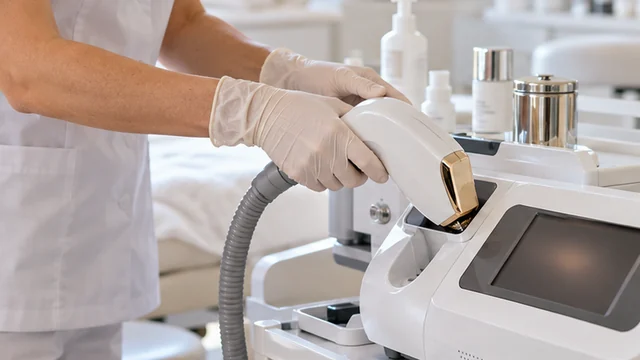
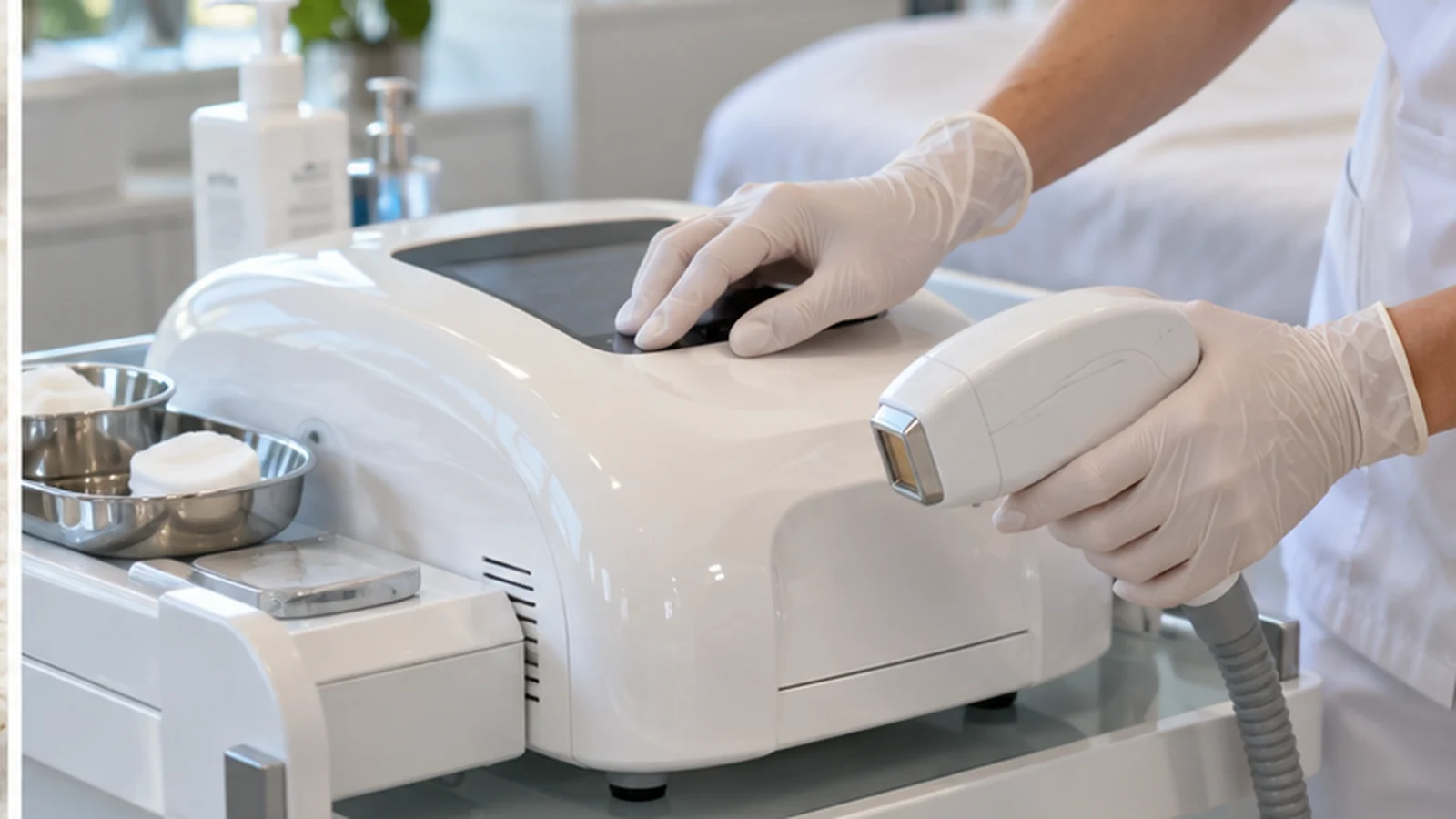
According to Sciton, BBL HEROic uses the Skin Positioning System (SPS) to track handpiece position and movement, Intelligent Control (IC), and Autodynamic Pulsing to automate how pulses are distributed as the handpiece moves across the skin. These are manufacturer-described design features, not independent evidence that the device is equally safe for all skin types or always delivers stronger results. Automation does not remove the practitioner's responsibility for diagnosing the target, choosing filters and settings, and monitoring skin response.
Ask what the clinic actually uses: HEROic installed on a compatible platform, an earlier BBL generation, or a different IPL machine. Request the exact model, configuration, servicing information, available handpieces and the qualifications of the person responsible. An offer labelled simply “BBL phototherapy” cannot be assumed to include SPS or Autodynamic Pulsing. Equally, HEROic in a clinic does not mean every accessory and protocol in that clinic belongs to this exact device.
Which skin concerns are reasonable targets for light treatment?
| What you want to change | Potential role of BBL HEROic | The important limitation |
|---|---|---|
| Freckles and isolated sunspots | Light may act on some benign pigmented lesions. | A new, changing or unusual lesion must be diagnosed first; not every type of pigmentation is suitable. |
| Small vessels and persistent redness | IPL/BBL is used for certain vascular features, including some associated with rosacea. | It does not address every mechanism of rosacea or replace medication and gentle care. |
| Uneven appearance after sun exposure | Some visible changes may improve gradually. | It does not restore the skin to the state it was in before sun exposure. |
| Acne, hair, loss of firmness | The manufacturer describes several separate protocols and indications. | Evidence, settings and permitted use depend on the actual filter, application and market; no universal result should be promised. |
| Melasma, deep folds, scars | HEROic should not be the automatic first choice. | Heat may worsen certain pigment disorders; structural defects may need a different approach. |
With rosacea, light treatments may reduce visible vessels, but underlying disease often still needs careful skin care and anti-inflammatory treatment. Redness with burning, bumps or eye symptoms requires an actual diagnosis, not a promise of “even tone”. To a layperson a sunspot and an early melanoma may sometimes look alike; suspicious lesions must be checked before applying light. A medical consultation may therefore matter more than a newer device.
How strong is the evidence behind superiority claims?
Clinical studies support IPL as a treatment class for certain vascular and pigmentation concerns. Professional guidance includes light therapy among options for rosacea, particularly visible vessels, while the effect on diffuse redness varies. Findings from other IPL machines or earlier generations of BBL cannot be presented as direct proof that HEROic is superior. In the manufacturer and professional materials assessed through October 2026, sufficiently direct head-to-head outcome evidence to promise HEROic superiority was not established; this describes the reviewed evidence, not proof that no studies exist. Sciton's speed, uniformity and comfort descriptions remain primarily manufacturer claims.
Regulatory permission and the strength of clinical evidence are separate questions. In the United States, the device's status and allowed indications must be checked against its exact technical identity and regulatory record—not merely the acronym BBL in advertising. The public material reviewed for this page does not establish an exhaustive, HEROic-specific list of FDA clearances, and no US status can be carried over automatically to Armenia. Ask for documentation identifying the unit and its lawful placing on the market in your country; do not assume local availability or approval without verification.
Translate “no downtime”, “suitable for everyone” and “results after one treatment” into practical questions: exactly what was treated, what was the diagnosis, how many visits were involved, and how did skin look without makeup a few days later? Before-and-after photos help only when light, angle, distance and time interval match. Different filters or foundation prevent a fair estimate of the device's effect. Reviews describe someone else's experience, not your individual tolerance.
Does your skin tone—and the season—matter?
Melanin amount and distribution strongly affect safety. In recently tanned or darker skin, surrounding skin may absorb light as well as the intended target, increasing the importance of settings and the risk of burns, dark marks or light spots. A holiday tan is a good reason to postpone assessment rather than ask for “lower power anyway”. Phototype alone is not enough: your past responses to sunlight and procedures also matter.
Tell the clinician about medicines that increase photosensitivity, retinoids and acids, ongoing or recently completed treatments, herpes, photosensitive epilepsy, post-inflammatory marks and active skin conditions. Do not discontinue prescribed medication yourself. Elective cosmetic IPL is generally postponed in pregnancy and breastfeeding because directly applicable data are limited and decisions should be individual. Active infection, open wounds and suspicious lesions in the treatment area need a different first step.
If melasma is your main concern, ask why heating the skin is proposed and how recurrence risk was assessed. If hair is the target, ask which configuration and indication is actually under consideration. A device's ability to perform multiple kinds of treatments does not mean every feature is available or appropriate for you.
What will the session feel like?
Following an examination, the skin is normally cleansed and the eyes protected with safeguards suited to light equipment; the practitioner chooses parameters and technique. Depending on the protocol, contact gel and built-in cooling may be used. Pulses can feel like brief heat or the snap of a rubber band. Some people find the treatment easy, while bony areas or places with visible vessels may sting more. Complete painlessness cannot be promised.
Visit length depends on treatment area, goal and the number of zones. A short visit does not establish consistent dose or good quality. Sudden severe pain, excessive heat or any visual disturbance means treatment should stop immediately. Eye protection is essential: IPL can injure ocular tissues. Ask which protective measures are used, especially near the eye, and do not accept periocular flashes without a clear safety explanation.
How long might your face look different afterwards?
Sciton markets HEROic as involving minimal downtime, but that is not your personal recovery forecast. Redness, warmth, puffiness, temporary darkening of treated pigment and sometimes crusts may follow light treatment. Reactions to vascular treatments can differ from those to sunspot treatments, and more intensive protocols may be more visible to other people.
| Stage | What may happen | How to plan |
|---|---|---|
| Treatment day | Warmth, redness and slight swelling; sometimes little visible change. | Leave room for a quiet evening and clarify whether makeup is allowed. |
| The following days | Treated pigmented spots may darken temporarily; roughness or small crusts are possible. | This may be more awkward for close-up photography than an ordinary working day. |
| After the reaction settles | It becomes easier to judge changes in a particular spot or vessel. | Do not scrub to speed recovery or judge the result from next-day photos. |
| Subsequent weeks | Final assessment depends on the goal and course; some problems persist or return. | Arrange consistent follow-up photos and maintenance discussion, not an automatic course promise. |
“I can go to work” is not the same as “nobody will notice treatment”. If discretion matters, ask what reaction is likely with your specific vascular or pigment protocol and allow a buffer before public events. There is no universal number of days for every patient and version of this equipment. Avoid heavy sun exposure initially and follow agreed guidance on skin care, cleansing, makeup, exercise and heat.
An expected reaction—or a complication?
Brief warmth, moderate redness and temporary sensitivity may be expected. Blisters, worsening pain, marked swelling, weeping or widespread injury are not normal evidence that “the machine is working”. Burns, post-inflammatory hyperpigmentation, lighter patches, infection and scarring can occur. A dark mark after a burn may be more troublesome than the original sunspot, which is why skin assessment and a cautious dose matter.
Contact the treating clinician that day if blisters, severe pain or rapidly deteriorating skin appear. Eye injury, visual symptoms or a severe allergic reaction require emergency care. Do not hide a suspected burn with harsh products or remove crusts. Keep a record of the area, date, medications and, when available, device and settings.
HEROic versus another IPL or laser: what are you really choosing?
IPL platforms vary in filters, cooling, pulse delivery, spot size and usability. HEROic emphasises positioning and automated pulse distribution. These features may help practically on large or curved areas, but cannot replace comparable clinical trials. Choosing a machine because it is “several times more powerful” misses the point: appropriate and safe delivery matters more than maximum output.
A selective vascular laser may be preferable for certain vessels; pigment-specific lasers serve different goals; creams or medication can be more appropriate for active rosacea and melasma. Sometimes no device is needed. A broader comparison belongs on the IPL and BBL phototherapy page; here the key decision is whether this exact HEROic configuration offers a demonstrated advantage for your diagnosed condition, and on what evidence.
How many sessions, and what counts as a result?
Studies and applications use different session numbers and intervals; there is no universal prescription “for HEROic”. A single vessel and widespread redness can call for different plans. Sunspots may diminish, but further sunlight can create new ones; rosacea remains a chronic condition. Ask what will be measured: visible vessel count, pigment area, standardised photos or perceived uniformity. Explicit measures help avoid unlimited repeat treatments with no clear goal.
You need not decide on a machine immediately after consultation. Starting with sun protection, treating inflammation, waiting until a tan fades, or seeking another opinion on a disputed lesion can be wiser. The total cost depends on area, number of visits and additional procedures; prices without details of zones and services are hard to compare. If a proposal rests mainly on branding, ask why another IPL or a no-light approach would be worse in your situation.
Questions to ask before you consent
- What are the exact model, platform and handpiece, and which HEROic functions are active?
- What is the diagnosis of each target: vessel, sunspot, rosacea or something else?
- What documents confirm the device's indication, regulatory status and lawful local use?
- How do my phototype, recent sun exposure and medicines affect the chosen protocol?
- How many visits may be required, and what change would count as enough?
- What will other people notice, and how can I contact someone if a burn or complication occurs?
- Which alternatives match my condition, and how do their pigmentation risks compare?
Good answers may lead you to an entirely different treatment. HEROic is a model name; safe personal care begins with diagnosis, appropriate selection and a realistic goal.
Frequently asked questions
Is this BBL the same as a Brazilian butt lift?
No. Here BBL is Sciton's name for broadband light. The same acronym also refers to a completely different surgical operation; they should not be confused.
Can it treat a tattoo or permanent makeup?
Do not assume IPL safely removes tattoos. Pigments may heat unpredictably or change colour. Identify those areas before treatment and discuss appropriate specialised methods separately.
Does one test pulse guarantee that a full session is safe?
No. It can help assess a local response to the selected protocol but cannot rule out reactions elsewhere, with other settings or after later sun exposure.
Sources
- Sciton: BBL HEROic, технические функции (информация производителя)
- Sciton: BBL HEROic, заявляемые применения и опыт пациента
- NCBI Bookshelf: Intense Pulsed Light (IPL) Therapy, обзор и меры безопасности
- American Academy of Dermatology: Lasers and lights for rosacea
- American Academy of Dermatology: Rosacea treatment
- Silpa-Archa et al.: Post-inflammatory hyperpigmentation, review