
DEKA Again: vascular lasers for fine red veins on the face
You notice fine red lines beside your nose or on your cheeks in a daylight photograph, and search for “DEKA Again” because you have heard about vascular lasers. The starting point is not booking a particular machine but asking two questions: what is causing the redness, and which approach is appropriate for your blood vessels and skin? DEKA Again is a multifunction laser platform, not a single treatment that removes every capillary. Lasers can help with some visible superficial vessels, but widespread redness, episodic flushing and vascular lesions call for different decisions.
This page explains the DEKA Again technology, its versions and the limits of the evidence. The broader comparison of light-based skin treatments belongs to IPL and BBL; here the essential distinction is between the name of a device and a medically justified vascular treatment plan.
What does the name DEKA Again actually cover?
On the Italian manufacturer DEKA's official website, Again is described as a dual-wavelength platform combining a 755 nm alexandrite laser and a 1064 nm neodymium Nd:YAG laser. These wavelengths are not interchangeable: they interact differently with pigment, penetrate to different depths and are selected for different clinical tasks. The manufacturer lists hair removal, certain benign pigmented and vascular lesions, and particular skin-rejuvenation applications. The fact that a device also removes hair does not mean a hair-removal setting should be used on a face affected by visible vessels.
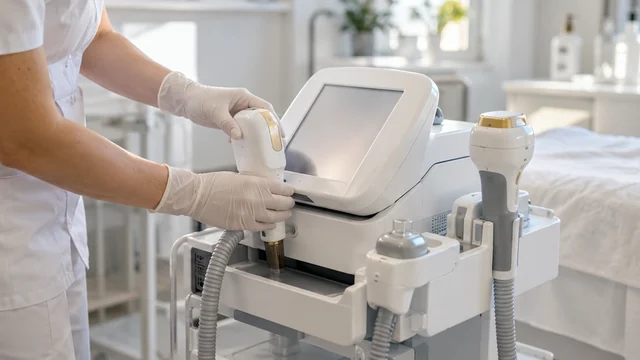
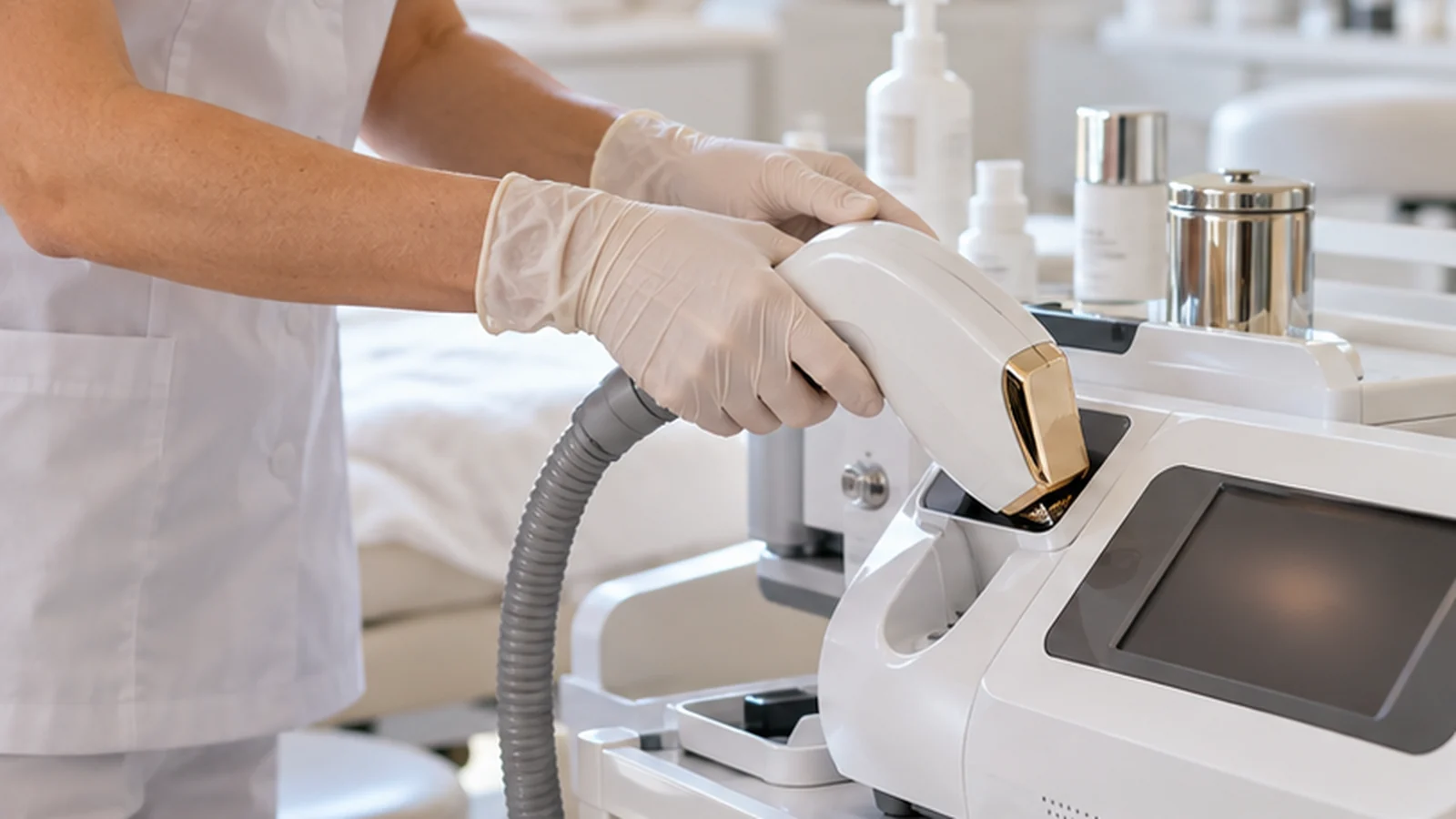
The product family includes Again, Again PRO and Again PRO PLUS; handpieces and modes are also described as Moveo HR, PL, SR and VL (vascular lesions). DEKA markets Moveo VL for superficial vascular redness, using contact delivery and multiple passes. This is a manufacturer's description of the technology, not proof that every patient will have no downtime or that all vessels will disappear after one appointment.
PRO and PRO PLUS are not merely decorative names. The manufacturer describes changes in power, configurations and available features, while regulatory documents may cover only a specified model family. If someone offers you a “DEKA” treatment, ask for the exact model shown on the device, the wavelength, the handpiece and the intended indication. Claims made for one device or configuration cannot automatically be transferred to another.
What does regulatory clearance establish—and what doesn't it?
In the United States, the FDA issued 510(k) decision K233090 on 27 October 2023 for the DEKA AGAIN PRO family. This is US marketing clearance based on substantial equivalence to legally marketed devices, not independent clinical confirmation of every advertised benefit. The indications include certain dermatological vascular lesions for the 755 nm alexandrite source and photocoagulation of specified vascular conditions—including telangiectasias, rosacea and certain leg vessels—for the 1064 nm Nd:YAG source. A list of indications does not mean that every symptom or site should be treated without diagnosis.
That US decision must not be applied automatically to the original Again, every possible PRO PLUS configuration or Armenia. Local device documentation, permitted indications, handpieces and practitioner qualifications need separate verification. Images of a machine posted from Yerevan also do not establish that a particular clinic currently owns or uses it. We have not independently verified availability of DEKA Again at any clinic in Armenia.
The other kind of evidence comes from clinical research on vascular lasers as a treatment category. Dermatology guidance supports appropriately selected laser treatment for certain visible vessels, including vessels associated with rosacea, but outcomes depend on the vessel, skin phototype and clinician's experience. This does not amount to a large, independent trial for every Moveo VL mode. Claims of “no side effects” do not rule out burns, changes in pigmentation or temporary purpura—small purple marks.
Red cheeks, facial capillaries and leg veins are different decisions
Laser energy is absorbed by targets in the tissue and produces heat; in vascular treatment one important target is haemoglobin in blood. A clinician adjusts the settings to affect the vessel while limiting injury to surrounding skin where possible. Depth, vessel diameter and skin colour help explain why treating fine vessels beside the nose is not the same as treating deeper vessels.
| What you notice | What the clinician needs to establish | What a laser cannot promise |
|---|---|---|
| Fine visible lines beside the nose or on the cheeks | Are these truly enlarged superficial blood vessels? Which wavelength and spot size are suitable? | That every line will disappear or that new vessels will never develop. |
| A constant red background with sudden flushing episodes | Is rosacea, inflammation, sensitivity or a trigger involved? | To switch off flushing mechanisms or replace appropriate skincare and rosacea treatment. |
| Visible vessels on the legs | Could there be a larger venous problem requiring vascular assessment? | To treat venous reflux or replace assessment of painful or swollen legs. |
| A red patch, birthmark or growing lesion | Is the diagnosis established, and is laser treatment appropriate? | To diagnose an uncertain lesion from a photograph. |
If redness appears suddenly, a spot changes shape, bleeds or looks unusual, an in-person dermatology examination should come first. A clinician needs to distinguish vascular changes from inflammation, skin cancer and other causes of discolouration. Swelling of a leg, significant pain or a sudden change in its vein pattern also calls for medical assessment before an aesthetic procedure.
Will the result still look natural?
Here, “natural” does not mean an unnaturally uniform complexion without any pink colour. It means reducing the red lines that bother you without causing patches from excessive treatment. You can discuss a conservative first session followed by reassessment rather than attempting to eliminate all redness at any cost. With rosacea, some redness is not solely caused by visible vessels; sensitivity and flushing may continue after individual capillaries have faded.
The American Academy of Dermatology reports improvement in visible vessels with laser and light procedures, but those results concern different devices and patient groups. A percentage from someone else's treatment must not be attributed specifically to Again. Treated vessels can fade while new ones may form later; neither the number of sessions nor the duration of results can reliably be predicted from a photo alone.
Freckles are different from a vascular network, and a lingering red mark after acne is different from an active inflamed blemish. If there are also pimples, burning, dryness or irritation, it may make more sense to calm the skin and address the underlying condition before considering laser treatment. Your need for a laser may look different afterward.
DEKA Again, pulsed dye laser and IPL: a useful comparison
A brand name by itself is not evidence of superiority over a well-chosen technology used skilfully. The relevant comparison is the target vessel, treatment depth, your skin characteristics and the recovery time you can accept.
| Approach | When it may be considered | The important trade-off |
|---|---|---|
| DEKA Again / AGAIN PRO, 755 and 1064 nm | When the exact device version, setting and diagnosis suit a vascular condition | Not every indication or handpiece is necessarily available on every model; verify configuration and authorised use. |
| Pulsed dye laser (PDL) | Often considered for superficial vascular changes and persistent redness | Certain settings can leave conspicuous purple marks; choose according to the condition. |
| IPL / BBL broadband light | When diffuse redness and certain pigment changes are being considered together | Not a single-wavelength laser; tanning and skin phototype affect suitability. |
| Medication and gentle rosacea skincare | When inflammation, flushing or a damaged skin barrier is part of the problem | They do not immediately erase every visible vessel, but can treat important drivers of symptoms. |
PDL and Nd:YAG lasers have long been used for vascular problems. What matters more for you is where the vessel lies and how the clinician manages pigmentation and overheating risks. “Which machine is strongest?” is less helpful than “Why is this particular setting suitable for my skin, and what might remain afterward?”
What does treatment feel like, and will others notice?
First, the clinician should examine the skin without heavy makeup and ask about sun exposure, tanning, past procedures, cold sores, scarring tendency, sensitivity, medical conditions and medications. They determine whether dermoscopy, a test spot or a different approach is needed. Appropriate eye protection is essential during treatment. Depending on the setting, sensations range from warmth and short snapping feelings to stronger stinging. Contact or cold-air cooling may help, but cannot guarantee a painless medical laser session.
Afterward, warmth, redness and swelling are possible; pinpoint purple marks or more obvious irritation may occur with some lasers and settings. According to AAD guidance on vascular treatment, redness sometimes lasts up to two weeks and purpura about one to two weeks. These are not promises about recovery after a specific Again treatment. One person may look presentable fairly soon; another may have visible treatment marks during important meetings. If a wedding, photoshoot or sunny holiday is only a few days away, discuss postponing: zero social downtime cannot be guaranteed.
In the first days, follow your clinician's written advice about gentle cleansing, sun protection and avoiding irritating products. When to resume makeup or exercise depends on your treated skin and the clinician's instructions, not a universal online calendar. Postpone vigorous exercise while the area is still hot, swollen or painful. Do not judge the result within hours, while the tissue response is still developing; compare photos taken under the same light without colour editing.
Who needs extra caution?
A darker skin phototype, recent tanning, melasma or a tendency to post-inflammatory pigmentation changes the risk–benefit balance. Inflamed, damaged or infected skin in the planned area needs assessment and often postponement. During pregnancy or breastfeeding, discuss an elective aesthetic procedure with a clinician; a lack of reliable studies of this specific use must not be treated as proof of safety. Never stop prescribed medication or anticoagulants on your own for a cosmetic treatment—tell the clinician what you use.
Pigmentation deserves special attention in darker skin: excess or lost pigment after treatment may be more noticeable and last longer than the original redness. Experience with your phototype and suitable protection of the epidermis—the outer skin layer—matter. If a laser pulse causes unusual pain, speak up immediately instead of enduring it for the promised outcome.
Contact the treating clinician promptly if pain is getting worse rather than better, blisters appear, the skin becomes markedly dark or pale, fluid weeps from the area, or signs of infection develop. A change in vision after facial laser exposure requires emergency medical care. These signs are not an expected “normal stage” of clearing vessels.
Questions to ask before agreeing
Ask for the diagnosis and a clear explanation of precisely which vessels would be treated. Check the complete DEKA model name, wavelength and handpiece, availability of its instructions and the clinician's qualifications. Ask what evidence supports the prediction for your kind of redness, whether treatment may involve more than one stage, how the intermediate result will be assessed and what will happen if burns or pigmentation changes occur.
You can also ask directly: “Could I treat my rosacea and work on skincare first, and decide about a laser later?” or “Why is this plan better for me than PDL or IPL?” A standard package without a diagnosis, a guarantee that every capillary will vanish or no discussion of eye protection are reasons to seek another opinion. Cost depends on the area, diagnostic work, amount of treatment, number of visits and follow-up—not simply on the machine's brand; we have no verified local price list. Choosing no procedure is entirely reasonable if the vessel pattern does not trouble you and a clinician has ruled out a medical condition needing treatment.
Additional questions
Can a single capillary beside the nose be treated without treating the whole face?
Sometimes, if a clinician confirms an individual superficial vessel and the handpiece is appropriate for its size. The area and setting follow an examination; simply choosing the smallest spot does not ensure safety.
If a vessel has disappeared, why might redness come back?
A laser acts on treated vessels but does not necessarily remove a tendency to rosacea, heat-triggered flushing or the formation of new capillaries. Skincare and management of triggers therefore still matter.