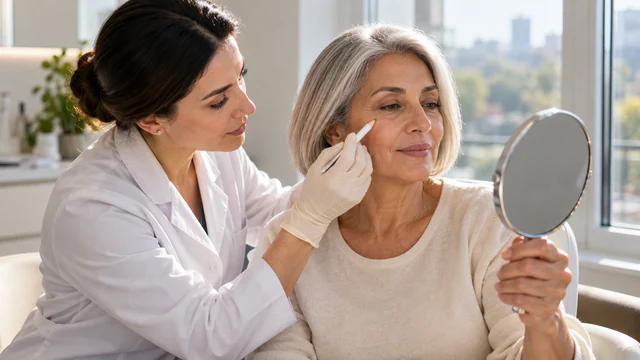
PhilArt Polynucleotides: How They Differ from Fillers
You may have been offered “PhilArt” because your skin feels drier, thinner or less firm. The name sounds like a filler, prompting reasonable questions: will it add volume, change my facial shape, or leave bumps under my eyes? PhilArt is the former name of a line of injectable polynucleotide products from Croma-Pharma; its current name in manufacturer materials is PolyPhil. It is neither botulinum toxin nor a typical volumising filler for cheeks or lips. The line is primarily marketed for skin quality, but the formulations and suggested sites vary.
Before agreeing, establish the exact product name on the packaging, not just “PhilArt”. PhilArt, PhilArt eye, hair and next are not interchangeable. PolyPhil and PhilArt names may coexist in older material and across countries; an identical umbrella brand does not prove that two syringes have the same formula, expiry or instructions.
What PhilArt contains—and why polynucleotides are not the same as fillers
Polynucleotides (PN) are chains of nucleotides, the building blocks of DNA. Croma describes purified PN-HPT material from freshwater fish for this line. It associates the products with tissue-repair conditions, hydration and changes to the dermis, the skin layer below the epidermis. The proposed biology is plausible, but it does not establish every marketed effect in clinical trials for every PhilArt formulation.
A structural hyaluronic-acid filler is generally used to replace volume or alter facial proportions; botulinum toxin can address selected expression lines; an injectable PN product is discussed for texture, fine lines or firmness. Even where a PolyPhil variant contains hyaluronic acid, that does not automatically make it a substitute for a structural filler. Deep folds caused by volume loss, substantial overhanging skin and deep scars may require other approaches.
PN and polydeoxyribonucleotides (PDRN) are often discussed together. Studies can involve differently processed materials and different chain lengths. Evidence about one PDRN preparation cannot simply be transferred to a PhilArt syringe. For more about the categories, see polynucleotides and PDRN.
PhilArt / PolyPhil variants: differences that matter
Current official Croma materials identify different compositions in products formerly sold under the PhilArt name. This table helps you identify a proposed variant; it is not a self-injection or treatment-selection guide. A manufacturer's suggested application is not authorisation for every country.
| Line designation | Principal ingredients reported by Croma per 2 ml syringe | Manufacturer-described purpose |
|---|---|---|
| PhilArt / PolyPhil | PN-HPT 40 mg in 2 ml | Skin quality, texture and selected scar-related areas |
| PhilArt eye / PolyPhil eye | PN-HPT 15 mg in 2 ml | Delicate eye-contour skin and superficial fine lines |
| PhilArt hair / PolyPhil hair | PN-HPT 15 mg in 2 ml | Scalp and eyebrows; not a substitute for diagnosing hair loss |
| PhilArt next / PolyPhil next | PN-HPT 20 mg plus hyaluronic acid 20 mg in 2 ml | More mature, dehydrated skin; a combined formula |
These numbers reflect the cited manufacturer materials; they do not apply irrevocably to every market, batch or historical catalogue. Confirm the actual label, current instructions and authorised use in the country where the injection will take place. Be especially cautious if someone offers “ordinary PhilArt” under your eyes without explaining the precise variant and its intended purpose there. The table lists principal ingredients, not every excipient; always check the complete ingredient list on the label and in the instructions.
“Eye” on a syringe does not make periocular injections simple: skin is thin, papules and swelling may be especially visible, and injection errors can be serious. “Hair” does not mean it cures androgenetic alopecia, nutrient deficiencies or thyroid disease. Those concerns need diagnosis, not automatic selection of an item from a product line.
What outcomes to expect—and what it will not do
A realistic aim is a possible gradual improvement in the sense of hydration, skin texture and some fine lines. Skin quality cannot be assessed reliably from a single picture; lighting, makeup, injection swelling and daily skincare can change the impression. Promises to erase all wrinkles, restore collagen completely or look ten years younger after one syringe are not backed by a credible level of precision.
| Starting concern | What is worth discussing | What not to expect |
|---|---|---|
| Thin, relatively dry skin with fine lines | Whether a skin-quality variant is appropriate after examination | Filling deep folds as a dense volumising filler would |
| Dark-looking hollows under the eyes | First identify volume loss, pigment, vessels or swelling | PhilArt eye removing an anatomical tear trough |
| Post-acne marks and scars | Assess scar type and depth; combined treatment may be relevant | All scars disappearing evenly after one product |
| Hair loss | Scalp assessment and investigation of its cause | Hair variant replacing established alopecia treatment |
| Pronounced skin laxity | Compare alternatives and the limits of injections | A lift comparable to surgery or dedicated lifting procedures |
If dehydration is the only issue, gentle skincare, sun protection and identifying irritants may be a sensible starting point. If dryness comes with itching, rash or inflammation, obtain a diagnosis first. An injection is not a workaround for treating a skin disorder.
What clinical research supports—for this treatment category
Reviews of PN studies report encouraging signals for elasticity, fine wrinkles and skin texture, but the evidence remains limited. A 2025 systematic review included nine studies with a total of 219 participants, judged their quality low or moderate and found major variation in substances, sites and injection methods. A July 2026 review of randomised PN/PDRN trials also highlighted small groups and inconsistent protocols; it covered rejuvenation, scar prevention and wound healing, rather than one named PhilArt product. That second review pooled seven randomised trials involving 183 people; the findings were heterogeneous and do not directly validate the entire PhilArt line.
Category-level findings do not prove that each PhilArt variant beats placebo for every advertised use. Manufacturer publicity and expert consensus can explain intended applications, but are not substitutes for large independent randomised trials. From this evidence, nobody can promise you a fixed number of sessions, months of effect or percentage chance of success.
Serious events were uncommon or unreported in the small reviewed studies, but the samples and follow-up cannot exclude rare severe harms. Safety also depends on the exact formulation, injection technique, sterile practice, your skin and previous treatments. A hopeful assessment of benefits should be paired with an explicit complication plan.
How injection works and what you may feel
Before treatment, the clinician should clarify your goals and the exact formulation, examine the area, ask about allergies and medications, explain alternatives and obtain informed consent. The skin is cleaned and disinfected. Small intradermal injections may be used according to the product and indication; Croma describes intradermal administration for PolyPhil, but the actual technique follows its current instructions and clinical judgement—not a diagram in an article.
Injections may feel like repeated small pinches or stings. Temporary bumps called papules, pinprick marks, redness and bruises may remain. Even slight swelling is very noticeable socially around the eyes. Do not accept an absolute assurance that you will “feel nothing and look unchanged”; discuss suitable anaesthesia, knowing that complete comfort is not guaranteed.
Ask what the clinician will do if an adverse reaction occurs. A PN preparation should not be assumed fully reversible in the way some hyaluronic-acid fillers can be treated: hyaluronidase is not a universal antidote for PN. A suspected complication requires medical assessment, not home attempts to dissolve material under the skin.
Recovery in the mirror and your diary
Uncomplicated superficial injections often allow a quick return to ordinary activities. But being medically able to work and having no visible facial marks are different things. Needle marks, swelling, small bumps, tenderness or bruises may make going without makeup or being photographed close up uncomfortable. Allow extra flexibility for eyelid treatment or a tendency to bruise.
| Time after injection | Possible appearance | What to allow for |
|---|---|---|
| Treatment day | Pinpricks, local redness, papules, mild swelling | Avoid an important photo shoot immediately afterward |
| Following days | Bruises or persistent puffiness | Leave a buffer before an event and assess the trend |
| Subsequent weeks | Gradual assessment after early reactions subside | Do not mistake initial puffiness for a lasting benefit |
| Review appointment | Check tissue condition and satisfaction | Decide on further sessions from your outcome, not an automatic subscription |
Request written aftercare advice on hygiene, makeup, exercise, sauna use, skincare and sun exposure from the person who injected the specific product. Never puncture papules, squeeze bruises or vigorously massage an area without medical advice. Session counts and intervals can differ with the formulation and indication; a single course prescribed identically to everyone is not reliable.
When to postpone and when to seek urgent care
Active infection, inflammation or damaged skin at the injection site needs medical attention before any elective injection. Pregnancy and breastfeeding lack sufficient reliable safety data, so the procedure should be postponed; Croma's UK guidance explicitly lists both as contraindications, alongside age under 18. Disclose allergies, especially to fish or product ingredients: PN-HPT is fish-derived, so the exact formulation and current instructions matter. Croma's UK guidance treats a confirmed allergy to fish products as a contraindication, not a reason to lower the dose or attempt a trial injection. Do not receive a product for which this restriction applies if you have that diagnosis. Subjective food intolerance is not the same as a medically confirmed allergy; if uncertain, clarify the diagnosis first rather than testing the injectable on yourself. Contraindications must be checked against the specific formulation and the documents applicable in your country; local instructions may contain additional restrictions.
Tell the clinician about immune conditions, impaired healing, anticoagulants and other medicines, recent peels, lasers, fillers and infections. Never stop prescribed medication on your own. Croma's UK guidance lists autoimmune disease, immunotherapy, diabetes, epilepsy, circulatory disorders, ongoing dermatitis and active herpes among conditions in which these PN injections should not be given; serious allergies and ongoing inflammation are also listed. These are restrictions in that product guidance, not a universal rule for every polynucleotide formulation. If any applies, do not plan the injection until an appropriately qualified clinician has checked the exact product against its current instructions; a confirmed contraindication cannot be waived simply by agreeing to treatment. Previous herpes outbreaks, poor healing and reactions to earlier injections also matter. Age, indication and permitted local use must match the documents for that particular product.
Increasing or unexpected pain, skin blanching or unusual discolouration, signs of impaired blood supply, fast-spreading redness, fever, pus, impaired vision or sudden pain near the eye need immediate medical assessment. Severe visual or breathing problems or a generalised allergic reaction call for emergency care. These are not normal expected recovery effects. FDA warnings on vascular injury mainly concern volumising fillers and do not establish their incidence or mechanism for PhilArt; nevertheless, serious symptoms after any facial injection must not be dismissed.
PhilArt versus alternatives: choosing without sales pressure
PhilArt / PolyPhil is chiefly a PN product line; compare exact formulation, purpose and quality of evidence, not packaging recognition. Other PN brands can have different concentrations, purification processes and indications. PolyPhil next includes hyaluronic acid whereas the stated base formula does not. The umbrella term “biorevitalisation” does not tell you which substance is being injected.
Hyaluronic-acid skin boosters use different formulations, structural fillers primarily add volume, and needling or laser treatments affect skin through other mechanisms. Chronic irritation, acne or active hair loss call for diagnosis and treatment of the cause first. Declining injections is also an entirely valid choice: gradual skincare, SPF and observation may suit minor dryness or fine lines.
Before payment, ask to see the sealed package, exact variant and batch, legible instructions, expiry date and evidence that it is permitted in the country of treatment. Croma shows CE marking for certain European-market products; that is not US approval or Armenian registration. An EU distributor's listing cannot establish a specific Yerevan clinic's stock. Costs depend on formula, dose, injector qualifications and follow-up; local price figures should not be invented.
Finally, agree on what will count as a meaningful improvement for you and what happens if there is none. Compare before-and-after photographs with consistent lighting and pose and without early swelling; reviews describe individual experiences, not complication rates. If the professional cannot identify the variant, will not discuss alternatives or promises guaranteed change, obtain another opinion. The decision belongs to you, not the packaging.
Additional questions
Can PhilArt be used when I have rosacea?
First assess whether rosacea is active and whether the skin barrier is inflamed or compromised. PhilArt is not a standalone treatment for rosacea; a dermatologist should assess the indication.
Should I stop blood-thinning medication before injections?
Never stop prescribed medication on your own. Tell the clinician in advance; they can assess bruising risk, coordinate with your treating physician and, if necessary, postpone the elective injection.
What should happen to the packaging information afterward?
Ask for the exact brand and variant, batch, expiry date, amount and injection sites to be recorded in your medical record. It will help if an adverse reaction occurs or another clinician needs to assess you.
Can PhilArt and laser treatment or a peel be performed on the same day?
There is no single safe rule for every combination. Skin injury type, area, formula and healing time all matter; plan the sequence before starting, not after irritation develops.
Sources
- Croma: PolyPhil (formerly PhilArt), composition and intended use
- Croma UK: four PolyPhil variants and their compositions
- Croma: PolyPhil next, a distinct combined formula
- Systematic review of aesthetic polynucleotides, 2025
- Review of randomized PN/PDRN trials, 2026
- FDA: warning signs after filler injections; not PhilArt regulatory status
- Croma UK: contraindication guidance, including fish allergy, age and pregnancy