
Polynucleotides and PDRN: what is injected and what to expect
If you have seen “polynucleotide” before-and-after photos or heard about Plinest, first decide what you actually want to change. Would slightly more even-looking, better-hydrated skin be enough, or are you hoping to remove sagging, deep lines or acne scars? These are different goals. Polynucleotide (PN) injections and related PDRN preparations may be considered for modest changes in skin quality, but they cannot replace a lift, volume-restoring fillers or treatment of skin disease. Evidence remains limited; another person's photos cannot predict your results or recovery.
What is injected, and why are the names confusing?
Polynucleotides are fragments of nucleic-acid chains, which form genetic material. Aesthetic formulations use specially purified material, often sourced from fish. PDRN stands for polydeoxyribonucleotide. PN and PDRN are sometimes studied together, but that does not mean every product has the same chain length, concentration, intended use or injection method. “Salmon DNA injections” is too vague a description to identify what you are being offered.
For example, Plinest is a particular commercial product, not another name for all polynucleotides. Mastelli describes the Plinest product as a sterile PN-HPT gel for intradermal use containing 40 mg in 2 ml, with manufacturer-stated applications relating to skin tone, younger skin and acne scarring. These are product specifications and manufacturer's claims, not evidence that every form of PDRN acts identically. Other products in the same family have different ingredients and intended uses.
The proposed purpose is to support tissue-repair processes and improve aspects of hydration and skin properties. Laboratory work discusses cellular signalling pathways, but a biological mechanism is not proof of a predictable visible outcome in people. What matters more than the word “regeneration” is whether the specific concern you have can be measured or meaningfully assessed.
What might improve, and what should not be expected?
| Your goal | Realistic PN/PDRN boundary | What to check first |
|---|---|---|
| Uneven texture or fine lines | Small studies suggest possible improvement; its size and duration remain uncertain | Compare unfiltered photos without makeup, in the same light and expression |
| Dryness or skin that feels less firm | A modest change in skin quality may occur; skincare and inflammation also influence the appearance | Are strong products causing irritation or damaging the skin barrier? |
| Depressed acne scars | Injections alone are unlikely to level deep, tethered scars | Scar type, active acne and whether a dedicated scar treatment is needed |
| Marked sagging, deep folds or loss of volume | Do not expect substantial lifting or restoration of volume | Discuss alternatives, including choosing not to intervene |
| Pigmentation or persistent vascular redness | PN is not a standard substitute for diagnosis and targeted treatment | The cause of spots or redness and appropriate sun protection |
A systematic review published in 2025 included nine studies involving 219 people; their quality was rated low or moderate. Findings for texture, wrinkles and elasticity were encouraging, but the authors called for more rigorous studies and standardised protocols. That review searched English-language primary research published from 2010 through 1 January 2024. A separate systematic review published in 2026, searching through January 2026, included seven randomised trials and 183 participants: four studies of aesthetic rejuvenation, one of postoperative scar prevention and two of wound healing. Different formulations, settings and outcomes mean that positive signals still do not establish a reliable effect for each formulation, treatment area or individual. The procedure is not necessarily pointless; the reasonable forecast is simply modest and uncertain. These reviews also cover different indications and methods, and some original studies may overlap. The totals of 219 and 183 should not simply be added or described as two independent groups of people who all received facial injections.
Ask how success would be judged: by someone saying “you look fresher”, or by a meaningful comparison of the area that concerns you at an agreed follow-up? If you are hoping for a pronounced change in facial contours, the improvement may not justify the cost and visible recovery for you.
Who might consider it, and who should postpone?
Someone with a moderate texture or skin-quality concern who accepts multiple needle punctures, possible marks and an uncertain benefit might wish to discuss PN. Compare it with doing nothing invasive and improving a gentle skincare routine, rather than with a filtered ideal. Before proposing treatment, a clinician should examine your skin and ask about previous injections, medical conditions, medicines and allergies.
Postpone injections where the skin has an active infection, inflammation or damage until the cause has been assessed. Painful eruptions, pustules and spreading redness need a diagnosis, not a label of “skin regeneration”. A history of abnormal scarring, immune disease, bleeding disorders, medicines affecting bleeding or a known reaction to ingredients calls for individual medical assessment. Never stop prescribed anticoagulants on your own for an elective beauty appointment.
If you are pregnant, breastfeeding or planning pregnancy, the lack of reliable safety evidence for the exact injected product matters more than reassuring claims of “biocompatibility”. It is sensible to defer elective injections and discuss your circumstances with your clinician. A fish allergy does not prove that purified fish-derived material will cause a reaction, but it must not be declared harmless either: ask about ingredients, manufacturing documentation, previous reactions and the clinician's assessment.
Under-eye concerns deserve separate diagnosis. Pigment, visible vessels, the shadow of a tear trough, puffiness and dryness have different causes and do not all respond to injections. For decisions specifically about this area, see the separate PDRN under-eye injections guide; cheek injection techniques should not be transferred to eyelids.
What happens during an appointment, and what does it feel like?
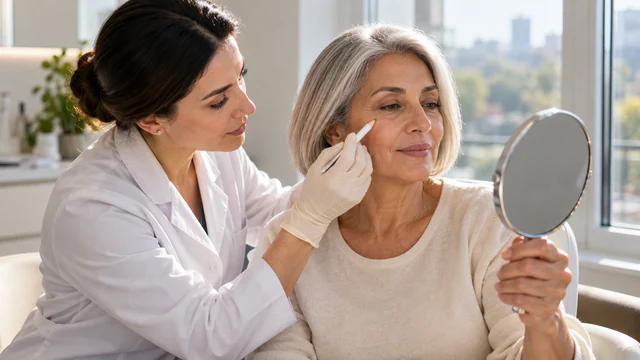
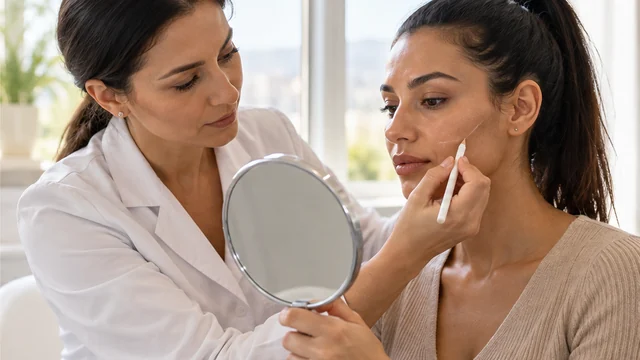
A good appointment begins with discussion, not an opened syringe: establish a precise goal, examine the skin, take a medical history, discuss alternatives and document the plan. Photos are taken with your consent. The clinician should verify the product, expiry date, intact packaging, manufacturer and authorised route of administration. Treatment generally involves several small needle punctures; their number, location, depth and technique depend on the actual product and area, not a universal facial map.
You may feel brief stings, burning or pressure. Topical anaesthetic cream can sometimes help, but may not eliminate discomfort and has its own cautions. Tell the clinician immediately about unusually severe or increasing pain rather than enduring it. Temporary little raised bumps at the entry points, swelling, redness, tenderness and bruising can occur.
A course length cannot be determined from the word PDRN. Mastelli publishes suggested protocols for specific Plinest versions, but clinical studies and commercial plans vary. Ask why that number of sessions is proposed, when to reassess and what happens if you stop after the first. There is no requirement to buy a long package before you know how you recover.
Recovery when you have work and social plans
| When | What may be visible | Practical planning |
|---|---|---|
| Immediately afterward | Puncture marks, redness, small swellings, sometimes pinpoint bleeding | Do not book important photos on the same day |
| Following days | Local swelling, papules or bruises may remain; resolution differs between people | Leave a buffer before occasions where you want to look like yourself |
| After the early reaction subsides | Skin may look much like it did before even though it is too early to judge benefit | Do not treat the absence of an immediate improvement as proof of failure |
| Weeks later and beyond | Any change in skin quality should be assessed at agreed follow-up points | Do not accept maintenance injections automatically without considering benefit |
Being medically well enough to resume ordinary tasks is not the same as feeling comfortable socially without a visible mark. One person returns to work straight away; another has a visible bruise while otherwise feeling fine. If a wedding, holiday, flight or presentation is approaching, build in a personal buffer discussed with the clinician rather than relying on “zero downtime” advertising.
Ask for the specific product's aftercare instructions: makeup, vigorous exercise, swimming, sauna, facial massage and retinoids may have different restrictions. Until you receive guidance, avoid rubbing or massaging the injection sites or trying to flatten bumps yourself; keep the skin clean. Sun protection remains sensible. Heat and strenuous activity immediately after treatment may aggravate discomfort or swelling.
Normal reaction or reason to seek help?
Mild tenderness, local redness and moderate bruising can occur after many injected treatments. Increasing severe pain, sudden visual problems, marked blanching, grey-blue or mottled skin, new weakness or facial asymmetry require urgent medical assessment. Vascular injury is well documented for dermal fillers, but those reports do not establish how frequently or to what degree the same events occur with a specific PN preparation. Even so, unusual vascular or neurological symptoms after any injection must not be ignored.
Increasing warmth, redness, pain, discharge or fever warrants contacting a healthcare professional the same day because infection is possible. Breathing difficulty, swelling of the tongue or throat or fainting calls for emergency services. Do not wait for the next scheduled session or rely only on a message to a clinic's social-media account.
How do PN injections compare with other options?
For primarily dry, uncomfortable skin, gentle cleansing, moisturising and daily sun protection may be the better first step. Skinboosters and biorevitalisation often involve particular hyaluronic-acid formulations and distinct injection approaches; similar marketing language does not imply identical outcomes. Botulinum toxin works differently for expression-related lines. Acne scars may warrant device-based, surgical or combined approaches following an assessment of scar type.
There is a difference between “the skin looks somewhat smoother” and “the facial features changed”. A small gradual texture change may look natural precisely because facial shape stays the same, but that subtlety can also make it difficult to judge value. Do not choose on the claim “stimulates collagen” alone; ask whether comparative research addresses your particular concern.
Questions to ask before deciding
- What is the exact product, manufacturer, formulation, lot number and instructions for use, and is it lawfully supplied where treatment will take place?
- Which feature of my skin should change, how will we measure it, and what will remain unchanged?
- Is independent evidence available for this product and anatomical area, or is the estimate based on clinician experience and manufacturer materials?
- Who will inject it, what are their medical credentials and experience with this region, and what are the sterility safeguards and complication plan?
- What is the complete treatment and price plan, including extra visits, and how much social recovery time should I allow?
- Who do I contact outside working hours if I have unusual swelling, colour changes or pain?
Deciding not to proceed now is a complete decision. You can document your baseline skin, adjust basic skincare, seek a diagnosis for spots or scars and reconsider later. The quality of a decision is not measured by the number of procedures, but by whether the possible benefit is worth the risk, cost and effort to you.
Additional questions
Can I have PN after another injectable treatment?
The interval depends on the exact substances, area, residual inflammation and earlier complications. Tell the clinician the name, date and site of every previous injection. No universal safe waiting period covers every combination.
Can I use home photos to check results?
Yes, as a supporting reference: use the same camera, distance, daylight, angle and no filters. Photos cannot replace examination or prove that an injection caused a change.
Do I need to repeat the course if the first visit goes well?
No. Arrange a reassessment and continue only with a clear goal, satisfactory healing and an acceptable balance of benefit and risk.
Sources and fact-checking
- PN systematic review, Journal of Cosmetic Dermatology (2025) — American Academy of Dermatology
- Randomised PN/PDRN trials systematic review (2026) — American Academy of Dermatology
- Plinest formulation and intended use — brand/manufacturer
- Dermal filler safety: contextual risks, not PN clearance — US regulator
- Questions to ask before aesthetic treatment — American Academy of Dermatology