
How to Lighten Dark Circles Under the Eyes: Types and Options
You have slept well, yet the skin under your eyes still looks dark. Or the circles show up mainly in photographs taken under overhead lighting. There is no universal cream that removes every kind of dark circle: first distinguish brown pigmentation, a bluish vascular tint, an anatomical shadow and temporary puffiness. Each calls for a different approach, and causes often overlap. Gentle skin care, sun protection and allergy management, when relevant, are reasonable starting points. Not everyone needs injections or lasers.
Dark circles are common and often reflect heredity, the shape of the eye socket or ageing rather than illness. If they do not disappear completely, that does not mean you have cared for your skin badly. The most useful first question is whether the skin itself is darker or light is simply falling into a hollow.
How can you tell which type of circles you have?
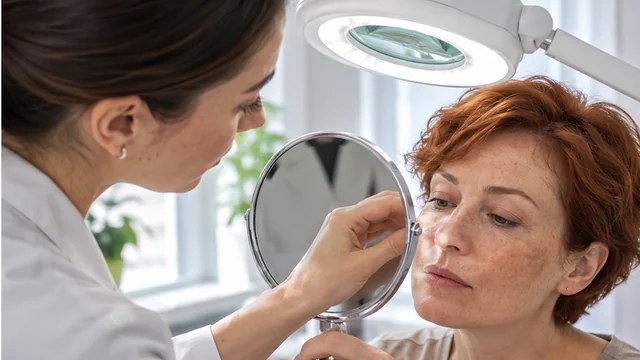
Look at your face in soft frontal light, then with light from the side. If a dark band changes markedly with the lighting direction, much of it may be the shadow of the tear trough—the natural hollow between the lower eyelid and cheek. A consistently brown colour suggests a pigment component. A blue-purple tint may reflect vessels visible through thin skin and the local anatomy. Allergic nasal congestion can cause a dusky bluish appearance; frequent rubbing adds inflammation and irritation.
These clues are not a home diagnosis. A dermatologist examines the skin, eyelids, contour and signs of inflammation, sometimes with dermoscopy. Do not stretch delicate skin for a “test” or diagnose it through a colour filter. The clinician may also ask whether the darkening followed eczema, a harsh peel, new cosmetics or repeated scratching.
| Main feature | Clue | Where to begin | What not to expect |
|---|---|---|---|
| Brown pigmentation | Colour stays fairly constant in different light | SPF, less rubbing, dermatitis treatment and cautious pigment care | Instant lightening from cream |
| Blue-purple tint | Thin skin, visible vessels, possible allergies | Assess allergies and skin health; occasionally specialist treatment | A whitening cream to eliminate a vascular tint |
| Anatomical shadow | Changes as you move the light source | Camouflage and anatomical assessment, not “bleaching” | One cream to fill a hollow |
| Morning puffiness | Changes over the day | Review sleep, allergies and possible causes of swelling | Pigment correction to remove under-eye bags |
Under-eye bags and a pronounced tear trough are not the same as dark circles. If bulging or excess tissue is your main concern, see the separate article about under-eye bags; if the main problem is an anatomical hollow, read about hollows under the eyes. This page is about identifying the source of darkness rather than confusing it with an optical effect.
What can you safely do at home around the eyelids?
For brownish colour, daily UV protection matters: a sunscreen suitable for this sensitive area, sunglasses and shade. Do not put products on the mucous membrane or too close to the lash line against their instructions. If your eyes itch or water and your nose is blocked, ask a clinician about treating the allergy instead of endlessly switching eye patches. Less rubbing means less irritation and potentially less lingering pigmentation.
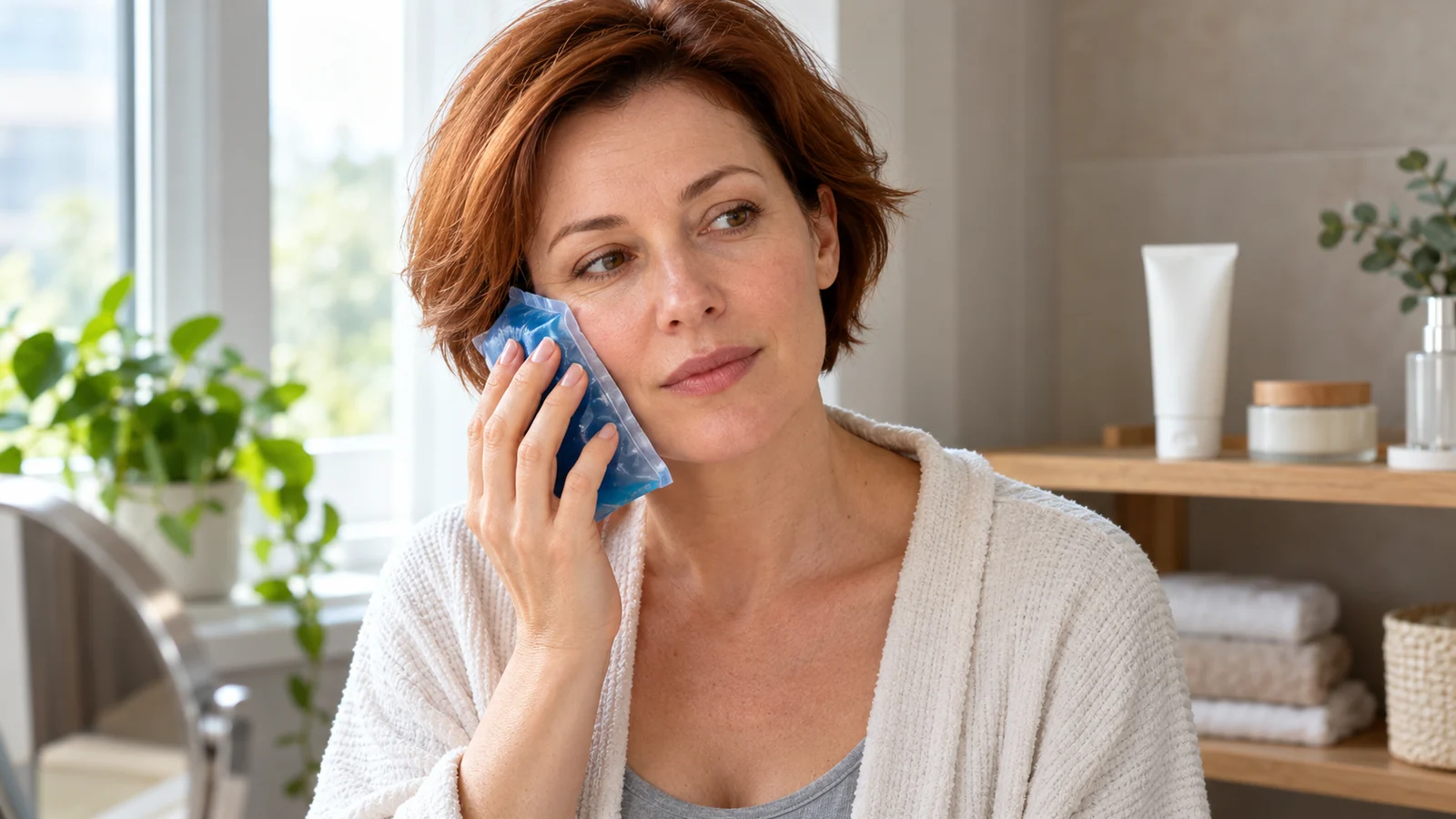
A consistent sleep routine and adequate hydration can sometimes make the face look less tired, but they do not rewrite heredity or eye-socket anatomy. A cool compress on closed lids may temporarily reduce visible morning puffiness; it does not remove pigment or fill a trough. Never apply ice directly to skin or press hard on the eyes. Stop a new cosmetic if it stings or causes a rash, and seek advice for persistent irritation.
Products with niacinamide, vitamin C or other pigment-targeting ingredients may provide modest benefit in suitable cases, but the studies are varied. Some active substances require medical assessment, appropriate concentrations and particular care with fragile eyelid skin. Do not automatically use your usual facial acids, retinoids, hydroquinone or aggressive “whitening” products around your eyes. Discuss active treatments with a clinician during pregnancy; cosmetic retinoids, for example, are generally avoided.
If several weeks of gentle care have made little difference, that is not a reason to make your peel stronger. Pigment may not be the main cause. A well-matched concealer often provides a more predictable result for an important occasion than trying a new product the night before.
When might a procedure actually help?
For persistent pigment, a dermatologist may consider prescription products or carefully selected superficial peels; for certain pigment or vascular changes, some laser methods may be considered. Eyelid skin is thin, however, and the risks of burns, increased pigmentation, scars and eye injury require an accurate diagnosis, a skilled operator and appropriate eye protection. Treatment selection needs special care with deeper skin tones and a tendency to develop dark marks after inflammation. Studies do not justify promising the same result to everyone, especially as causes are often mixed.
If shadow from a deep eyelid-to-cheek transition is the main cause, a clinician may sometimes discuss restoring volume. Under-eye filler is not routine skin care: persistent swelling, unevenness and a visible bluish cast are possible, and accidental injection into a blood vessel can injure tissue or, rarely, cause catastrophic complications including blindness or stroke. The US Food and Drug Administration (FDA) has not approved filler injections in the periorbital region; that is a US regulatory position, not an automatic rule for every country. The fact that some hyaluronic-acid fillers may be dissolved does not guarantee safety.
For substantial anatomical changes, surgery may sometimes be discussed with an eyelid specialist, but surgery cannot treat every form of pigmentation. Conversely, filling a hollow may do nothing for brown skin caused by rubbing or inflammation. A careful clinician should show which part of the darkness they expect to change and which part will remain.
During pregnancy, it is generally better to postpone elective injections, lasers and other device procedures for dark circles: high-quality safety data are limited, and cosmetic correction is not medically urgent. Breastfeeding is not the same as pregnancy; suitability depends on the specific method and requires an individual discussion with a clinician that acknowledges the remaining uncertainty. Gentle care and camouflage remain reasonable options.
What does recovery look like, and can you go to work?
Gentle care and camouflage require no medical recovery, although cosmetics can cause irritation, particularly if several actives are tried at once. After professional peels or light-based procedures, redness, dryness, swelling, temporary darkening of treated pigment or peeling may occur. Injections can leave bruises, puffiness and asymmetry, and swelling does not always settle quickly. Being well enough to work does not mean a treatment will be invisible under the eyes.
If you have a photoshoot in a few days, plan a first injection or device consultation well in advance and discuss visible recovery before consenting. Ask when makeup is safe at each healing stage, which aftercare is needed and when the final result should be judged. Compare before-and-after photos in matching light: an overhead lamp can create a shadow even if the skin has not changed.
Severe pain after an injection, skin turning pale or mottled, sudden vision loss or deterioration, double vision or new neurological symptoms require immediate emergency medical care. After any procedure near the eyes, increasing pain, pronounced swelling, visual problems or discharge should not be left until a routine follow-up.
When should dark circles be assessed medically rather than cosmetically?
If they appear suddenly, especially on one side, or occur with severe swelling, pain, fever, injury or worsening vision, seek medical assessment. If you also have persistent fatigue, pallor, breathlessness, heavy menstrual bleeding or other systemic symptoms, a clinician can decide whether testing is needed. A universal “dark-circle blood-test panel” without other symptoms is usually unnecessary. Treat the cause before masking the sign.
For an elective aesthetic appointment, bring a list of cosmetics and medicines and mention allergies, dermatitis, previous injections and any tendency to pigment changes. Ask: how much of the darkness is colour and how much is shadow? How was that determined? What will not change? What risks are specific to my skin and eyelids? Who provides urgent help if something goes wrong? Declining injections in favour of gentle care is a valid decision.
One further question
Can lash products make the darkening worse?
Yes, if they cause contact irritation or allergic dermatitis and you rub your eyelids frequently. A clinician can help identify the triggering product; covering the colour without addressing inflammation will not solve the problem.
Sources
- Cleveland Clinic — Dark Circles Under Eyes
- Cleveland Clinic — Allergic Shiners
- Peer-reviewed review — Periorbital Vascularity, Erythema, and Hyperpigmentation
- International expert consensus — Management of melanin hyperpigmentation disorders
- FDA (US) — Dermal Fillers (Soft Tissue Fillers)
- Peer-reviewed 2024 review — Topical Therapies for Periorbital Dyschromia
- Mayo Clinic — Dark circles under eyes: causes and care
- American Academy of Dermatology — Pregnancy skin care
- Kovacs et al. — Cosmetic Dermatology in Pregnancy and Lactation (2026)