
Hair Loss Treatment: Diagnosis, Options and Timelines
When more hair appears on your brush, your parting seems wider, or bare patches develop, it is tempting to buy an “anti-hair-loss” product immediately. But hair-loss treatment starts not with a shampoo or injection but with understanding why your hair is thinning. After an illness or childbirth, temporary shedding is common; slowly widening partings can suggest female-pattern hair loss; round patches and scalp inflammation need a very different assessment. A treatment that helps one condition may be ineffective or harmful for another.
Are you losing many hairs or gradually losing density?
Excessive shedding means noticing more hairs in the shower or on your pillow over a relatively short period. It may begin a few months after a serious feverish infection, childbirth, surgery, restrictive dieting or major stress. This pattern is called telogen effluvium: many hairs move into the resting stage around the same time and later shed. Hair frequently grows back when the underlying cause resolves, but not within days. The event itself does not prove the diagnosis; other factors may contribute to ongoing thinning.
A different pattern is a parting that slowly widens, a smaller ponytail and shorter, finer hairs in certain areas. In women, these signs warrant assessment for androgenetic alopecia, also called female-pattern hair loss, which may progress. It does not mean you will inevitably lose all your hair. Treatment aims to slow further miniaturisation and, if possible, improve density. Postpartum shedding may sometimes reveal pre-existing pattern thinning, so “it's only hormones” may be an incomplete explanation.
A map of causes: why one medicine cannot treat every pattern
| What you see | What the clinician needs to distinguish | Main decision |
|---|---|---|
| Diffuse heavy shedding after a trigger | Telogen effluvium, nutritional deficiency, coexisting female-pattern thinning. | Identify the trigger, restore nutrition or treat a confirmed cause, and monitor regrowth. |
| Slowly widening parting | Female-pattern hair loss and possible contributing conditions. | Discuss longer-term therapy to preserve functioning follicles. |
| One or more round bare patches | Alopecia areata, fungal infection and other diseases. | Seek a dermatologist's diagnosis; therapy depends on the extent and activity of disease. |
| Thinning at the front hairline or eyebrows with itching or burning | Inflammatory scarring forms of alopecia. | Arrange assessment without delay: the aim is to stop follicle damage. |
| Broken hair or thinning edges after tight hairstyles | Shaft breakage, physical damage and traction alopecia. | Reduce pulling and damage, and check the scalp and follicles. |
This table cannot give you a diagnosis, but it can point you to the right care. Red, painful or scaly patches, pustules, smooth areas without visible follicle openings, or a rapidly changing hairline deserve prompt dermatology assessment. In scarring alopecia, inflammation can permanently damage follicles, so waiting for vitamins to work can mean lost time. If the hair loss comes with significant weakness, blood loss or other new general symptoms, discuss your wider health with a doctor as well.
How can you get assessed without unnecessary tests?
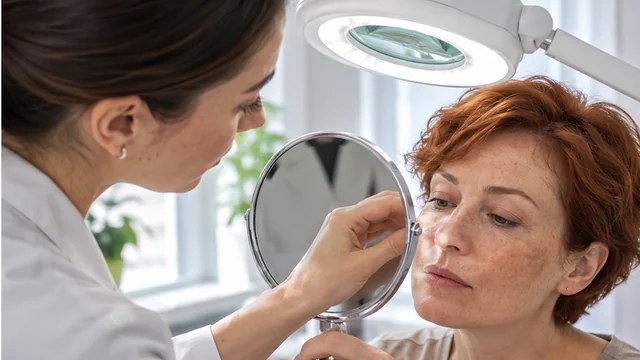
The clinician will ask when it started, how fast density changed, about fever, childbirth, weight loss, dieting, new medication, thyroid conditions, menstrual history, itch or scalp pain, and family patterns. Mention supplements and attempted treatments as well as haircare products. Do not stop a prescribed medicine simply because shedding started around the same time: assess possible causation and alternatives together with its prescriber.
An examination looks at scalp condition and thinning pattern. Trichoscopy, a magnified look at scalp and hair, can reveal differing shaft thicknesses and signs of inflammation. Sometimes a gentle hair-pull test is used. Blood tests should follow your history and findings; a blood count, iron studies or thyroid tests may help investigate suspected causes. A long generic “hair panel” is not automatically necessary. If scarring disease is suspected or the diagnosis is unclear, a small scalp biopsy may be advised.
Bring earlier photographs of your parting if you have them and an approximate date when shedding started. For monitoring, use the same parting, styling, lighting and camera distance: daily photos after every wash may create more anxiety than insight. Your clinician may recommend objective density checks at sensible intervals. If you have used minoxidil or other products, say which ones, their dose or concentration, how long you took or applied them, and any skin reactions.
Which treatments are used for which diagnoses?
When shedding follows stress, illness or childbirth
With typical telogen effluvium and no other ongoing cause, the main response is to address the trigger where possible and allow the hair cycle to recover. Improvement takes months because new hair grows gradually. In acute cases shedding often settles over roughly 3–6 months, while visible density may take longer to return. If you were eating too little, restore adequate protein and energy intake; treat confirmed deficiencies with medical guidance. Avoid high-dose iron or vitamins without evidence of deficiency: excess amounts can also cause harm. If marked shedding persists, patches appear or the parting widens, review the original diagnosis.
When the parting becomes wider over time
For female-pattern thinning, topical minoxidil is among the best-studied options. It can slow further thinning and improve growth in some hairs but cannot guarantee your former density. Shedding sometimes temporarily increases when treatment begins; a few weeks is too soon to judge success. Response is usually assessed over approximately 6–12 months of consistent use. Benefits gradually fade when the treatment is stopped. Choose the concentration and schedule with a clinician or from the instructions for the specific locally registered product, not an influencer's routine.
Minoxidil may cause irritation, itching and dryness; if it spreads beyond the scalp, unwanted facial hair can appear. The American Academy of Dermatology recommends avoiding it during pregnancy, when planning pregnancy and while breastfeeding. Low-dose oral minoxidil is a different option sometimes prescribed by specialists in selected circumstances. It is not an over-the-counter substitute for topical treatment: cardiovascular risks, medication interactions and monitoring require assessment. Whether a medicine is appropriate depends on contraindications and local regulatory status, not just online information.
A dermatologist may sometimes discuss an antiandrogen such as spironolactone when the hair-loss pattern and medical circumstances support it. Such medications may be used off-label for hair loss and require checking contraindications, drug interactions, pregnancy status and plans. Finasteride is used for some forms of hair loss, but its use in women needs especially careful individual assessment. It is contraindicated during pregnancy because of potential harm to the developing fetus; for anyone who could become pregnant, risks and reliable ways to prevent fetal exposure must be discussed before any prescription. For example, the US label for finasteride 1 mg states that it is intended for men only and is not indicated for women; local rules still need to be checked separately. Spironolactone is also generally not recommended during pregnancy because it could affect fetal development. Never start hormone-active treatment using another person's dosing plan, alter doses yourself or assume all countries authorise the same use.
When distinct bald patches appear
Alopecia areata is an autoimmune disorder in which the immune system attacks hair follicles. For smaller patches, a dermatologist may consider topical treatment or corticosteroid injections into the area; regrowth sometimes occurs without treatment. Severe, widespread disease can be treated with certain systemic drugs, including JAK inhibitors that alter immune signalling, but these require specialist diagnosis, laboratory monitoring, infection screening and assessment of serious risks, including severe infections, blood clots and cardiovascular complications described in warnings for some drugs in this class. Approvals depend on the specific medicine, country and age group. This is not a decision for a cosmetic clinic based on an online diagnostic label.
When inflammation threatens to scar follicles
In scarring alopecias the priority is to reduce inflammation and stop damage to follicles that are still alive. Topical, injected or systemic anti-inflammatory medicines may be needed, according to the specific disease. A follicle replaced by scar tissue cannot be promised to regrow hair. Seek assessment promptly for scalp tenderness, burning, persistent redness, scaling around individual hairs or rapid movement of the hairline.
Where do PRP, mesotherapy, lasers and transplantation fit?
You may see offers for platelet-rich plasma (PRP, a concentrated component prepared from your own blood), injected mixtures, laser devices and hair transplants. These are not a single universal “course against shedding.” Some have encouraging research for certain diagnoses, but protocols and quality of evidence vary. Mesotherapy mixtures are not automatically standardised for ingredients or safety. No one can legitimately promise that any injection “feeds hair bulbs” or substitutes for treating inflammation or inherited thinning.
Transplantation relocates existing follicles; it does not correct why they are being lost. It may suit selected stable thinning patterns after evaluating the donor area and controlling active loss. Timing and indications require particular caution in active scarring disease or uncontrolled shedding. Any invasive technique also brings recovery costs—soreness, visible marks and possible complications—and should not be chosen solely because of a glossy photo of thick hair. Ask what outcome was measured and whether the study addressed your particular diagnosis.
What timeline is realistic, and how can you judge progress?
For telogen effluvium, clinicians monitor decreasing shedding and gradual return of density over months, not the day after you improve your diet. For inherited thinning, stabilising the parting and preserving hair over time may be the goal; a little fine regrowth in the first month is not a final success measure. For inflammatory alopecia, stopping new patches and relieving burning may count as a meaningful result even if older bald areas remain. Agree on these criteria before treatment, or photographs may never seem convincing.
Ask when follow-up is planned, what will be measured and when an ineffective plan will be reconsidered. Bleaching, a new haircut or voluminous styling may alter how your parting looks without necessarily increasing functioning follicles. For events or photographs, styling, hair fibres or powders, hairpieces or a wig may make you more comfortable while tests are underway or slow treatments take effect. They are practical options, not a sign of giving up.
What can you do at home without losing valuable time?
Gentle washing as often as your scalp needs does not cause pathological hair loss: hairs that have already completed their cycle become visible in the shower. Avoid constant pulling from tight hairstyles or heavy extensions, repeated scalp injury and harsh brushing of wet hair. You need not fear every hair dye, but if strands are breaking, reduce chemical and heat damage. Haircare can improve comfort and reduce breakage; it cannot treat autoimmune or scarring alopecia on its own.
Expensive “growth complexes” are not universal treatment: without a deficiency, added nutrients often lack proven benefit and may interact with medicines. Be especially wary of self-prescribing high doses of biotin, which can distort some laboratory tests; tell your doctor if you take it. Do not put irritating mixtures on an inflamed scalp or try to “wake follicles up” with home needling. If money is tight, prioritise a proper diagnosis, treatment of the identified cause and checking progress over a series of unproven procedures.
When should you book a routine visit, and when should you seek help sooner?
A non-urgent dermatologist appointment is reasonable if thinning progresses, hair density has fallen for several months, the parting looks different or you are troubled by shedding, even without other symptoms. Arrange earlier assessment for new patches, tenderness, burning, pustules, persistent redness, crusting, scarring areas or rapid changes to the hairline: some causes need timely treatment to protect follicles. Significant general symptoms accompanying hair changes also call for a wider medical evaluation.
Questions for a first appointment include: “What diagnosis is most likely and what argues against it?”, “Which blood tests would change treatment?”, “How will we distinguish temporary shedding from inherited thinning?”, “Which treatments have evidence for my diagnosis?”, “When will we review the result, and what if nothing improves?”, and “Do my current medicines or pregnancy plans limit the choices?” You deserve specific answers; offering everyone an identical treatment course without examining the scalp is a weak basis for consent.
You do not have to settle everything at one visit. When evidence is incomplete, seek a second opinion; for temporary telogen effluvium, monitoring without invasive procedures may be reasonable. The point of treating hair loss is not to promise thick hair at any cost but to protect what can be protected, treat reversible causes and identify diseases where delay matters. For everyday measures, see how to reduce hair shedding, but choose medication only after establishing the diagnosis.
Frequently asked questions
Can one person have several causes of hair loss at once?
Yes. Temporary telogen effluvium can overlap with inherited thinning or iron deficiency, for example. Identifying one trigger does not always end the investigation.
Should I count every hair that falls out each day?
Usually not. The number you see depends heavily on how often you wash and brush. Persistent changes in the parting and density, matched photographs and your symptom history are more useful for your dermatologist.
If shedding stops, can I stop treatment immediately?
It depends on the diagnosis. Treatment for a temporary trigger may end, while stopping maintenance therapy for inherited thinning often leads to the loss of gains. Discuss stopping medication with the clinician who prescribed it.
Sources
- AAD: female-pattern hair loss and minoxidil
- AAD: hair-loss diagnosis and treatment
- British Association of Dermatologists: telogen effluvium
- AAD: alopecia areata treatments
- AAD: scarring alopecia and the importance of early treatment
- FDA: biotin interference in laboratory tests
- MotherToBaby: finasteride and pregnancy
- DailyMed: finasteride pregnancy warning (United States)
- DailyMed: JAK inhibitor prescribing warnings (United States)