
Rosacea: signs, triggers and gentle skin care explained
Red cheeks and burning skin: is it really rosacea?
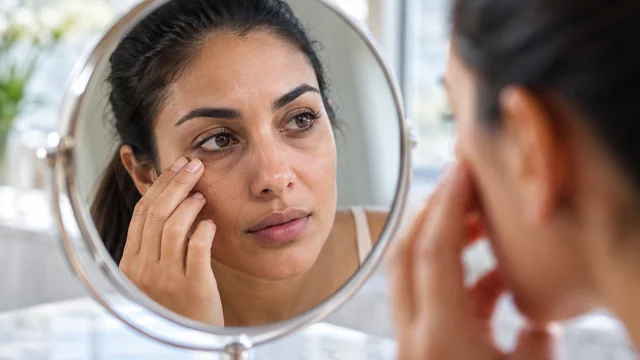
Perhaps your face flushes after a hot drink or in warm weather, while a familiar cream suddenly stings. Small inflamed bumps may have appeared on cheeks that used to feel comfortable. Rosacea is one possibility: a chronic inflammatory condition that can cause facial flushing, sensitivity and sometimes spots. But neither a photograph nor the colour of your cheeks establishes a diagnosis; other conditions can look similar.
The key point: rosacea can usually be managed, but there is no reliable promise of a permanent cure. First identify whether flushing, constant discolouration, visible vessels, inflamed bumps or eye symptoms predominate. That determines whether care, medication or a light-based procedure may help. Eye symptoms call for medical assessment before any cosmetic treatment.
Which signs matter beyond ordinary blushing?
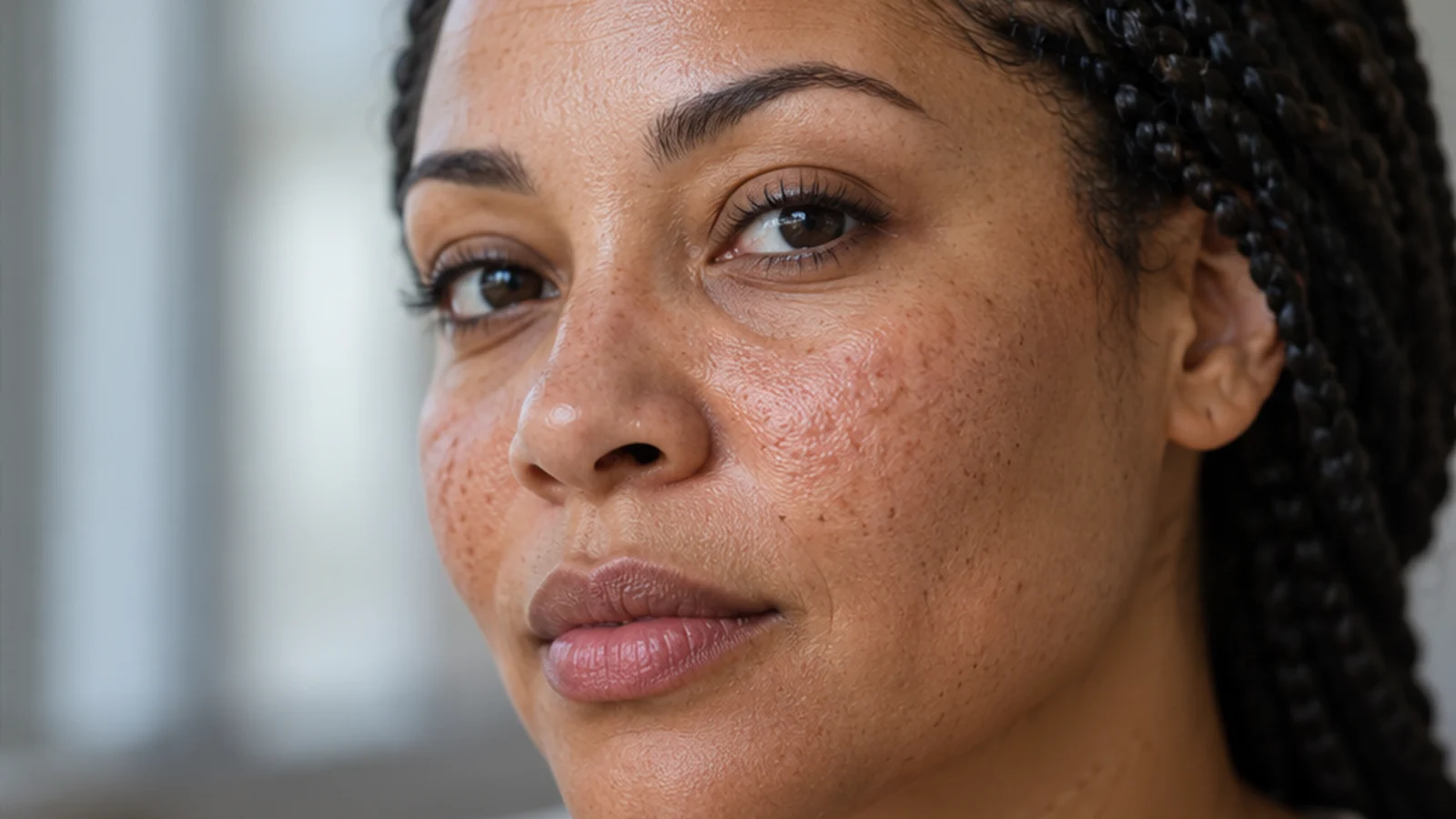
One person has sudden facial warmth and flushing; another has persistent colour in the centre of the face and tiny visible vessels. Others develop inflamed red bumps or pustules resembling acne, sometimes with burning. Skin may feel dry, swollen or sore when products are applied. On deeper skin tones, red colour can be less obvious; warmth, stinging, spots or a change in usual pigmentation may be more noticeable.
Less often, the skin gradually thickens, particularly around the nose; a soothing serum is not enough for that. Clinicians also assess eyelids and eyes: gritty sensation, dryness or watering, redness, crusting near eyelashes and sensitivity to light. Eye symptoms can precede obvious facial redness. Several signs may coexist, so giving someone one permanent “type” can obscure the full picture.
What else can look similar?
Acne commonly features comedones, or blackheads and whiteheads, which are not typical of rosacea, although the two can coexist. Contact dermatitis may follow an irritant or allergy and often involves itching, scaling or a clear link to a new product. Seborrhoeic dermatitis often brings flakes around the nose, eyebrows and scalp. Medication reactions, photosensitive illnesses and other causes of rashes, including lupus, sometimes need excluding. Guesswork can worsen irritation.
Dermatologists usually make the diagnosis from symptoms and an examination; no universal “rosacea blood test” exists. Tests or other specialist opinions are reserved for atypical cases or suspected alternative diagnoses. Write down when symptoms started, what products you used, possible triggers and any eye problems. Photos taken in similar light on ordinary and flare days help show changes but do not replace examination.
When should you not wait for a cosmetic consultation?
Eye pain, noticeable blurred or reduced vision, light sensitivity or marked redness in an eye require urgent medical attention, ideally an ophthalmic assessment. These symptoms may indicate corneal involvement or another eye disorder and cannot safely be diagnosed through an article. New grittiness in the eye, even without severe pain, is also a reason to seek urgent medical assessment to exclude corneal disease. If the only issue is long-standing dryness without a red eye, pain, light sensitivity or visual changes, arrange a routine medical assessment rather than a cosmetic procedure.
Sudden redness is not always rosacea. Rapidly worsening one-sided pain, hot swollen skin, fever, feeling seriously unwell or a spreading rash need urgent assessment for infection or another acute cause. Severe facial swelling with breathing difficulty is an emergency. Do not start peels, lasers or unfamiliar active skin products while these symptoms are present.
Why does it happen, and is one product to blame?
Rosacea has no single established everyday cause. Individual susceptibility, skin immune responses, blood-vessel regulation and the skin barrier all play a part. Skin organisms, including Demodex mites, are being studied, but finding the mite alone is not diagnostic. Rosacea is neither caused by poor hygiene nor transmitted through contact.
Sunlight, overheating, cold or wind, alcohol, spicy dishes, hot beverages, stress and vigorous exercise may provoke episodes in some people. This is not a universal prohibition list. If coffee or running does not affect you, there is no reason to ban it automatically. Keep brief notes for two to three weeks about activities, weather, products and skin changes. Even a flare on the following day may reflect several overlapping factors; the aim is to discover your own patterns, not police every choice.
When the skin burns, temporarily simplify rather than adding a new “calming” product daily. Fewer unfamiliar ingredients make reactions easier to interpret. Ordinary skincare can ease discomfort, but it cannot treat every form of inflammation or complications involving the eyes.
Which treatments match which signs?
Start with the symptom, not the machine. Medication and procedures address different problems. A combined plan may be helpful, but controlling inflammation and restoring tolerance of basic care often comes first. This comparison supports a dermatologist discussion; it is not a prescription.
| Main concern | Options commonly considered | What not to expect |
|---|---|---|
| Inflamed red papules and pustules | Prescription topical treatments such as azelaic acid, metronidazole or ivermectin; sometimes systemic therapy for more pronounced disease | Vascular laser alone does not replace control of inflammation |
| Persistent colour and fine visible vessels | Gentle care; assessment for vascular laser or IPL for persistent vessels; certain topical medicines temporarily lessen redness | One session cannot guarantee that flushing or new vessels will never return |
| Flushing triggered by heat, emotion or drinks | Identify personal triggers, prevent overheating and discuss treatments with a clinician | No universal technique permanently switches off skin reactivity |
| Dryness, burning and poor tolerance of cosmetics | Restore gentle cleansing and moisturising, protect against sunlight daily and avoid irritating products | Skincare does not substitute for medicines when inflammation is active |
| Eyelid and eye problems | Eye assessment, individually prescribed lid care and treatment according to severity | Facial cosmetic procedures cannot treat eye disease |
| Thickening of the nose or other skin | Dermatologist examination, then specific medicines or procedures when needed | An ordinary cream cannot reverse established tissue thickening |
Even azelaic acid can sting sensitive skin, so the regimen depends on tolerance. Oral drugs including doxycycline, and in selected severe cases isotretinoin, require prescription and review of contraindications and interactions. Vasoconstricting topical drugs can temporarily reduce persistent redness, but results wear off and sometimes redness rebounds or worsens. Medicines have different registrations and availability in different countries; do not assume a foreign label applies locally.
What daily routine is least likely to irritate?
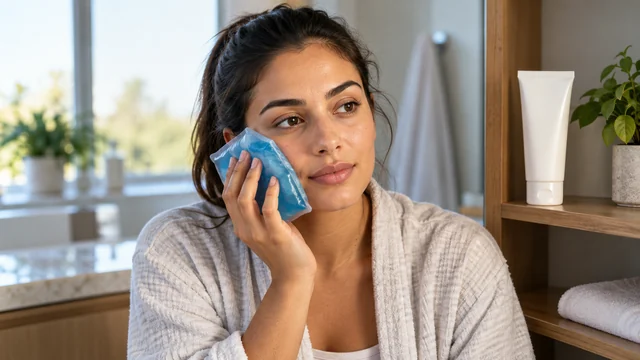
You need a predictable basic routine rather than many steps: gentle cleansing without scrubs or brushes, fragrance-free moisturiser and broad-spectrum SPF 30 or higher each day. Use lukewarm water, avoid rubbing and pat dry. You need not endure severe stinging for promised “renewal”. Mineral sunscreens feel more comfortable for some people, but personal tolerance matters most.
Be cautious with strong acid peels, alcohol-based toners, perfumed masks and repeated exfoliation, especially during flares. Do not apply steroid creams to your face without advice: prolonged inappropriate use can worsen similar eruptions. Ask how to layer prescribed medicine, moisturiser and sunscreen. A non-irritating foundation or colour-correcting product is a valid choice; covering redness does not mean ignoring your health.
A practical plan for the coming week
If a shoot or work event is approaching while your skin already burns, avoid experimenting with acids, massage or unfamiliar treatments. Return to products you tolerate, limit overheating and test makeup beforehand. Newly prescribed treatment may need weeks to improve inflammation, not a fixed day; discuss your own timeline with the dermatologist. Calm, comfortable skin is more useful before an event than a promise of instant perfection.
Will laser or IPL remove redness forever?
Vascular lasers and intense pulsed light (IPL) can reduce visible vessels and persistent redness in appropriate patients. IPL is broad-spectrum light, not a laser. Settings, wavelengths, pigmentation, tanning and operator experience matter to safety. Plan alongside a dermatologist when inflammation is active. New vessels and flares remain possible even after a good outcome because rosacea is chronic.
Immediately afterwards, redness, warmth and swelling may increase; bruising, crusting or temporary pigmentation changes sometimes occur. Burns, persistent pigment change and scars are more serious possibilities. “No downtime” can therefore be misleading: you may feel well enough to work yet prefer not to appear without makeup. Visible recovery cannot be precisely promised without assessing the method and your skin.
If discretion matters, ask about a test area, reactions for your skin phototype, sun avoidance and when to resume usual products. Injectable “cocktails”, harsh peels and resurfacing are not standard rosacea care merely because they are advertised for “red skin”. When the skin barrier is inflamed, they may make things worse.
How will I know the plan is working?
Your dermatologist can set baseline signs to track: fewer bumps, less burning, better tolerance of care, less frequent flushing and less obvious vessels. Do not judge an anti-inflammatory medicine after a single day. Topicals for inflamed lesions work gradually, temporary redness medicines follow a different schedule, and vessel procedures have their own recovery phases.
Agree on follow-up, who to contact about an unwanted reaction and when to reconsider the plan. If a cream progressively irritates or the agreed trial brings no improvement, revisit diagnosis, application, tolerance and prescription rather than doubling the dose. Sometimes anti-inflammatory medicine plus gentle care is needed before discussing visible vessels.
Relapses can occur even after long quiet periods. Maintenance need not mean an endless series of expensive appointments: suitable daily care, sunscreen, realistic personal trigger management and review if new symptoms arise may be enough. If signs are mild and do not trouble you, observation and gentle care after diagnosis can be reasonable; cosmetic procedures are optional.
What should I ask to remain in control of the decision?
- What points to rosacea in my case, what needs ruling out, and do I have eye involvement?
- Is the priority reducing inflamed lesions, burning, flushing or visible vessels?
- Which minimally invasive options can we start with, when should we assess results, and what would change the plan?
- How do the treatments fit my medicines, possible or planned pregnancy, sensitive skin and routine?
- If a light procedure is proposed, what alternatives exist, what risks apply to my phototype, and what will other people see during recovery?
- What should I do if symptoms suddenly worsen, what needs urgent help, and whom should I contact about the eyes?
You do not have to decide at the first appointment. A good explanation says what is being treated, why the method fits and what happens if it fails. Advertising photos cannot predict the response of your particular redness: check lighting, skin tone, timing and other treatments. A plan for normal days matters more than a perfect-looking promotional image.
Frequently asked questions
Could I mistake a post-workout blush for rosacea?
Yes. A short-lived flush after exercise alone does not establish disease. Repeated or lasting changes accompanied by burning, irritation, spots or eye symptoms deserve assessment.
Can rosacea spread through towels or kissing?
No. Rosacea is not considered infectious. Some skin infections can resemble it, which is why unusual presentations need diagnosis.
Does everyone with rosacea need a Demodex test?
No. Finding mites on skin is not the same as diagnosing rosacea. A clinician decides whether further testing is warranted by the examination and other possibilities.