
Under-eye bags: causes, home care and correction options
You notice puffiness under your eyes in the morning, but by lunchtime it has nearly gone. Or the same bulges have appeared in photographs for years, regardless of how much you sleep. Both are called “under-eye bags”, although their causes and possible solutions are different. First establish whether you are seeing fluid, a structural bulge, excess skin, or a shadow cast by a hollow. A cream and an operation cannot substitute for one another; sometimes the right person to see is a doctor investigating the swelling, not an aesthetics practitioner.
A small, familiar, symmetrical swelling without other symptoms is often simply an appearance concern and does not necessarily need treatment. If swelling starts suddenly, grows rapidly, hurts or affects your vision, do not postpone medical assessment in favour of a cosmetic procedure. No before-and-after picture can replace this distinction.
Why bags appear: four different pictures that can look alike
Morning puffiness. Fluid can temporarily collect in the lower eyelid tissues. Swelling may stand out more after sleeping, a salty meal or exposure to an allergen, then change through the day. Itching, sneezing and watering eyes are clues that a clinician should consider allergy. Medicines and medical conditions can also contribute; neither can be diagnosed from appearance alone.
Persistent fat bulges. With age, the supporting structures of the lower eyelid change and the fat around the eye may protrude more. People sometimes call these “fat pads” or “under-eye hernias”, although those are informal descriptions. Drinking less in the evening will not make anatomical fat disappear, and massage cannot remove it. Inherited facial structure can make these bulges visible even at a younger age.
Loose or excess skin. Thin skin may gather in folds, particularly when you smile; extra skin sometimes appears alongside protruding fat. A skincare product that makes the surface look smoother cannot physically remove marked excess skin. The treatment questions here are different from those about puffiness alone.
A shadow or hollow. The tear trough is the indentation between the lower eyelid and cheek; in side lighting it may resemble a dark semicircle. A neighbouring small bulge may heighten that contrast. A hollow, skin pigmentation and a bluish vascular tone can all create a “tired eyes” impression, but they are not the same thing as bags. There is a separate page about under-eye hollows; here the key question is whether there is actual bulging or swelling.
How to recognise which situation you may have
This guide is not a substitute for an examination. It helps you describe what you notice so the conversation is about your particular situation, rather than a vague promise to “rejuvenate”.
| What you notice | What it may suggest | What to do next |
|---|---|---|
| More noticeable on waking, then decreases; both eyes | Changing fluid retention, sleep, diet; sometimes allergy | Observe the pattern; discuss recurrent symptoms and their cause with a doctor |
| A bulge that has looked similar for years | Protruding fat pads and the arrangement of surrounding tissues | If bothersome, seek an assessment of eyelid anatomy by a specialist rather than buying a “drainage” course |
| Main concern is a dark stripe in certain lighting | A tear trough, pigment, vascular colour or shadow | Clarify whether the concern is colour or contour; do not assume filler is the answer |
| New swelling on one side, redness, pain or vision changes | Possible inflammation or another medical condition | Seek prompt medical assessment; vision change, severe pain or marked deterioration warrant emergency care |
When under-eye bags are not a cosmetic issue
Consult a doctor about persistent, unfamiliar or worsening swelling, particularly with a rash, irritation, headache, allergy symptoms, swelling elsewhere on the body or feeling generally unwell. The clinician can review the eyelids and eyes, your medicines and other symptoms; when indicated, they may investigate thyroid or kidney disease, inflammation or another cause. A blanket panel of tests without a history or examination is not necessary, but lack of pain does not prove that swelling is only cosmetic.
Emergency signs include sudden loss or change of vision, severe eye pain, marked redness with a painful swollen eyelid and fever, noticeable protrusion of the eyeball or difficulty moving the eye. Do not book a device-based cosmetic procedure for these symptoms. If you develop sudden, severe one-sided swelling, do not vigorously massage the area or apply steroid ointment near the eye on your own.
What you can try at home, and what it cannot do
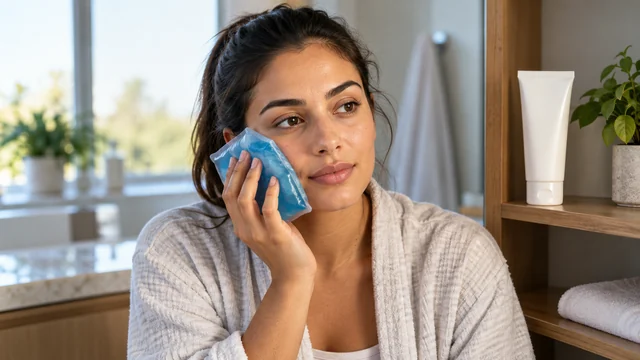
If the swelling is familiar, soft, fluctuates after sleep and has no warning signs, it makes sense to start without a procedure. A cool, not icy, compress over closed eyelids for a few minutes may temporarily reduce puffiness. Adequate sleep, avoiding excess salt, not smoking and attending to allergy symptoms help some people. Where allergy is present, treatment should address its actual manifestations, not just the appearance of the eyelids.
Hard rubbing, scalding compresses, home acid treatments and self-injections near the eye are not safe skincare. Eye patches might make the skin feel pleasant or briefly lessen puffiness, but they will not reposition protruding fat. Be equally realistic about creams promising to “remove bags forever”: no cosmetic cream corrects a substantial anatomical bulge.
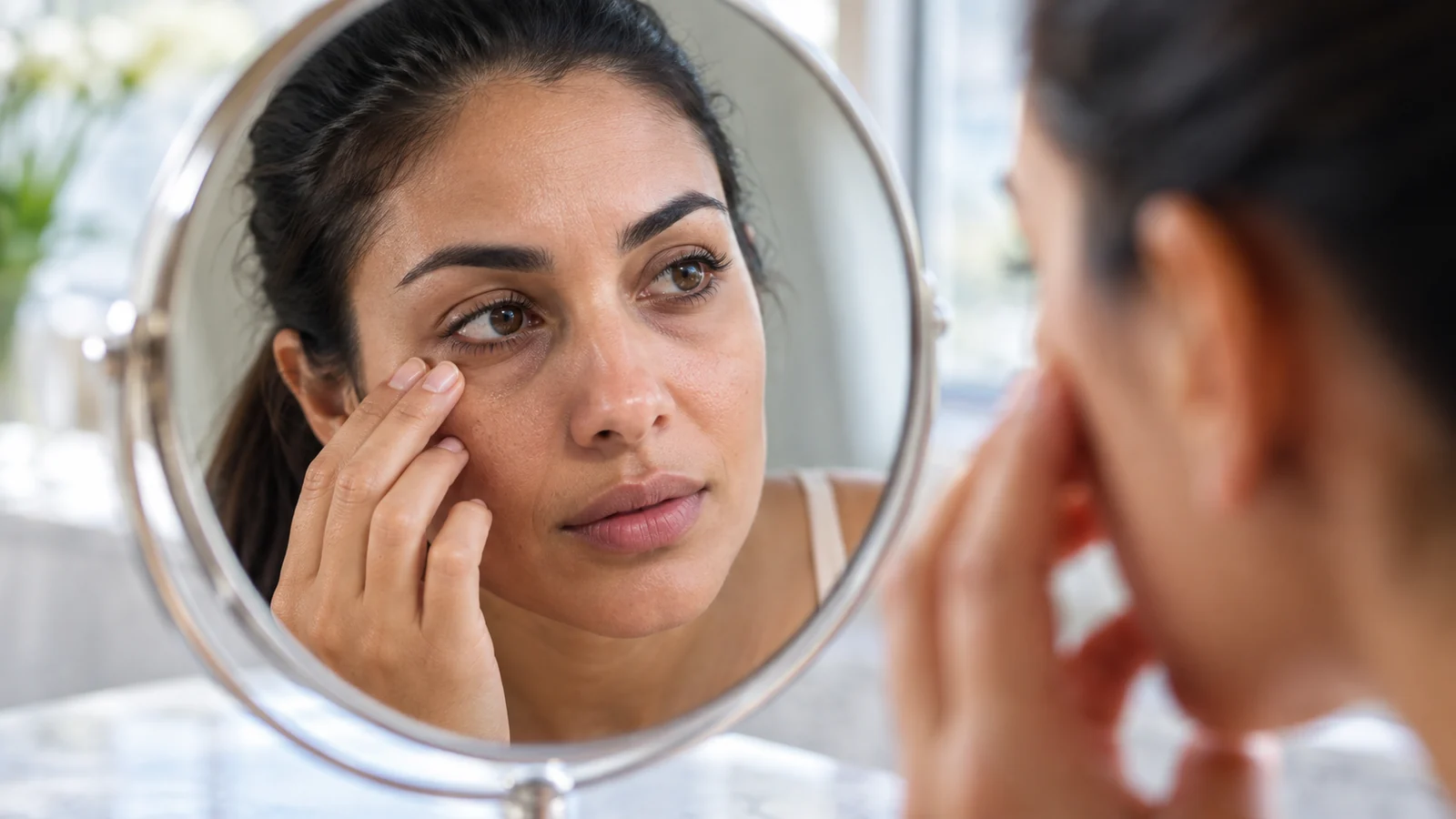
To avoid being misled by random lighting, compare your face in the same place in the morning and evening, at roughly the same distance from the mirror. If you wear contact lenses or have dry eyes, mention this before any eyelid procedure: the comfort of the eye surface matters as much as its contour.
Which approaches suit which causes?
These are treatment categories, not a list of services claimed to be available locally. Once the cause is understood, you may choose self-care, medical treatment of an underlying condition or a discussion of aesthetic options. For some combinations there is no single ideal procedure.
| Approach | What it may change | Main limitation |
|---|---|---|
| Observation, sleep and avoiding triggers | Fluctuating morning puffiness | Does not remove lasting fat bulges or excess skin |
| Treatment of a diagnosed allergy or illness | Swelling driven by that particular condition | Not something to prescribe “just in case” for appearance |
| Gentle skincare, makeup and choosing photographic lighting | How noticeable skin texture and shadows look | Does not change deeper anatomy and may not change the contour |
| Filler injection for a carefully assessed hollow | Sometimes the transition from eyelid to cheek, not the bag itself | Can worsen true puffiness; high-risk region with serious vascular complications |
| Lower blepharoplasty (eyelid surgery) | In selected cases, position or volume of fat pads, sometimes excess skin | Surgery, not skincare: recovery, complications, eye shape and scarring must be considered |
Extra caution is needed with injections around the eyes. In a carefully selected person with a hollow, filler may smooth the eyelid-to-cheek transition, but it does not “dissolve” bags. Swelling, a bluish tint, unevenness and prolonged fluid retention may occur. The US FDA states that injecting fillers around the eyes is not an approved use in the United States; this says nothing about their legal status in Armenia. Rare accidental injection into a blood vessel can cause tissue necrosis, vision problems including blindness, or stroke. Sudden severe pain, pale or bluish skin, altered vision, sudden weakness or difficulty speaking after an injection requires immediate emergency medical care.
Surgical correction is considered after an in-person assessment of persistent structural changes. Lower blepharoplasty may involve repositioning or removing some fat and treating skin; the surgeon selects the technique. The state of the ocular surface, lower-lid position, dry-eye tendency, previous procedures and expectations all matter. Possible risks include asymmetry, prolonged swelling, dryness, a changed eyelid position, infection and, rarely, serious vision damage. Nobody can guarantee perfect symmetry or an end to a “tired look” from a photograph.
How long will you look as though you have had a procedure?
“Recovery” means different things for different options. An ordinary cool compress has no healing period. An injection can leave visible swelling or a bruise even if you are able to work the same day. After surgery, medical restrictions and how noticeable you look socially are not the same. According to the American Society of Plastic Surgeons, many patients look presentable after 10–14 days, while full healing can take months. This is a professional guideline, not a promise for any one patient.
During the first days after blepharoplasty, bruising, irritation, swelling, dry-eye sensations or temporary sensitivity to light are possible; the surgeon may recommend particular drops or ointment. Do not schedule a public event, photo shoot or trip for a date when your appearance must be completely predictable: allowing extra time matters more than the average figure. Ask your surgeon when to resume exercise, contact lenses and makeup; a generic online instruction may not match your operation. Before an injection, also establish restrictions, a complication-response plan and how to access urgent help.
How to ask for a natural result without accepting too much
Naturalness is more than a smooth outline. Your lower eyelids should retain their familiar movement, shape and comfort. Erasing every shadow may require extra volume that makes the face look heavier. Correcting a bag may reveal an existing hollow or a feature of the skin. A productive discussion starts with what bothers you specifically: morning puffiness, a fixed bulge at the side, or colour in a particular light.
Before consenting, ask the clinician to name the principal cause, show it in different light and explain which parts the proposed method cannot fix. For surgery, ask about experience operating on eyelids and arrangements for complications. For injections, ask for the precise product, regulatory status in the relevant jurisdiction, why this high-risk area is being considered, the practitioner's training and the emergency-care pathway. “It works for everyone” is not a medical explanation.
When examining before-and-after photos, check head tilt, direction of lighting, expression, time elapsed after treatment and amount of makeup. An “after” shot immediately following treatment might hide later swelling or, conversely, show healing that is not yet finished. Ask whether the pictured person had the same underlying issue: success for a hollow does not prove success for swollen bags.
What happens if you do nothing?
For a familiar aesthetic feature, declining a procedure is a complete and legitimate option. Fluctuating swelling may lessen with changes in habits or treatment of its cause. Structural fat bulges can change as facial tissues age, but their pace is unpredictable. Natural ageing continues even after successful surgery, so “forever” claims are not accurate.
A useful order of decisions is: rule out a medical cause, distinguish a bulge from a hollow, then compare conservative and invasive approaches in light of your own comfort with risk and recovery. If you like how you look in ordinary daylight, there is no need to alter it because of one unflattering photograph.
Frequently asked questions
Why are bags more noticeable on one side after sleeping?
Head position and fluid distribution can affect morning appearance, but persistent or new swelling on one side should not automatically be blamed on sleep. If it persists, worsens or comes with other symptoms, seek medical evaluation.
Can an old filler make the area look baggy?
Yes. In some cases, filler around the eye is associated with prolonged swelling or unevenness. Tell the clinician the product, location and injection date, and bring records if you have them. Do not try to massage or “dissolve” the material yourself.
Should I come to the consultation without makeup?
Ideally, the clinician should see the contour, skin colour and eyelid condition without concealer; makeup can be removed there if needed. Photographs of yourself under different daylight conditions may be even more useful.
Sources
- Mayo Clinic — Bags under eyes: symptoms and causes.
- Mayo Clinic — Bags under eyes: diagnosis and treatment.
- NHS — Eyelid problems and warning signs.
- U.S. FDA — Dermal fillers: indications and risks.
- American Society of Plastic Surgeons — Eyelid surgery recovery.
- American Society of Plastic Surgeons — Eyelid surgery results.