
Dark circles under the eyes: types, causes and what helps
You slept well and used your usual cream, yet the area under your eyes still looks dark. That does not necessarily mean you are tired, and there is no single “best treatment for dark circles” for everyone. In one person the colour comes from melanin, the pigment in skin; in another, vessels show through thin skin; in a third, a hollow or puffiness casts a shadow. Often several causes overlap. Working out what actually looks dark is more useful than immediately buying an expensive cream or choosing an injection or laser.
In most cases, symmetrical dark circles are a normal appearance concern rather than an illness. Sometimes, however, the eye area reacts to allergy or inflammation, a change in general health, or a local medical problem. When darkening is recent, particularly on one side, or comes with unusual swelling, pain or altered vision, seek medical assessment before any cosmetic treatment.
Why does the under-eye area look darker?
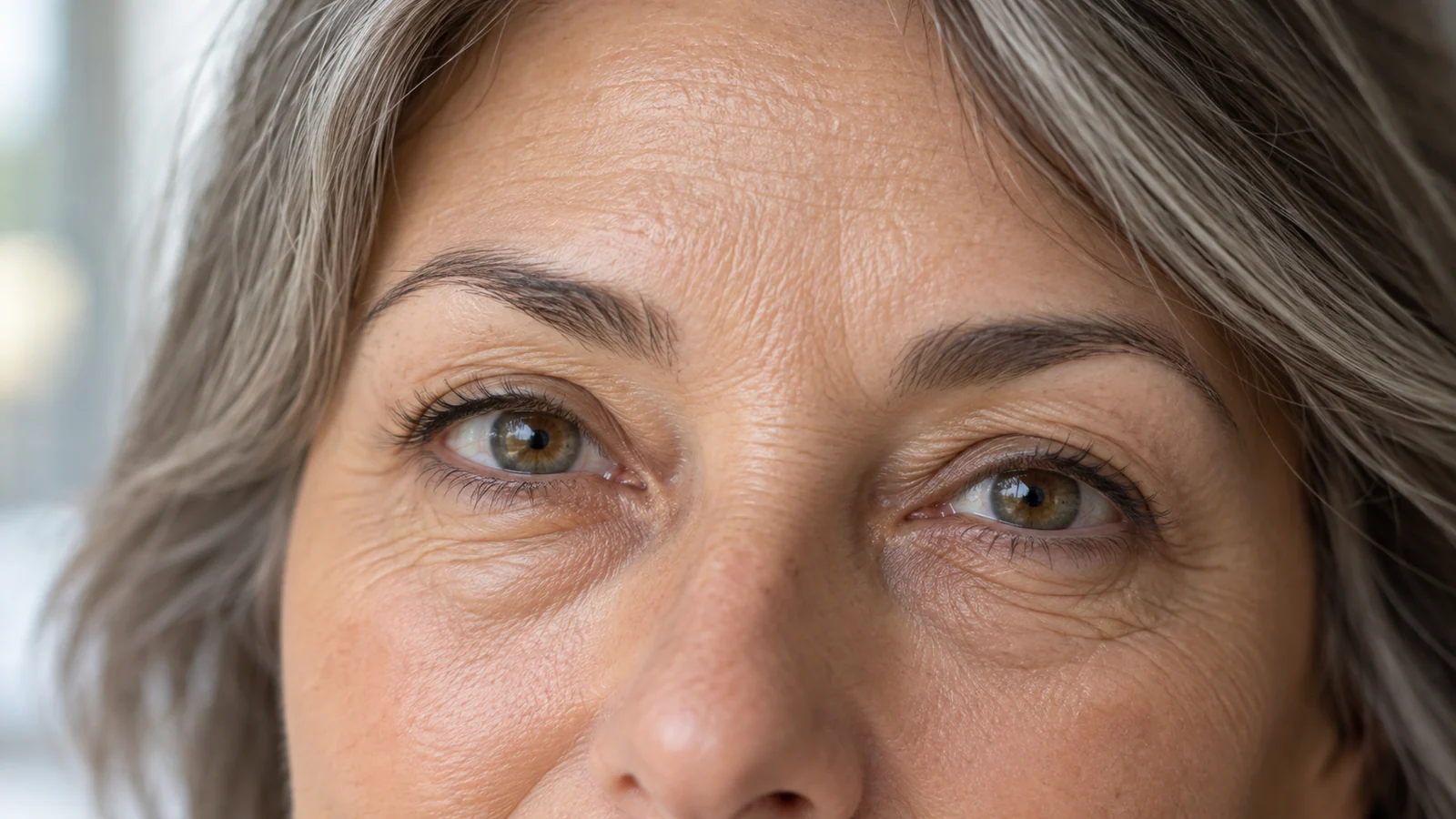
Notice not only the colour but where the darker area begins and ends. Brown that looks similar under different lighting may suggest pigmentation. A blue or violet cast may reflect vessels visible through thin skin. A dark line beneath a bulging lower lid that changes when you turn towards a window is often a shadow. A photograph or colour alone cannot establish the cause: skin tone, the camera and mixed mechanisms all influence the appearance.
Pigment. Hereditary characteristics, sunlight and inflammation after skin irritation may increase pigment production. For some people the area has looked dark since adolescence and similar colouring runs in the family. Eczema, a contact reaction to makeup or repeatedly rubbing the eyelids can leave post-inflammatory pigmentation. Your usual eyeliner, makeup remover or scented cream could maintain irritation without you connecting it to the circles.
Vessels and skin. Eyelid skin is thin, so vessels and deeper tissues can give it a bluish appearance. Age-related skin changes may make this more apparent. Poor sleep and dehydration can make someone look tired, but do not explain every persistent circle. If you also have itching, watery eyes and nasal congestion, investigate a possible allergy rather than trying to bleach the skin.
Volume and light. The tear trough, a depression between the lower eyelid and cheek, casts a shadow even when its skin is not more pigmented. Prominent lower-lid fat pads and swelling also affect the play of light. Overhead lighting can exaggerate the contrast in selfies. A detailed discussion of hollows belongs on the under-eye hollows page; here the key is distinguishing their shadow from a true colour change.
How can you work out which cause is more likely?
Observing at home is not a diagnosis, but it can help you ask a more precise question at the appointment. Compare your face in soft daylight looking straight towards a window, then in side lighting. Note whether darkness shifts as the light moves and whether you see scaling, itching, puffiness or a clearly pigmented border. Do not pull or rub your lids to perform an online “test”: it cannot reliably diagnose the problem and may itself irritate the skin.
| What you notice | What to ask at the appointment | Why it matters |
|---|---|---|
| Even brown colour on both sides | Is there pigment, sun exposure or residual irritation? | Pigment-focused skincare and sun protection may help; restoring volume may hardly change the colour. |
| Blue-purple colour, thin skin | How much comes from vessels, skin thickness or swelling? | Lightening creams may not hide tissues showing through. |
| A dark line that changes markedly with lighting | Is this a tear-trough shadow or a bulging lower eyelid? | A treatment targeting pigment may be ineffective. |
| Itching, redness, puffiness or repeated eye rubbing | Could this be dermatitis, allergy or an eye condition? | Treat inflammation and remove the irritant first; postpone procedures. |
| A mix of colour, hollowing and swelling | Which factor matters most, and what is safest to leave alone? | A single procedure seldom addresses everything. |
When do you need medical evaluation rather than a cosmetic procedure?
If your circles are long-standing, symmetrical and unaccompanied by other symptoms, a clinician can often assess them from the history and examination. There is no automatic reason for a panel of “all vitamin tests” just because of dark circles. With pronounced fatigue, breathlessness during ordinary activity, heavy periods, unusual pallor or other general symptoms, a primary-care clinician may decide whether tests for conditions such as anaemia are appropriate. Testing should follow symptoms, not a face photograph.
A routine dermatologist or ophthalmologist visit is sensible for persistent itching, inflamed eyelids, repeated swelling or pigmentation that changes after a new eye drop or skincare product. Some prescription eye medicines, including prostaglandin analogues, can change pigmentation around the eyes. Do not stop prescribed drops yourself. Tell the clinician which products you use and when the changes began.
Do not wait for a cosmetic appointment if swelling grows quickly on one side or you have eye pain, worsening vision, significant redness or fever: urgent medical assessment is needed. A recent injury or bleeding around the eye should not be covered with concealer and observed for weeks. Even a painless new one-sided swelling deserves medical assessment.
What can you try without a procedure?
With a pigment component, gentle skincare and consistent sun protection are a reasonable first step. By day, use a tolerated broad-spectrum sunscreen with SPF 30 or higher without getting it into the eyes; sunglasses and shade help too. When hyperpigmentation is an issue, tinted products containing iron oxides may also provide some visible-light protection. Even excellent SPF will not fill a hollow or make thin skin opaque.
If the skin itches or stings, consider temporarily stopping newly introduced active ingredients, fragranced cosmetics and harsh cleansing. Do not independently apply strong acids, retinoids or prescription lighteners close to the lash line: eyelid skin is delicate, and eye exposure is hazardous. A dermatologist can choose a site-appropriate regimen for pigmentation or dermatitis. Treatments intended for the cheeks should not simply be transferred to the eyelids.
Sleep, enough fluids and management of allergies may improve some temporary factors, but this is not a test of whether you are living “correctly”. Genetic colour and structural shadows will not vanish with one extra hour of sleep. A cool compress may briefly reduce puffiness but cannot treat persistent pigment. If your immediate goal is to feel comfortable at work or in photographs, a fine layer of colour-correcting concealer is a perfectly valid choice, not a failure to seek treatment.
Which aesthetic options match the different types of circles?
For persistent pigment, a clinician may discuss supervised topical treatment and, in selected cases, peels or laser procedures. Research on under-eye circles includes different methods, skin types and outcome measures, so a fixed session count or complete colour removal cannot be promised. Eyelid treatments demand careful eye protection and attention to irritation, burns and rebound or post-inflammatory pigmentation, including in darker skin phototypes. Not every device is suitable close to the eye.
When a hollow is the main cause, a specialist may consider a hyaluronic-acid filler for the tear trough or a surgical assessment if fat pads and excess skin are prominent. Filler does not remove melanin or treat allergy. In addition to swelling, bruising and contour irregularities, facial filler injection carries a rare but extremely serious risk of entering a blood vessel, causing tissue damage and vision impairment, including blindness. Persistent puffiness or a blue cast from superficial filler can also occur, especially with thin skin. The US FDA has approved specific products, including JUVÉDERM VOLBELLA XC and Restylane Eyelight, for treating under-eye hollows in adults. This does not authorise every filler for every injection around the eyes, or mean that filler treats pigmentation. Check registration and indications for the exact product in Armenia; regulatory approval does not remove the risks. Do not consent without discussing whether this is necessary, the clinician's experience near the eyes, alternatives and an emergency plan.
If prominent lower-eyelid bags contribute most, eyelid surgery can change the shadow but may not lighten true pigmentation. Anatomy, dry-eye symptoms, previous surgery and individual risks matter. Devices are sometimes considered for a vascular component, but suitability and safety next to the eye require separate assessment: “laser for dark circles” is not the name of one universal procedure.
When could you see a change, and what will other people notice?
Judge skincare over time, not the morning after the first application: pigmentation, if it responds, changes gradually and may never disappear fully. Strong topical products can cause dryness and irritation; that means the routine should be reviewed, not that the product is “working harder”. Peels or laser sessions can leave redness, swelling, flaking, crusts or temporary changes in colour. Social downtime depends on the exact method and settings, your skin and how visible a mark you are comfortable having in public.
Filler may change the contour immediately, but bruising and swelling can distort the early result and some problems appear later. If you have an important event in a few days, no one can promise the injections will be invisible even if you feel well. Visible marks and restrictions after eyelid surgery are generally greater than with skincare; plan the timing individually with the surgeon. Severe unexpected pain, rapid vision change or skin blanching after an injection needs emergency help, not a routine follow-up appointment.
How can the result stay natural?
Natural does not mean “do as much as possible”. Sometimes easing irritation and adjusting skincare creates a more rested appearance; sometimes a shadow can be softened but an innate facial feature cannot, and need not, be erased. With multiple causes, agree on the one component you genuinely want to change. Subtle volume correction may look better than trying to fill an entire trough; if you tend to swell, declining filler can be more sensible than any injection technique.
Ask the clinician to describe the likely cause for each eye, explain what the proposed method will not change and spell out recovery in your case. Ask whether a dermatologist or ophthalmologist should assess you; which medicines or products conflict with the treatment; what raises your personal risk; whether a no-procedure plan is safe; when to judge the final effect; and what happens if the outcome disappoints. Before-and-after photographs should match in lighting, camera angle, expression and time after treatment, or a change in shadow may masquerade as a treatment success.
Cost depends on more than the treatment's name: assessment, clinician qualifications, device or product, number of stages, follow-up and management of complications all matter. A single price list without a proper examination is a poor way to choose between pigment treatment and a volume intervention. If a practitioner cannot explain why a specific route fits your case, or promises to remove every type of circle completely, postpone the decision and seek a second opinion.
When is it better not to change anything?
If your circles have been stable for years, you feel well and only started questioning them after comparing yourself with a retouched photo, you do not medically need to change them. Put cosmetic treatment on hold for active dermatitis, unexplained one-sided swelling or eye symptoms until the cause is clear. With very thin skin, a strong tendency to swell or a higher risk of pigment complications, a chosen procedure may cause more trouble than benefit. You can choose skincare, makeup, a consultation, or no intervention after weighing the risks.
Additional questions
Can a new eyelash product cause dark circles?
Yes. Skin irritation or a reaction to the product may increase darkness; some eye medicines also change pigmentation. Note when symptoms started and show the clinician the product name or ingredient list. Do not stop ophthalmologist-prescribed eye drops on your own.
Why does concealer seem to emphasise my circles more than before?
Dryness, flaking and unsuitable makeup texture can make the border under the eye more obvious. That does not prove pigment has worsened: first look at bare skin in comparable lighting.
Sources and medical references
- Cleveland Clinic — Dark Circles Under Eyes
- Sarkar et al. — Periorbital Hyperpigmentation: A Comprehensive Review
- Treatments of Infra-Orbital Dark Circles by Various Etiologies
- American Academy of Dermatology — How to fade dark spots
- FDA — Dermal Fillers: Risks and Safety
- FDA — JUVÉDERM VOLBELLA XC: infraorbital hollow approval
- FDA — Restylane Eyelight: infraorbital hollow approval