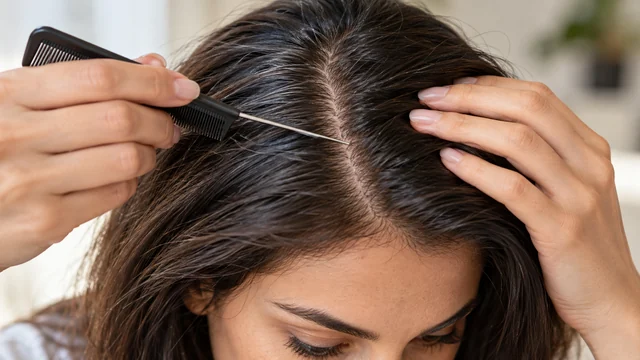
Hair Loss and Thinning in Women: Causes and Diagnosis
First the ponytail feels thinner. Then your part seems wider, and more hair collects in the drain after washing. It is tempting to buy a “thickening” product or book a procedure, while worrying about missing something important. For women noticing hair loss, the best first step is usually not injections or a device but working out which kind of hair loss is occurring and whether a medical problem needs prompt attention. Treatment depends on the cause: after temporary shedding, addressing a trigger and watching the pattern may be enough; female-pattern thinning often calls for continuing treatment; and inflammatory scarring conditions deserve early diagnosis.
Hair grows slowly. Looking in the mirror daily is a poor way to measure change, and promises to “restore full density in a few sessions” are not a dependable guide. Here is how to distinguish possible causes, prepare for an examination and avoid unnecessary expense or painful procedures.
Is the hair shedding, becoming finer, or breaking?
Increased shedding means more hairs are leaving the scalp during the hair cycle. Miniaturization means that hairs produced by affected follicles gradually become shorter and finer: this can occur with female-pattern hair loss, also called female androgenetic alopecia. Breakage may look similar, but the shaft snaps along its length after friction, heat styling, coloring or tight hairstyles; the follicle need not be damaged. More than one mechanism can coexist.
The number of hairs in a brush cannot establish a diagnosis. On a wash day you notice hairs that have already finished their growth cycle; when you wash less frequently, they accumulate. The pattern over time is more informative: sudden loss of volume all over, a slowly widening central part, discrete smooth patches or changes along the front hairline.
| What you notice | What it might mean | A sensible next step |
|---|---|---|
| Several months after an illness, childbirth or severe dietary restriction, shedding increases across the scalp. | Possible telogen shedding, a temporary shift in the growth cycle; it can also overlap with chronic pattern thinning. | Discuss recent events and nutrition with a clinician; do not start supplements or injections at random. |
| The part gradually widens, the ponytail gets thinner, and the scalp generally looks normal. | Female-pattern hair loss is possible; fine hairs may appear before obvious bare areas. | Arrange a dermatologist's examination and assessment of hair-shaft variation; discuss long-term options. |
| Round hairless patches appear, or eyebrows or eyelashes are lost. | Alopecia areata or another condition is possible; treatment differs from ordinary pattern thinning. | See a dermatologist for diagnosis rather than covering the problem with procedures. |
| Pain, burning, redness, crusts, pustules, shiny smooth skin or a rapidly receding hairline. | An infection or inflammatory scarring alopecia may threaten permanent follicle loss. | Seek an in-person assessment promptly; avoid injections and microneedling on the affected scalp. |
Why might this be happening now?
Think back over recent months: high fever, surgery, a substantial physical stressor, rapid weight loss, childbirth, a medication change or changed eating habits. Telogen shedding often begins some time after an event. Do not assume that emotional stress is the only explanation; medical causes matter too. Shedding after childbirth often gradually settles, but persistent worsening, patches or inflammation warrant assessment.
Changes in menstruation, acne, increased coarse facial hair and irregular cycles can help a clinician decide whether hormonal evaluation is needed. Yet normal hormone tests do not exclude female-pattern hair loss: follicles can have inherited sensitivity without elevated blood androgens. Thinning may become more noticeable during perimenopause or after menopause, but age is not itself a diagnosis.
Iron deficiency, insufficient protein intake, thyroid disease, certain medicines and inflammatory scalp conditions may also contribute. Do not stop prescribed medication yourself; speak to the prescriber about a possible connection. Constant traction is another cause: tight braids, ponytails and extensions can harm the hairline; changing styling habits early may help prevent further damage.
When not to wait or book a cosmetic procedure
Seek timely medical assessment if hair loss develops rapidly in patches, the scalp hurts, burns, becomes red or crusted, pustules appear, or areas seem to lack normal follicular openings. Rapid change of the frontal hairline with eyebrow loss also merits attention: some scarring alopecias irreversibly destroy follicles. Do not investigate these signs by needling your scalp at home. Fever, marked painful swelling or spreading redness calls for urgent in-person care.
Hair loss alone rarely needs an ambulance, but fainting, pronounced weakness, substantial bleeding or other acute symptoms should be assessed according to their own urgency. A painless scalp does not necessarily mean a harmless condition: types of alopecia present differently.
Which tests are useful, and which may be unnecessary?
A dermatologist normally starts with a history and examination: when it began, which area changed first, menstrual patterns, medicines and supplements, hair care and scalp symptoms. Older photographs of your part and an approximate timeline can help. Trichoscopy uses magnification to examine follicles, scalp and hair thickness and characterize the pattern.
Testing need not mean ordering “everything.” A blood count, iron-store assessment, thyroid tests and other investigations are chosen according to symptoms, diet, menstrual blood loss and examination. If there are signs of androgen excess, the clinician decides whether hormone tests are warranted; timing and interpretation can depend on contraception. Suspected scarring disease sometimes requires a biopsy, a small scalp tissue sample; it is not routine for every woman with a widening part. See more about scalp diagnostics.
If you are offered a package of injections without examination or a discussion of the type of alopecia, ask for the working diagnosis. The useful question is not “which tests will make my hair grow?” but “what cause is suspected, and how would each result change the plan?”
How does treatment depend on the cause?
For female-pattern hair loss, topical minoxidil applied to the scalp according to the specific product instructions is one of the better-studied options. Shedding can temporarily increase in the first weeks. Assessing benefit takes months, commonly around 6–12, and maintaining the effect generally requires continued use. Irritation, flaking and unwanted facial hair after accidental transfer are possible. Avoid minoxidil during pregnancy, while planning pregnancy and during breastfeeding; product approvals and instructions differ by country.
A clinician may discuss oral medicines such as spironolactone or low-dose oral minoxidil. These are not cosmetic vitamins: they carry contraindications, side effects, possible monitoring requirements and important pregnancy-related restrictions. Hair-loss use of some regimens is off-label, and a regulatory status abroad cannot be assumed to apply in Armenia. Do not self-prescribe or replace topical therapy with tablets without reviewing risks.
| Situation | Priority | What not to promise |
|---|---|---|
| Telogen shedding after an identifiable trigger | Address the cause, support nutrition and monitor; treat other detected conditions. | Neither mesotherapy nor PRP guarantees faster recovery. |
| Gradual female-pattern thinning | Discuss evidence-based medicines and realistic long-term maintenance. | Full return to former density or permanent results without ongoing care. |
| Patchy autoimmune hair loss | Dermatologist-led diagnosis and disease-specific treatment according to severity. | That everyday cosmetic products treat autoimmune inflammation. |
| Inflammatory scarring alopecia | Treat active disease promptly and protect remaining follicles. | That an already destroyed follicle can be revived by an injection. |
| Breakage from hair care or traction | Gentler styling, removing damaging habits and scalp assessment when needed. | That a follicle procedure repairs breakage along the hair shaft. |
What about PRP, mesotherapy, low-level light and microneedling?
These treatments often appear side by side in advertising, but they are not interchangeable or universal treatments for alopecia. PRP uses processed autologous plasma, mesotherapy injects assorted substances, microneedling makes controlled punctures, and low-level light uses no needles. Research is encouraging for some combinations and diagnoses, but evidence quality, substances, devices and protocols differ. None replaces treatment for infection, scarring alopecia or systemic illness.
Separate articles discuss the procedure experience and risks of PRP for hair, scalp mesotherapy and scalp microneedling. This page addresses the earlier choice: is a procedure needed at all? Sometimes the most reasonable answer is no, or not yet.
What will you see in the mirror over weeks and months?
Do not judge growth by the hairs left after one wash. Changing damaging styling habits may improve how hair feels sooner, but increasing actual density takes time. After temporary shedding, short new hairs may appear as the growth cycle recovers, while visible volume lags until they grow longer. In female-pattern thinning, the goal is often slowing further loss and gaining some thickness, not recreating the exact former hairline.
For a fair comparison, photograph the central part and temples using the same light, hair length, dryness, style and camera distance, perhaps monthly. Constant pictures from different angles may increase anxiety without providing better information. Changing your part, cutting your hair, camouflage fibers or a wig can help you feel comfortable now; these are valid choices, not a failure of medical treatment.
If a wedding, performance or photoshoot is close, think carefully before starting treatment that might temporarily increase shedding or irritate the scalp. Discuss that possibility in advance. Non-invasive treatments usually do not create procedure-type downtime, but a reaction to a topical product may be visible. After injections or needling, small marks may not be easy to conceal the same day.
What can you do at home, and where are the limits?
Eat enough food and protein, avoid crash dieting, reduce traction, harsh heat and chemical processing. A gentle shampoo and conditioner may reduce breakage but cannot restore a follicle destroyed by disease. Washing less just to avoid seeing hairs in the drain does not treat shedding. Do not take iron or high doses of biotin, vitamin A or selenium “just in case”: excessive supplementation may cause harm, and biotin can interfere with certain laboratory tests.
If thinning exposes the scalp, protect it from sunlight with a hat or suitable sun protection. Avoid home needling, irritating DIY mixtures and self-injections, especially when inflammation is possible.
Keeping control during a consultation
- “What working diagnosis explains my pattern? Which findings support it or argue against it?”
- “Could this be scarring disease or infection? Do I need urgent assessment?”
- “Why is each test needed, and how would its result change treatment?”
- “Which part of the plan has the strongest evidence for my diagnosis? What remains experimental?”
- “How should we evaluate progress over the coming months, what counts as no benefit, and what then?”
- “How do my medicines, pregnancy plans, health and budget affect the choice? Could we watch and wait?”
A second opinion is reasonable if the only response is a prepaid package of treatments without a diagnosis. Equally, a clinician's recommendation to monitor for now can be good care rather than a refusal to help.
Short answers to additional questions
Can coloring make hairs fall out from the root?
Harsh coloring more commonly damages the shaft and causes breakage. A chemical burn or severe scalp inflammation is different and more serious: painful, injured skin deserves examination.
Should I get “all the hormone tests” before seeing a dermatologist?
No. Tests are selected according to examination, menstrual history, symptoms and medication. A large panel ordered independently may add little and require repeat interpretation.
Can I use hair camouflage fibers alongside treatment?
Often yes, provided they do not irritate the scalp or prevent medicine reaching the skin itself. Check the order of application against product instructions and with your clinician.
Sources
- American Academy of Dermatology: female-pattern hair loss, diagnosis and treatment
- American Academy of Dermatology: diagnosing and treating hair loss
- British Association of Dermatologists: female-pattern hair loss patient leaflet
- British Association of Dermatologists: lichen planopilaris
- American Academy of Dermatology: everyday care for thinning hair
- FDA: biotin may interfere with certain laboratory tests