Scalp Mesotherapy: What Is in the Syringe and Who It Is For
You see an offer for “hair-loss mesotherapy”: multiple scalp injections, perhaps promising to nourish the roots or noticeably thicken the hair. Before agreeing, ask two questions: exactly what will be injected, and what diagnosis is it supposed to treat? Mesotherapy is a name for many different injectable mixtures and drugs, not one standardized treatment. There are preliminary positive findings for certain injection regimens, but not sound evidence that every “hair growth cocktail” is effective.
Unlike ordinary scalp care, mesotherapy punctures the skin barrier. Pain, visible marks and risks are real even if the visit is short. It cannot correct iron deficiency, independently treat autoimmune or scarring alopecia, or replace diagnosis. An unknown ingredient list is a sufficient reason to decline.
What is in the syringe, and why does that matter more than the word “mesotherapy”?
Usually this means multiple superficial scalp injections. Formulas may contain vitamins, amino acids, peptides, minoxidil, dutasteride or other substances. Ingredients, concentrations, sterility, compatibility and legal status vary. Evidence for one medicine does not demonstrate that an arbitrary similarly advertised mixture works. “Safe vitamin cocktail” has no meaningful medical content without an exact ingredient list and evidence for that specific route of administration.
A systematic review of injectable treatments for androgenetic alopecia published in 2026 found small, heterogeneous studies and short follow-up. The authors considered that certain protocols, particularly those studying dutasteride, might offer cosmetic benefit, but concluded that better trials are needed before injections become routine treatment. Evidence for many vitamin or peptide mixes is even less established. Results from studies predominantly involving men cannot be assumed to apply to every woman; oral-drug evidence cannot be transferred to intradermal injection.
| Wording in an offer | What it does not establish | What to ask |
|---|---|---|
| “Vitamins and peptides for follicles” | This does not prove the combination works or is authorized for scalp injection. | Exact ingredients and concentrations, manufacturer, registration status, sterility and evidence on that formula. |
| “Mesotherapy with a medicine” | The injection route may be outside the product's authorization; pregnancy safety and interactions need separate review. | The drug name, purpose, legal basis for its use and potential effects beyond the scalp. |
| “Signature cocktail” | It may be impossible to identify what produced any benefit or which ingredient caused a reaction. | Can you obtain a documented ingredient-and-dose list and refuse an unclear mixture? |
Who should even consider discussing injections?
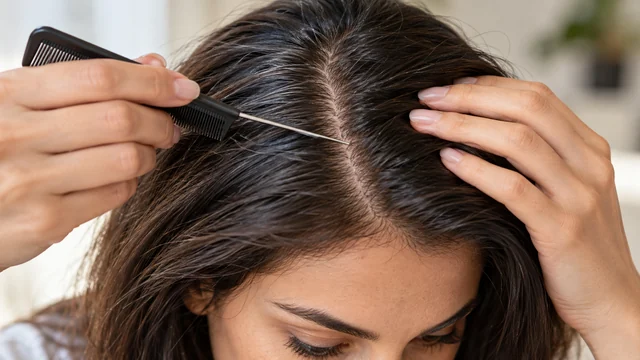
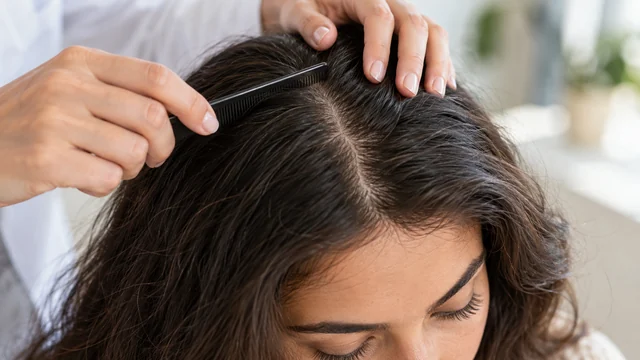
First identify the reason for hair loss. If the part is widening and a clinician confirms female-pattern hair loss, discuss better-studied medicines first. Additional injections should be considered only with an explanation of limited evidence, expense, risks and alternatives. No one can guarantee that a widening part will improve. If shedding started after illness, childbirth or severe dieting, a cocktail does not address the cause of temporary growth-cycle disruption.
Bald patches, scalp pain, burning, peeling, crusts, pustules or a rapidly changing hairline mean cosmetic injections should wait. Inflammatory and certain scarring diseases can permanently destroy follicles; delaying treatment may matter more than the promised cosmetic effect. A clinician should inspect the scalp and consider trichoscopy, targeted tests or biopsy where indicated. If the cause is unknown, start with the guide to hair loss in women and discuss an in-person assessment.
Postpone mesotherapy for active infection or inflammation at injection sites, unexplained painful lumps, known serious reactions to an ingredient, or conditions increasing bleeding or infection risk. Anticoagulants, bleeding disorders, immunodeficiency and poorly controlled diabetes require individual medical assessment. Never stop prescribed medicines to undergo a cosmetic procedure. During pregnancy, while planning pregnancy or breastfeeding, elective injections of inadequately studied mixtures are best avoided: lack of convincing safety data does not prove safety.
What might a session involve, and how much does it hurt?
After history-taking and examination, the practitioner should identify the product, show its packaging and explain the sterile technique. The scalp is cleaned and disinfected, then small injections are placed in agreed areas. Some people feel brief pinpricks; others find them distinctly painful, and areas vary in sensitivity. If local anesthesia is offered, ask about its ingredients, contraindications and possible reactions. “Completely painless” is not a responsible promise.
Needle count and appointment length depend on the treated area, technique and treatment plan. A fixed “one-size-fits-all” regimen without a diagnosis or product assessment is concerning. Some people tolerate injections better after eating and sleeping normally; for others even brief injections are unpleasant. Tell the clinician if injections or local anesthetics previously caused fainting or reactions, so arrangements can be adjusted safely.
Single-use sterile needles and syringes, hand hygiene and safe handling of vials are basic injection-safety requirements. Reusing a needle or syringe between patients can spread infections and is unacceptable. Focus less on the decor and more on who takes medical responsibility for prescribing, preparing the product and responding to complications.
How will your scalp look tomorrow, and can you go to work?
Redness, pinpoint marks, touch sensitivity, small bumps or bruises can follow injections. Everyday activity may resume quickly if the scalp settles, but that is not a guarantee of an invisible part the next morning. Bright lighting and photographs may reveal the dots, particularly when hair is parted. Avoid scheduling a first session just before a photoshoot two days later.
| When | What may happen | What to consider |
|---|---|---|
| Immediately after | Puncture marks, stinging, localized redness, tightness or tenderness. | Keep unclean hands away; get written aftercare instructions. |
| The following 24 hours | Marks may remain visible; minor bruises sometimes emerge. | Agree on washing, styling, products and exercise precautions for the actual injected substance. |
| Over the next days | Ordinary local reactions should subside, at an individual pace. | Worsening pain, heat, pus or spreading redness are not normal recovery. |
| Over months | Potential change is in hair growth, not the puncture marks, and only if the regimen works. | Compare photographs in matching light; shine after treatment does not prove new hair growth. |
There is no evidence-based universal ban duration for exercise, saunas, swimming, coloring or shampoo across all mixtures. Obtain product-specific instructions instead of trusting promises of “zero downtime.” Until punctures have healed, avoiding rubbing, irritating products and potentially contaminated environments is sensible; agree on the duration with the treating clinician. Contact them after accidental exposure or unexpected reactions.
Which complications matter beyond normal temporary marks?
Alongside brief pain, pinpoint bleeding and bruises, there may be allergic or irritant reactions, infection, inflamed nodules, skin changes or hair loss around injections. Case reports describe scarring and persistent hair loss after mesotherapy. Such cases do not establish how often it occurs, and a limited published record does not establish that it is risk-free.
Seek emergency help immediately for difficulty breathing, tongue or throat swelling, or fainting after injection: these may signal a severe allergic reaction. Increasing pain, rapidly spreading redness, fever, pus, marked facial swelling or an unusual severe headache needs urgent clinical assessment. Do not massage lumps, squeeze lesions or self-prescribe antibiotics. Keep the injected product details to show the treating clinician.
When could density change, and are repeat sessions needed?
Hair growth cannot be assessed tomorrow; follicles operate on cycles measured in months. Even an effective regimen takes time to affect visible density, and guaranteed hair counts are implausible. Published studies use different substances, depths, schedules and outcome measures. Across the reviewed evidence for androgenetic alopecia injections, no validated mesotherapy course covers all causes of hair loss. There is therefore no universal honest number of visits, interval or duration of benefit.
Ask for a stopping rule: when will standardized photos be compared, what counts as no benefit, and after how many visits will the plan be reconsidered? Parallel minoxidil treatment, correction of a deficiency or gentler care may also improve hair, so the full change cannot automatically be credited to mesotherapy. If there is an effect, ask how long it has been studied after stopping and why further injections are justified. “Come forever to keep it” is not evidence.
Mesotherapy, PRP, microneedling, or no procedure?
Mesotherapy injects an external substance or mixture. PRP involves taking the patient's blood and preparing platelet-rich plasma; evidence varies with the diagnosis and preparation method. Microneedling creates punctures without necessarily injecting a cocktail and is often studied alongside minoxidil. Low-level light therapy avoids needles but has its own device-specific evidence limitations. A different mechanism does not mean one treatment will work better for you.
If avoiding pain, keeping plans predictable and having an unmarked scalp before an event matter most, discuss established noninvasive options, camouflage or monitoring first. If the goal is to “feed the follicles” but testing shows shedding linked to a deficiency, treating the cause makes more sense than scalp injections. For a persistently widening part, a long-term strategy matters more than the immediate post-session appearance. Declining injections is not the same as ignoring hair loss.
What belongs in informed consent, and how should you read before-and-after photos?
Ask about more than the visit price: diagnostic assessment, the product, possible tests, follow-up appointments and care if a complication occurs. It makes little sense to compare offers by “mesotherapy” alone when the formulas differ. Establish who prescribes and injects, their experience with the particular product, whom you can call after hours and what happens if you react. Attractive photos do not replace these answers.
- “What diagnosis has been established, and what evidence supports these exact ingredients for it?”
- “May I see the original packaging, ingredients, expiry date and authorized route of administration?”
- “Are there allergens, medicines, contraindications or interactions relevant to my health?”
- “Exactly what is included in the course price, and what would a changed plan cost?”
- “How will my part look tomorrow, when can I wash, color and exercise, and whom can I call if something goes wrong?”
- “What evidence-based alternative can I choose if I do not want injections?”
Compare before-and-after photos for the same parting, hair length and cleanliness, lighting, angle, follow-up period and other treatments. “Everyone in the reviews got results” tells you neither complication frequency nor your individual odds. Do not consent to an undefined cocktail just because asking questions feels awkward: ingredient transparency is the minimum for a meaningful choice.
Additional questions
Can a test injection rule out allergy?
No. A small test injection cannot guarantee freedom from immediate or delayed reactions during a full treatment. If you have had serious allergies, discuss the exact ingredients and whether specialist assessment is needed first.
Must the head be shaved before mesotherapy?
Usually complete shaving is unnecessary to reach the scalp, but preparation depends on technique and treatment area. Any proposal to remove hair should have a clear explanation.
Can vitamin mesotherapy replace treatment for iron deficiency?
No. A confirmed deficiency requires assessment of the cause and appropriate systemic correction; injecting an undefined mix into the scalp does not reliably correct it.
Sources
- Beer et al., Dermatologic Surgery (2026): systematic review of injectable treatment for androgenetic alopecia
- Systematic review of mesotherapy for hair loss (2023)
- Duque-Estrada et al., JAAD: hair loss following mesotherapy (case reports)
- CDC: prevention of unsafe injection practices
- American Academy of Dermatology: diagnosis and treatment of hair loss