Primelase Excellence: A Diode Laser for Hair Removal
If you are offered Primelase hair removal and told that “this laser suits everyone and never hurts,” ask for specifics. Primelase is a professional diode-laser system, not a separate universal method of removing hair. Results depend on the exact unit and applicator, skin tone, hair type, tanning history and the operator’s training. The goal is long-term reduction in regrowth, not a promise that every hair disappears forever after one appointment. You may choose it, compare another technology or keep your usual hair-removal routine. Understanding the difference matters before a holiday, a photo shoot or an expensive prepaid course.
What exactly is Primelase, and why does “Excellence” matter?
The US FDA database identifies Primelase Excellence as a diode-laser system made by High Technology Products S.L.U. of Spain. Its US 510(k) substantial-equivalence decisions are K191321 from 2019 and K201594 from 2020. This is clearance for marketing the specified device in the United States, not a prize for the “most effective laser” and not permission to use the device automatically in Armenia. A brand name on a banner is insufficient: ask to see the precise model on the label, its applicator and its intended use.
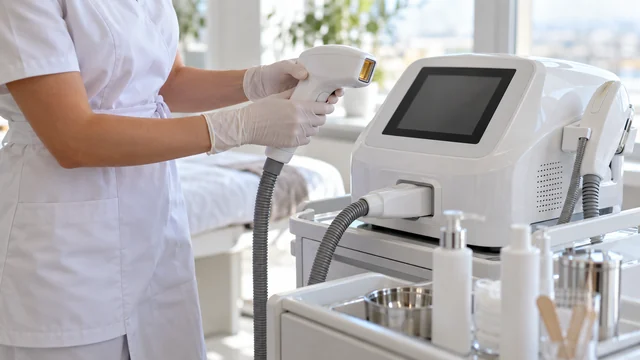
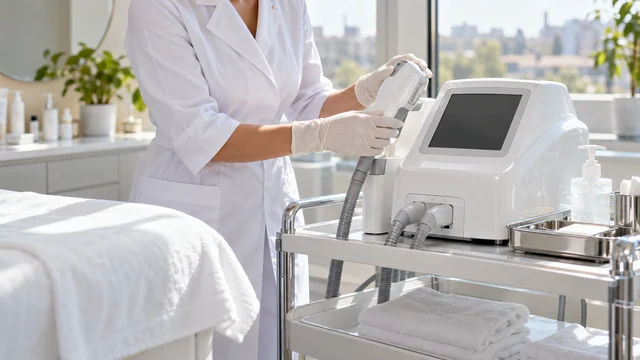
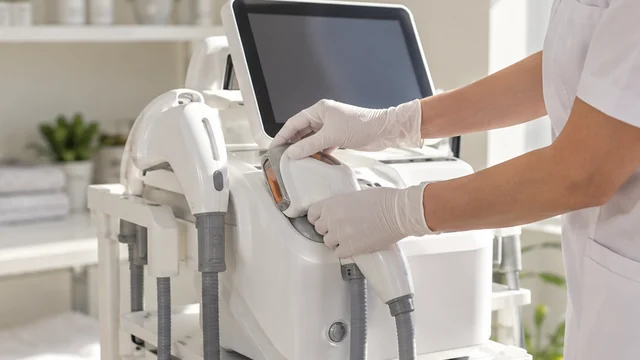
The 2020 filing describes a console and interchangeable laser applicators at 755, 810 and 1060 nm and a combined 810–1060 nm option. That does not mean every installed machine has every applicator or that every indication applies to each configuration. Some applicators in the US filing have additional stated uses, including certain benign pigmented or vascular lesions. A hair-removal discussion must not turn these entries into a promise to treat every spot, blood vessel or wrinkle. A clinician should assess any unexplained pigmented lesion before a hair-removal operator treats the area.
How the laser acts on hair—and where the promises end
Melanin, the pigment in hair, absorbs laser light. The energy becomes heat that damages structures involved in hair growth. Dark hairs against contrasting skin tend to be better targets; white, grey, colourless and many very fair hairs absorb too little energy, while red hairs often respond less well. At the same time, the practitioner must protect skin, which contains melanin too, particularly after tanning and in darker skin phototypes.
In the regulatory documents, “permanent hair reduction” means a long-term, stable decrease in the number of regrowing hairs measured 6, 9 and 12 months after completion of treatment. It does not mean lifelong total smoothness. Some follicles survive; remaining hair can become finer or sparser, and hormonal changes can bring new growth. Facial hair deserves extra caution because androgen activity and health conditions can affect it. If growth increases suddenly alongside irregular periods, acne or other changes, investigate the possible medical cause rather than simply increasing laser power.
Applicators and modes: what you can ask about
| What the documents describe | Why it matters to you |
|---|---|
| 755 nm | One applicator wavelength; the choice for your skin and hair requires an examination, not a number on an advertisement. |
| 810 nm | A commonly used diode wavelength, but its name alone does not make the settings effective or safe. |
| 1060 nm and 810–1060 nm | Other applicator configurations; do not assume identical indications or comfort. |
| Static and Dynamic | Different pulse-delivery modes with different combinations of energy and frequency; “dynamic” never means “burn-proof.” |
| Sapphire-tip contact cooling | Helps control surface heating and discomfort, but cannot replace proper settings and contraindication screening. |
At the visit, ask which configuration will actually be used, why it was chosen, who is authorised to operate it and what personal restrictions were found. Power figures or claims of being “X times stronger” without context cannot tell you whether it is safe. Do not copy online settings: two body areas on the same person can differ in hair thickness, colour and sensitivity.
Who might benefit, and when should the plan change?
The most straightforward aim is reducing unwanted dark hair on an area that can be treated safely. Less regrowth may help some people with ingrown hairs, but inflammation, infection or lasting skin changes need separate assessment. If you recently tanned, used a self-tanner or came back from the beach, postpone until the colour has faded and the skin has recovered. The US device description refers to phototypes I–VI, but this does not eliminate higher burn or pigmentation risk with unsuitable settings on darker skin.
Tattoos in the treatment zone, active inflammation, broken skin, suspicious moles, pronounced scarring tendency and photosensitising medicines call for individual clinical assessment. Mention acne treatment, every medicine, recent procedures and herpes history. Never stop prescribed treatment yourself “for the laser.” During pregnancy, elective hair removal is usually best postponed because direct evidence is limited; discuss options with your treating clinician. During breastfeeding, individual assessment matters: a 2026 review considers laser hair removal a possible option with caution but advises against treating the breast or nipples. Direct lactation-safety evidence specific to Primelase remains insufficient.
What happens during treatment, and will it hurt?
The area is usually examined, cleaned and prepared. The doctor or trained operator must provide appropriate laser eye protection to everyone present: safety eyewear is essential, not an optional extra. You may feel short bursts of heat, stinging or snapping, varying by area and hair density. Sapphire contact cooling can improve comfort, but the device name cannot substantiate a promise of “absolutely painless” treatment. Report unexpectedly severe pain or a burning sensation immediately.
Session duration depends on area and technique. Visit numbers depend on the hair-growth cycle, body zone, density, phototype and individual response. Treated hairs do not necessarily vanish on day one; some shafts gradually shed from the skin. Lack of immediate smoothness does not necessarily mean failure. But if there is no meaningful change after several planned visits, review the diagnosis, parameters, technique and expectations instead of automatically buying another course. Consistent photographs are more useful than memory alone.
What will you look like afterward, and when can you attend an event?
In the first hours, redness and mild swelling around hair follicles are possible; some people take longer to settle. The American Academy of Dermatology describes common temporary discomfort, swelling and redness lasting roughly 1–3 days, although your own reaction matters more than a timetable. Desk work often needs no leave, but the face, exposed legs or décolletage may look obviously irritated. If an important photograph requires completely calm skin, do not schedule your first treatment immediately beforehand.
Follow the specific aftercare you receive: avoid irritating hot, sensitive skin, temporarily limit heat and friction and protect exposed treated areas from ultraviolet light. Ask your clinician which signs mean you can return to workouts, pools or regular products. Do not conceal inflamed areas with heavy makeup unless advised it is safe. Avoid plucking between sessions unless your practitioner agrees; plucking can disrupt treatment planning, whereas shaving is often permitted under the protocol.
Expected effects versus signals to seek care
Brief mild redness and tenderness are one scenario; blisters, escalating pain, weeping, extensive crusts or sudden darkening or whitening of skin are another. Stop applying irritating products and contact a clinician promptly; severe reactions need urgent evaluation. Eye pain or vision changes after laser exposure also require immediate emergency assessment, even when the skin looks normal. Infection, persistent lightening or darkening and sometimes scarring are possible. Strong pain is not a normal price of effectiveness, nor a measure of laser quality.
There are subtler reasons to change course. On the face, some people develop more fine hair around a treated area instead of less: this is called paradoxical hypertrichosis. Risk varies by area and other factors and cannot be ruled out entirely. Discuss it with a dermatologist rather than covering it up with more unexamined sessions. An unexpectedly painful rash or inflamed bumps also deserve review, particularly if you tend to folliculitis.
Primelase versus another system: a comparison without rankings
| Question when choosing | Primelase Excellence | Another professional laser | Electrolysis or temporary removal |
|---|---|---|---|
| Is the exact model documented? | Check the identification plate, applicator and instructions. | Apply the same checks; a famous brand alone is insufficient. | Electrolysis works differently; shaving and waxing have different durations. |
| Very fair or grey hair? | Response is generally limited because light absorption is poor. | Many other light-based systems face the same limitation. | Electrolysis may suit individual light hairs; shaving does not rely on pigment. |
| Tanned skin or darker phototype? | Requires individual selection, settings and operator experience. | Practical experience with your phototype matters more than a brand slogan. | Temporary methods also require skin assessment, but do not carry the same laser-specific risks. |
| What result can be expected? | Reduced regrowth after a course; maintenance may be needed. | Broadly comparable goals, but superiority needs direct comparative evidence. | Electrolysis treats hairs individually; shaving must be repeated regularly. |
Separate pages about Soprano ICE Platinum, Thunder MT and laser hair removal in general cover nearby decisions. This page is for checking Primelase in particular: has the brand name concealed the actual applicator, which indications apply to this configuration, and what experiences and limits are realistic? A protocol from another device or clinic is not automatically interchangeable.
What the documents establish—and what they do not
FDA K191321 and K201594 document US substantial-equivalence decisions for Primelase Excellence. The K201594 submission states that no separate clinical study was included in that submission; the clearance must not be misrepresented as a head-to-head trial proving superiority. The American Academy of Dermatology and the American Society of Plastic Surgeons discuss hair reduction as a recognised approach while stressing operator competence, repeat visits and possible adverse effects.
A social-media statement that a clinic has “original Primelase” says little about maintenance, applicators, registration documents or help if complications occur. Availability and lawful use of a specific configuration in Armenia require local verification; these cannot be inferred from FDA clearance, a manufacturer page or this article. Ask to see the equipment identification, operator credentials and a written burn-response plan.
How to use a consultation without buying a course blindly
Ask for your skin and hair to be assessed in normal, unfiltered light, including which hairs are likely or unlikely to respond. Bring a few concrete questions:
- Before: how do your phototype, tan and medicines affect the plan; who will perform the procedure and what protects everyone's eyes?
- During: which applicator is installed, can a small-area test be considered, and how does the practitioner respond to sharp pain?
- After: what is normal this evening and in the following days, whom do you contact after a burn, and who reviews disappointing results or changes the plan?
That conversation should produce a personal safety and follow-up plan, rather than just a promise of years of smooth skin.
Compare the total proposed course, not only the single-session price: ask about postponement after tanning, extra sessions, machine servicing and any maintenance treatment. Decline blanket claims that “all fine fuzz” can be removed: poorly pigmented vellus hair may be a poor target. A good consultation need not end in payment. Sometimes the best decision is leaving the area alone, trimming for now and returning later with clear expectations and no urgency.
Additional questions
Can Primelase be used over a tattoo?
Hair-removal lasers can damage tattoo pigment and skin. The design is normally excluded; ask the practitioner to mark a suitable clearance around it and discuss alternatives for hair directly over the tattoo.
If hair returns after treatment, does that mean the machine was broken?
Not necessarily. Follicles cycle through growth phases, and hormonal changes can bring new hair. Marked or unexpected growth still deserves discussion with a dermatologist and, where indicated, investigation.
Can I request the exact power setting my friend had?
No. Safe parameters depend on your skin, hair, body site and the specific applicator. Someone else's settings are not your prescription.
Sources and documents
- FDA (2019), Primelase Excellence K191321
- FDA (2020), Primelase Excellence K201594
- American Academy of Dermatology, laser hair removal FAQs
- American Academy of Dermatology, laser hair removal preparation
- American Society of Plastic Surgeons, laser hair removal safety
- Kovacs et al. 2026, pregnancy and lactation review
- Snast et al. 2021, paradoxical hypertrichosis systematic review