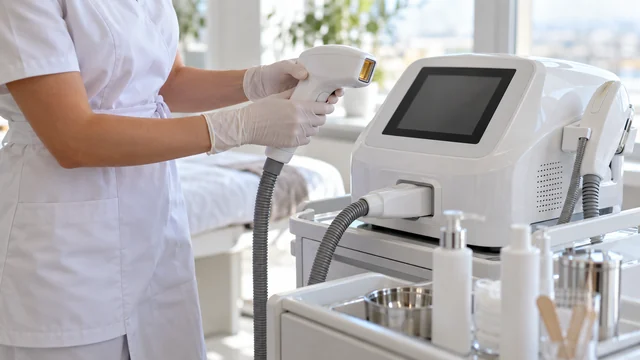
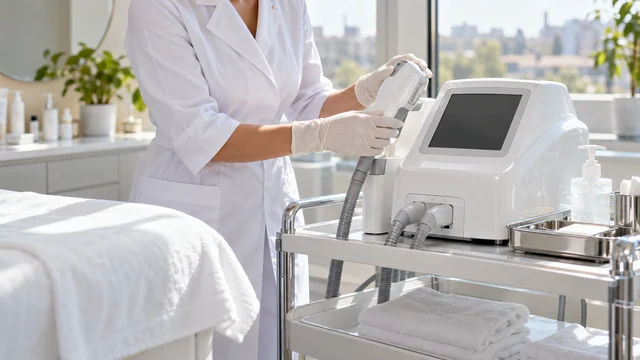
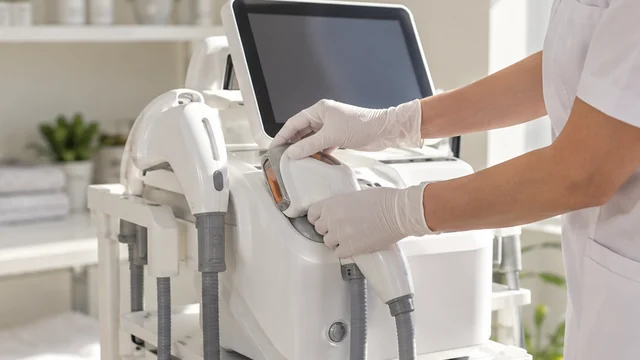
Soprano ICE Platinum: Three-Wavelength Laser Hair Removal
You are considering laser hair removal and see the promise “Soprano ICE Platinum: three wavelengths, painless, suitable for everyone.” Part of this is verifiable technology and part is advertising. Soprano ICE Platinum is a specific Alma Lasers Soprano-family configuration with a combined Trio diode applicator using three wavelengths. It aims for long-term hair reduction, not guaranteed lifelong elimination or identical safety for every skin type.
Before choosing, consider hair colour and thickness, skin phototype, tanning, body area, pigmentation risk and causes of increased growth. A familiar device name does not replace an experienced operator, appropriate settings, eye protection and a willingness to change the plan if the skin reacts poorly. This matters especially for facial hair, darker skin and hair with very little dark pigment.
What does Platinum mean, and how does it differ from Soprano ICE?
The word Platinum matters: FDA document K172193 describes adding a Trio handpiece and the Soprano ICE Platinum name for this configuration. Alma describes diode wavelengths of 755, 810 and 1064 nm operating together in one applicator. The figures relate to light absorption and penetration, not three separate treatments in one or triple effectiveness.
The original Soprano ICE, Platinum and newer Soprano-family models are not interchangeable devices with identical handpieces. Ask to see the precise model, actual applicator and documents for that configuration. A sign saying “alexandrite + diode + Nd:YAG” does not prove three distinct laser types: the specified Platinum Trio uses diode emitters of differing wavelengths.
What does the FDA establish—and what is marketing?
In 2018 the FDA issued a 510(k) substantial-equivalence decision for the modified Soprano family, including Soprano ICE Platinum with Duo and Trio modules (K172193). K172193 lists removal of benign vascular lesions separately for the new Trio applicator. Hair Removal and Super Hair Removal for long-term stable reduction in regrowing hairs, measured 6, 9 and 12 months after a course, are listed for the individual 755, 810 and 1064 nm diode modules. Do not assume all individual-module indications are automatically established for the combined Trio applicator; request documentation for the configuration actually used. This is far more precise than “hair will never return.”
US documents include uses across different skin phototypes and refer to tanned skin for certain modules and modes. That wording does not remove the clinical need to assess recent tanning: extra skin pigment absorbs light and may raise burn risk. US clearance also does not prove registration or availability in Armenia. Local permissions and the actual machine must be verified separately.
Alma promotes Platinum as comfortable across phototypes, with ICE cooling and a moving treatment technique. These are relevant features, but “painless,” “safest” and efficacy for every pale hair are manufacturer marketing, not personal medical guarantees. They do not remove the need for history-taking and individual risk assessment.
How laser energy acts on hair
Laser hair reduction relies on melanin, the pigment inside hair, absorbing light. Some energy becomes heat and damages follicular structures that generate new hairs. Several sessions are needed because hairs in the same area occupy different growth phases; not every follicle is equally responsive on a given day. One session does not finish the process.
Dark, well-pigmented hair usually responds best. Grey, white and many very blond or red hairs respond less predictably, irrespective of three-wavelength advertising. For isolated colourless hairs, consider discussing electrolysis, which destroys individual follicles with electrical energy. It has separate skill requirements, sensations and time commitments.
Three wavelengths: their practical role, not a ranking
| Trio component | Why it is included | What the number does not prove |
|---|---|---|
| 755 nm | Different melanin absorption and energy distribution | That every pale, fine vellus hair will disappear |
| 810 nm | A widely used diode wavelength for hair reduction | That skin and hair thickness do not affect results |
| 1064 nm | A different balance of penetration and pigment absorption that matters when planning settings | That recent tanning or dark skin is automatically safe from burns |
Three components do not prove superiority over every single-wavelength device. Compare actual outcomes in similar skin and hair types, at the same follow-up points, with side effects reported. Reviews of randomized studies support laser-based long-term hair reduction in general, but robust long-term brand-to-brand data on this exact multiwavelength configuration are relatively limited in research reviewed through October 2026.
Does it fit your skin and hair?
Coarse dark leg or underarm hair. This is a common situation in which laser treatment can give noticeable reduction. The clinician must still check hair diameter, skin response, relevant risks and previous removal. No exact percentage should be promised in advance: people and body areas differ.
Darker skin or a tendency to post-inflammatory marks. Treatment can be possible with suitable technology and an experienced practitioner, but burns and pigment change require extra care. Discuss your actual phototype, not just ethnicity or a skin-colour label. Ask how much experience the operator has with comparable pigmentation and how they test skin response.
Recent tan, self-tanner or irritation. Your visit may need postponing. The American Academy of Dermatology recommends avoiding tanning and sunless tanners before treatment and protecting skin from sunlight. A claim of year-round usability does not make a session just after a beach holiday or sunbed safe.
Fine facial hair. First distinguish thick terminal hair from light peach fuzz. Laser treatment may offer little benefit for vellus hair; a rare unwanted result is paradoxical hair growth, reported particularly on the face and neck. Sudden new growth accompanied by other hormonal symptoms warrants medical assessment.
Should hormones be checked first?
Not every woman needs blood tests before hair removal. But rapidly increasing coarse hair on the chin, chest or abdomen—particularly with irregular periods, severe acne, scalp hair loss or other new symptoms—should be discussed with an endocrinologist or gynaecologist experienced in endocrine conditions. Laser affects visible hair, not an underlying hormonal cause. New hair may emerge even after an initially successful course.
Pregnancy is a reasonable time to defer nonessential cosmetic hair removal: high-quality safety and durability evidence for this particular situation is insufficient and hormonal shifts complicate prediction. During breastfeeding, assess timing and treatment area individually with a clinician; do not automatically transfer pregnancy restrictions or assume absolute safety.
What does a visit feel like?
Before treatment, the practitioner reviews health, medicines, recent skin reactions, scarring tendency, herpes history and tanning. Hair is generally shortened according to instructions; avoid pulling it out by the root before the course, as the follicle is the target. Prepare the skin to suit the protocol, without unsuitable products or self-tanner.
In the SHR In-Motion approach, the applicator moves across the area while heat accumulates gradually, and tip cooling reduces surface discomfort. Alma also describes stationary modes for selected areas. You may feel warmth, tingling or brief painful pulses, especially with dense hair and sensitive sites. “Almost painless” to one person may still feel painful to another.
Protective eyewear is essential because laser light can damage vision. Do not direct the beam towards eyes or treat without protection appropriate to the system. Tattoos and suspicious lesions must be spared direct laser exposure and may need dermatological assessment. An operator who ignores tanning, omits eye protection or offers to laser every lesion without evaluation is a reason to walk away.
What visible traces should you expect afterwards?
Redness and mild swelling around follicles often develop immediately and can resemble a mild sunburn. According to AAD, ordinary minor reactions often settle within 1–3 days, with individual variation. Most people return quickly to daily tasks, but tight clothes, rubbing and heat may bother sensitive sites; follow specific instructions.
Before a photo shoot with bare legs or an event involving exposed underarms, allow for visible red dots, not just the absence of medical sick leave. Makeup may be inappropriate on freshly treated or injured skin. Treatment immediately before a sunny holiday is inconvenient, because the area needs sun protection both before and afterwards.
Blisters, burns, severe pain, worsening inflammation, pus or marked darkening or lightening of skin need prompt contact with a clinician. Burns, scarring and pigment changes are real risks, particularly with incorrect settings or insufficient skin preparation. Do not pop blisters or apply harsh acids to damaged skin.
How many visits, and can hair return?
There is no single required number. AAD notes that many people need several sessions, often approximately 2–6, though some need more. Location, hormones and hair cycles change the schedule and results. Automatically selling exactly six or eight sessions before assessing response is not an individualized plan. The interval should suit the area, not simply appointment availability.
Treated hairs may shed gradually afterwards; that does not mean every follicle has been destroyed. Remaining or new hair can later grow, and maintenance sessions are sometimes needed. Reviews show that long-term reduction differs between legs and face and can be less durable on the face. Be skeptical of 100% forever claims and agree on a realistic definition of success for your area.
Comparing Platinum with other lasers
When comparing Platinum with a standalone diode, alexandrite, long-pulsed Nd:YAG or another multiwavelength platform, start with your hair, phototype and the clinician's experience. Other systems may use distinct laser sources or cooling designs; the label “triple” does not make them equivalent. Separate pages cover Primelase, Thunder MT and general laser hair removal principles. (Primelase) (Thunder MT) (laser hair removal)
Compare the likelihood of achieving your goal, number of visits, full-course cost without invented packages, and a plan for managing burns—not simply advertised comfort. A high price or famous name does not guarantee operator competence. Someone who openly discusses limitations for grey hair and recent tanning may provide a more trustworthy consultation.
What to ask before paying for a course
- Is this truly Soprano ICE Platinum with a Trio applicator? What documents identify the configuration and its permitted use in this country?
- Are my hairs pigmented and thick enough? Where might shaving or electrolysis be a safer option?
- How do you account for tanning, phototype, moles, tattoos, medicines, scarring and hormonal factors?
- How are eyes protected, how are settings chosen, and what happens if skin overheats?
- When will results be assessed, what additional visits and costs may arise, and what if facial hair growth unexpectedly increases?
If shaving suits you and hair is barely visible, treatment is optional. If you want less shaving but are unwilling to accept an uncertain number of visits or possible pigment changes, you may defer it. A clear, safe plan with realistic limits for your skin matters more than a promise that no hair will ever return.
Further questions
Can dye or henna make laser treatment work on pale hair?
Colouring the visible hair shaft does not ensure enough pigment is present inside the follicle for a good response. Tell the operator about dyes, and do not try to “prepare” grey hairs with colouring.
Why is growth slowing faster on one leg than the other?
Hair-growth phases, baseline density, hair thickness and how completely the area was covered can differ. Marked asymmetry calls for reviewing the protocol, not automatically increasing power.
Can I have a peel on the same area on the day of laser treatment?
Combining them may increase irritation and damage risk. Ask the clinician for a safe sequence and spacing based on procedure intensity and your skin.
Sources and fact checking
- FDA K172193: Soprano ICE Platinum, Duo and Trio modules, indications
- Alma Lasers: Soprano ICE Platinum specifications (manufacturer statements)
- AAD: laser hair removal results, timing and risks
- AAD: laser hair removal preparation and consultation questions
- Systematic review of long-term hair reduction (2022)
- Systematic review of paradoxical hypertrichosis (2021)