
Double chin: four causes and how to choose a direction
You notice a fold under your chin on a video call that you hardly see in an ordinary mirror. Your first thought might be to “remove the extra fat” with massage or a procedure. But a double chin does not always mean excess fat : the natural shape of your jaw, head position, loose skin or age-related changes in the neck muscles can create a similar outline. The most useful first step is to establish which structure creates the contour and only then consider a treatment. Sometimes doing nothing is the right choice.
The answer to “how do I get rid of a double chin?” varies. For a superficial fat pad, one might discuss overall weight management when appropriate, local fat-reduction treatments or liposuction; marked skin excess or changes in the muscles call for different options, potentially surgery. Exercises cannot selectively burn fat from under the chin. And if a new lump or swelling has appeared in place of a familiar soft fold, you need medical assessment rather than a cosmetic treatment.
What are you actually seeing? Four reasons for a similar outline
Subcutaneous fat. Fat can accumulate under the chin at any body weight; inherited patterns and fat distribution differ. Sometimes the area becomes smaller with overall weight loss, but no one can predict precisely how much one particular area will change. A larger fat pad with reasonably elastic skin is one distinct situation for choosing treatment.
Skin laxity. Age, weight changes and individual factors can reduce skin elasticity. The fold may be thin even with little underlying fat. Removing fat may not restore a sharply defined jawline because the remaining skin may not contract sufficiently, leaving the appearance of a second contour.
Muscles and bone support. The platysma, a thin superficial neck muscle, may develop noticeable bands or change the outline over time. A less projected chin and the bite relationship also influence the profile. Fat-dissolving injections cannot correct these anatomical factors. Bite or jaw assessment is not needed for everyone, only when there are relevant functional symptoms or a specialist identifies a reason.
Camera angle and posture. A close front-facing camera, low angle, lowered head and soft evening lighting can all change the look of your neck. Take a few neutral photographs from the same distance, looking straight ahead with relaxed muscles—not to find a flaw, but to decide whether there is a consistent change that genuinely matters to you. Another person's filtered photograph is not a useful benchmark.
When is a “double chin” not a cosmetic question?
A typical cosmetic fold changes gradually and is roughly symmetrical. A new firm area beneath the jaw, a growing lump, one-sided swelling, pain, redness, skin warmth or a persistent nodule needs a medical examination. NHS guidance also recommends having a lump assessed if it persists longer than two weeks. Causes include lymph nodes, salivary glands, cysts and other conditions; you cannot diagnose the cause from a photograph or by feeling it yourself.
If swelling makes breathing or swallowing difficult, is rapidly increasing or comes with severe general symptoms, seek urgent medical help. For unusual swelling at the front of the neck, voice changes or systemic symptoms, a clinician can decide whether the thyroid or other structures need investigation. Do not massage, heat or inject an unidentified “fat pocket.” Ultrasound or other tests are selected after assessment; they are not automatically necessary for everyone with a soft fold.
Choose the route according to the tissue, not the advertisement
| Main contributing factor | Options worth discussing | Important limitation |
|---|---|---|
| Local fat with reasonably elastic skin | Observation; overall weight management if indicated; targeted fat injections, suitable devices or liposuction | No method guarantees one contour for every anatomy; risk, predictability and downtime vary |
| Marked excess or loose skin | Non-invasive treatments with modest expectations; a plastic surgery consultation about lifting | Fat removal does not remove surplus skin; device-based improvement can be limited |
| Muscle bands or deeper neck structures | Professional anatomical assessment; sometimes surgery | Superficial fat is not always the main cause |
| Low chin projection or altered bite | Assessment of facial proportions; relevant specialist if there are functional complaints | Reducing volume underneath is different from changing the bony profile |
| Sudden asymmetric swelling or a lump | Medical investigation before any cosmetic procedure | Aesthetic treatment must not replace diagnosis |
Frequently, several factors coexist: some surface fat, slightly looser skin and the natural shape of the profile. A fold can therefore remain even after fat reduction. A more useful question than “which technology is strongest?” is “which part of my particular concern will it change, and what will remain?” The answer helps balance cost, medical risk and a subtle or more noticeable outcome.
What can you realistically do at home?
If your weight is changing and there is a medical reason to address it, sustainable eating, activity and sleep habits may affect overall body composition. But you cannot instruct the body where to burn fat: local exercises, tongue gymnastics, chewing and “face fitness” have not been shown to selectively remove submental fat. Rapid weight loss is no guarantee of a better outline either; reduced volume can make loose skin more apparent.
Head position, posture and phone ergonomics may change the appearance at a particular moment and ease neck muscle discomfort; they do not restructure the chin. Creams and moisturising can keep skin comfortable but cannot substitute for fat removal or surgery to remove excess tissue. Massage may temporarily change how puffy an area feels, but convincing evidence that it durably reduces submental fat is lacking. Avoid tight taping, harsh gadgets and self-injections for an unproven effect.
Doing nothing is also legitimate. Most people have a fold when lowering the head in some positions. If your concern started with one unflattering photograph, observing the area for a few weeks may serve you better than rushing into a course of treatment.
Fat-reducing injections: for whom, and what is different about them?
Deoxycholic acid disrupts fat cells in the injected region. In the US, Kybella is FDA-approved to improve the appearance of moderate to severe fullness caused specifically by fat beneath the chin in adults. That does not approve every “lipolytic cocktail,” injections elsewhere on the body or availability in Armenia. In September 2026, the FDA strengthened warnings: injection-site nodules or masses may persist and require treatment, and serious reactions have been reported from use outside the authorised region.
After such injections, swelling may be conspicuous and the chin may temporarily appear fuller than before. Pain, numbness, firmness and bruising are possible. Significant complications include injury to a branch of the facial nerve with an asymmetric smile, difficulty swallowing and tissue damage. Thus “lunchtime injections and no one will notice tonight” is a dubious promise. The method is not designed to tighten loose skin; satisfaction may be lower when skin laxity remains despite reduced fat. If swallowing becomes difficult after an injection, your smile becomes noticeably uneven, pain rapidly worsens or the skin appears injured, seek urgent medical assessment; if breathing is difficult, call emergency services.
These injections are never a do-it-yourself treatment. Before agreeing, obtain the exact product name and composition, locally applicable official indications, an anatomical assessment and evidence of appropriate professional qualifications. If someone offers an unnamed “fat-dissolving solution” without clear documentation, do not decide on the spot. Having no incision does not mean having no medical risk.
Devices or surgery: which trade-off fits your life?
Devices using controlled cooling, heating, radiofrequency or ultrasound may be offered to reduce local fat or change tissue quality, but these are different mechanisms. Some machines have specified authorisations in particular countries; others are marketed for uses beyond the evidence. Even within one category, ask whether the device is intended for use directly under the chin, which tissue it targets and the extent of contour change that is realistic. These methods are not as powerful or predictable as liposuction.
There are risks advertisements rarely show. For fat freezing, the FDA describes rare paradoxical adipose hyperplasia: instead of shrinking, the treated fat grows, sometimes requiring surgery. Energy-based treatments may cause burns, altered sensation, swelling and other complications; a needle-free method is not automatically risk-free. If offered a “double-chin lift,” ask what the plan does separately to fat, skin and muscles.
Liposuction directly removes accessible subcutaneous fat through small incisions. It targets that tissue more directly, but it is surgery, with anaesthesia, possible bruising, swelling, irregular contours, infection and recovery requirements. If skin does not retract well or the main cause lies deeper, liposuction alone may not be enough. A neck lift involves different work on the skin and often the muscles, with different scars, postoperative care, risks and social downtime. It deserves a separate, unhurried discussion with a plastic surgeon, not an automatic add-on.
For a detailed comparison confined to non-surgical options, see double-chin treatments without surgery . This page answers the earlier question: why has the fold appeared, and is any removal procedure necessary?
What will others notice, and when can you judge the result?
Home care involves no procedural recovery but should not promise major anatomical change. Injections can cause visible swelling, bruises and tenderness for more than a day; the area may initially look larger. Non-invasive device treatments can cause redness, numbness or local firmness; any volume reduction is assessed later. Surgery can involve compression garments, incisions, swelling and activity limits. Being able to leave home is not the same as looking fully recovered.
If you have a wedding, flight, public meeting or photo shoot coming up, do not rely on a fixed number of days from an advertisement. Ask about social as well as medical downtime in your case: whether marks can be covered by clothes or makeup, when exercise is safe, whether you need review and whether swelling might still be present on your date. For planned surgery, leave additional time for an unexpected recovery course.
Removing fat cells or tissue does not stop ageing, weight fluctuations or skin changes. Gentler device treatments may need repeating and have modest effects. No method guarantees a perfectly straight neck contour. Instead of aiming for a filtered profile in a picture, describe the particular rounding you would like to reduce while keeping natural transitions.
What should you bring to a consultation without losing freedom of choice?
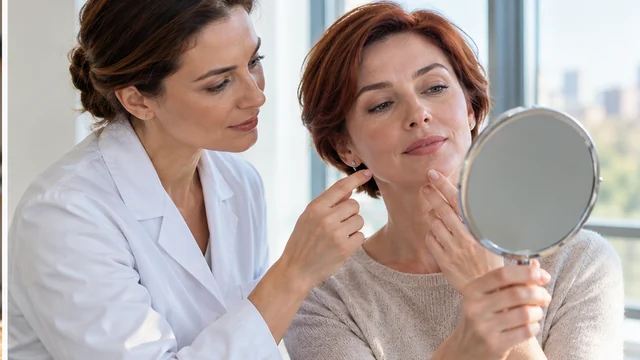
Bring your own neutral front and profile photographs. Explain when you first noticed the change, weight shifts, previous operations, swelling, pain and any functional symptoms. Ask whether the main contributor is fat, skin, muscle or bone; which part a proposed treatment addresses; which result is unlikely; procedure-specific complications; number of visits; and which treatment and follow-up elements are included in the price. No specific cost or availability in Yerevan can reliably be asserted without checking the provider, device and medicinal product.
Two valuable questions are “What happens if I do nothing for now?” and “What is the gentlest option for the result I want?” If several procedures are bundled, request a separate explanation of the benefit and risk of each rather than buying a package. Any optional aesthetic choice allows time to think, a second opinion or a decision not to proceed—particularly when the concern began with a single photograph.
Frequently asked questions
Can my chin look fuller only in the mornings?
Sleep position and temporary fluid changes may affect how soft tissues look. But a new, lasting or one-sided swelling should not automatically be blamed on fluid retention; have it assessed by a clinician.
Does everyone need an ultrasound before an aesthetic consultation?
No. If the examination finds a lump or its origin is uncertain, the clinician decides whether ultrasound or other testing is appropriate. For a stable, typical soft fat pad, the decision starts with a clinical assessment.