Skin Booster Injections: What They Mean and What They Promise
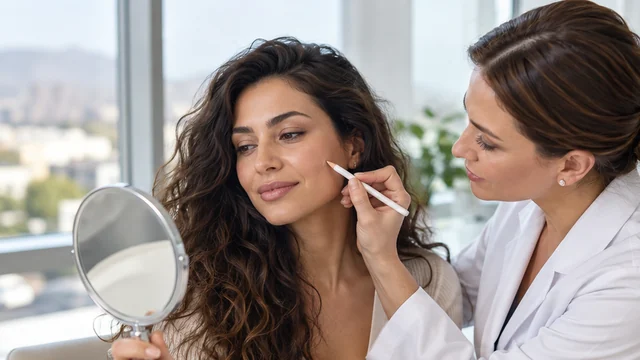
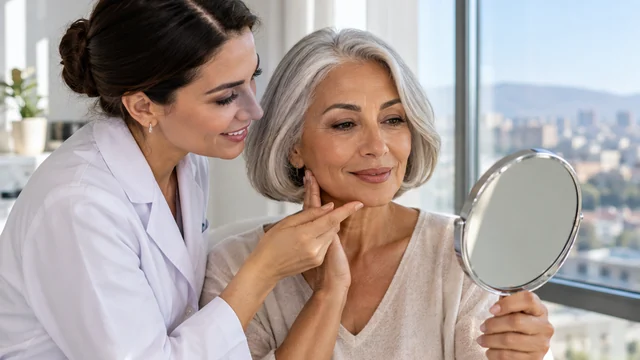
Perhaps your skin feels less smooth: foundation settles unevenly, fine lines remain visible despite moisturizer, and your usual routine no longer feels comfortable. You might start looking into skin booster injections, treatments intended to improve skin quality. Usually the aim is not to reshape your face or enlarge your cheekbones, but to influence hydration, fine texture, and sometimes superficial lines. However, this term does not refer to a single product and cannot guarantee the same result for everyone.
Before agreeing, ask: which exact product, in which area, and at what depth will it be injected? Those answers determine which effectiveness data apply, the possibility of swelling, how long any benefit might last, and the relevant safety risks. “We'll do a skin booster” without its name, ingredients and instructions is not enough for informed consent.
What does “skin booster injections” actually mean?
It is an umbrella term used in marketing and clinical practice, not a single registered medicine or universal technology. Often it means small deposits of hyaluronic-acid products placed within or close to the skin. Hyaluronic acid binds water; its properties vary with concentration, molecular structure, and chemical cross-linking between molecules. Some preparations add little noticeable volume, while others contain a stabilized gel that remains in tissue longer. Multi-ingredient cocktails are also sold under similar names; this does not automatically make them comparable to clinically studied products.
“Biorevitalization,” “mesotherapy,” and “skin booster” may overlap in advertising, but formulation and labeling matter more than the term. For example, the US FDA approved SKINVIVE by JUVÉDERM for specific indications. The 2023 indication concerned improving cheek-skin smoothness in adults older than 21; in June 2026 the US indication was extended to reducing neck lines using injections specified in its labeling. This does not mean every booster is approved for the neck, the under-eye area, or every age. US approval also does not establish registration in Armenia.
How can you tell what change is actually being promised?
A realistic goal is a modest improvement in the skin's surface quality, sometimes easier to notice in natural light and while the face moves. Better hydration is not the same as erasing wrinkles, and smoother-feeling skin does not mean tightened retaining ligaments or replacement of lost subcutaneous fat. If the main issue is a prominent fold beside the mouth, a deep tear trough, or sagging tissue, a superficial hydration treatment alone will generally not solve it.
| What you would like to see | What to discuss with the clinician | Where expectations need adjusting |
|---|---|---|
| Dry-feeling, rough skin and fine lines | A product specifically studied for skin quality; a review of home care and sun protection | When inflammation, an irritating routine, or a skin disorder is the cause, injections must not replace diagnosis |
| Less noticeable pores or smoother makeup | Moderate texture improvement is possible but varies between people | Pores do not permanently “close”; filtered photographs hide the true size of any effect |
| More cheek volume or correction of hollows | Restoring volume is a different treatment goal with different products and risks | Increasing the amount of booster is not a substitute for choosing an appropriate volumizing filler |
| Persistent pigmentation, visible vessels, active breakouts | Establish a diagnosis first and choose condition-specific treatment | There is no sound basis for treating an injectable booster as reliable stand-alone treatment for these problems |
If someone promises an “invisible lift,” ask which objective measurement will show it. Some studies measure skin moisture with instruments, others use photographic rating scales or participant opinions. These are not interchangeable outcomes. Without a control group, improvements may partly reflect skincare, the season, photography technique, or expectations.
Why not choose whichever booster is called “the best”?
Different products have very different evidence bases. A randomized study of one solution does not automatically apply to another just because both contain hyaluronic acid. Studies may use different injection planes, session numbers, follow-up intervals, facial areas, and starting skin conditions. A 2026 review highlights just how heterogeneous the skin-booster category is; individual trials should therefore not become promises about every product.
The US-approved SKINVIVE has clinical trial data on cheek smoothness, but these findings belong to the specific product, treated site and population studied. Evidence for a different brand might consist only of a small uncontrolled series. Ask what improvements remained once injection bumps and swelling faded, and how long participants were followed. An early mirror result can partly reflect the injection itself rather than a durable skin change.
Check three layers of information: official labeling with indications and contraindications, published research on that exact formulation, and the clinician's expertise with the relevant anatomy. A sophisticated technique name or a device making many evenly spaced punctures replaces none of these. Comparing individual brands is a separate decision: pages about NCTF 135HA and Teosyal Redensity 1 should not be mistaken for descriptions of every booster.
What happens during treatment, and what will you look like afterwards?
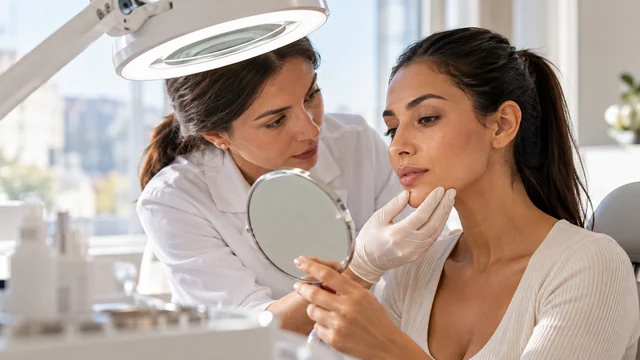
First, the clinician asks what you want to change, what you have previously had injected, and about chronic conditions, active breakouts, allergies or reactions, herpes, and medication. They examine your skin and show you the packaging of the proposed product. They then cleanse the area, offer anesthesia when appropriate, and inject according to the product instructions and clinical assessment. Using a needle, cannula, or injector head changes the experience; a device alone neither makes treatment painless nor removes vascular risks.
You may feel pinching, pressure, or stinging from the needle. Small raised bumps called papules, red puncture marks, tenderness, and swelling can remain visible; bruising is possible, especially across a larger treated area. One person's marks may be barely noticeable the next day, while another needs several days or longer to feel comfortable without foundation. “Zero downtime” is not a safe promise. Some inflammation after punctures is expected, but its extent varies.
| Time | What may happen | How to plan ordinary life |
|---|---|---|
| Immediately after injections | Puncture marks, moderate tenderness and unevenness where product was deposited | Do not count on flawless makeup or a close-up portrait on treatment day |
| Over the following days | Some marks fade, while bruises or swelling can remain longer | Get written aftercare advice and an agreed contact or review date; applying makeup immediately may not be appropriate |
| Once the reaction settles | Assess skin quality, not just early puffiness | Compare pictures in similar lighting and with the same skincare routine |
| Months later | Benefits may diminish; duration depends on product and skin | Do not prepay for an unlimited course without clear measures of benefit |
Restrictions involving exercise, saunas, sunlight, massage and makeup depend on the formulation and injection technique. Instead of a universal “avoid everything for a week,” ask for written instructions specific to your area and the reason for each restriction. If a wedding, trip or photo session is approaching, leave some buffer for visible marks and their evaluation. Being able to go to work is not the same as being ready for a close-up photograph.
When should you postpone or avoid the procedure?
An active infection or inflammation at the planned injection site calls for treatment first. Allergy to ingredients, including lidocaine when present, may rule out a particular product. Pregnancy and breastfeeding call for a conservative decision: a lack of good cosmetic-injection safety data is not evidence of safety. Bleeding disorders, anticoagulants and other important medicines require a specific risk assessment; never stop prescribed medication on your own.
Your treatment history matters too. Mention recent fillers, infections, dental work or nodules after previous injections. Unhealed skin damage, a changing mole, or an unexplained rash should be evaluated before elective treatment. And if you feel pressured in the consultation, you can simply postpone the decision: skin-quality injections are not urgent medical care.
Which complications must not be dismissed as ordinary injection marks?
One of the most concerning complications of hyaluronic-acid gel injection is accidental entry into a blood vessel, which can compromise blood supply. Such events are thought to be uncommon, but their precise rate across all products marketed as skin boosters is unknown; the consequences can be severe: skin injury, loss of vision including blindness, and vascular neurological injury are possible. This risk concerns injectable gels, not just thick fillers used for volume. Superficial placement does not make vascular anatomy irrelevant.
Seek immediate medical help if, during or after injection, you develop unusually severe or increasing pain, sudden pallor or grey or mottled skin, changes in vision, weakness, facial drooping, or speech difficulty. Do not wait for a routine appointment or rely only on a message to the clinic. Fever, increasing redness, hot painful swelling or discharge also call for prompt medical assessment because infection is possible.
Firm nodules, inflammation, unevenness and lingering swelling can develop in later weeks; an examination is needed to establish the cause. Hyaluronidase is an enzyme a clinician may use for some complications of hyaluronic-acid fillers, but it is not an at-home “undo button” or a guarantee of full recovery, especially after a serious vascular event. Ask beforehand who manages complications and how rapidly care can be arranged.
How do you distinguish a useful consultation from an attractive sales pitch?
Ask for more than a “glow cocktail”: request the full product name, ingredients, batch number, expiry, region-specific instructions, and why it can be used in the proposed area. Ask who performs the injection, what qualifications they hold, and what their vascular emergency protocol is. Consent should cover likely benefits as well as alternatives, asymmetry, repeat treatment and cumulative costs.
Price depends on the exact product, amount used, treatment area, practitioner expertise and follow-up. A low quote without specifying the formula and what is included is hard to compare. There is no verified basis for promising that any of these brands are available in Yerevan: check each product's registration and lawful supply before deciding, rather than relying on a photograph of packaging.
Consider what would be “enough” improvement for you. If you would welcome a subtle smoothing effect, injections are one possible option, but not necessarily the first. If overuse of acids, harsh cleansing or poor sun protection is driving dryness, improve your routine first. Volume loss, pigment disorders and vascular changes deserve their own assessment. Choosing not to have injections is a complete and reasonable decision.
Additional questions
Can one small area be treated on its own?
Sometimes, if the selected product's labeling permits that anatomical site and the clinician has identified a clear goal. Local injections do not always blend evenly into surrounding skin, so discuss the plan beforehand.
Can injections be combined with retinoids or exfoliating acids?
You may not need a long break from your skincare, but the pause required for irritating ingredients depends on skin condition and specific aftercare instructions. Significant irritation is a reason to postpone injections.
Does everybody need an allergy test?
No single test excludes every possible reaction to every booster. The clinician reviews your allergy history and the exact ingredients; testing is guided by medical indications and product instructions.