
Laser Skin Tag Removal: Diagnosis, Method and Healing
A small soft growth on your neck catches on a necklace or collar, and you want it removed quickly, ideally without a mark. Online this is often called “laser papilloma removal”, but the first task is to identify the growth. A skin tag, or acrochordon, is a benign soft fibrous growth, sometimes attached by a narrow stalk. Not every growth casually called a papilloma is an acrochordon or is associated with human papillomavirus (HPV).
A laser can be used to remove some small, confirmed benign skin tags, but it is not essential or proven superior in every case. Dermatologists also use careful snipping, electrosurgery and freezing. The key to choosing safely is confirming the diagnosis first. If a growth is suspicious and tissue testing is needed, destroying it with a laser without a diagnostic plan may be the wrong choice.
What does a laser remove, and why is examination essential?
A typical acrochordon is soft, skin-coloured or slightly darker, with a stalk or broader base. Skin tags may occur on the neck, in armpits, skin folds, under the breasts or on the eyelids. They are usually harmless and need no treatment unless they become inflamed, rub on clothing or affect vision. Wanting cosmetic removal is understandable, but does not make it medically necessary.
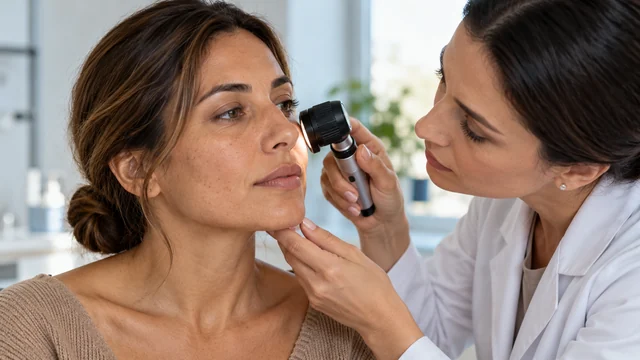
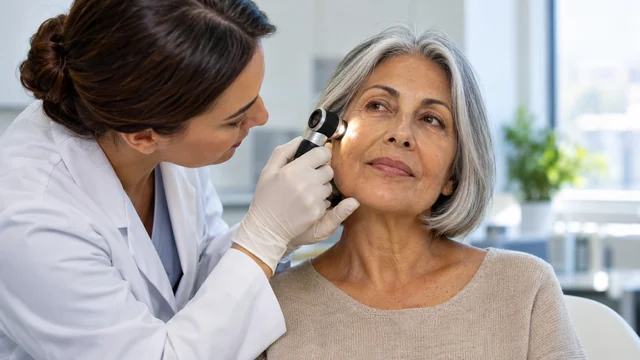
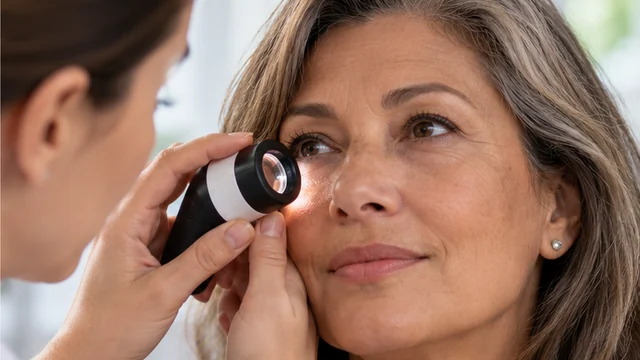
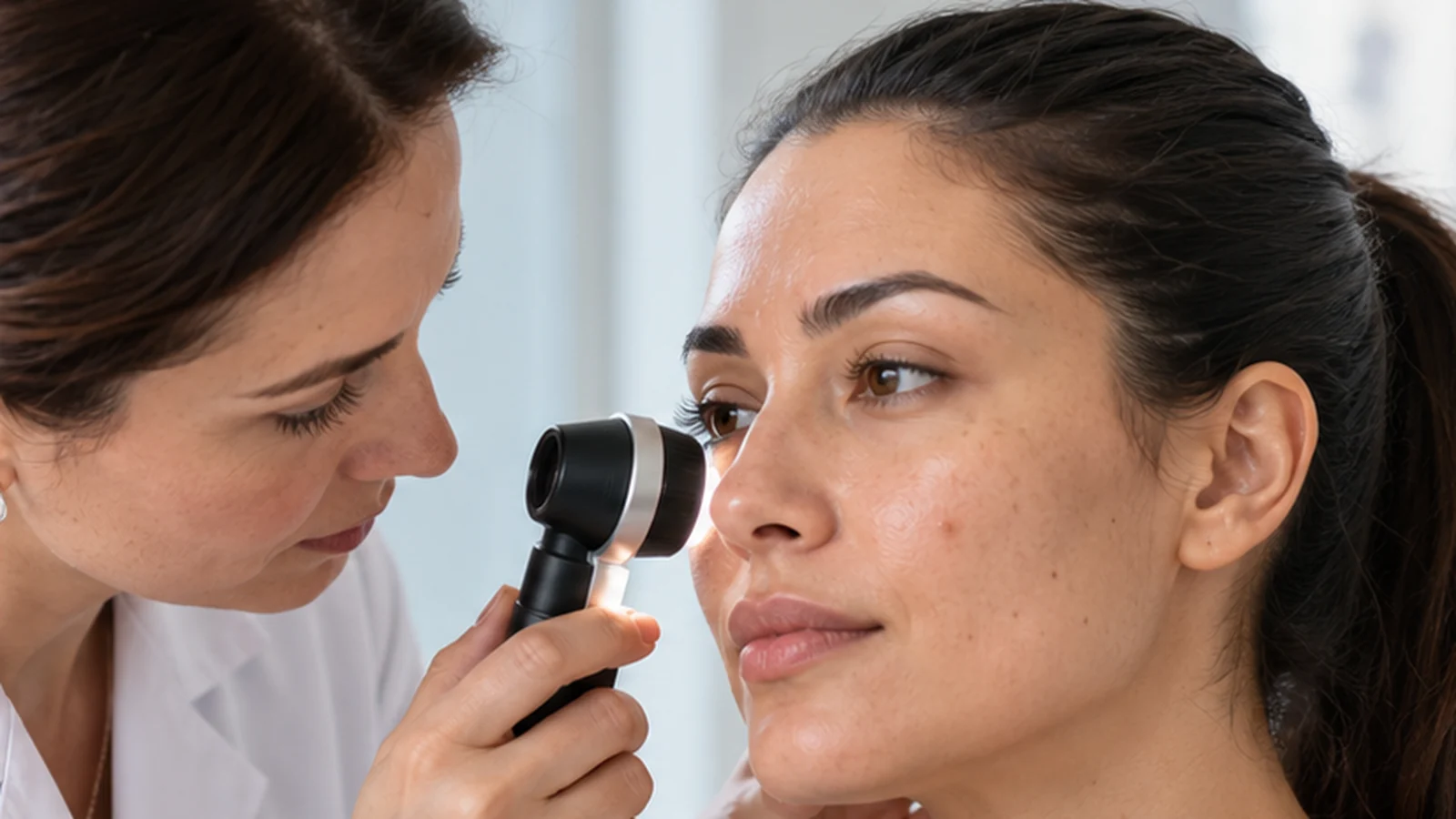
Viral warts, seborrhoeic keratoses, some moles, other benign lesions and, less commonly, skin cancers can look similar. A clinician considers the shape, surface, colour, pace of change and history. They may examine the growth with a dermatoscope — magnification with specialised light — or recommend a biopsy, meaning a tissue sample for laboratory analysis. This is particularly important for a pigmented lesion, a fast-changing one, spontaneous bleeding, ulceration or a growth different from surrounding ones.
There is a crucial distinction. When a growth is cut off, tissue can be saved for histology if needed. Laser vaporisation may destroy that tissue, leaving no adequate specimen. When the diagnosis is uncertain, testing comes ahead of a promise to “remove it in a minute.” Moles and suspicious spots need their own diagnostic decision, not a standard “papilloma removal” price list.
How does laser removal of a skin tag work?
First, the practitioner examines the area and asks about illnesses, allergies, medicines, scarring and nearby growths. Only after confirming a benign lesion should the clinician discuss the method and local anaesthesia. In selected small cases, a carbon dioxide (CO₂) laser may be used: its energy is absorbed by water in tissue to ablate or detach a small growth. This differs from extensive facial laser resurfacing in both treatment area and aftercare.
You may briefly feel a sting, warmth or smell heated tissue; local anaesthesia usually reduces discomfort. Technique depends on the lesion's shape, size, location and the equipment used. A tiny superficial wound remains afterwards, sometimes with a crust. The number of lesions removable in one visit should not be promised beforehand: each needs assessment, especially when they are numerous or look different.
Appropriate eye protection is essential, particularly near the face; treating eyelids needs special training and eye-protection procedures. A home laser or marketplace “burning pen” is not equivalent to a medical procedure. Settings cannot safely be copied from a video. If someone offers immediate destruction of an unexplained pigmented lesion without examining it, stop and ask a dermatologist.
Laser, snipping, electrosurgery or freezing: which option?
The decision depends on whether the growth has a stalk, the fragility of surrounding skin, its location and the possible need for laboratory testing. No method guarantees that the skin will heal without a mark.
| Option | When it may be considered | Main trade-off |
|---|---|---|
| Laser ablation, such as CO₂ | An individual small growth after diagnosis is confirmed, when a controlled local approach is appropriate. | Thermal injury and possible pigmentation changes or scarring; vaporised tissue may leave no adequate histology specimen. |
| Careful snipping by a clinician | Often useful for a skin tag with a clearly defined stalk. | Some bleeding is possible, but the specimen can be sent for analysis if needed. |
| Electrodesiccation or electrosurgery | A targeted electrical treatment, sometimes also sealing small blood vessels. | Not a laser; crusts, colour changes and scars are possible. |
| Cryotherapy | The growth is destroyed by cold, usually liquid nitrogen. | Blisters, crusts and pale or dark marks can occur; the result depends on freezing depth. |
| No removal | A confirmed benign lesion causes no discomfort or inflammation. | The lesion stays, but you avoid a wound, cost and the risks of unnecessary treatment. |
In its patient guidance, the American Academy of Dermatology mainly lists freezing, electrodesiccation and snipping. Clinical references also describe CO₂ laser for some small acrochordons. These are different kinds of evidence: listing a method does not prove it causes fewer scars than the alternatives for every patient. If someone promises “no scar” or absolute superiority for their device, ask for sound comparisons involving skin tags specifically, not facial rejuvenation studies. A 2023 pilot study compared two types of laser on the neck of just one person; it did not compare laser with snipping, freezing or electrosurgery. It therefore cannot predict the outcome for every patient or establish that lasers are best for all skin tags. That does not mean laser is unsuitable in selected cases.
What will my skin look like afterwards, and when will it recover?
A small treated area may resemble a pinpoint scrape, initially pink, then drying or crusting. Sensitive areas may sting or stay red for a while. Even after new skin has covered the surface, its colour may differ from surrounding skin. A tiny wound can still be socially visible, especially on the face or exposed neck.
There is no single reliable number of days for “laser healing”: depth, area, location and individual skin response all matter. AAD information says a scab after electrodesiccation may heal in one to three weeks; that number must not be applied automatically to every laser technique. A tiny spot can heal visibly faster than an extensive resurfacing treatment, so their timelines should not be equated. If a photoshoot or occasion is close, allow for possible pigment changes beyond the day a crust falls off.
Until the wound closes, follow gentle care instructions: clean hands, mild cleansing, protection from friction and no picking. After the skin has re-formed, protect exposed sites from the sun to reduce the chance of lasting discolouration. Do not use acids, scrubs, alcohol solutions, lightening products or heavy makeup on an open area unless your clinician specifically approves. Dressings and makeup restrictions vary by technique.
What can go wrong, and who might not be suitable?
Any removal method can cause bleeding, irritation, infection, scarring, incomplete removal or pigment change. Lasers add a thermal effect that can leave a darker or lighter spot. Some laser procedures carry a greater risk of pigment disturbance in darker skin phototypes. That is not a blanket ban, but a reason to discuss practitioner experience, depth of treatment and alternatives.
Elective treatment may need postponing for active skin infection or inflammation, uncertain diagnosis, poor wound healing or other medical concerns. Tell the clinician about pregnancy, breastfeeding, immune deficiency, diabetes, a tendency to thick scars, retinoid treatment and all medications. Rules for deep CO₂ facial resurfacing cannot simply be transferred to every tiny spot procedure; nor can a small treatment be declared safe for everyone solely because it is small.
An eyelid, mucosal, intimate or repeatedly injured area needs particular care in selecting a specialist and method. If an eyelid lesion affects vision, a clinical assessment takes priority over choosing laser treatment. DIY cauterisation in these places is especially risky. If many new tags appear rapidly, a dermatologist may suggest broader medical evaluation rather than removing everything immediately.
When should I call a clinician after removal?
Mild tenderness and local redness just afterwards can be expected. But increasing pain, spreading hot redness, pus, fever or bleeding that will not stop call for same-day medical advice. Rapid facial swelling, a severe allergic reaction or breathing difficulties require emergency care. Do not conceal worsening symptoms with cosmetics or use uncontrolled cauterising products.
If the area does not heal in the expected period, grows again or changes in a way the clinician did not explain, arrange another examination. A nearby new skin tag does not necessarily mean the laser failed: the tendency to develop them can remain. Distinguish regrowth in the treated spot from a completely new lesion.
Why is home removal a poor substitute?
Tying a growth off with thread, cutting it with scissors, applying strong acids or using wart medications at home can cause burns, bleeding, infection or scars. Even with home-freezing devices, a growth that merely looks like a skin tag is not necessarily a confirmed diagnosis. The most serious mistake is destroying a lesion that needed a dermatologist’s examination and possibly laboratory testing of the tissue.
Different home products have different regulatory statuses. The US FDA has said that over-the-counter drugs for removing moles or skin tags cannot legally be sold in the United States. However, it has also cleared certain cryotherapy medical devices for marketing under the 510(k) pathway: for example, the CryoFreeze Wart and Skin Tag Remover (K243487, 13 March 2025) is labelled for skin tags in adults aged 22 and older. This does not authorise every product for every suspicious lesion, demonstrate zero risk or establish that the device is registered in Armenia. If the diagnosis is uncertain, consult a dermatologist before choosing a home treatment on the strength of an advertisement.
Do not use wart medication just because the word “papilloma” sounds familiar. A wart and an acrochordon are different and need different diagnosis and treatment. If you do not know what your growth is, show it to a dermatologist and explain when it appeared, whether it bothers or bleeds and what you have already applied.
How should I choose laser versus a simpler option?
Rather than asking for “laser only”, bring your actual goal: remove the growth, retain smooth skin if possible, avoid unnecessary downtime and not miss a medical problem. Ask why the clinician believes it is an acrochordon, whether histology is needed and what happens to the specimen using the proposed technique. Why is laser better here than scissors, freezing or electrosurgery? What marks are most likely in the first days?
Ask about anaesthesia, eye protection, wound care, pigment changes for your skin type and contact details for complications. Check what the consultation, procedure, histology if indicated and follow-up might cost; fees vary by setting and scope, so no universal local prices are given here. Discussing a method or device is not a claim that any particular website or practice offers it.
If a confirmed harmless lesion neither hurts nor bothers you, leaving it alone is reasonable. If it changes, bleeds without injury or raises doubts, start with in-person diagnosis. If it is clearly benign and removal is worthwhile to you, choose a method the clinician can justify for this particular growth, rather than the one advertised as most high-tech.
Additional questions
Do I need an HPV test before a skin tag is removed?
For a typical acrochordon, an HPV test is not routinely required to decide about removal: “skin tag” does not mean viral wart. If examination suggests another condition, testing may be different.
Can several skin tags be removed in one visit?
Sometimes, but every atypical or suspicious growth must be examined first. The treated area, location and ease of aftercare determine whether combining procedures makes sense.
Will removal leave a white spot on tanned skin?
Pigment change is possible but cannot be predicted from tanning alone. Tell your clinician about recent sun exposure and previous pigment marks; delaying a non-urgent procedure and planning sun protection may be wise.
What if shaving keeps cutting the growth?
Repeated irritation may be a reason to consider removal, but it does not prove the diagnosis. A dermatologist must check it is benign and choose a suitable method for an area that is shaved regularly.
Sources
- American Academy of Dermatology — Skin tags: Why they develop, and how to remove them.
- DermNet — Skin tags (acrochordons).
- NCBI Bookshelf / StatPearls — Skin Tag (Acrochordon).
- DermNet — Lasers in dermatology.
- American Academy of Dermatology — ABCDEs of melanoma.
- US Food and Drug Administration — Warning about unapproved mole and skin-tag remover products.
- Pilot study comparing two lasers for acrochordon removal (2023).
- FDA — 510(k) K243487: CryoFreeze device marketing clearance (2025)