Uneven Skin Texture: Causes and What Realistically Helps
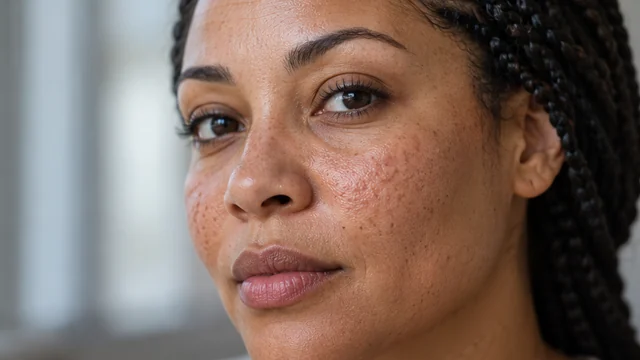
In a phone photo your skin may look smooth, while near a window you notice tiny bumps, pores, dry flakes or shallow depressions. People call all of these uneven skin texture, yet their causes and treatments differ. Gentle care may help roughness linked to dryness or an irritated skin barrier; cream cannot lift an established acne scar level with surrounding skin. A new, rapidly changing or bleeding growth must not be exfoliated or lasered before medical assessment.
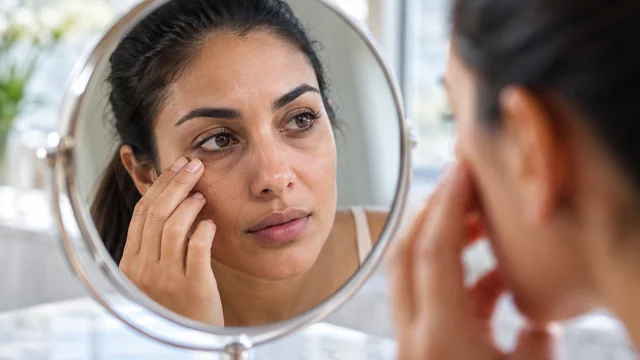
The useful first step is to identify what you actually see: temporary flaking, blocked pores, active inflammation, individual raised lesions or sunken scars. Judge progress in consistent ordinary daylight, not highly magnified selfies or filtered pictures. Visible pores and fine surface texture belong to healthy skin, and completely eliminating them is neither realistic nor required.
Which kind of unevenness do you see?
“Texture” describes an appearance, not a diagnosis. Tiny uniform bumps centred on hair follicles, often on upper arms or thighs and sometimes cheeks, may be keratosis pilaris: keratin plugs build up at follicles. It is usually harmless, can recur and needs no treatment unless it bothers you. Similar bumps, however, can be acne, milia, irritation or another skin condition. A photograph alone cannot establish the diagnosis.
With comedones (blackheads and small closed bumps), preventing new acne matters. Pits where acne used to be involve scar tissue. Narrow deep scars, broad depressions and rolling tethered scars call for different approaches; raised firm scars require a different plan from depressed ones. The clinician should identify scar shape before offering a device.
Sometimes colour creates the impression of unevenness: post-inflammatory marks, redness, freckles and visible vessels cast contrast without changing the surface much. Treating “texture” may therefore miss the actual concern. Age-related loss of firmness, visible pores in oily areas and active inflammatory skin disease are further separate problems, with different realistic goals and treatment tolerances.
| What you notice | Possible explanation | Sensible next move |
|---|---|---|
| Dry, faintly rough skin with tightness | Barrier disruption or irritating routine | Simplify products, moisturise and reassess |
| Small similar bumps without marked inflammation | Keratosis pilaris or closed comedones, among other causes | Clarify diagnosis before choosing gentle products |
| Pimples together with bumps | Active acne and possible scarring | Control inflammation first; avoid picking |
| Pits where pimples used to be | Different kinds of atrophic scars | Dermatologist assessment and individual treatment plan |
| New rough patch, enlarging crust or bleeding nodule | A skin disorder, including a possible tumour, must be excluded | In-person dermatology examination before cosmetic treatment |
When a peel or laser should not be the first step
See a dermatologist if texture changes suddenly or you notice a fast-growing lesion, a sore that does not heal, bleeding, pain, or a spot changing in colour or shape. An asymmetric pigmented spot with irregular colour or changing edges also deserves assessment. Do not scrub or apply acids to such a lesion: examination, sometimes dermoscopy or further testing, comes first.
Postpone skin-injuring procedures during active infection, painful deep acne, a cold-sore outbreak, sunburn or major irritation. Itching, splitting flaky skin, oozing or pain can indicate a treatable inflammatory condition rather than an aesthetic surface problem. Treating that condition takes precedence over resurfacing.
Tell the clinician about medicines, recent tanning, keloid history, dark marks after inflammation, immune suppression and pregnancy. Topical retinoids should be avoided during pregnancy; the suitability of each proposed procedure has its own conditions. Never stop prescribed medicine on your own just to undergo a cosmetic session.
What to try at home without causing more roughness
For dryness and irritation, several weeks of gentle, simple care often make more sense than starting several active products at once. Use comfortable cleansing, tolerated moisturiser and sun protection. Frequent abrasive scrubbing or stiff brushes can aggravate redness, barrier damage and that rough feeling.
If a doctor confirms keratosis pilaris, moisturisers containing urea or lactic acid and cautious exfoliation may help. The American Academy of Dermatology explains that treatment controls signs rather than permanently removing the tendency. Applying acid more often does not ensure faster, safer improvement. Reduce or pause it if it stings or irritates, and allow time to assess your skin's response.
For comedones, salicylic acid or topical retinoids may be options, chosen around skin sensitivity, dermatitis and pregnancy. Active inflammatory acne also needs treatment to prevent new scarring: a pit that forms now cannot be erased merely by arranging a procedure later. Squeezing inflamed spots or aggressively clearing pores can injure the skin further.
Change one active product at a time and note which ones cause dryness or burning. Check the skin in ordinary light rather than a harsh lamp that amplifies shadows. Persistent unexplained roughness, pain or failure of a sensible routine warrants diagnosis, not steadily stronger acids. Choosing no procedure may be sensible.
When an in-office procedure may genuinely help
For depressed post-acne scars, skincare can improve the overall complexion but cannot reliably undo deep tissue tethering. A dermatologist may discuss microneedling, different laser techniques, chemical peels, targeted scar release (subcision), or combinations. The right option depends on scar depth and shape, skin tone, pigmentation risk and how much recovery time you can accept, not the strongest advertised resurfacing.
Microneedling creates controlled punctures to encourage skin remodelling. The US FDA has authorised particular devices for specified indications, not all devices, combinations or body areas. Risks include redness, dryness, crusts, bleeding, herpes reactivation, infection and pigment changes. Home needles that penetrate living skin are no substitute for trained medical treatment; reusing a needle cartridge is unsafe. Products or drugs applied through punctures should not be assumed safe simply because a clinic markets the combination. RF microneedling has additional device-specific risks and should not be conflated with ordinary microneedling.
Laser resurfacing covers many different treatments. Intensive methods can involve visible redness, peeling and a longer healing period; gentler methods may achieve less improvement and need repeated visits. Persistent colour changes or scars are possible. With more pigmented skin or a history of dark acne marks, careful preparation and parameters matter because of post-inflammatory hyperpigmentation risk.
For an individual deep scar, releasing its tethering or another scar-specific technique may be more suitable than broad laser treatment. Raised hypertrophic or keloid scars involve excess scar tissue and require a different strategy. Visible redness or active rosacea is another separate path: reducing vascular colour does not fill a depression. Related: rosacea
Compare the goal, not the machine name
| Main aim | First reasonable route | What it cannot promise |
|---|---|---|
| Reduce dryness and fine roughness | Restore the barrier, moisturise, adjust routine gently | Will not remove deep scars or raised growths |
| Reduce comedones and new breakouts | Treat acne with a tolerable routine | Will not level existing sunken scars |
| Improve acne pits | Classify scars; sometimes combine targeted procedures | No guarantee of perfectly smooth skin or no further acne |
| Reduce a red background | Diagnose redness and visible vessels | Colour improvement alone does not change physical depressions |
| Remove a suspicious new growth | Diagnosis rather than cosmetic destruction | Peels and lasers cannot replace excluding dangerous disease |
What recovery looks like in real life
Basic skincare causes no procedural wound, although actives can provoke temporary dryness and redness. Superficial procedures may cause peeling; needling can leave conspicuous redness, tenderness, pinpoint marks or crusting. Intensive laser resurfacing may require substantially longer healing. The timetable from one device, depth or technique must not be applied to another.
Medical recovery and social visibility are not the same. Being physically able to work at home tomorrow does not mean feeling camera-ready. Makeup may not be permitted immediately on injured skin and can worsen irritation. Ask to see ordinary photographs across the healing period, not just the immediate result, and request a plan for persistent redness.
If a wedding, public appearance or sunny holiday is approaching, avoid trying a new aggressive treatment right before it. Sun exposure, tanning and unsuitable products can increase the risk of dark marks. Depending on wound healing, your clinician may restrict exercise, saunas, pools, acids or scrubs. There is no single universal aftercare calendar.
How to tell whether improvement is real
Compare the same angles, expression and diffuse light without filters. Side lighting and close-up magnification exaggerate pores; soft lighting can seemingly erase scars. Credible before-and-after pictures use comparable timing and no convenient makeup or temporary post-treatment swelling. Also track comfort, tolerance of skincare and new inflammatory lesions.
Maintenance depends on the cause. Keratosis pilaris may require recurring care, acne requires prevention of new breakouts, and age changes the baseline over time. Scars can become less visible but may not vanish. The strongest treatment is not automatically the best: a subtle change with little visible downtime may suit your priorities better than a more ambitious, riskier one.
Questions worth asking before consenting
Ask for the diagnosis or working explanation and have the clinician point out exactly what will be changed, distinguishing scars from ordinary pores, surface texture or redness. Ask whether an active condition needs treatment first and why this method is preferable to simpler options. Discuss likely magnitude and uncertainty of benefit, an individually justified number of visits, visible recovery and risks for your skin tone.
Also ask who will treat you, how contraindications are checked, how burns, infection or persistent marks are managed, and when makeup, sport and sun exposure can resume. Total cost depends on area, method, sessions and related care; request an itemised plan, not an advertising figure. Refusal to examine your skin or promises of “perfectly smooth in one session” are reasons to seek another opinion.
The goal need not be poreless skin. It is to identify the reason for the changes and decide whether benefit warrants cost, risk and recovery. Starting with gentle care, diagnosis or observation is just as valid as choosing a professional treatment for significant scarring.
Additional questions
Can friction from a mask or collar also cause a rough-looking surface?
Friction and moisture can worsen irritation or breakouts that feel bumpy. But persistent or itchy rash should not automatically be blamed on fabric: arrange examination if it does not settle after removing the trigger.
Should I photograph my skin before changing products?
Not necessarily. One photo in comparable daylight every few weeks can help judge change without checking a magnifying mirror every day. Do not substitute sharing photos of a suspicious growth for medical assessment.
Can foundation temporarily make texture less visible?
Makeup can soften colour contrast, but heavy products may emphasise flakes or irritate sensitive skin. After an injuring procedure, ask when it is safe to resume makeup on the treated area.
Sources
- American Academy of Dermatology: Acne scars — consultation and treatment
- American Academy of Dermatology: Keratosis pilaris — diagnosis and treatment
- American Academy of Dermatology: ABCDEs of melanoma
- FDA: Microneedling devices
- American Academy of Dermatology: Skin care in pregnancy
- FDA (15 October 2025): Safety communication on RF microneedling