Diode Laser Hair Removal (Soprano): What It Does and Who It Suits
Are you tired of arranging shaving around travel, or bothered by ingrown hairs, and now considering Soprano? The essential point is this: diode laser hair removal can reduce the amount and thickness of pigmented hair for a long time, but it cannot promise permanently smooth skin and does not work equally well on all hair. “Soprano” names a family of systems, not one universal beam; the exact model and handpiece matter. Before paying for a course, find out whether your skin and hair are suited to the proposed protocol.
What does a diode laser actually do?
Laser energy is absorbed mainly by melanin, the pigment in hair, and converted into heat affecting structures within the hair follicle. The aim is to heat the target while protecting surrounding skin. Traditional diode systems commonly use a wavelength around 810 nm, but particular devices can emit other wavelengths or combinations. So neither “diode” nor “Soprano” tells you all the treatment settings.
Not all follicles are at the same stage of growth, which is why appointments are repeated. Losing some hair after the first session is not the end of a course. Hair that returns is often sparser or finer, but some follicles continue producing hair, and hormonal changes may encourage new growth. The realistic term is long-term hair reduction, not guaranteed removal of every hair for life.
There are several generations of Soprano equipment. For example, Alma describes the Soprano Titanium system as combining 755, 810 and 1064 nm wavelengths, moving the applicator and cooling the skin. These are specifications for a particular version, reported by its manufacturer; they do not independently prove that every Soprano unit is painless, suitable for everyone, or superior to other lasers. Ask for the exact model and which treatment mode is appropriate for your skin phototype.
Do my hair and skin suit it? Look at the combination, not just the body area
| Situation | What is realistic | What to discuss first |
|---|---|---|
| Dark, fairly coarse hair and skin without a recent tan | Usually a clear target for laser energy; the effect still depends on the area and settings. | Your skin phototype, expected appointments and a test spot if uncertain. |
| Brown or very dark skin | Treatment can be possible with an experienced practitioner, but pigmentation risks need particular care; a long-pulsed 1064 nm Nd:YAG may sometimes be preferable. | Experience with your phototype, available wavelengths, cooling and skin protection. |
| Blonde, grey, red or nearly colourless hair | Results are much less predictable because there is little suitable pigment to absorb the energy. | Whether a trial is sensible at all; electrolysis as a separate alternative. |
| Fine downy hair, especially on the face | It may not decrease; paradoxical increased growth in or near treated facial areas has been reported. | Whether to leave the fine hair alone and assess why it appeared. |
| Sudden increase in chin hair alongside acne or menstrual changes | Cosmetic removal cannot address a possible underlying hormonal problem. | Whether clinical assessment for hirsutism and associated symptoms is needed. |
Darker skin is not by itself a reason to rule out laser treatment, but equal safety across phototypes cannot be promised. Melanin occurs in the epidermis as well as in hair; incorrect energy delivery can heat the skin. With darker phototypes, the operator’s experience, suitable equipment, careful settings and candid expectations are crucial. A more conservative setting may yield slower visible progress; that may be a sensible trade-off rather than a mistake.
What happens during a session, and how much does it hurt?
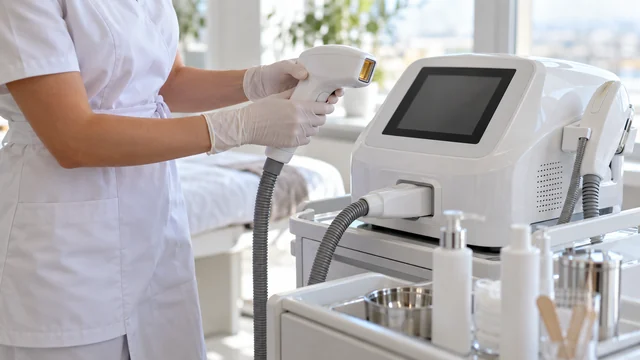
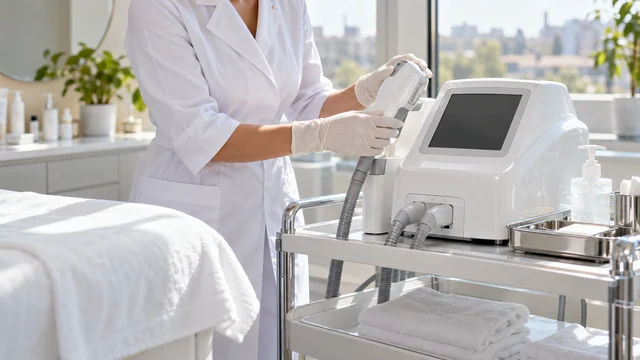
At consultation you should be asked about medicines, skin conditions, herpes episodes, scarring, recent tanning and prior reactions to light treatments. Hair and skin are examined and a small test area may be considered. Before treatment the area is cleaned, everyone in the treatment room receives wavelength-appropriate eye protection, and the device is used according to the protocol for that site. Some systems use coupling gel, cooling and a moving handpiece; others work differently.
Sensations range from brief hot pricks or rubber-band snaps to gradually building warmth. Underarms, the bikini area and dense hair can feel more intense than lower legs; tolerance varies considerably. Cooling helps, but “painless” on a brochure is not a reliable promise about your experience. Tell the operator immediately about sharply unusual pain or a burning sensation rather than enduring it to obtain a stronger result.
Not everyone needs a numbing cream. Applying powerful anaesthetics to large areas or covering them with plastic wrap without medical direction can cause dangerous systemic effects. Treatment duration depends on the body area and device. Ask for a realistic estimate for your zones rather than choosing a claim that the “whole body takes minutes.”
What will I see immediately, a week later and after the course?
Redness, tenderness and slight swelling around follicles may appear immediately, resembling mild sun irritation. Many people resume normal activities the same day, yet red dots can be visible on bare legs or arms. No medical leave is not the same as being invisible socially. If you have a photoshoot, beach outing or event requiring exposed skin tomorrow, do not schedule your first treatment just beforehand.
Over subsequent days, treated shafts may seem to grow before gradually shedding from their follicles. That is not necessarily treatment failure. Do not pluck them, scrub hard or try to force shedding. Regrowth between sessions can also be patchy, sometimes resembling a checkerboard. Compare the same area in similar light after comparable intervals rather than judging a single day.
Intervals between treatments are chosen for the area and hair cycle, not from a promotional one-size-fits-all calendar. Several sessions may be recommended, with occasional maintenance later, especially in hormone-sensitive sites. A systematic review published in 2022 found varied outcomes among studies of long-term reduction and relatively few high-quality trials with extended follow-up; that describes the scope of the reviewed evidence, not proof that laser treatment is ineffective. Neither an exact session count nor “100% gone” follows from the laser’s brand name.
Before and after: a practical route
- Before the visit. Avoid tanning and self-tanner, and report recent sun exposure. If you have tanned, wait until your skin returns to baseline as advised. Ask how long to stop waxing, plucking and electrolysis before treatment: laser needs a pigmented hair target in the follicle. Shaving is generally permitted, with timing agreed locally.
- On treatment day. Arrive without irritating skin products if instructed. Do not conceal creams, medicines, a current infection, a rash or a fresh tan. Safety glasses must suit the laser’s wavelength.
- During the first days. Clean and cool the skin gently as instructed; avoid rubbing and temporarily avoid heat, saunas and strenuous exercise while tenderness or redness persists. Protect exposed skin against ultraviolet light; the AAD advises broad-spectrum SPF 30+ and avoiding tanning beds.
- Between visits. Shave if needed, but do not remove hair from its root unless your clinician agrees. Do not shorten the interval yourself to accelerate results: skin recovery and hair cycles need to be respected.
If redness is only mild, follow aftercare instructions and monitor the skin. Blisters, worsening burning, weeping skin, unusually severe pain or persistent colour change warrant a medical assessment. Worsening redness and warmth, pus or fever could signal infection and need prompt medical attention. A burn is not evidence of successful treatment.
When should I postpone or see a doctor first?
A recent tan, sunburn, damaged skin or active inflammation in the target zone are reasons to delay and discuss recovery. Active infection, a suspicious pigmented lesion, a severe previous reaction or unusual scar formation calls for an in-person assessment. Tattoos and moles must not be treated casually as ordinary skin: the operator should safely exclude them from exposure and refer any concerning lesion for diagnosis.
Disclose all medicines, including acne treatments, photosensitising medicines and drugs affecting clotting. The blanket rule that “every retinoid prohibits laser for six months” is too crude: risks depend on the specific drug, skin and procedure. Never stop prescribed medication yourself. During pregnancy, postponing elective cosmetic hair removal is generally prudent because good safety data are limited, not because fetal harm has been established. While breastfeeding, discuss the area, any anaesthetic and your circumstances with your clinician.
If facial hair suddenly becomes substantially thicker, particularly with menstrual changes or other new symptoms, investigating the cause may matter more than buying sessions immediately. Laser manages hair growth; it does not treat an endocrine disorder.
Diode, alexandrite, Nd:YAG or electrolysis?
A diode laser is not the only reasonable choice. The 755 nm alexandrite laser is commonly considered for pale skin with dark hair, while long-pulsed 1064 nm Nd:YAG can provide safety advantages for darker skin. What fits depends on phototype, hair thickness, equipment and operator skill; even direct comparison studies do not identify one winner for everyone. The alexandrite guide discusses that particular option, and the general laser hair-removal guide covers the wider category.
Electrolysis treats follicles individually and may suit pale or grey hairs that absorb too little laser energy. The trade-off is time spent on individual hairs and dependence on skilled technique. Ordinary shaving remains a perfectly valid alternative if you prefer not to commit to consultation and a course. Waxing and plucking are also options outside treatment, but during a laser course they remove the follicle’s hair target.
How do I know the plan is personal, not just a package sale?
Ask for the device’s model, wavelengths and rationale for your skin colour. Ask how the operator judges burn and pigmentation risk, why that interval was chosen, which responses are normal, who assesses an adverse reaction medically and how you would access help. Request an outcome description without “forever” or “guaranteed”, and ask what would prompt them to call the course insufficiently effective.
When examining before-and-after photographs, compare the same body area, the interval since the last session, lighting and whether shaving happened just before the image. One person’s photographs cannot predict typical results for your phototype. A useful quote separates the zones, consultation, anticipated number of sessions, maintenance and rescheduling terms, without inventing a fixed Yerevan price.
You should be free to say, “I need to think about it.” Sometimes the best next step is treating irritation, waiting for a tan to fade, discussing possible hormonal symptoms or simply continuing to shave. You do not need to have your first treatment on the day of the consultation.
A few additional questions
Why are there a few hairs along the edges of the area after my course?
The marked borders, different growth cycles and varying shaft thickness can explain this. Do not attempt to “finish” the spot yourself; bring it to a follow-up to distinguish normal regrowth from a missed patch.
Is laser treatment possible between seaside holidays?
Scheduling depends on actual tanning and the time your skin needs to recover, not just a gap on the calendar. Discuss the trip and anticipated sun exposure before choosing dates.
Should I photograph my results at home?
It is optional, but dated images of the same zone with similar lighting can help you judge change without checking the mirror every day.