How to Soften Crow's Feet: Home Care and Procedures
In a photograph you smile and notice delicate little rays at the outer corners of your eyes. In the mirror, with your face relaxed, they may almost vanish—or the lines may remain even when you are not squinting. This distinction, rather than the popularity of a particular treatment, determines how best to soften crow's feet.
The short answer: daily sun protection and gentle skin care can lessen the appearance of fine lines and limit further photoageing. If wrinkles appear mainly when you smile, botulinum toxin injections may temporarily reduce the muscle contractions that create them. If grooves remain visible at rest, skin quality, sun damage and fold depth matter more; retinoids, laser resurfacing or other texture-focused treatments may be discussed. No treatment can guarantee the complete erasure of every line while preserving exactly the same facial movement.
Which type of crow's feet do you have? Compare two expressions
Crow's feet are radiating lines beside the outer eye corner. The muscle that closes the eyelids during smiling or squinting folds the skin; over time some creases become visible even without movement. Dryness may temporarily accentuate them, but moisturising is not the same as treating deep, fixed creases.
| How the lines look | What may help | What not to expect |
|---|---|---|
| Appear with a smile and almost disappear at rest | Discuss botulinum toxin for dynamic wrinkles, if you want any intervention at all | A face that is both entirely motionless and capable of a completely natural smile |
| Fine lines that look worse with dryness or bright light | Moisturising, UV protection and comfortable products suitable for the eye area | A lifting effect or lasting removal of muscular creases from a single cream |
| Visible in a relaxed face, with uneven skin texture | Assessment of sun damage; carefully selected topical treatments or skin-surface procedures | No redness or recovery time after intensive resurfacing |
| Hooded skin, bags or changes in eyelid position | In-person anatomical assessment by an appropriate specialist | A single injection beside the eye resolving excess skin or an eyelid disorder |
Look at your face in ordinary daylight without pulling the skin taut with your fingers. If you like the creases in your genuine smile, there is no reason to call them a problem. You may simply want to ease dryness or protect your skin against further sun damage.
What home care can actually do
Broad-spectrum sunscreen with SPF 30 or higher is a useful long-term habit for limiting photoageing. Apply it according to its directions, keeping it out of your eyes; add sunglasses and shade in bright sun. Frequent squinting can also make expression lines more pronounced. A moisturiser can temporarily soften the appearance of superficial fine lines but cannot lift deeper tissues.
Retinoids, derivatives of vitamin A, can gradually improve some fine signs of photoageing. However, the sensitive skin around the eyes can react with stinging, dryness and irritation. Do not place strong active products against the eye surface or lash line unless a clinician has specifically advised it. Avoid starting several acids, scrubs and retinoids at once. Topical retinoids should be avoided during pregnancy and when planning pregnancy; discuss suitable care individually when pregnant or breastfeeding.
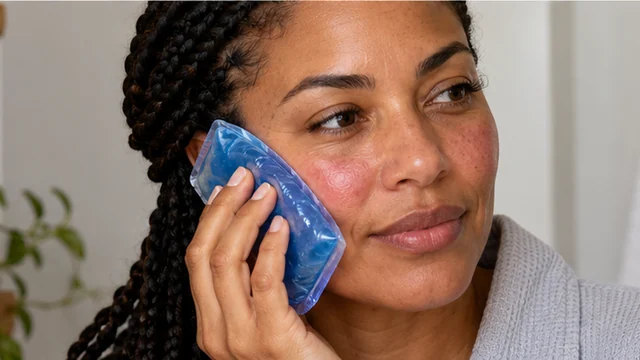
Eye patches, massage and facial exercises may feel refreshing or temporarily change the appearance of puffiness, but the evidence reviewed does not support promising that they will remove established crow's feet. In particular, do not rub this delicate area vigorously: irritated skin may be more noticeable than the wrinkles themselves.
When is botulinum toxin suitable—and when might it not be?
For dynamic crow's feet, a medically qualified practitioner may suggest targeted injections into part of the orbicularis oculi muscle around the eye. In the United States, the specific product BOTOX Cosmetic has an approved indication for temporarily improving moderate to severe lateral canthal lines in adults. This does not establish the same regulatory status for every brand, or confirm that a particular service is available in Armenia. Ask for the exact product name, provenance and authorised uses in the country where it will be administered.
Effects usually develop over several days. The American Academy of Dermatology says improvement often lasts around 3–4 months, after which muscle activity returns. Stronger relaxation may smooth lines more but can make your smile feel unfamiliar. Anatomy, injection sites, dosage and the clinician's skill influence whether your expression stays natural; a friend's photograph cannot predict your result.
An injection feels like a brief prick. Tenderness, small bruises, swelling, temporary asymmetry or weakness of nearby muscles, including eyelid drooping, can occur. The official US BOTOX Cosmetic label also warns of rare but serious signs of toxin effects spreading beyond the injection area: difficulty swallowing, speaking or breathing, or marked muscle weakness. Seek emergency medical care if these occur after injections. Treatment by an unqualified injector or outside an appropriate medical setting creates avoidable risk.
Evidence about the safety of cosmetic BOTOX Cosmetic during pregnancy remains insufficient. The 2024 US product label reported no data on its presence in human milk; however, small studies available by September 2026 found onabotulinumtoxinA to be undetectable or present only in trace quantities in milk after cosmetic injections. Those findings do not guarantee the safety of every brand or dosing regimen during breastfeeding. It is prudent to postpone elective cosmetic injections in pregnancy; while breastfeeding, discuss the need for treatment and alternatives with your treating clinician. Before treatment disclose neuromuscular disorders, swallowing difficulties, medicines—particularly those affecting nerve-to-muscle signalling—and any previous reactions to botulinum toxin. These details can change the safety decision.
When to discuss lasers and other treatments for skin texture
If a crease has become fixed at rest, relaxing the muscle may not remove it completely. Laser resurfacing changes the skin surface as it heals; treatments vary greatly in depth and intensity. More intensive options may improve texture more visibly but involve longer recovery. Risks include redness, swelling, changes in pigmentation, herpes flare-ups, infection and scarring. The clinician should account for your skin tone, sun response, medicines and tendency to develop pigmentation, particularly close to the eyes.
Chemical peels and microneedling may sometimes be considered for superficial skin changes. But do not assume that techniques used on the cheeks are appropriate immediately beside the eyelid: the permitted treatment area and eye protection are critical. Fillers near the outer eye corner are not a straightforward substitute for botulinum toxin in expression lines. Injections close to the eyes require a separate discussion of vascular and other serious risks.
When can I go to work, pose for photos or return to the gym?
Many people resume normal activities immediately after botulinum toxin, though injection-point redness or a bruise may show for several days. The AAD advises against rubbing treated areas and recommends waiting at least two hours before strenuous exercise; your own clinician may give stricter instructions. Effects are still developing over the first few days, so injections immediately before a major photo shoot leave little room to check symmetry.
Laser resurfacing is different: swelling, tenderness, peeling, crusting and redness may make it uncomfortable to appear in public without camouflage. For some forms, active surface healing lasts roughly one to two weeks, and residual redness may last longer. Makeup should be resumed only when the surface has healed and the treating clinician approves. If you need to look completely familiar at a meeting in a few days, staying with gentle home care may be the better choice for now.
Five questions to ask before deciding
- Do my lines arise from muscle movement, or are they also visible at rest?
- What degree of improvement is realistic with my anatomy, and will my smile still look natural?
- What exact product or laser would be used, who would perform the treatment, and is its use authorised locally?
- What am I likely to look like tonight, in a few days and before my upcoming event?
- Which complication symptoms need urgent assessment, and whom can I contact if they appear?
Before-and-after photographs only help when the lighting, angle, degree of smiling and time since treatment are comparable. A relaxed-face photograph can make dynamic wrinkles appear to have disappeared without a fair comparison. If offered a “full-face package,” ask why each proposed area is relevant rather than agreeing automatically. Keeping your smile and some natural expression lines is a valid decision.
Frequently asked questions
Can eyesight or a habit of squinting affect crow's feet?
Frequent squinting accentuates dynamic lines. If you squint often, consider an eye examination and protection from strong light, although this will not erase creases already present.
Can the result of injections be assessed that evening?
No. Early puncture marks and swelling do not reflect the final muscle-relaxing effect, which develops gradually. Ask your clinician when the appropriate review visit should take place.
Is it unsafe for my skin if I do nothing?
No. Ordinary age-related crow's feet are usually a cosmetic concern, not a medical condition. Sun protection remains sensible whatever you decide about procedures.
Sources
- AAD: botulinum toxin, expected effect
- AAD: botulinum toxin, FAQ and aftercare
- BOTOX Cosmetic: US prescribing information, revised 2024
- AAD: skin care for wrinkles
- ASPS: recovery after laser resurfacing
- FDA: dermal filler risks
- NHS: topical retinoids and pregnancy
- NIH LactMed: botulinum toxins and breastfeeding evidence, September 2026