
How to Minimize Enlarged Pores: What Actually Helps
In side lighting, pores on the nose and cheeks can look much larger than they do in an ordinary mirror. If you would like smoother-looking skin, do not begin with aggressive extractions: pores cannot be permanently “closed”, although controlling oil, blockages and irritation can often make them less noticeable. Start with gentle cleansing, non-comedogenic products and daily sun protection; salicylic acid or a suitable retinoid may help when there are comedones. If loss of firmness or residual acne scars are the main issue, the approach is different.
Why do pores look prominent—and what are you actually seeing?
A pore is the opening of a hair follicle and its associated oil gland; it is a normal part of the skin. Its size and appearance depend on inherited characteristics, oil-gland activity, follicle size, surrounding tissue and cumulative sun damage. In some people excess sebum makes skin look porous, in others plugs are responsible, while age-related loss of firmness may also contribute. Lighting, camera magnification and heavy foundation can change the impression.
Blackheads do not mean “dirty skin”: open comedones contain follicular material that darkens on exposure to air. The nose also has sebaceous filaments—fairly uniform tiny dots involved in normal sebum flow. There is no need to squeeze them until they vanish: they will reappear. If there are nearby red, painful spots, it is more important to treat acne than to extract every dot.
How do you decide where to start?
| What you notice | Likely issue | A sensible first step |
|---|---|---|
| Shine in the T-zone, blackheads and whiteheads | Oil and comedones make follicular openings more conspicuous | Gentle care; if tolerated, a salicylic acid product; dermatology assessment for persistent acne |
| Prominent pores but almost no inflammation | Your skin's natural structure, sometimes excess oil | Non-comedogenic products and sun protection; do not expect pores to disappear |
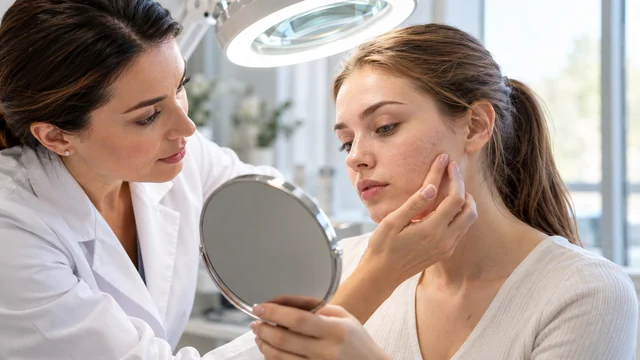
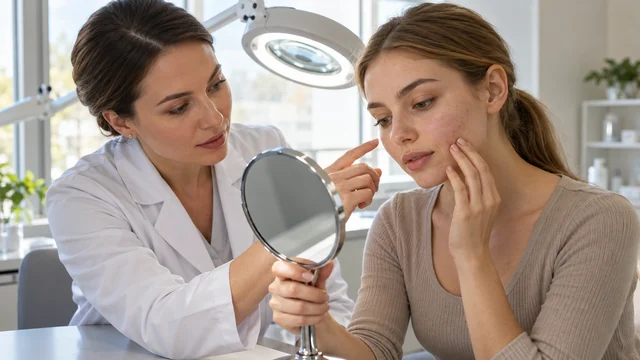
| Uneven pits on the cheeks after pimples | These may be depressed scars rather than enlarged pores | Examination in side lighting and a separate scar-treatment plan |
| Peeling, burning and redness after acids | An irritated skin barrier | Stop active products temporarily; return to gentle care and assess the reaction |
| Skin has lost firmness and pores stand out more | Reduced tissue support around follicles | Sun protection and discussion of realistic procedural results, if this matters to you |
Home care: what is genuinely worthwhile
Cleansing without that “squeaky clean” feeling
Cleanse gently morning and evening and, if needed, after heavy sweating. Use lukewarm rather than hot water; brushes, harsh scrubs and repeated washing will not shrink follicular openings. Instead, irritation and over-drying can increase redness and make skin look less even. If your face feels tight, add a suitable moisturiser—hydration neither “opens” nor “closes” pores.
Salicylic acid—when pores are congested
Salicylic acid helps reduce the build-up of dead cells and follicular blockage, so it is more relevant to comedones than deep scars or age-related changes in skin structure. Start with one product, consider its concentration and formulation, and watch for dryness or burning. Combining several acids, a scrub and a retinoid may cause more irritation than benefit. If you have eczema, pronounced sensitivity or possible rosacea, discuss your choices with a dermatologist.
Retinoids are not an eraser; they are tools for acne
Retinoids influence cell turnover and are part of evidence-based acne treatment; some cosmetic retinol formulations may also make the surface look smoother over time. They cannot render naturally large pores invisible. Dryness, flaking and irritation are possible, so the product and frequency need to suit your skin. Avoid topical retinoids when pregnant or planning pregnancy; discuss any specific product with your clinician during breastfeeding as well. This also matters when an ordinary-looking cosmetic contains retinol.
If you are treating comedones or mild acne, do not switch products every evening simply because your pores are still visible: early changes with a suitable acne treatment are often assessed after 6–8 weeks, not a few days. This is not a promise that pores will “shrink” by that date, nor a reason to put up with severe burning. If irritation worsens, deep painful breakouts appear or you see no improvement, review the plan with a dermatologist rather than adding more acids or applying products more often.
Sunscreen and makeup
Broad-spectrum SPF 30 or higher helps limit ultraviolet damage, which can contribute to loss of firmness and more visible pores. Non-comedogenic moisturisers and makeup help avoid adding to congestion. A primer may temporarily blur texture in photographs, but that is an optical effect, not treatment. Assess progress in consistent lighting without filters rather than in magnified selfies.
What can procedures offer, and why are they optional?
If gentle care does not achieve the result you want, a clinician may discuss superficial peels, device-based procedures or treatment of coexisting acne. A peel can sometimes improve superficial roughness and comedones, but the depth of treatment and risks of irritation or pigment change vary. Laser and radiofrequency methods may affect skin texture and tissues around follicles, yet studies are heterogeneous, and no one should promise a permanent reduction in pore size by a particular percentage. An expensive device is not necessarily the right one for your skin.
Distinguish a cosmetic procedure for texture from treatment of active acne. If inflamed spots are still appearing, prioritise a plan to control the condition; evidence is insufficient for some procedures to replace medical acne treatment. A tendency to develop dark marks after inflammation, a deeper skin tone, recent tanning or reactive sensitivity makes settings, operator expertise and the risk of post-inflammatory pigmentation especially important. Do not agree to deep treatment solely for ordinary sebaceous filaments on the nose.
What might you look like after a procedure?
After a superficial treatment, you may have temporary redness, dryness or peeling; more intensive procedures can cause swelling, conspicuous redness, crusts and a period in which the skin barrier recovers. Duration depends on the method, settings, skin tone and personal response. “You can work the next day” does not mean your face will look as usual in daylight or under makeup. If you have a photo shoot, a sunny holiday or an important meeting coming up, ask in advance about socially visible recovery and allow a buffer, rather than trusting an exact day-count promise.
Forceful home extraction with needles or damaging masks is no substitute for proper assessment: it can leave inflammation, pigmentation or scarring where there used to be only a dot. Do not use alcohol or toothpaste to “tighten pores” either; tightness is not evidence of smaller openings. Follow the clinician's individual aftercare instructions after a procedure; adding acids to irritated skin can delay healing.
When do you need a diagnosis rather than another bottle?
See a dermatologist for deep painful pimples, rapidly increasing inflammation, persistent burning and redness, oozing or an unusually changing patch of skin. A solitary lesion that bleeds, grows or does not heal should not be dismissed as a “large pore”; have it examined. If the irregularities followed acne, read more about the types and treatment options in how to reduce acne scars. Facial redness and episodes of flushing need their own assessment; enlarged pores alone are not a diagnosis of rosacea.
Choosing your next step without unnecessary spending
- Look at your skin in ordinary daylight: are you concerned about comedones, oiliness, small scars or its natural texture?
- Simplify your routine to gentle cleansing, moisturising and sun protection; introduce only one potentially active product at a time, provided it is appropriate for you.
- Judge comfort, the number of blocked follicles and the visibility of unevenness under comparable conditions—not whether pores have “disappeared”.
- If you are considering an in-office procedure, ask which structure it is meant to change, what evidence applies to your skin, what pigment risks exist and how long recovery may be visible.
- Ask about a no-procedure alternative. If your skin's texture bothers you only a little, postponing treatment is a complete and reasonable choice.
A good outcome here usually does not mean “porcelain” skin without pores. It means calmer-looking skin with fewer plugs and less irritation—and expectations that match normal anatomy. If advertising promises to erase real skin texture, ask whether the images show a change in lighting, makeup or a lasting effect.
Frequently asked questions
Can I make pores smaller just on my nose?
You can choose comedone treatments for a particular area if it tolerates them, but the anatomical openings will not disappear. Sebaceous filaments on the nose are not a reason to scrub harder.
Why are pores visible again after a facial extraction?
Extraction may remove some follicular contents, but it cannot stop oil production or change the basic structure. Consistent gentle care matters more than the promise of “one facial forever”.
Sources
- American Academy of Dermatology: What can treat large facial pores?
- DermNet: Enlarged pores
- American Academy of Dermatology: updated acne guidelines (2024)
- British Journal of Dermatology: topical retinoids and pregnancy outcomes (2026)
- American Academy of Dermatology: Adult acne treatment and when to expect changes