
How to Manage Rosacea: Redness, Bumps and Vessels
One day your face feels calm; the next it suddenly burns after hot tea, sun or exercise. Your usual cream stings and the colour in your cheeks lingers. If this is rosacea, no single cream or procedure can eliminate it permanently: the condition is usually chronic, but its manifestations can often be managed well. A practical approach is to confirm the diagnosis, identify your main features—flushing, persistent discolouration, inflammatory bumps, visible vessels or eye symptoms—choose treatment for those features and maintain gentle care. Acne acids or a laser chosen without a diagnosis can make matters worse.
Make sure this is rosacea, not another cause of facial redness
Rosacea may involve flushing, persistent pink, red, purple or brownish facial colour, fine visible vessels and bumps or pustules without the comedones typical of acne. Even water may sting. On darker skin, redness can be less obvious; warmth, flushing episodes, texture changes and reactions to usual skincare help inform the assessment. Rosacea can also affect the eyes, causing dryness, a gritty feeling and irritated eyelid margins.
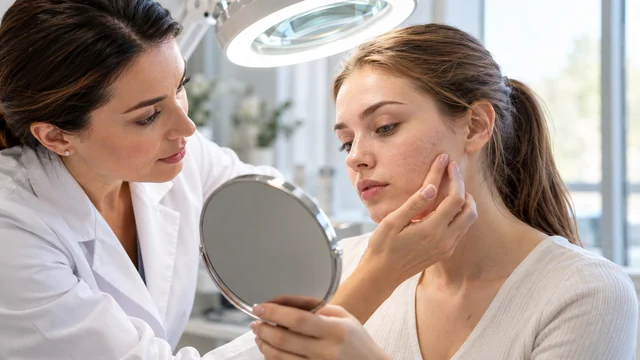
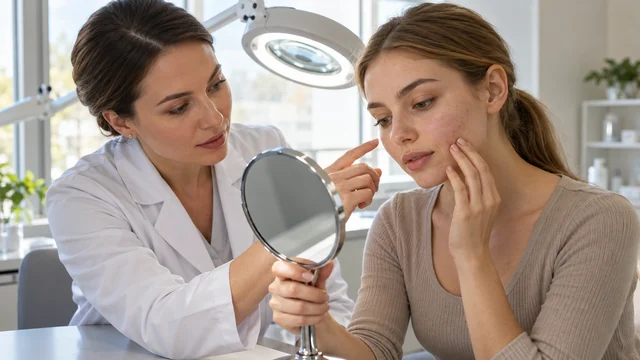
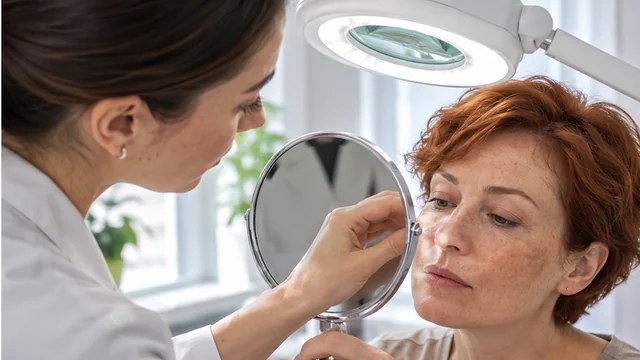
A photograph alone is not reliable for diagnosis. Contact dermatitis, seborrhoeic dermatitis, perioral dermatitis, acne, medication reactions and, less often, autoimmune conditions can look similar. Tell your dermatologist what you have applied, particularly steroid creams: topical corticosteroids can worsen or mask rosacea. Do not try to “test” the diagnosis with a self-prescribed antibiotic or steroid cream. An unusual rash, systemic symptoms or an atypical persistent colour change needs medical evaluation rather than a cosmetic facial.
What should you treat first: redness, bumps or blood vessels?
| Main feature | What to discuss with your clinician | What not to expect |
|---|---|---|
| Burning and flushing associated with triggers | Reducing irritants and supporting the skin barrier; sometimes symptom-specific medication | One cream will not permanently prevent every individual episode |
| Persistent colour change without bumps | Where appropriate, topical vessel-constricting medication, vascular lasers or light treatment | A temporary effect is not a permanent remission |
| Inflammatory bumps and pustules | Topical azelaic acid, ivermectin or metronidazole; for more marked inflammation, prescribed oral treatment | The same plan will not necessarily remove enlarged vessels |
| Distinct visible blood vessels | Vascular lasers or IPL following assessment of skin tone and risks | No guarantee vessels will never appear again |
| Dry or irritated eyes and eyelids | Eye-symptom assessment; an ophthalmologist and specific treatment when needed | Facial cosmetic treatment does not replace an eye examination |
This is not a self-prescribing checklist. Formulation, strength, duration and restrictions depend on your skin, other conditions, medicines, pregnancy and breastfeeding. For example, brimonidine or oxymetazoline can temporarily lessen persistent redness, but colour returns as the medication wears off; some people experience worsening redness or irritation. Before trying one, understand what to do if symptoms worsen and whether it suits you.
At home: soothe your skin without turning life into a list of bans
Choose a gentle cleanser without harsh brushes or exfoliating grains, a simple moisturiser that does not sting, and daily broad-spectrum sunscreen of SPF 30 or higher. Mineral UV filters sometimes feel better on sensitive skin, although tolerance of the actual product and applying enough of it matter most. Introduce new products one at a time. If one causes persistent burning, stop using it and discuss the reaction with a professional. Claims of “deep cleansing” often mean precisely the irritation you need to avoid now.
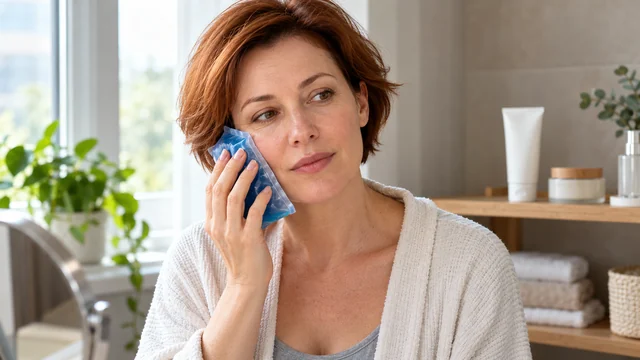
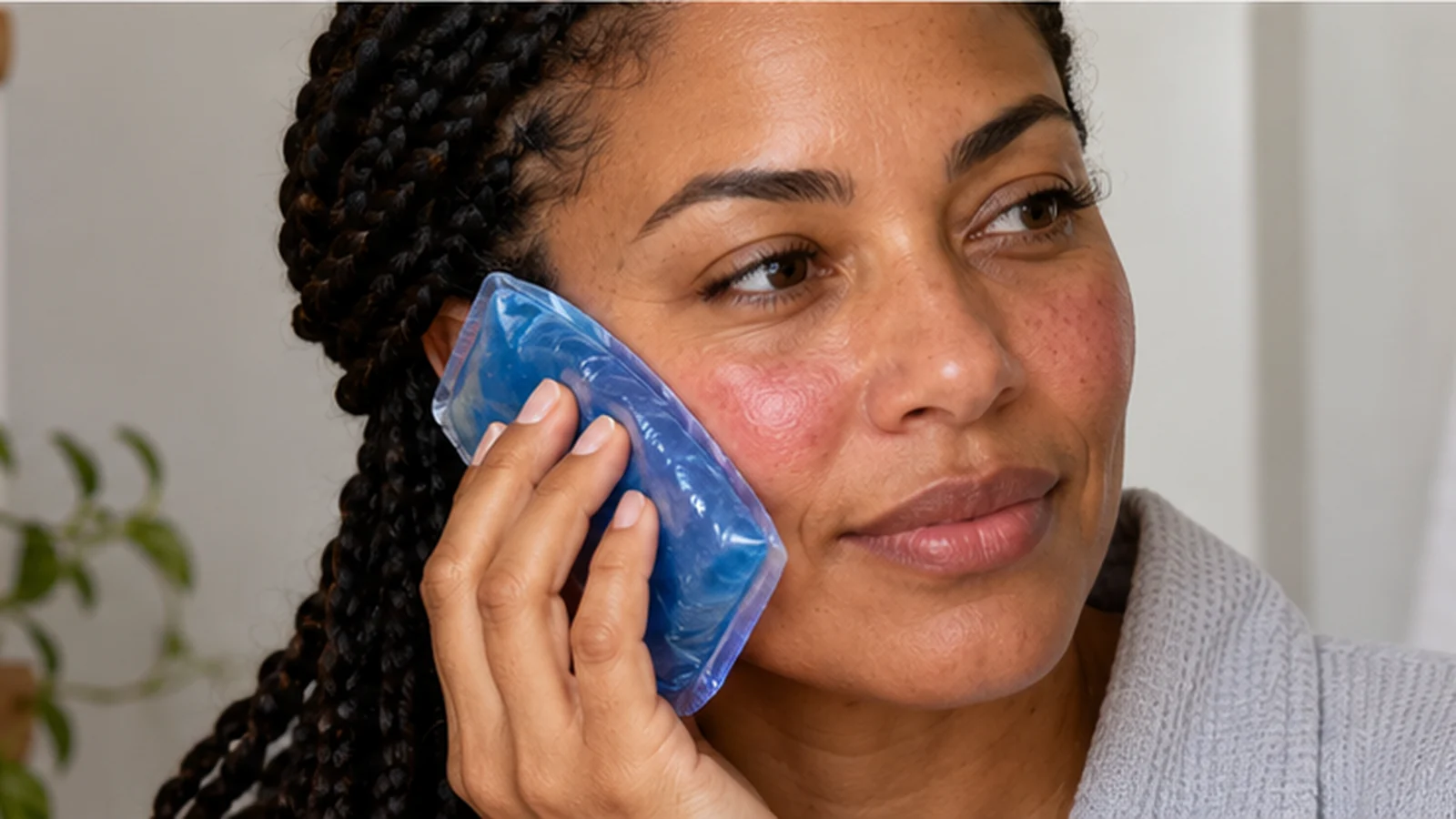
Triggers differ from person to person. For one woman it may be overheating or a hot shower, for another spicy food or alcohol, for a third a strong wind. Brief notes about recurring episodes are more useful than excluding everything indefinitely. Exercise is not automatically prohibited: if intense activity makes your face burn, reduce overheating, choose a cooler room, take breaks and observe your response. A cool, not icy, compress may be comforting when you feel hot; ice directly against bare skin and aggressive cooling are unnecessary.
A green-tinted concealer can sometimes visually neutralise redness if your skin tolerates makeup. It does not treat inflammation and need not be part of every day's routine. Nor must you eliminate every supposedly “bad” food: evidence for one universally strict rosacea diet is insufficient, while your own repeatable reactions matter more than someone else's trigger list.
When do medicines begin to work—and why not judge after three days?
Topical treatment for inflammatory bumps usually takes time. Early changes may be gradual, with noticeable improvement often assessed after several weeks and sometimes after two to three months. If a product stings or your skin clearly deteriorates, do not simply wait for it to “get used to it” without advice. For more severe inflammation a dermatologist may prescribe oral treatment, such as doxycycline, taking contraindications and interactions into account. It is a medicine, not a cosmetic “redness course”; tell your doctor especially if you are pregnant or planning pregnancy. Doxycycline and other tetracyclines are generally avoided during pregnancy; choose an appropriate alternative with your clinician. Do not take antibiotics “just in case”.
Remission does not mean you can discard all skincare. Even when skin is calm, individual triggers and a tendency to flare remain. A long-term, manageable plan is usually preferable to cycling through strong peels, new serums and another medication course at every flare. If entirely different symptoms arise during treatment, the diagnosis or your tolerance of the product may need reconsideration.
Can laser or IPL help without a long interruption to daily life?
Vascular lasers and intense pulsed light (IPL) can reduce visible blood vessels and persistent colour changes. They do not remove the chronic tendency to rosacea or substitute for treatment of inflammatory lesions or eye involvement. Results and the need for repeat sessions depend on the presentation, skin tone, technique, device and individual response. Pigment-change risk is particularly important in darker or tanned skin; settings should never be copied from another person's photographs.
During treatment you may feel heat and uncomfortable snapping sensations; afterwards redness, puffiness and sometimes more conspicuous temporary skin changes are possible. How noticeable recovery will be socially, and when makeup is acceptable, depend on the technique and clinician's advice. Do not schedule a procedure just before an important event: ask what you might look like the next day and over the following weeks, not only when you can go back to work. If your skin is currently very irritated or flaring, discuss the procedure after the inflammation is controlled.
For some vascular lasers, a more helpful guide than “no downtime” is that redness can remain visible for up to 2 weeks, while red or purple spots may last around 1–2 weeks. These are possible reactions, not inevitable outcomes or a timetable for every laser or IPL setting. If you have a photo shoot or important meeting coming up, discuss the planned settings, the chance of temporary marks and how much buffer to allow—not merely when you can return to work.
When should you seek help sooner?
Eye pain, sensitivity to light, reduced vision or marked redness of the eye require urgent medical assessment, including ruling out damage to the cornea. Even eyes that are merely dry but persistently irritated need examination; do not postpone it until a cosmetic procedure. A rapidly spreading painful rash with significant swelling, fever or general illness is not a routine home-care issue: seek medical help. Slowly thickening skin on the nose should also be shown to a clinician because this manifestation may require different treatment.
If you are pregnant, breastfeeding or planning pregnancy, say so before a treatment plan is chosen. Some commonly used rosacea medicines are unsuitable at these times; do not reuse an old prescription without checking. The same applies to treatment for other illnesses that may alter skin sensitivity or the suitability of procedures.
Questions to ask so you leave with a plan, not a collection of procedures
- Which findings support rosacea in my case, and which similar conditions have you ruled out?
- Is the present priority burning, inflammatory bumps, persistent colour or individual vessels?
- Which gentle skincare should I keep, which active products should I stop, and what should I do if medicine irritates my skin?
- When should we assess results, and what would show that the plan needs changing?
- If you recommend IPL or laser, what precisely may improve, what will not, how visible could the reaction be and what are the risks for my skin tone?
- Is there evidence of eye involvement, and should I see another specialist?
The aim with rosacea is not to ensure you never blush again: many factors influence skin appearance and sensations. It matters more that discomfort and flares become less frequent and more manageable and that treatment fits your daily life. If symptoms are currently mild, you can reasonably choose gentle care and observation with your clinician rather than a device procedure.
Frequently asked questions
Can rosacea first appear later in adulthood?
Yes. Age alone neither proves nor rules out rosacea. Have new persistent redness assessed by a dermatologist rather than automatically attributing it to hormonal changes.
Is rosacea contagious?
No. Rosacea is not transmitted through ordinary contact with another person.
Sources
- American Academy of Dermatology: Rosacea diagnosis and treatment
- National Rosacea Society: updated phenotype treatment algorithms (2025)
- DermNet: Rosacea
- Primary Care Dermatology Society: Rosacea clinical guidance
- American Academy of Dermatology: Rosacea in darker skin tones
- American Academy of Dermatology: Lasers and lights for rosacea — results and recovery