Liftera: ASTERASYS HIFU Devices for Facial Contouring
You may be curious about Liftera because you would like a slightly more defined facial contour without surgery, yet you worry about losing cheek fullness or having a painful experience. Liftera is a family of high-intensity focused ultrasound (HIFU) aesthetic devices from the South Korean manufacturer ASTERASYS. They are designed to deliver noninvasive energy into tissue for tightening and a visible lifting effect. It is not surgery and cannot be promised to correct marked tissue sagging.
Before booking, establish the exact model available, which applicator will be used, whether the plan respects your individual anatomy and what supports the predicted result. “Liftera” in an advertisement and a specific Liftera 2 unit do not necessarily mean identical equipment or protocols. Online descriptions do not verify that a particular machine is actually available in Armenia; you must check locally.
What are Liftera-A and Liftera 2, and why does the model matter?
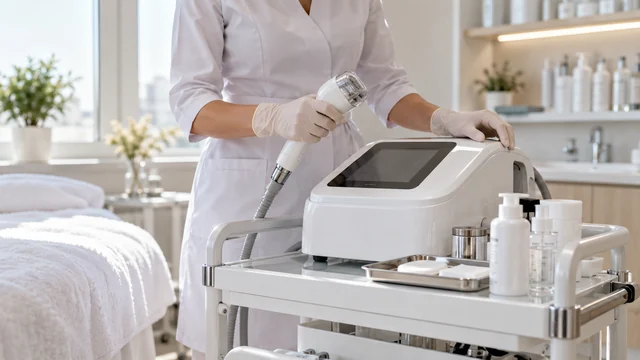
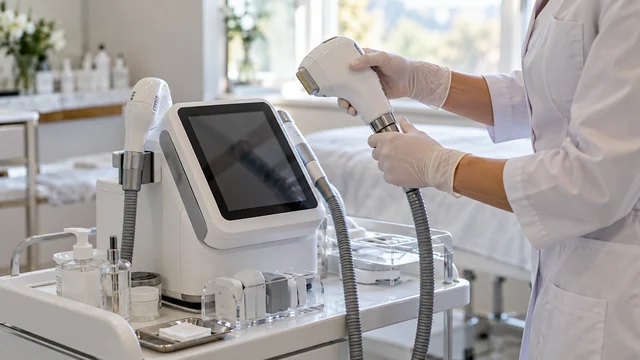
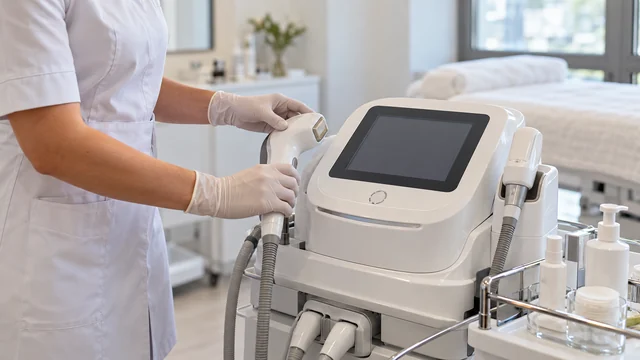
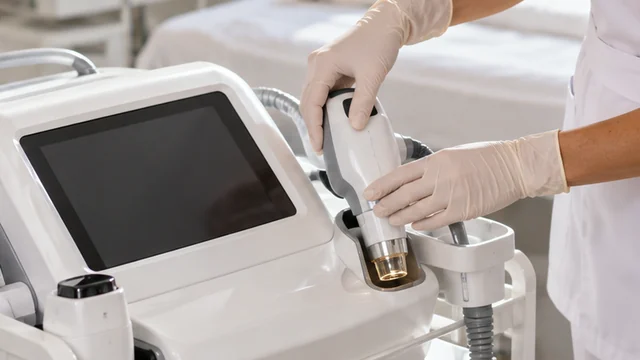
ASTERASYS materials for Liftera-A and information about Liftera 2 describe two applicator types: Line, which lays down successive treatment points along a line, and Pen, intended to deliver energy more flexibly to small or curved areas. The company calls its heat-distribution concept Thermal Diffusion Treatment (TDT). This is a manufacturer-specific description, not independent evidence that it outperforms other ultrasound technologies.
The Liftera 2 website also promotes comfort, limited downtime and additional features. These are manufacturer claims. Without identifying the exact model, shipment or identification details, manual and applicator, you cannot apply Liftera-A settings to Liftera 2 or vice versa. When advertising mixes Liftera-A, Liftera 2 and “SMAS lifting,” ask to see the model on the device label and its user documentation.
Focused ultrasound creates localized heat zones at selected depths; any aesthetic improvement is linked to the tissue response and subsequent collagen remodeling. Advertising often reduces this to “tightens the SMAS.” The superficial musculoaponeurotic system, or SMAS, is only one anatomical layer: actual treatment depth varies with the area, tissue thickness, handpiece and method. No applicator should be assumed to reach SMAS in every area, and ultrasound does not mechanically reposition tissues as surgery does.
What can Liftera realistically change—and what cannot it fix?
Focused ultrasound is most reasonably discussed for mild to moderate loss of skin firmness and subtle contour changes. Systematic reviews of HIFU and microfocused ultrasound report possible benefit for some such indications. However, the evidence combines different devices, anatomical sites, settings, endpoints and assessment methods. Effectiveness data for a device class cannot automatically prove a specific benefit for Liftera or either of its models. As of October 2026, the reviews examined here primarily cover a technology category, not a separately validated Liftera model; this does not assert that no model-specific studies exist anywhere.
The final visual response develops gradually; tissue remodeling is not completed overnight. Changes may be assessed over the following months, and magnitude varies. Promises of “ten years younger,” “equivalent to a facelift” or exact millimeters of lifting without examining you lack a reliable basis. Pronounced jowls, substantial skin excess or major volume loss may not respond adequately to HIFU alone.
| Main concern | What to discuss for Liftera | Realistic limit |
|---|---|---|
| Mild looseness of the lower face | Possibility of modest, gradual tightening | Do not promise surgical tissue repositioning |
| Marked excess skin on the neck | Assess the degree of skin excess objectively | Energy does not remove spare skin |
| Hollow cheeks or a very lean face | Assess fat compartments and unwanted volume loss risk | More heating is not necessarily better |
| Fine lines or uneven pigmentation | Ask whether HIFU is needed at all | It is not pigmentation therapy or surface skincare |
| Visible improvement needed within a few days | Do not expect final effects by that date | Instant lifting claims are unreliable |
Keeping your recognizable face matters. If you value soft cheek fullness, say so during consultation. Excessive energy or an unsuitable depth could, in some circumstances, affect the underlying fat. Volume reduction and contour irregularity have been reported after ultrasound procedures. They are not inevitable with Liftera, but the possibility justifies discussing technique, especially if your face is naturally lean.
Line or Pen: a question of anatomy, not a universal winner
The Line applicator places focal treatment points along a planned path. Promotional and technical descriptions position Pen for areas needing more maneuverability. This is about ergonomics and coverage, not a universally superior handpiece proven by independent head-to-head trials. If someone proposes treating your entire jawline using only Pen or only Line, ask why and which areas will be avoided.
Avoiding vulnerable anatomy is especially important. Skin and subcutaneous fat thickness differs over the cheeks, temples, beneath the jaw and on the neck. The practitioner needs to know where nerves, blood vessels and bony prominences lie, while considering previous fillers, operations, threads and implants. Calling a technique “vector-based” does not replace anatomical knowledge.
Whether real-time tissue visualization is available must be verified for the exact device model. Ultrasound imaging that displays deeper layers during treatment is a distinguishing feature of certain other systems; it must not be attributed to Liftera merely because both use ultrasound. Expert consensus on imaging-equipped systems discusses potential safety benefits of depth assessment, but it is not a Liftera-specific trial.
What will the session feel like, and how will your face look afterward?
Typically, the skin is cleansed, treatment areas marked, coupling gel applied and the applicator moved over agreed zones. Pulses can feel like hot pinpricks, deep pressure or pain, particularly near bone. Discomfort varies with settings and the individual. A manufacturer's “less painful” claim cannot guarantee that your session will be painless.
After HIFU, your skin might look almost unchanged or have redness, slight puffiness and touch sensitivity. Some people experience tenderness while chewing or pressing on treated areas. Going straight home does not mean everyone will look camera-ready the next morning. If you have daily video meetings or a photo shoot, ask about visibility in people with similar skin and allow a buffer rather than relying on a categorical “no downtime” promise.
| When | Possible and expected changes | Action |
|---|---|---|
| Immediately afterward | Mild redness, warmth and sometimes swelling | Review the skin and sensations with the practitioner |
| Next few days | Tenderness when touched; sometimes hardly any visible marks | Avoid vigorous rubbing; follow individual instructions |
| Following weeks and months | Gradual, variable changes in firmness | Compare photos under matching conditions, not day-to-day impressions |
| At any time | Blisters, burns, severe pain, numbness or altered facial movement are not normal recovery | Seek medical assessment immediately |
Aftercare and temporary limits on heat exposure or vigorous exercise depend on your skin's response and the treating clinician's plan. Do not use vigorous facial massage, heating tools or more device treatments yourself to “speed up results.” An uneven smile, facial weakness or unusual nerve-related sensations emerging after hours require prompt assessment, even if redness looks minor. Any sudden change in vision after ultrasound treatment also requires emergency medical attention. Reports of eye complications concern HIFU as a treatment category and do not establish a Liftera-specific risk rate.
When is it better to postpone or decline treatment?
Before the session, tell the clinician about pregnancy or breastfeeding; a pacemaker or another implanted device; metallic hardware; active skin conditions or open wounds; nerve sensitivity; and previous surgery, fillers, threads or implants within the intended area. Each restriction must be checked against the exact device instructions and a clinical evaluation. Contraindications from another brand must not be presented as verified Liftera instructions.
Elective aesthetic HIFU is best postponed during pregnancy because adequate product-specific safety evidence is unavailable. Suspicious lesions and abnormal sensitivity need diagnosis rather than cosmetic treatment. With major facial fat atrophy, discuss the risk of further thinning and other approaches first. Sometimes avoiding energy-based lifting altogether is the soundest decision.
Burns, pigmentation changes, nerve injuries and subcutaneous volume loss have been described for HIFU as a category. A 2026 Japanese investigation of reported adverse events documents that serious problems occur in practice, but reported cases cannot establish the individual complication rate for Liftera. Figures from other devices cannot be applied to this model as exact probabilities. The practitioner should be trained in this specific device and facial anatomy.
Liftera versus Ultraformer, Ultherapy and other approaches
These systems are often grouped under “nonsurgical SMAS lifting,” yet their applicators, imaging availability, operating depths and evidence bases vary. Ultraformer III and Ultraformer MPT require model-specific information; the Liftera 2 page describes that version, not every Liftera unit. Without high-quality direct comparisons, confident rankings for lifting strength or pain are unjustified.
If your concern is dryness or fine surface texture, dermatologic skincare rather than deep energy may be more useful. If jawline changes mainly reflect volume loss, a different assessment is appropriate. Substantial excess skin may warrant discussion of surgical and nonsurgical options. Your anatomy and actual aim, not brand familiarity, should decide.
How to look past marketing and what to ask before paying
Review photographs taken with the same facial expression, head and chin angle, lighting and follow-up interval. A small upward head tilt alone can simulate a sharper jawline. Reviews may reveal how appointments are organized, but they cannot replace evidence of effectiveness and safety. An advertisement with no complaints does not mean complications never occur.
- What is the exact Liftera model, manufacturer, device identification and authorization status?
- Which handpiece will be used in each zone, and how will the clinician choose a safe depth?
- Does this model have imaging and how are vulnerable structures protected?
- What might improve given my cheek volume and excess skin, and what will remain unchanged?
- What pain is expected, and how do I recognize a burn or nerve dysfunction?
- What does the fee cover: zone mapping, number of pulses, follow-up and complication care?
Ask about price together with the treatment-zone map and exact device model. Comparing bare prices for “Liftera” tells you nothing about treatment scope or practitioner qualifications; no Armenian price or device availability is claimed here. Choosing to monitor your appearance and do nothing for now is a valid outcome, not a missed opportunity.
Frequently asked questions
Can Liftera be performed over a previously placed filler?
Tell the practitioner the exact filler, date, location and depth of injection. They must evaluate device and product instructions, relevant intervals and individual anatomy; there is no universally safe interval.
Should I repeat Liftera if the first result seems underwhelming?
Do not rush to repeat it. Review comparable photos after adequate follow-up, consider the original cause of sagging and discuss whether another session has a favorable risk–benefit balance for your anatomy.
Can I demand a precise number of ultrasound lines beforehand?
A plan should describe the intended zones and approximate treatment volume, but a rigid pulse or line count does not itself guarantee effectiveness or safety. Ask how the clinician adjusts the plan to tissue thickness and tolerability.
Sources
- Liftera 2: official product website, manufacturer claims.
- ASTERASYS: Liftera-A technical brochure.
- Systematic review (2025): HIFU for aesthetic skin changes.
- Systematic review (2023): microfocused ultrasound for facial tightening.
- Consensus (2022): safety of microfocused ultrasound with visualization.
- Japanese survey of HIFU adverse events (2026).
- Systematic review (2025): reported adverse events of imaging-guided microfocused ultrasound