Ultraformer 3: Cartridge Depths, Results and Recovery
You may have noticed that your jawline looks softer and the skin on your cheeks feels less firm than before. You do not want surgery or a change in your features, so you search for “Ultraformer 3”, also called “Ultraformer III”. Ultraformer III is a CLASSYS device using high-intensity focused ultrasound (HIFU). It may produce modest firming in mild or moderate laxity, but it cannot replace a surgical lift, restore lost volume or deliver the same result for everyone. The Russian search spelling «ультраформер 3» refers to the same device.
This page is specifically about Ultraformer III, not every so-called “SMAS lift” or the newer Ultraformer MPT. Your actual tissue, the precise model and the operator's expertise matter more than the word “ultrasound” in advertising. Asking questions before treatment is reasonable; choosing not to have it is reasonable too.
How Ultraformer III works—and what cartridge depths mean
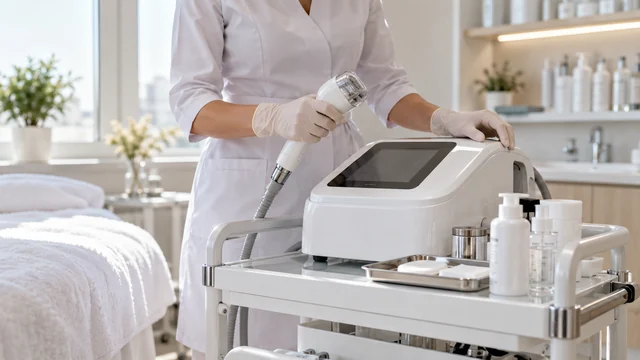
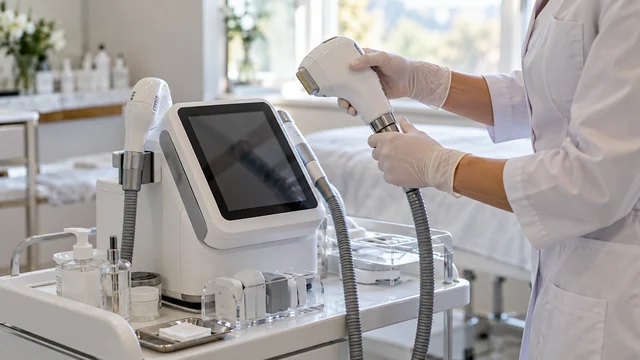
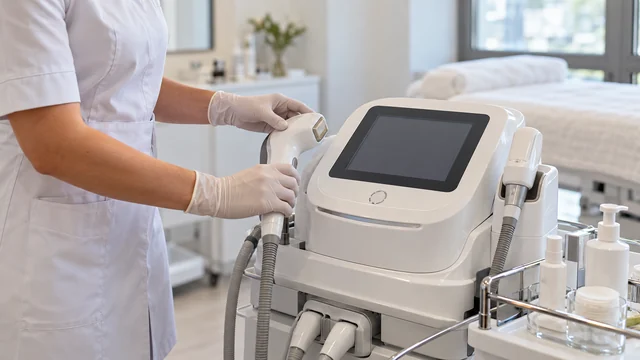
CLASSYS describes Ultraformer III as an MMFU system: micro- and macro-focused ultrasound. Rather than heating every skin layer uniformly, the applicator concentrates acoustic energy into small points at selected nominal depths. Local heating triggers a healing response associated with contraction of some collagen fibres and later collagen remodelling. It does not draw up an entire facial layer as though tightening a drawstring.
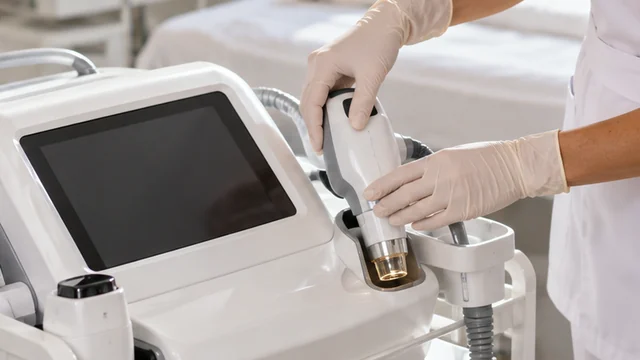
The current CLASSYS Ultraformer III product page shows cartridges at 1.5, 2.0, 3.0 and 4.0 mm, with 6, 9 and 13 mm options for selected body applications. However, earlier CLASSYS corporate materials also list a 4.5 mm Ultraformer III cartridge. That discrepancy matters: a 4.0 mm cartridge must not be treated as interchangeable with a 4.5 mm one, and settings from another configuration should not be copied. These numbers describe cartridge configurations, not instructions to select a depth yourself. Deeper is not necessarily better: even the difference between 3.0 and 4.0 mm can matter in a thin face or near vulnerable structures. Heating the wrong tissue plane may injure tissue that was not meant to be treated. Before consenting, ask the clinician to check the exact device model, the physical cartridge label, permitted treatment areas and settings against the instructions supplied for that particular unit. A general webpage or an old marketing brochure cannot substitute for those instructions.
Clinics sometimes call the procedure an “ultrasound SMAS lift”. SMAS is the superficial musculoaponeurotic system, a connective-tissue layer of the face. Mentioning SMAS does not make the procedure equivalent to surgery: a surgeon repositions and secures tissues, whereas this device produces focal heat. These approaches are not interchangeable for pronounced sagging.
What may change—and what will not
With slight loss of firmness or early loss of jawline definition, you might notice a neater transition from cheek to jaw and skin that feels firmer. This is a possible, not guaranteed, outcome. Systematic reviews of the broader focused-ultrasound treatment category report improvements in mild to moderate laxity, but pool different devices, settings and evaluation methods. Their averages cannot be assigned to an individual Ultraformer III session.
| If you are concerned about… | Whether Ultraformer III makes sense to discuss | What not to confuse |
|---|---|---|
| Early loss of cheek firmness or a less defined jawline | May be considered after assessment of tissue thickness and mobility | Do not expect surgical lifting |
| Pronounced jowls or excess neck skin | The method is often limited | A plastic-surgery opinion may be more helpful |
| Hollow temples or sunken cheeks | Usually not the primary solution | Ultrasound cannot replace lost fat or volume |
| Pigmentation, visible redness or active acne | Diagnosis and a different treatment strategy are needed | It is not a targeted pigment-removal or inflammation-treatment device |
| Wrinkles when smiling or contracting facial muscles | Effect on these lines is uncertain | It works differently from treatments that relax expression muscles |
There is a less obvious limit for a naturally lean face: even a small change in subcutaneous volume may make it look more hollow. The manufacturer also supplies deeper macro-focused cartridges for body tissue, but reducing facial fat is not always desirable. If you value fullness in your cheeks, say so explicitly and ask which areas and planes the clinician will exclude.
Who might consider it, and who should pause
Suitability is not determined simply by age or whether you have tried other devices. More useful factors are mild to moderate laxity, adequate soft-tissue volume, absence of relevant contraindications and comfort with a subtle outcome. Compare your face at rest and in motion: a fold may reflect expression, anatomy, shifting fat pads or reduced skin elasticity. Ultrasound does not address these different causes equally.
Postpone the procedure and seek assessment if the proposed area has an infection, marked inflammation, an open wound, an unexplained lump, impaired sensation or unexplained pain. Mention pregnancy or breastfeeding: evidence for elective use during these periods is insufficient, so postponement is prudent. Disclose implants, threads, fillers, previous surgery, conditions affecting healing and all medicines. These are not automatically permanent exclusions; their significance depends on location, product and the current instructions for the exact model.
The operator needs to understand nerve and vessel anatomy, bony prominences and the thickness of facial fat. Avoid a standard pattern of treatment pulses applied to every face. Treating a suspicious area without examination, or claiming that a needle-free treatment cannot burn or otherwise injure tissue, is a reason to decline.
What happens during a session
First come a discussion of your aims, examination, review of previous procedures and agreement on the areas to treat. Ask to see the device name and documentation and confirmation that appropriate authentic cartridges are being used. The skin is then cleansed and coupling gel applied. The operator places the applicator against planned areas and delivers pulses. Session length and pulse count depend on the area and individual plan, not a single advertising standard.
Sensations vary. Some people report deep warmth or short needle-like zings, particularly near the bony edge of the jaw; others find them very uncomfortable. Needle-free does not mean painless. Report severe, unusual or shooting pain immediately rather than enduring it in the hope of better efficacy. Discuss pain-control options and their suitability individually; do not self-medicate on someone else's advice.
Ask who will actually hold the applicator and whether they can recognise and manage complications. “The machine calculates everything itself” misrepresents clinical responsibility. Choosing the area, maintaining contact, setting energy and avoiding vulnerable structures still demand professional judgement.
Recovery: being able to work is not the same as looking camera-ready
The skin surface usually has no open wound or dramatic peeling because it is not the main target. Temporary redness, local swelling, tenderness, sensory changes or bruising may occur. Many reactions are mild, but nobody can promise zero downtime. Manufacturer assurances about no recovery time are not a substitute for your individual response.
| When | What you may notice | A practical decision |
|---|---|---|
| Immediately after treatment | Warmth, pink skin, isolated tender spots | Avoid an important photo shoot the same day |
| The first few days | Possible puffiness, tenderness or a bruise | Leave a buffer before public events and ask about safe aftercare |
| Following weeks | Little visible change, or gradual change | Do not judge the final outcome from next-morning photos |
| Later follow-up | Further firming may emerge; magnitude and durability vary | Compare standardised photographs rather than promised deadlines |
There is no one aftercare timetable for sport, saunas, intense sun exposure or cosmetics that fits every Ultraformer III protocol. Obtain written instructions according to your skin's response. Avoid intense heat or friction while unusual tenderness is being assessed. Makeup may hide some redness but may not hide swelling or bruising; that is part of social downtime too.
Symptoms that require prompt attention
Mild tenderness is different from increasing pain or loss of function. Reviews of focused-ultrasound complications describe burns, persistent sensory changes, unusual line-shaped reactions and temporary dysfunction of facial muscles. Some reviews concern ultrasound systems with imaging rather than Ultraformer III. Their incidence figures and treatment algorithms cannot be used as brand-specific statistics, but the types of injury explain why anatomy and technique matter.
Blistering or a burn, rapidly worsening swelling, a new asymmetric smile, facial weakness or worsening numbness require prompt medical evaluation. Difficulty breathing or sudden serious neurological symptoms require emergency help. Do not massage a suspected injury or assume that any unusual symptom must disappear on its own.
Comparing Ultraformer III, MPT and other options fairly
Ultraformer III is a distinct CLASSYS device with MMFU technology and its own interchangeable cartridges. Ultraformer MPT is another model by the same manufacturer, described with micro-pulsed delivery, linear and circular application patterns and booster applicators. Similar names do not make their instructions, cartridges or study results interchangeable. The newer model is covered separately under Ultraformer MPT.
Other HIFU devices may create focal treatment zones differently and carry different labels. Ultherapy is a separate ultrasound platform; some configurations provide ultrasound imaging. An FDA clearance for a specific Ulthera System in the United States does not automatically extend to Ultraformer III. Radiofrequency devices heat tissue through a different mechanism; injections address specific texture or volume concerns rather than duplicating focused ultrasound; surgical lifting may be more predictable for major skin excess but has a different level of invasiveness and recovery.
A useful way to choose is to establish what you want to change, then which anatomical structure is responsible, and only then compare brands. For minor changes, skincare, sun protection or watching and waiting may suit you better. There is no special “window of opportunity” lost by declining a procedure now.
What studies show—and what remains unproven
The manufacturer publishes Ultraformer III material and photographs; clinical HIFU research suggests some potential for skin firming. Yet small samples, lack of controls, inconsistent photographic lighting and very short follow-up weaken predictions for any one person. Research into a different focused-ultrasound device supports the general mechanism, not identical effectiveness for III. One small 2025 split-face study evaluated specific Ultraformer III cartridges near the eye, but it is not evidence of the same result for all facial areas or protocols.
Do not resolve the question “Is Ultraformer III FDA-approved?” using a reseller's slogan. US device authorisations attach to specified products and intended uses; FDA documentation for Ulthera is not authorisation for a CLASSYS machine. Armenian authorisation, the local device version and actual availability must each be verified through appropriate official documents. A vendor website or reviews cannot establish that this specific device is available in Yerevan.
Questions to ask before paying
Ask for a clear plan stating Ultraformer III, the exact treatment areas and what will deliberately be left untreated—not just a generic “rejuvenation programme”. Ask why particular cartridge depths suit your face, who will operate the device, how baseline condition will be recorded, whom to contact if complications occur and what the quotation covers. Price may depend on area, work involved, consumables and operator qualifications; quoting a local price without verification would be misleading.
When looking at before-and-after photographs, check matching angles, expression, light and time after treatment. Immediate puffiness is not proof of lasting lifting. A sound consultation gives you time to think and seek a second opinion. If modest improvement will not meet your aim, discuss genuinely different options rather than agreeing to an unnecessarily aggressive HIFU plan.
Additional questions
Can I have Ultraformer III with dental implants?
A dental implant does not automatically mean the procedure is safe or forbidden. Tell the clinician its type and position so that the exact Ultraformer III instructions and proposed treatment area can be checked.
How can I check whether a cartridge is compatible?
Ask to see the device identification, cartridge labelling and consumables documentation. Serial numbers and packaging can help the authorised supplier verify origin; a logo alone does not prove authenticity.
Can ultrasound be combined with botulinum toxin or fillers on the same day?
No universally safe interval can be specified without knowing the substance, site and timing of previous injections. The clinician should plan the sequence; you do not have to combine procedures for convenience.
Is another consultation useful if I see no change?
Yes, once the agreed observation interval has passed. Compare photos in consistent lighting and discuss whether the outcome matches your initial goal. A weak effect is not a reason to increase energy automatically.
Sources
- CLASSYS: Ultraformer III product and cartridge specifications
- Systematic review of HIFU, Aesthetic Surgery Journal, 2025
- Review of MFU-V complications, 2026 (a different class of equipment)
- FDA: filing for the specific Ulthera System, not Ultraformer III
- Ultraformer III clinical-study collection, manufacturer material
- Small split-face clinical study of Ultraformer III cartridges near the eyes, 2025
- CLASSYS: 2024 corporate portfolio listing earlier Ultraformer III cartridges (not instructions for use)