Couperose Treatment: Where to Start and When Lasers Help
You notice fine red vessels on your cheeks, your skin burns after cleansing, and your complexion looks uneven in photos. Online, this is often called “couperose.” But treating so-called couperose does not begin with choosing a laser: first establish whether the issue is individual dilated vessels, chronic rosacea, inflammation, or another cause of redness altogether. That determines whether gentle skincare, prescription medicine, a light-based procedure, or medical investigation is appropriate.
With confirmed rosacea, redness, burning, blemishes and flare frequency can often be reduced, but promising a permanent cure would be misleading. Skincare, sun protection, medicines and vascular procedures have different jobs. If redness does not bother you and a clinician has ruled out a condition requiring treatment, you may reasonably choose gentle care and observation alone.
What is actually red: small vessels, flushing or inflammation?
“Couperose” is an informal name for a visible network of vessels, often around the cheeks and nose; it is not itself a diagnosis. Telangiectasias are tiny dilated blood vessels visible through the skin. Rosacea is a chronic inflammatory condition that may include persistent central facial redness, sudden hot flushes, skin sensitivity, visible vessels and acne-like papules or pustules. The eyes can also be affected. A clinician assesses the individual features rather than prescribing a single cure for every aspect of rosacea.
For some women, the skin turns pink after a hot shower or spicy meal and then returns to its usual colour. For others, a red background persists even in a cool room in the morning. Others develop painful inflammatory spots alongside redness. These patterns can overlap, but do not all respond to the same treatment. A laser can target some visible vessels; it does not replace anti-inflammatory therapy or abolish an individual tendency to flush.
Why is the face red if it is not rosacea?
Possible explanations include irritation from acids, retinoids or fragranced products; contact allergy; eczema; seborrhoeic dermatitis with scaling around the nose and eyebrows; perioral inflammation; sun damage; and red post-acne marks. Certain medicines, including improperly used steroid creams, can alter the appearance. More rarely, redness accompanies a systemic illness. Neither a selfie nor a checklist of “couperose symptoms” can reliably establish the diagnosis.
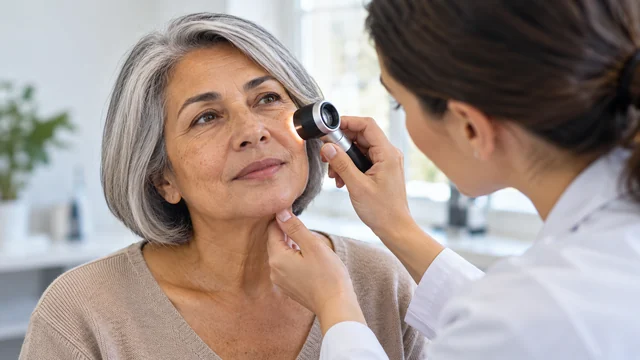
Tell the dermatologist where the redness began, when it started, and whether there is itching, tenderness, scaling, spots, or a connection to a new product, medicine or sun exposure. Bring a list of skincare and medication; photos during a flare and at baseline can show how symptoms vary. Typical rosacea is often diagnosed from history and examination without a routine battery of tests. If findings are atypical, tests are selected to rule out other causes, not to “prove couperose with a blood test.”
When should you avoid going straight to an aesthetic procedure?
If redness begins suddenly with increasing facial swelling, difficulty breathing or a worsening overall condition, seek emergency medical care. Eye pain, light sensitivity, marked changes in vision or intense eye redness require urgent ophthalmic assessment; a skin laser will not treat these symptoms. Grittiness, dryness and inflamed eyelid margins also deserve medical attention in possible rosacea even if your cheeks are only mildly red.
Increasing thickening of the nasal skin, an unusual one-sided patch, a bleeding or changing lesion, painful rash, fever or significant systemic symptoms warrant dermatological assessment rather than camouflage. With light sensitivity and other systemic complaints, the doctor may consider autoimmune causes. If you use a prescribed facial steroid, do not stop it abruptly on your own; discuss a safe plan with the prescriber.
A decision table: what suits different symptoms?
| What you see or feel | A sensible starting point | What not to expect |
|---|---|---|
| Burning, tightness or irritation after skincare | Review irritants, cleanse gently, moisturise and protect from sun; a doctor checks for dermatitis | That a vascular laser will repair a damaged skin barrier |
| Flushing episodes after heat, stress or drinks | Track your own triggers and seek clinical assessment; discuss medication if appropriate | That removing vessels will completely stop flushing |
| Persistent central redness without prominent spots | Confirm the diagnosis; discuss topical medicines that temporarily reduce colour, and vascular treatment where appropriate | That temporary blanching means the disease has been cured |
| Individual visible red capillaries | Assessment for a vascular laser or IPL after excluding other causes | That a cream will dissolve an already dilated vessel |
| Red bumps and pustules without typical blackheads | Targeted anti-inflammatory dermatological treatment where indicated | That flashes of light alone replace treatment of the spots |
| Dry, stinging or irritated eyes | Clinical assessment of eye symptoms; urgent ophthalmology when warning signs occur | That caring for cheek skin treats an eye problem |
Home care: fewer irritants, not more products
Start with a gentle fragrance-free cleanser without abrasive particles, a simple moisturiser, and broad-spectrum sunscreen SPF 30 or higher every day. Sun exposure commonly aggravates rosacea; mineral filters may be better tolerated by some sensitive skin, but your own response matters. Apply products gently without brushes or vigorous rubbing. Do not introduce several serums at once: otherwise it is difficult to identify the cause of stinging.
Triggers differ from person to person. Heat, overheating during exercise, sun, alcohol and spicy foods are common examples, but not universal prohibitions. Recording what preceded flushing for a couple of weeks is more useful than eliminating foods with no apparent connection. Warm rather than very hot water, protection from wind and a break from harsh peels may reduce irritation. A tolerated foundation or green-toned concealer is a reasonable way to conceal redness, not a failure to pursue treatment.
Avoid using a steroid cream without advice for a quick fix: it may worsen some rosacea presentations. Take care with acids, retinoids and benzoyl peroxide, particularly when the skin barrier is impaired; concurrent acne may call for a different plan. Home LED masks, massage, ice and aggressive cooling cannot substitute for diagnosis or evidence-based therapy; direct intense cold can also irritate sensitive skin.
Medicines: what do they treat, and why not choose from a photograph?
For inflammatory papules and pustules, a dermatologist may prescribe azelaic acid, ivermectin, metronidazole or another appropriate treatment. Sometimes oral treatment, such as a particular doxycycline regimen, is needed. The choice depends on severity, other conditions, medicines and tolerability. Do not self-prescribe antibiotics or isotretinoin merely for red cheeks. For persistent redness, topical vasoconstricting formulations of brimonidine or oxymetazoline may be considered where available and appropriate. They can temporarily lighten redness, but do not remove telangiectasias and are not suitable for everyone.
Some people experience irritation or increased redness with a vasoconstrictor; the usual colour can also return as its action wears off. The clinician should explain application, realistic limits and reactions that warrant reassessment. If a cream improves bumps but leaves the visible vessels, that is not necessarily failure: inflammation and dilated vessels are separate targets. It can make sense to calm the skin first and discuss device-based treatment later.
If you are pregnant, planning pregnancy or breastfeeding, say so before treatment is chosen. Safety depends on the specific medicine: tetracycline antibiotics, including doxycycline, are generally avoided during pregnancy. Your clinician can choose an option suited to your circumstances and symptoms; do not start or stop prescription medicines independently.
When do lasers and IPL make sense?
Vascular lasers target blood vessels; IPL delivers filtered broad-spectrum pulses of light. After diagnosis, either may be considered for prominent superficial vessels or persistent redness. Outcomes depend on the pattern of redness, skin phototype, tanning, device settings and operator experience. More than one visit may be needed, but an advertising package cannot predict an exact number. Laser treatment does not replace SPF, skincare or medication for active inflammatory rosacea.
After treatment the skin can become redder and swollen, sometimes with pinpoint purple spots resembling small bruises. These can be an expected effect of particular techniques, yet remain conspicuous before a wedding or photography session. Burns, lasting pigment changes and scars are possible, particularly with inappropriate settings. For a detailed decision about devices for persistent vascular redness, see the separate guide to lasers and IPL in more complex rosacea. More on laser and IPL for complex rosacea
What is the route from the first consultation to calmer skin?
- First, clarify the pattern. The clinician asks about flushing, eye symptoms, skincare, medicines and sun sensitivity, examines the skin and considers look-alike conditions when needed.
- Next, identify the main symptom. Burning and inflammation often call for stabilising the barrier and medical treatment; individual vessels are addressed separately.
- Check skincare tolerance. You do not have to buy an entire product range. A short routine that your skin tolerates matters more than the number of bottles.
- If using a device, discuss limits. Review skin phototype, recent tanning, contraindications, eye protection, the likely appearance the next day and the response plan for complications.
- Measure more than colour. Monitor flushing frequency, burning, spots, eye comfort and your own quality of life rather than a single “after” image.
You can usually continue daily life while using non-irritating home care. Prescription creams may cause temporary stinging or dryness, making the doctor's instructions important. After laser or IPL you can commonly leave the office independently, but no need for bed rest does not mean your face will look unchanged. Leave time before public events, and ask specifically about makeup, exercise, saunas and sun exposure. There is no universal promise that everything will disappear by tomorrow.
Why might redness return after improvement?
Rosacea tends to fluctuate and skin remains susceptible to triggers. Successful care can reduce symptoms, yet vessels may develop again over time. This is not a reason to repeat procedures endlessly: first determine whether the return is inflammation, visible vessels, a reaction to new skincare or another skin disorder. Maintenance care or a changed prescription may be needed; repeating device treatment is only one option.
When reviewing before-and-after photos, look for identical lighting and camera angles, no filters and a clear follow-up interval. Naturally textured skin need not look airbrushed. If offered “permanent removal of couperose in one session,” ask exactly which feature is targeted and what evidence supports the prediction. Costs may depend on the area, modality, number of visits and any initial medical care; local prices and actual service availability must be checked independently rather than inferred here.
What should you ask, and when is no treatment reasonable?
Useful questions include: “What is the working diagnosis and what else might explain it? Should we treat inflammation, the barrier, vessels or eyes first? Which signs mean the plan must change? How visible might my skin be in the first days? How do you reduce burns and pigment change for my phototype? What happens if I choose not to have a laser now?” A good answer distinguishes a likely improvement from a promise that all redness will disappear.
For mild symptoms without warning signs, if your appearance does not bother you, gentle care, monitoring and a planned examination may be enough. If inflammation hurts, eye symptoms develop or redness progresses, medical evaluation matters more than a cosmetic result. Treatment should serve your comfort and skin health, not the pursuit of a flawless photograph.
Frequently asked questions
Can rosacea first appear after a skincare change?
A new product can cause irritation or contact dermatitis that resembles rosacea, or provoke a flare in an already sensitive complexion. If the link is clear, stop the suspected product and discuss persistent symptoms with a dermatologist; one episode alone cannot establish a diagnosis.
Does everyone with red cheeks need a Demodex mite test?
No. The role of Demodex is interpreted in the context of examination and the particular clinical findings. Routine testing of every person with facial redness neither replaces an examination nor automatically determines treatment.
Can I wear makeup with rosacea?
Yes, provided it is well tolerated. Choose non-irritating products, remove makeup gently, and avoid rubbing. After procedures, agree the timing for restarting makeup with your clinician according to the condition of your skin.
Sources
- American Academy of Dermatology: diagnosis and treatment of rosacea.
- ROSCO: recommendations on diagnosis and management of rosacea, British Journal of Dermatology, 2020.
- Systematic review of phenotype-based treatments, British Journal of Dermatology, 2019.
- British Association of Dermatologists: patient information.
- DermNet: symptoms, differential diagnoses and treatment of rosacea.
- Primary Care Dermatology Society: rosacea care and pregnancy precautions