Laser for Facial Redness: PDL, KTP, Nd:YAG and IPL Compared
You may have changed your skincare, learned to avoid overheating, perhaps treated breakouts, and still see a persistent red colour across your cheeks. Searches lead to “facial redness laser,” IPL, PDL and one-session promises. Vascular lasers or IPL can genuinely be among the options for reducing visible vessels and persistent vascular redness in rosacea, but the result depends on what causes the colour. Technology does not treat every sign of rosacea, cannot promise permanent clearance, and sometimes needs to wait until inflammation is controlled.
This page helps you decide when gentle care or anti-inflammatory therapy has already been considered and the remaining question is whether to target the vascular component with light. If the diagnosis remains uncertain, redness is new, or you have eye symptoms, start with a general assessment of why the face is red and what treatments are appropriate. You need not have medically “severe” rosacea to consider devices: advanced here refers to a more complex decision, not a formal disease stage. General guide to causes and care of facial redness
Which kinds of redness may respond to light?
Imagine three photographs of the same face. One shows a few sharply defined fine vessels beside the nose. Another shows a diffuse red colour over the centre of the face. A third shows a hot flush after brisk walking that fades in a cool room. The first two can be reasonable vascular targets to discuss with a dermatologist; the third involves complex vascular reactivity and may not disappear even when visible vessels are treated.
Rosacea can involve both vascular and inflammatory features. Papules and pustules generally need targeted medical management. With pronounced burning, scaling or intolerance even to water, a clinician should first assess barrier damage and similar skin conditions. Sun-related vascular damage, red post-acne marks and vessel changes from other diseases can resemble rosacea but require different expectations and investigations. A device should follow a diagnosis, not a promotional photograph.
PDL, KTP, Nd:YAG and IPL: compare tasks, not brand names
| Method | Why it may be considered | The practical trade-off |
|---|---|---|
| PDL, pulsed-dye laser | Visible superficial vessels and some persistent vascular redness | Depending on settings, noticeable purple marks and swelling may occur; “no bruising” cannot be guaranteed |
| KTP, green vascular laser | Individual superficial red vessels in appropriately selected skin | Requires careful settings; recent tanning or more pigmented skin increases concern about pigment changes |
| Nd:YAG, vascular settings on certain systems | Selected deeper or larger vascular targets assessed by a specialist | Not a universal substitute for PDL or IPL; vessel depth, size and heating of surrounding tissue matter |
| IPL, intense pulsed light | Diffuse red background and vascular symptoms in carefully selected patients | Not a laser: broad spectrum with filters; settings must match phototype and pigmentation, and improvement is often gradual |
| No device: address inflammation and triggers | Active lesions, burning, frequent flares or uncertain diagnosis | Does not remove existing visible capillaries, but may be the more important first step |
No technology wins for everyone. Reviews published through October 2026 identify relatively few large direct comparisons of particular platforms and settings in patients with matching rosacea features. Systematic reviews find improvements in vascular symptoms but report differences in techniques and quality concerns across some studies. “New technology” is not proof of superiority, and results from one model must not be ascribed to another with a similar name.
Why does the dermatologist ask about skin phototype, tanning and medication first?
Light energy is not absorbed exclusively by its intended target. Skin melanin also affects safety, so fresh tanning, phototype, prior post-inflammatory pigmentation and scarring tendency influence the plan. Pigment injury may be especially visible in darker skin. This is not an automatic exclusion but a reason to choose an appropriate method with a clinician experienced in that phototype. Proper eye protection and safety procedures must match the specific device.
Disclose all oral and topical medicines, including retinoids, acids and medicines that may cause photosensitivity, as well as recent treatments and a history of cold sores. Do not independently stop prescribed medication for a laser appointment: any pause depends on the drug, your skin and the technique. The claim that all retinoids are always prohibited is also too simplistic. Elective aesthetic energy-based treatments are usually best postponed during pregnancy: safety evidence for particular techniques is limited, and the skin may respond differently. Breastfeeding is not the same risk situation as pregnancy; discuss it separately with your clinician, considering the technique, medicines and infant-care arrangements. No procedure can be promised universally safe.
How can you tell when this is not an aesthetic concern?
Severe eye pain, light sensitivity, sudden worsening of vision or marked eye inflammation require urgent medical evaluation, not a cheek treatment. Dryness and grittiness also merit disclosure: ocular rosacea may occur even when facial redness is modest. An unusual one-sided eruption, bleeding lesion, enlarging thickening of the nose, fever, substantial swelling or systemic symptoms call for reassessment of the diagnosis.
If your skin worsened abruptly after a peel, retinoid or steroid cream, do not try to “burn away” the redness. A dermatologist first needs to distinguish irritant or allergic dermatitis, steroid-related changes and other conditions from vascular rosacea. History and examination are often sufficient; tests or biopsy are reserved for indications. A red face is a symptom, not a command to switch on a machine.
What result should you expect: capillaries are not the same as a general flush
Specific superficial vessels may fade following an appropriate treatment. Improvement in diffuse background redness is less predictable: lighting, room temperature, stress, activity of rosacea and medication change skin colour from one day to another. Episodes of flushing and burning may persist despite a good vascular response. Agree on a concrete measure: fewer vessels beside the nose, a more even tone in natural daylight, or less need for full-coverage foundation are different goals.
Do not compare the day after treatment with a carefully selected photo from months later. Fair comparisons need the same light, angle, camera settings and no colour correction. Temporary post-treatment redness can either hide or exaggerate the ultimate benefit. Ask when a follow-up photo will be meaningful for the proposed approach and what the clinician realistically expects for your vessel type.
What happens during treatment, and how might the skin look afterwards?
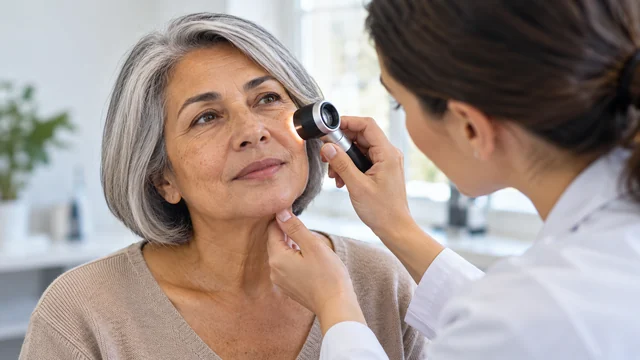
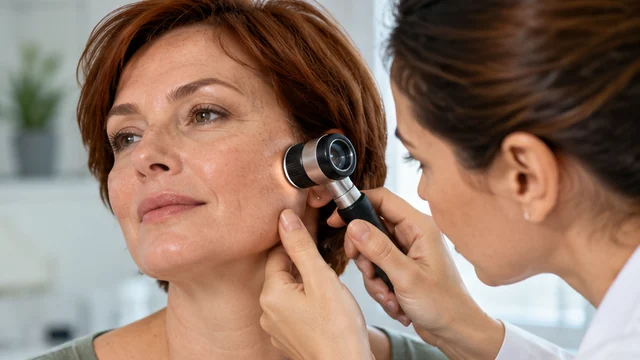
First the clinician examines the skin, identifies the proposed target, checks contraindications and selects settings. Flashes may feel briefly hot or like a sharp snap of an elastic band; sensation depends on the device, cooling and sensitivity. Some modes are easier to tolerate than others. “Completely painless” is not a reliable sign of expertise: it matters more that you know how to signal discomfort and ask for a pause.
During the first hours you may notice warmth, increased redness or swelling. In the following days, some vascular settings produce purpura: red-purple marks that resemble bruises and can be visible for around one to two weeks, sometimes longer. Even without purpura, next-day skin may not look normal. The clinician should explain skincare, safe cooling, when makeup is allowed, sun protection, and limits on exercise, hot showers, saunas and active products for that specific procedure. Do not cover a possible burn with heavy makeup without advice.
Planning around a meeting, wedding or holiday
| Period | What you may notice | How to plan being seen by others |
|---|---|---|
| Treatment day | Warmth, redness and swelling; some tightness | Do not assume your skin will look unchanged on leaving |
| The first few days | Redness may intensify; purplish marks may appear with certain settings | Ask when makeup is permitted; avoid scheduling an important shoot immediately afterwards |
| Around 1–2 weeks | Some visible marks fade gradually, but the timing varies | Leave a buffer, especially if you prefer not to explain facial changes |
| Later, once skin settles | Assess vessel response and whether a further step is warranted | Use baseline photos taken in similar conditions, not photos at peak swelling |
Social recovery is not the same as medical recovery. You might feel well enough to work but prefer not to join a video call with purple dots on your cheeks. If an important occasion is only days away, consider postponing an elective session. Discuss realistic sun protection during travel and avoid unnecessary UV exposure before and after treatment. Timing and restrictions depend on your skin and the chosen settings.
Which responses are expected, and which require medical contact?
Expected effects include mild discomfort, temporary swelling and redness, and sometimes purpura. Before treatment, know whom to call if instead of gradual improvement you develop increasing severe pain, blisters, significant oozing, sharply altered skin colour, infection signs or vision problems. Eye symptoms after treatment require urgent medical assessment. Do not attempt to treat suspected burns with acids, retinoids or home heat.
Burns, persistent light or dark pigment changes and scars are possible although never the intended result. Risk varies with device, settings, phototype, tan and safety measures. If a provider does not ask about pigmentation history, cannot identify the technology, or avoids discussing eye protection and complication management, declining the session is sensible. High prices and dramatic photographs do not demonstrate safe technique.
What if the background redness persists after several sessions?
Do not increase the energy merely because the skin “didn't respond.” First check what persists: new fine vessels, flushing, inflammatory lesions, skincare irritation or an overall impression of colour. The next step might be a revised diagnosis, changed medication, barrier care or simply stopping experiments on sensitive skin. A more aggressive setting may increase pigment and unwanted texture risks without improving the outcome.
Rosacea frequently requires ongoing management. Light treatment may reduce existing vessels but does not remove the predisposition to new ones, sun sensitivity or future flares. When comparing plans, consider not just the price of one visit but the treated area, actual indications, further visits, follow-up and possible management of adverse effects. General medical information cannot establish local prices or which clinics own particular devices.
Five questions that can prevent an unnecessary procedure
- What is my diagnosis, and which part of the redness is a vascular target rather than something requiring medicines or barrier repair?
- What is the exact device and technology, and why are they suitable for my phototype and pigment history?
- What is the realistic limit of improvement for individual vessels versus diffuse redness if flushing persists?
- What might my face look like tomorrow, after three days and before an event; when is makeup permitted and when may I exercise?
- What alternatives exist, how would I recognise complications, and can I choose observation without neglecting necessary medical care?
If redness is modest, skin feels comfortable, and you are satisfied with skincare or medicine, you can decline a device procedure. If vascular symptoms meaningfully bother you, consult a dermatologist experienced in managing rosacea and vascular technology. The aim is improvement in a defined concern, not endless removal of every natural blush.
Frequently asked questions
Could I first treat only a small area of one cheek?
Sometimes a clinician offers a limited test area when justified by the device and individual risk. A test cannot guarantee identical outcome or recovery across the whole face; this is an individual decision.
Does a vessel becoming darker immediately afterwards prove success?
No. Temporary colour change can be part of the tissue response but is not proof of lasting success. Assessment comes after healing and against the original target.
Do I need a preventive antibiotic after laser treatment?
Not on your own. An ordinary vascular light procedure does not automatically require antibiotics. A clinician decides if any medication or wound care is indicated for your particular skin.
Sources
- American Academy of Dermatology: lasers and light for rosacea.
- ROSCO: phenotype-directed treatment recommendations, 2020.
- Systematic review of IPL for rosacea, 2024.
- Systematic review and network meta-analysis of devices, 2026 (online November 2025).
- American Academy of Dermatology: diagnosis and comprehensive care.
- American Society for Dermatologic Surgery: retinoids and laser timing consensus
- 2026 review: distinct risk assessment for aesthetic procedures in pregnancy and breastfeeding