
Wart and papilloma removal: what the growth is and healing
You have noticed a tiny growth on your neck catching on a necklace, or a rough spot on your finger, and search for “papilloma removal.” Before choosing a laser, ask what the growth actually is. In everyday speech, “papilloma” can mean a viral wart, a soft skin tag or even a mole. These are not the same diagnosis; using a single caustic remedy on all of them may scar skin or delay proper assessment.
In brief: a confirmed common skin wart can sometimes be watched or treated with a dermatologist-recommended medicine; a clinician can offer freezing or other procedures when appropriate. A soft skin tag (acrochordon) is not the same as a viral wart and usually needs no removal for medical reasons. A changing, bleeding or unexplained lesion needs examination and sometimes tissue analysis before anyone destroys it cosmetically. [1–4]
Why is “papilloma” not a diagnosis?
Common warts are caused by human papillomavirus (HPV). They may be hard, rough, flat or threadlike, and occur on hands, feet and elsewhere. HPV can spread through contact and sometimes shared items, especially where skin is wet or broken. Not every growth involves HPV, however. A small soft growth on a stalk around the neck, underarms or skin folds is often a skin tag; it is not considered a contagious wart. [1–3]
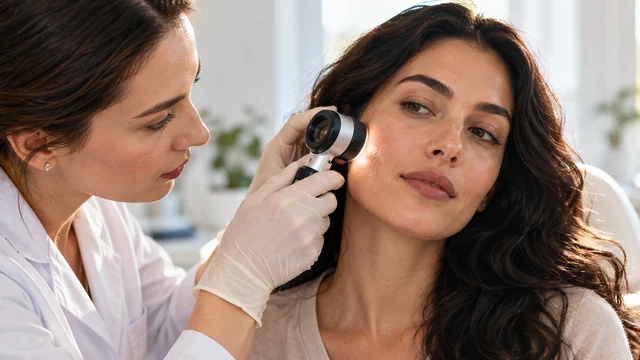
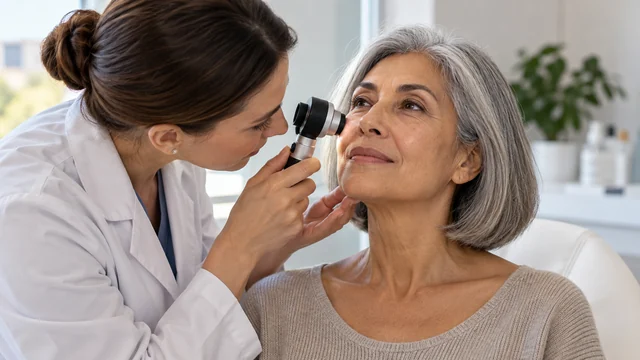
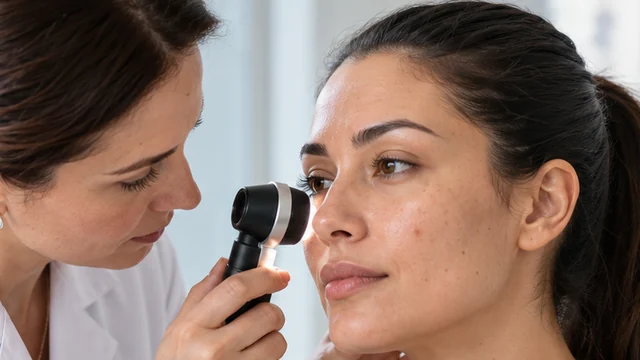
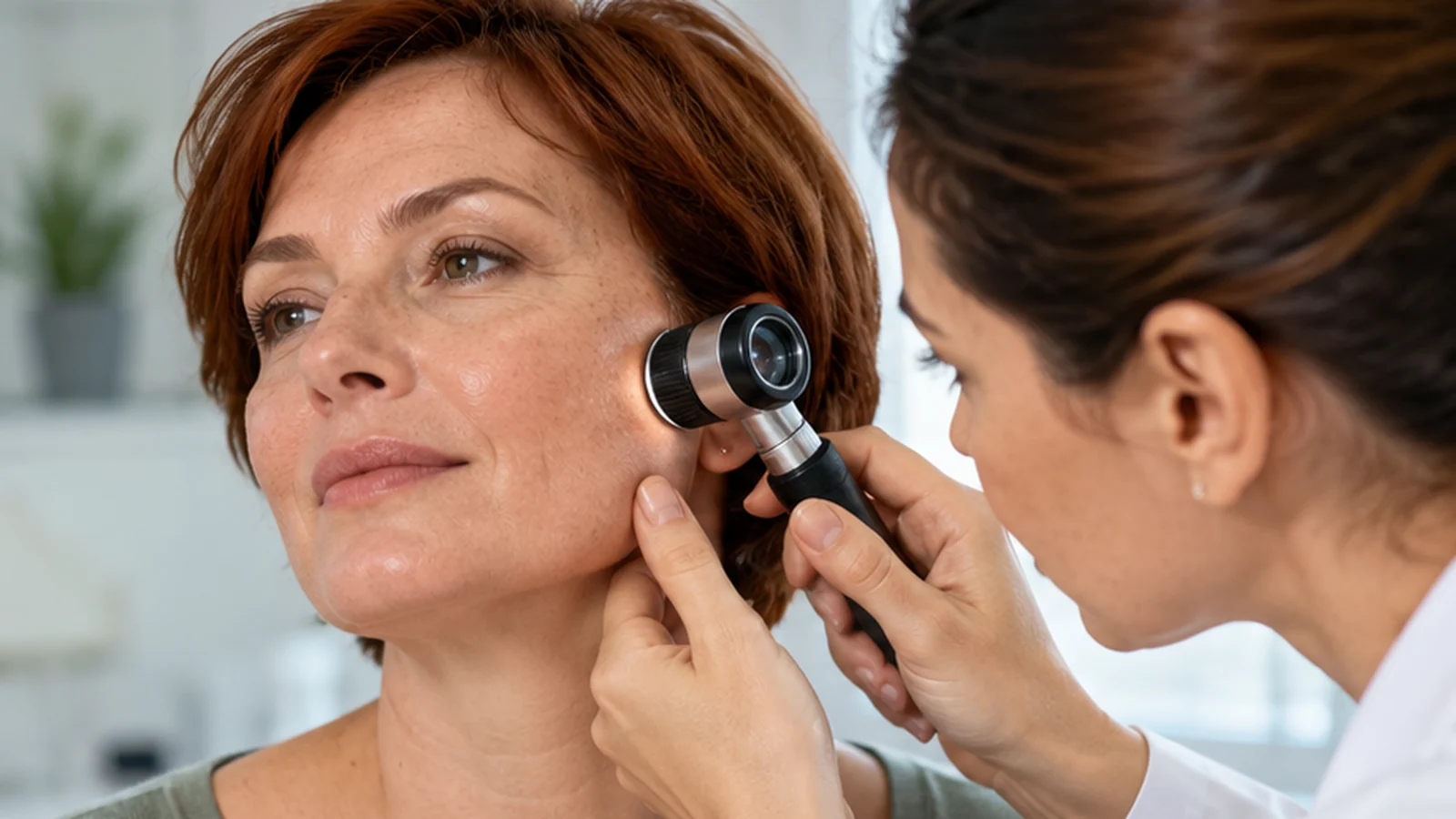
Moles, seborrhoeic keratoses, corns, cysts and some skin tumours may also look like “papillomas” to a non-specialist. Colour and size alone cannot establish that a lesion is harmless. A dermatologist reviews changes over time, location, shape and surface, and may use dermoscopy, a magnified examination with special illumination. Uncertain or suspicious lesions sometimes require a biopsy: taking a tissue sample for laboratory examination. [1, 4]
| What you notice | What it could mean | Reasonable next step |
|---|---|---|
| A rough growth on a finger or sole | Possibly a common viral wart; a plantar wart may resemble a corn | Confirm the diagnosis; discuss watchful waiting, topical care or cryotherapy |
| A soft, mobile growth on the neck or in a skin fold | Possibly a skin tag, not necessarily HPV | Confirm its nature; remove only if irritated or personally bothersome |
| A pigmented, changing or bleeding spot or bump | Cannot safely be assumed to be a harmless “papilloma” | Dermatology assessment before cosmetic destruction |
| A growth on the genitals, near the anus or on a mucous membrane | Possibly anogenital warts or another condition | See an appropriate clinician; do not use hand-and-foot wart products |
This table cannot diagnose anything from a photo. Its purpose is to prevent blind booking for removal. Read separately about moles and naevi or skin tags; this page focuses on telling warts apart from growths casually called papillomas.
When is waiting reasonable, and when should you seek assessment?
A confirmed common wart often disappears without treatment, but it may take months or years. Waiting is reasonable when it does not hurt, is not repeatedly injured, the diagnosis is clear and its appearance does not trouble you. Discuss treatment if it hurts when walking, is repeatedly damaged, spreads, causes substantial distress or you wish to shorten its course. New warts can occur even after successful removal: treating a visible lesion cannot give lifelong protection against HPV. [1, 2]
See a dermatologist before cauterising a growth that changes shape or colour, grows rapidly, bleeds without apparent trauma, ulcerates, is unusually painful or looks different from other marks. Reduced immunity, diabetes, loss of sensation in the feet and impaired wound healing also call for extra caution. Home removal may be unsafe, and look-alike lesions deserve proper diagnosis. [1, 2, 4]
Never experiment with acid or home freezing on the face, near an eye, on a lip, mucous membrane or intimate area. Anogenital warts have their own clinical guidance; a clinician considers their site and number, pregnancy and other circumstances. Some medicines for anogenital warts are contraindicated during pregnancy, so treatment must be chosen with a clinician. Having a genital wart does not itself mean having cancer, but it does not replace indicated cervical screening or discussion of HPV vaccination according to age and local guidance. [1, 3]
How are warts and soft skin tags actually removed?
For some common non-genital warts, a dermatologist may suggest salicylic acid, a keratolytic that gradually sheds the thickened outer skin. It takes persistence and is unsuitable for some people and locations. Another option is cryotherapy with liquid nitrogen. Pain, redness, a blister and crust can follow, and several visits may be needed. Other topical medicines or procedures depend on the wart type and response to past treatment. [1, 2]
Laser treatment, electrocautery and surgical removal are also options, but “laser” does not mean a guaranteed scar-free outcome. Location, depth, prior attempts, tendency toward pigmentation or scarring, and whether a specimen is needed for histology all matter. Destroying tissue can make later diagnosis impossible; an uncertain lesion should not simply be vaporised for cosmetic reasons. The separate laser wart removal page explores those technologies more closely. [1, 4]
Soft skin tags are treated differently. After confirming the diagnosis, a dermatologist may snip one off or use another suitable method. Applying wart-strength salicylic acid to a skin tag can burn surrounding skin. Tying it with thread, cutting it off at home or using chemical “burners” risks bleeding, infection, lasting pigment changes and scars. Leaving an untroublesome skin tag alone is a completely valid choice. [4]
| Option | When it may be discussed | Important trade-off |
|---|---|---|
| Watchful waiting | A clearly diagnosed ordinary wart without symptoms | Resolution is unpredictable; it may persist and spread |
| Topical treatment | Selected warts on hands and soles | Weeks of consistent care; possible irritation or incomplete clearance |
| Clinician-performed cryotherapy | Warts suited to freezing | Pain, blisters, colour changes; often more than one session |
| Excision or biopsy | A bothersome growth or uncertain diagnosis | Clinician decides whether tissue analysis is needed; scarring is possible |
What will healing look like, and when can you appear in public?
Visibility depends on the technique, site and size. After cryotherapy the skin can become red, blister and crust. The American Academy of Dermatology says the treated surface often heals in about 4–7 days; that is not a promise of even colour or a completely invisible mark by a deadline. Excision may require a dressing or stitches and different healing time. Collars rub the neck; hands are washed often; the soles bear pressure when walking. [1]
If an event, open-neck outfit or close-up photos are only days away, plan social downtime separately from medical recovery. You may be well enough for work while a crust, colour change or dressing remains visible. Concealer on unhealed skin without clinical approval is no shortcut to recovery. For the face, learn the likely healing course for your exact site before choosing a date.
Your clinician should explain when to wash the area, change dressings, swim, exercise and return to sun exposure. Do not pick scabs or puncture blisters. Increasing pain, spreading redness, pus, fever or bleeding that does not stop with advised first-aid measures requires medical attention. Some early tenderness is expected; significant deterioration is not something to endure.
Can a mark remain, or can the growth return?
Yes. A scar, depression, pale patch or darker spot depends on treatment depth, skin tone and responsiveness, location, aftercare and individual scarring tendency. Skin that remains pink after a wart disappears does not necessarily mean failure. Yet visible clearance does not prove eradication of HPV from all surrounding skin; another wart may appear nearby or elsewhere. “Permanent and without a trace” is not a credible guarantee. [1–3]
When viewing before-and-after photos, ask when the second image was taken. A site covered immediately after removal may look tidy, while scar maturation takes longer. Lighting and angles can hide minor unevenness. Instead of asking which machine is newest, ask how the diagnosis was established, what happens to the removed tissue and what marks are realistic for your skin.
How can you avoid spreading ordinary warts before and after treatment?
Do not pick the growth or shave across it. Wash your hands after touching it; do not share towels or grooming tools. With a plantar wart, avoid walking barefoot on shared wet floors. Covering a wart at a pool can reduce direct contact but cannot eliminate transmission risk. Biting skin around nails can spread periungual warts to adjacent areas. [2]
After a procedure, instructions may differ because you are protecting a healing wound as well as trying to limit transmission. Do not add your own chemical cauterisation to “speed things up.” Several or repeatedly recurring warts warrant renewed assessment of diagnosis and treatment strategy, rather than endless switching between acid and freezing.
What should you ask a dermatologist before consenting?
- Is this a viral wart, skin tag or another lesion? What supports the diagnosis?
- Is dermoscopy, biopsy or histological analysis needed before destroying the tissue?
- Can we safely observe it? What are the risks of waiting and of treating this particular site?
- Why this treatment, how many stages might it take, and what signs mean it needs reassessment?
- How might it look over the first days and weeks; when can I use makeup, exercise and go into the sun?
- What should I do with pain, marked inflammation or bleeding, and whom can I contact after hours?
At the consultation, recall when the lesion appeared, how it changed, what you applied and whether you scar conspicuously. Mention pregnancy, immune conditions, diabetes, medicines and allergies: these may change the plan. Cost depends on diagnosis, number and location of lesions, technique, anaesthesia and possible tissue analysis. No responsible estimate of cost or required sessions can be given without assessing the lesion.
The right decision need not be immediate removal. One person only needs reassurance after diagnosis; another has a painful plantar wart; for another, excluding a different skin condition comes first. The diagnosis, not the everyday label “papilloma,” determines a safe next step.
Additional questions
Do I need an HPV test before removing a common wart on my hand?
Usually not. A typical skin wart is diagnosed on examination. With uncertainty, excluding another skin disease, sometimes through biopsy, matters more. For anogenital warts the CDC also advises against HPV testing as a diagnostic tool.
Can I remove a wart that appeared after a manicure?
First confirm that it is a wart. Timing alone cannot identify where any infection came from. Until assessment, do not cut it with manicure tools or use those tools elsewhere on your skin.
Can several warts be removed in one visit?
It depends on their site, size, diagnosis and technique. Sometimes a clinician treats several at once; sometimes sessions are staged to limit tissue injury and make healing easier to monitor.
Sources
- American Academy of Dermatology — Diagnosis and treatment of common warts.
- NHS — Warts: waiting, home treatments and prevention.
- CDC — Distinct management of anogenital warts.
- American Academy of Dermatology — Skin tags, differences from warts and removal.
- American Academy of Dermatology — Warning changes in pigmented lesions.