How to Remove a Skin Tag Safely Instead of Using Home Methods
A necklace keeps catching a small soft growth on your neck, or a bump in the armpit rubs on clothes. It is tempting to remove it at home, especially when pens, patches, and solutions are advertised for that purpose. The safer route is to have a dermatologist identify the lesion first and, if it really is a skin tag (acrochordon, a soft fibrous growth), choose an appropriate medical removal method. Skin tags are usually benign and often need no removal at all. Moles, warts, and other lesions, however, can resemble them and may need diagnosis rather than cauterisation.
Does this particular growth need removing?
A typical skin tag is a soft flesh-coloured or slightly darker growth, often on a narrow stalk, in places where skin rubs: neck, armpits, under the breasts, or groin creases. Shape and colour alone do not establish a diagnosis. If you are unsure what it is, do not turn a home experiment into your diagnostic test. The causes of skin growths are discussed separately; the focus here is your next step with this particular lesion. More about causes of skin growths
| Situation | Reasonable next step | Why |
|---|---|---|
| Small, soft, unchanged for a long time, causes no trouble | You may leave it; mention it at a routine examination if never formally diagnosed | Removal is not medically necessary |
| Catches on jewellery, razors, or underwear and is sometimes injured | See a dermatologist to confirm the diagnosis and choose a removal method | Repeated friction is a problem, but cutting it off yourself adds risk |
| Grows quickly, changes colour or shape, bleeds unexpectedly, or ulcerates | See a dermatologist promptly; do not remove it yourself | Another condition, including skin cancer, must be excluded |
| Located on an eyelid, near lashes, or on the genitals, or diagnosis is uncertain | In-person assessment by an appropriately qualified specialist | Sensitive site and potentially different diagnoses |
A little blood after accidental snagging does not automatically mean cancer, but repeated or unexplained bleeding deserves examination. A single online photo cannot distinguish concerning changes reliably. If the dermatologist sees suspicious features, the plan changes: removal followed by histology (examining tissue under a microscope) may be needed instead of cosmetic destruction that leaves no specimen.
How can a clinician remove a confirmed skin tag?
The choice depends on stalk size, location, number of growths, healing tendencies, and whether a tissue sample is needed. No single method guarantees a less visible mark for everyone. Common options include:
- Snipping with a sterile instrument. After preparing the skin and using local anaesthetic if needed, the clinician cuts the growth with scissors or a blade and stops bleeding. The growth disappears immediately, but a small wound still needs to heal.
- Cryotherapy. Liquid nitrogen freezes and destroys tissue. Stinging, a blister, and then a scab may follow, and the growth may not fall off the same day. Some lesions require repeat treatment.
- Electrodesiccation or electrocautery. Electrical energy destroys or coagulates the tissue and leaves a scab. Site and individual skin pigmentation matter, because light or dark marks can remain.
Laser may be mentioned for some benign growths, but “laser” alone does not guarantee a better result or replace diagnosis. Equipment and indications are covered in the separate laser-removal article. If a lesion is suspicious, the clinician should not destroy it purely for cosmetic convenience when tissue is needed for examination. More about laser skin-tag removal
Why not tie it off, cut it, or burn it at home?
Videos using a band or thread make it look simple: tie off the base, wait, and supposedly the growth drops off. At home you cannot verify the diagnosis, sterility, or depth of injury. Tying may cause pain, inflammation, tissue death, or damage to adjacent skin; self-cutting can cause bleeding and infection. These methods are particularly inappropriate near the delicate eyelid or genital skin.
Wart removers, acids, celandine preparations, caustic folk mixtures, and home freezing cannot automatically be assumed to be safe substitutes. They may damage healthy skin as well as the growth, causing burns, scars, and pigment changes. The American Academy of Dermatology advises against at-home skin-tag removal products; the US FDA states that no over-the-counter drug products to remove skin tags or moles are FDA approved. However, that does not mean the FDA has cleared no home-use devices: in 2024 it cleared the cryotherapy device Compound W Skin Tag Remover through the 510(k) pathway, for over-the-counter use by adults aged 22 and older. Clearance of a device does not diagnose an individual growth or eliminate the risks of treating another, potentially dangerous lesion. These facts describe US regulation, not Armenian product availability or authorisations.
A further danger is burning off something that was not actually a skin tag: it may delay a correct diagnosis and destroy material needed for testing. A friend's apparently scar-free DIY removal does not establish that the same method is safe for you.
Will it hurt, and how will the skin look afterwards?
Removing a small confirmed tag in a clinic is often quick, but not necessarily painless. Local anaesthesia may feel like a brief injection or sting; cryotherapy can also sting. Larger or multiple growths and sensitive sites may call for different pain control. Mention allergies and any past reactions to local anaesthetics beforehand.
On removal day, you may see a pinpoint wound, slight bloody discharge, redness, or mild tenderness. A scab often follows. According to the AAD, healing after electrodesiccation may take one to three weeks; healing after your particular method and at your site must be discussed with the clinician. Redness or pigment change can outlast wound closure. On the neck it may show close up or in photographs; under clothes it is easier to conceal. Avoid arranging facial lesion removal immediately before an important photoshoot.
Follow the instructions for dressings, gentle washing, and reducing friction. Do not pick the scab or put aggressive acids, alcohol mixtures, or make-up on the wound until cleared by your clinician. For sun-exposed areas, ask about sun protection after the wound closes to help reduce lasting pigmentation. Pressing hard to check whether the growth is “all gone” interferes with healing.
Seek medical help if bleeding does not stop with ordinary gentle pressure from a clean cloth, pain rises quickly, redness spreads, or pus, fever, or substantial swelling develops. Heavy ongoing bleeding or sudden deterioration requires urgent care. If you take anticoagulants or have a bleeding disorder, plan removal with your clinician in advance; never stop prescribed medicines on your own.
Should several growths be removed at the same appointment?
If there are many, first establish whether they are all the same type. The doctor should assess suspicious, prominent, and frequently injured lesions; all do not have to be removed at once. Several small wounds in rubbing areas can be more inconvenient than one: dressings rub on clothing, skin sweats, and aftercare becomes harder. Staging treatment may make sense. Their number or location alone cannot diagnose diabetes or a hormonal condition, though a clinician may investigate overall health if you have relevant symptoms.
A fully removed tag usually does not grow back at precisely the same site, but new ones may appear elsewhere. If a pigmented or unusual growth reappears at a treated site, have it assessed rather than burning it again. If avoiding a mark matters more to you than rapid removal, say so: even professional treatment carries some scar risk.
Five questions to ask before consenting
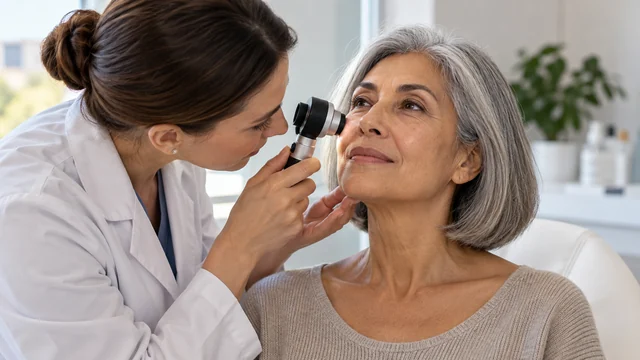
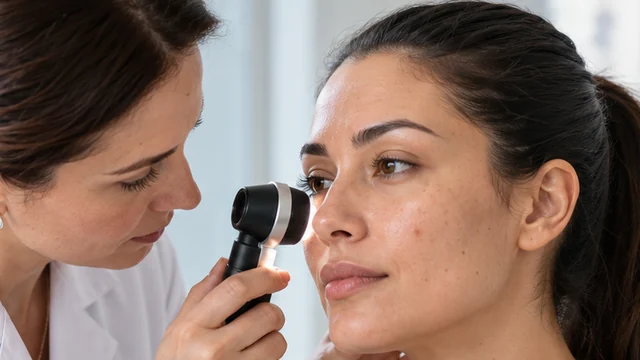
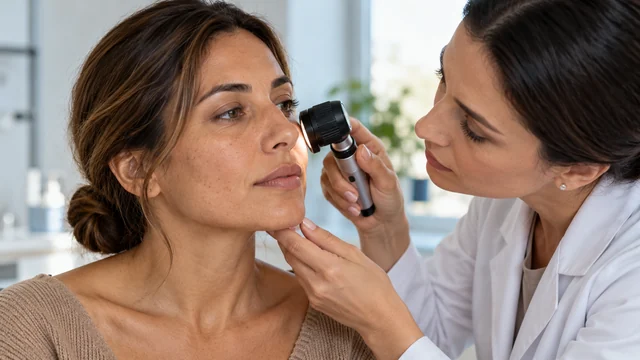
- How certain are you that this is a benign skin tag? Would dermoscopy or histology be appropriate?
- Why do you recommend snipping, freezing, or electrical removal for this location and my skin type?
- What mark is most likely: scab, temporary darkening, lightening, or a scar?
- How do I care for the wound, how long should I avoid rubbing, make-up, and swimming, and what if it bleeds?
- Which medicines or medical conditions should I report, and whom should I contact about a complication?
Declining removal is also a reasonable choice when the lesion is not bothersome and the clinician sees no warning signs. The goal is not perfect skin at all costs but the right diagnosis and a well-informed, unhurried decision.
Further questions
Can a skin tag fall off on its own if left alone?
Usually it remains, although it can sometimes get injured or tear away; do not deliberately provoke this. If a growth unexpectedly changes or falls off with bleeding, discuss it with your clinician.
Must every removed growth be sent for histology?
Not every typical benign skin tag needs examination under a microscope. The decision depends on diagnostic confidence and suspicious features; ask before treatment.
What if I accidentally shave one off?
Apply gentle pressure with a clean cloth, rinse with water, and protect the wound. Get medical help if bleeding continues, pain is severe, or you are unsure it was a skin tag.
Can a skin tag be removed during pregnancy?
When it causes no trouble and shows no warning signs, delaying elective cosmetic removal is often sensible. Do not delay assessment of an injured, bleeding, or suspiciously changing lesion. Discuss removal technique and anaesthesia in the context of pregnancy with your clinician.
Sources
- American Academy of Dermatology — Skin Tags: Why They Develop, and How to Remove Them
- American Academy of Dermatology — 5 Reasons to See a Dermatologist for Mole or Skin Tag Removal
- Cleveland Clinic — How To Remove Skin Tags
- Cleveland Clinic — Skin Tags (Acrochordons)
- U.S. Food and Drug Administration — Safety Warning on OTC Mole and Skin Tag Removers
- American Academy of Dermatology — Moles: Diagnosis and Treatment
- U.S. FDA — Compound W Skin Tag Remover: 510(k) K242803 (2024), Indications for Use