
Is Skin Tag Removal Safe When Done by a Dermatologist?
A small, soft growth catches on your necklace or collar, and removing it seems like a two-minute task. Removal of a genuine skin tag (acrochordon) by a dermatologist is generally a minor, relatively safe procedure, but the first safety step is to confirm that the growth really is a benign skin tag. A mole, wart or another skin lesion may look similar, and destroying it before diagnosis can be a mistake. Cutting, tying or chemically burning a growth yourself is not an equally safe option.
Skin tags themselves are usually harmless and need no treatment. You can leave one in place if it is painless, uninjured and not bothersome. Removal for appearance is your choice, not something you must do because a growth is visible.
First, is it definitely a skin tag?
A typical acrochordon is a small, soft, skin-coloured or darker growth, sometimes on a narrow stalk. They often occur on the neck, underarms, skin folds or eyelids. Yet a familiar colour and shape do not prove the diagnosis. Some moles and other skin lesions also project above the surface, and potentially dangerous changes cannot be excluded by comparing online photographs.
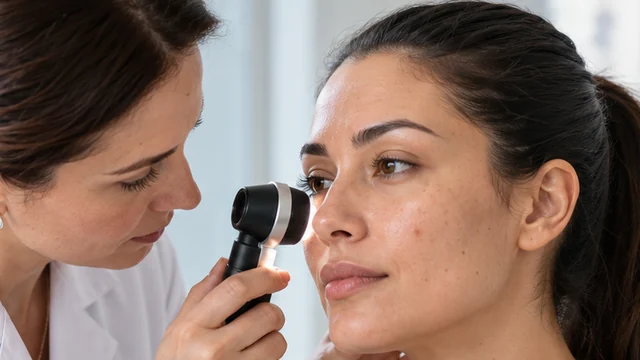
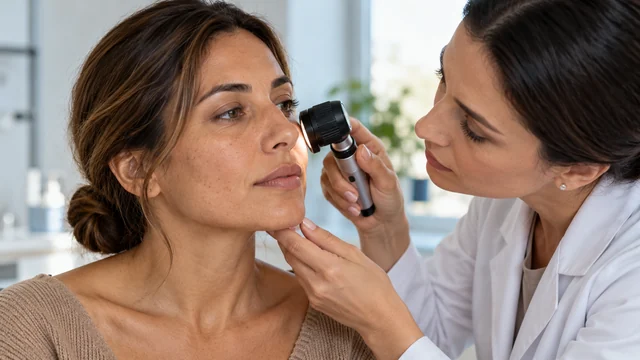
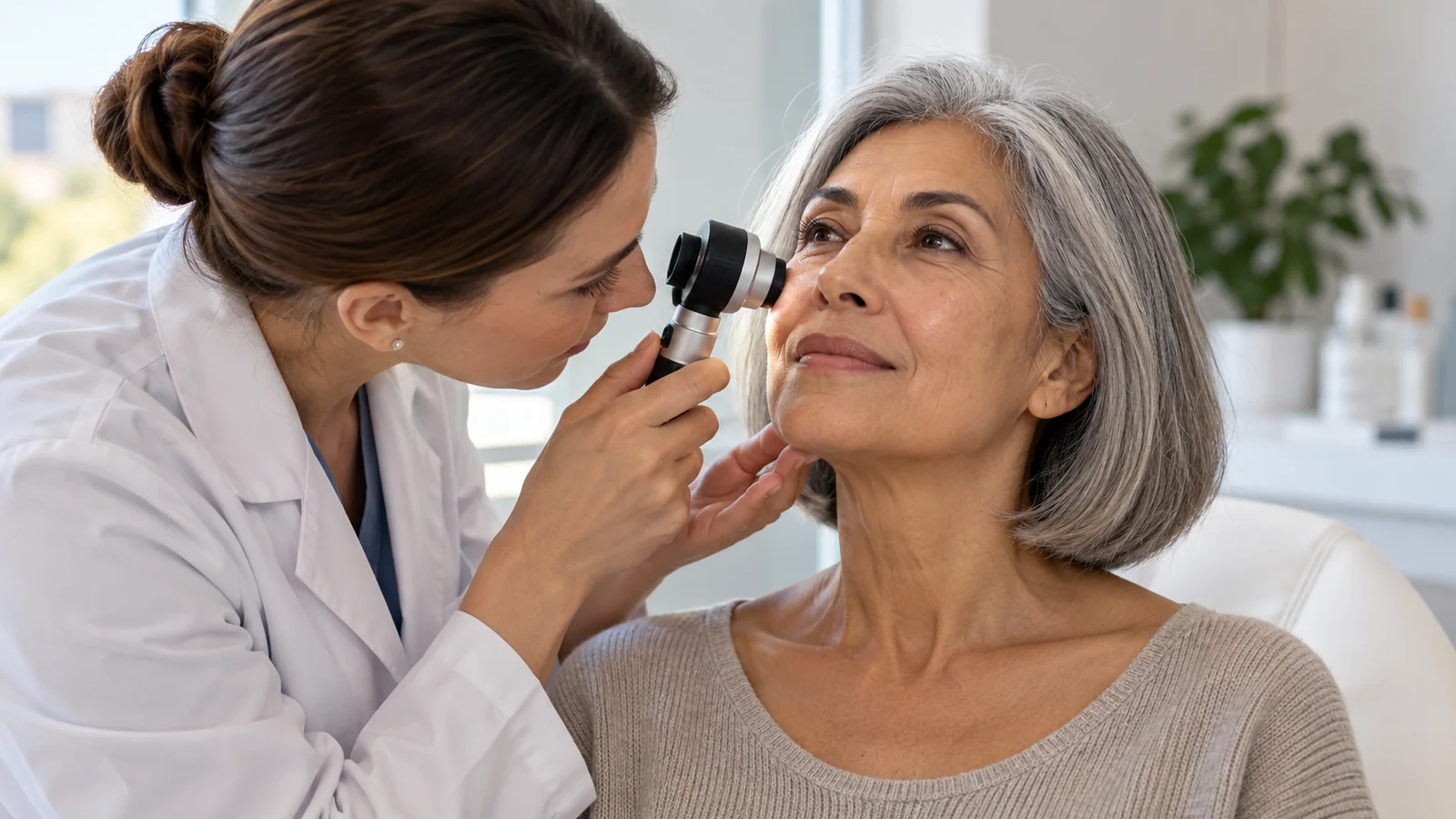
See a dermatologist for assessment before arranging purely cosmetic removal if a growth enlarges rapidly, changes colour or shape, has uneven pigmentation, bleeds without an obvious injury, develops a crust without trauma, hurts or fails to heal. A lesion that looks very different from your others also needs assessment. Your dermatologist will decide whether to use dermoscopy (magnified examination with special lighting) and whether to take tissue for histology (microscopic examination).
Not every typical, clearly diagnosed skin tag needs to be sent for histology after removal; that is a clinical decision. But a suspicious lesion should not be destroyed in a way that leaves no tissue available for investigation. The distinction between “remove a known skin tag” and “find out what this growth is” matters more for safety than the name of the machine used.
When should you remove, observe or investigate?
| Situation | More appropriate next step | Why |
|---|---|---|
| Stable, soft growth that is not painful or repeatedly injured | Leave it alone, or arrange a routine assessment if uncertain | A true skin tag is benign; removal creates a wound and a risk of a mark |
| Growth repeatedly catches on clothing, a razor or jewellery | Confirm the diagnosis and discuss professional removal | Removing a source of recurring irritation may be worthwhile |
| Spot changes, becomes unevenly dark, bleeds without injury or will not heal | Prompt dermatology assessment and consideration of tissue examination | Another condition must be ruled out before the tissue is destroyed |
| Many new growths appear in a short period | Dermatology review and, when indicated, discussion of general health factors | There may be something to assess beyond individual growths |
| Growth on the eyelid margin or another delicate location | Assessment by a clinician experienced in that anatomical area | Its proximity to the eye or other structures changes technique and risk |
This table cannot diagnose a lesion. It helps distinguish a cosmetic nuisance from a medical question. Do not label lesions on the genitals or mucous membranes as skin tags yourself either: other conditions there require different assessment and treatment.
How safe are the different removal techniques?
A clinician may snip the lesion off with a sterile instrument, use an electric current at the base or use cryotherapy (controlled freezing). Choice depends on its stalk, size, location, skin type, bleeding tendency and confidence in the diagnosis. Local anaesthetic may be used when needed, and the brief injection can hurt more than removal itself. Even a tiny procedure leaves a small wound that has not fully healed when you walk out.
Snipping can cause temporary tenderness or bleeding; freezing may produce a blister, scab or pigment change; an electrical technique produces controlled tissue injury and subsequent healing. Every method can leave a small scar, a pale patch or a darker mark. Post-inflammatory pigmentation is especially important to discuss in darker skin. No stitches does not mean no trace.
The word “laser” does not by itself guarantee a safer outcome. Correct diagnosis, controlled treatment depth and experience in that location matter more. There is no single best technique for a tiny stalk on the neck, a broad lesion in a fold and a growth on the eyelid margin. If histology is required, choose a method that yields suitable tissue for examination.
Why are home remedies an unsafe experiment?
Thread, scissors, acids, caustic herbal solutions and unverified online devices can cause bleeding, chemical burns, infection, scars or persistent pigment changes. Tying off a stalk can injure nearby skin and still does not establish what you are removing. Even a little growth may bleed much more than expected, particularly if you take medicine that affects clotting.
The US FDA has stated that there are no FDA-approved over-the-counter medicines for at-home mole and skin-tag removal in the United States and warns about injuries and delayed skin-cancer diagnosis. This is a statement about US regulation, not a conclusion about the registration of a particular product in Armenia. The label “natural” is no evidence of safety. A wart treatment is not automatically suitable for a skin tag or mole.
If you already attempted removal at home, do not burn the injured skin again or peel away a scab. Uncontrolled bleeding, rapidly spreading redness, pus, fever or severe pain call for urgent medical care. Tell the clinician what substance you applied, especially if the growth looked unusual even before treatment. If bleeding starts after an attempt at home, apply steady pressure with clean gauze or a clean cloth. Seek emergency care if it will not stop or you become markedly weak or dizzy.
Who needs additional precautions?
Tell the clinician about impaired healing or immunity, diabetes, a tendency to form keloid scars, allergies to local anaesthetics or antiseptics, pregnancy, a pacemaker if an electrical technique is planned, and all medication—particularly anticoagulants and antiplatelet drugs. These do not automatically prohibit removal; the method, preparation and need for treatment are individual decisions. Do not stop prescribed medication yourself even for a tiny lesion.
When friction repeatedly inflames skin in a fold, the clinician may also suggest ways to reduce irritation. Removing existing tags does not stop new ones appearing elsewhere. Numerous skin tags sometimes prompt consideration of wider health factors, but a single tag alone does not diagnose diabetes or a hormonal disorder.
How will the area heal, and what will other people notice?
Right after removal there may be a red dot, a small dressing or a shallow wound. A scab may form later; this shows more on the face or neck than beneath clothing. Healing time varies with size, site and method. Nobody should promise perfectly even, mark-free skin by a particular date. Leave room in your schedule before photographs, public speaking or a holiday, and discuss timing with your dermatologist.
Unless instructed otherwise, basic care of a small superficial wound generally involves gentle cleansing, maintaining suitable moisture with an appropriate product, and a dressing where clothing rubs. Do not pick the scab or put acids, alcohol-based products or makeup onto open skin without medical advice. Once the wound is closed, sun protection can help avoid worsening discolouration. Freezing and electrosurgery may require different aftercare; follow your clinician's written instructions.
A completely removed tag is not usually expected to regrow in that exact spot, although new tags can develop nearby. If an unusual lesion appears again at the site, bleeds or changes colour, do not assume it is merely a returning skin tag—show a clinician.
Five questions before removal
- Which features make you confident this is an ordinary skin tag, and do I need dermoscopy?
- Should the tissue go for histology, and will your proposed method preserve a sample?
- How likely is a visible pale or dark mark or scar in this area and with my skin tone?
- How do my medication, chronic conditions or a location close to the eye affect the plan?
- How should I care for the area, and what changes call for an earlier review?
A good consultation may end with a simple answer: “This is a harmless tag and it is not bothering you; leave it.” If removal would make life more comfortable, professional treatment after a confident diagnosis is generally wiser than a home experiment. The most important safety factors are identifying the growth correctly and treating skin gently—not speed or equipment branding.
Additional questions
Can several confirmed skin tags be removed in one appointment?
Sometimes. The clinician considers their number, size, location, tolerance of local anaesthesia and the total wound area. A questionable lesion still needs diagnosis first; removing it together with others must not replace that assessment.
Would a photograph taken several months ago help?
Yes, especially if the lesion has changed. Dated images may help the dermatologist understand how its size and colour have evolved, but cannot replace an examination or, if indicated, dermoscopy or histology.
Sources
- AAD: Skin tags — why they develop and how to remove them — American Academy of Dermatology.
- AAD: Five reasons to see a dermatologist — American Academy of Dermatology.
- NHS: Skin tags — Wirral Community Health and Care NHS Foundation Trust.
- FDA: Amazon OTC removal warning letter — U.S. Food and Drug Administration.
- AAD: ABCDE signs of melanoma — American Academy of Dermatology.
- AAD: Skin cancer diagnosis and biopsy — American Academy of Dermatology.
- Dermatologic electrosurgery and implanted cardiac devices — Journal of the American Academy of Dermatology.
- NHS inform: Severe bleeding first aid — NHS inform / NHS Scotland.