Subcision for Post-Acne Scars: Who It Suits and What to Expect
There are shallow waves left on your cheek after acne. Side lighting makes them stand out more than direct light, and you read about subcision, a technique that “releases” tethered scars. Subcision can improve certain atrophic (depressed) acne scars, particularly where fibrous bands pull the skin down. But not every indentation has that structure, and you cannot judge the result immediately after treatment: early lifting may simply be swelling.
This is a minor invasive surgical procedure, not a superficial peel or skin “massage.” A clinician passes an instrument under the skin and mechanically divides some fibrous bands—firm strands anchoring the area below its surroundings. The goal is to reduce tethering, not manufacture completely new skin. Wanting a scar to cast a softer shadow may be a sensible goal; a promise to erase every acne mark completely is a warning sign.
How can I tell whether subcision suits my scars?
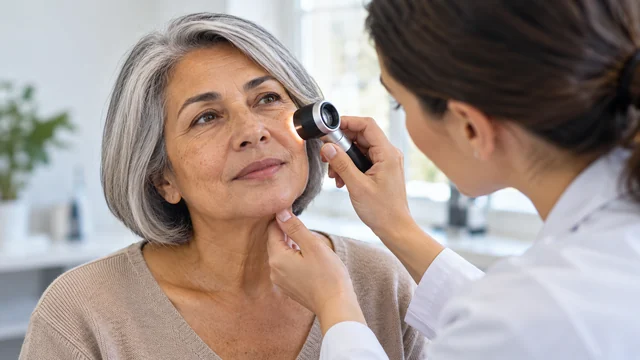
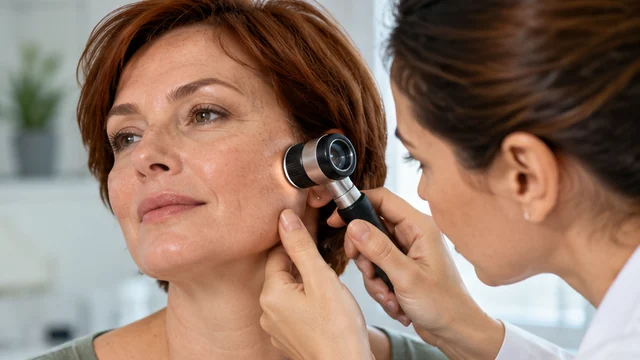
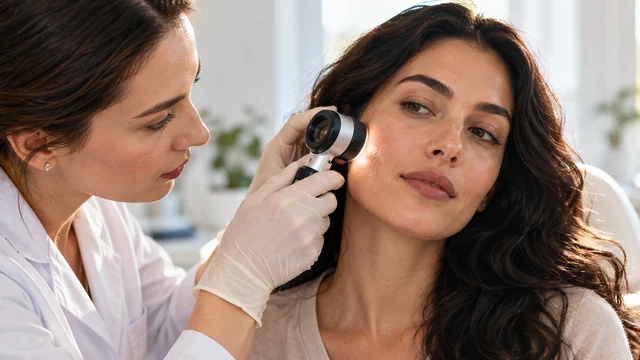
Subcision is most often considered for rolling scars: broad, wave-like depressions with softly defined edges. Fibrous bridges may lie beneath them. A dermatologist examines the skin in different lighting, assesses each scar's depth and shape, checks for active acne, pigment changes and previous procedures. Gently stretching the skin can sometimes suggest how mobile a depression is, but that alone cannot prove subcision will work.
| Scar appearance | Likely role for subcision | What else may be needed |
|---|---|---|
| Wide, wave-like depression probably tethered by fibrous bands | A main option to discuss if examination confirms suitable anatomy | Sometimes later work on the surface or volume |
| Round depression with steep vertical edges—boxcar | Only when additional tethering is present; not an automatic first choice | Laser resurfacing, focal edge correction or occasionally surgical techniques |
| Very narrow deep mark—ice-pick | Usually does not address the principal problem of a narrow, deep defect | Targeted methods for individual narrow scars after assessment |
| Flat red or brown mark without depression | Does not correct discoloration when there is no mechanical tethering | Acne control, sun protection, treatment of vascular or pigment changes |
| Firm raised scar | Usually a different mechanism; subcision may be inappropriate | Separate assessment of a hypertrophic or keloid scar |
If several scar types coexist, a clinician may suggest stages rather than one technique for everything. The scar-treatment comparison page explains choice by scar shape. Here the decision is specifically whether to release tethering, and whether the recovery and risks are worthwhile for you.
What happens during subcision, and what will I feel?
First, you agree on goals, document the starting texture in comparable lighting, and review medicines, allergies and bleeding risk. The skin is cleaned with antiseptic. Local anaesthesia is usual; the injection and a sensation of pressure may still be noticeable even without sharp pain. A needle or blunt cannula—a slim instrument with a rounded tip—may be used. Choice of instrument and depth depends on site, fibrous bands and the clinician's expertise, not a fashionable technique name.
During release, you may feel movement or tension and occasionally hear small clicks. This is not proof that each band has been “correctly cut.” Tell the clinician immediately about severe or unusual pain. Blood vessels and nerves run nearby, so home subcision, probing with sharp instruments or copying a video is unsafe. Avoid a practitioner who will not explain the anatomical risks in the proposed area.
Sometimes a filler is discussed to support the lifted depression, or another procedure is proposed later. That is a separate decision: injected materials bring their own risks, costs and limitations, and combinations are not suitable for everyone. Do not accept a vague “package” because it promises a more dramatic effect. Ask what each element contributes and why it is needed now.
What will I look like afterward: medical versus social recovery
Swelling, tenderness, firmness, minor bleeding at entry points and bruising are possible. You may feel well enough for normal activities before your skin looks unnoticeable in daylight. Some people need only a few quieter days; others have visible bruising much longer. The size of the treated area, extent of release, blood-vessel characteristics and tendency to swell influence visibility.
| Approximate stage | What you might see or feel | How to plan |
|---|---|---|
| Procedure day and the next 1–3 days | Swelling, soreness and entry marks; early fullness may misleadingly resemble the final effect | Avoid important filming or events without a buffer; ask about your personal restrictions |
| Around days 4–7 | Some people still have visible bruises and uneven swelling; bruises change colour | Build in time before office work or video calls; only use makeup after approval for the treated skin |
| Following 1–2 weeks and beyond | Most early effects gradually settle, but some firmness or residual tenderness can last longer | Do not judge the final result; show persistent or worsening symptoms to the clinician |
| Later assessment | Once swelling settles, genuine changes in surface contour become clearer; tissue remodelling takes time | Compare photos at the agreed follow-up interval, not the next day |
These are planning guides, not guaranteed deadlines. If a wedding, work trip, sunny holiday or close-up appearance is coming, allow a more conservative margin and discuss it before consenting. “Zero downtime” cannot be promised, especially after extensive treatment.
What should I do—or avoid—afterward?
The treating clinician should give instructions suited to the extent of the procedure and your skin. They generally cover gentle hygiene, protecting entry points, avoiding trauma and following individual activity restrictions. Do not forcefully massage an area, squeeze lumps or try to “break” a recurring dimple yourself. Agree on pain relief and skin care, particularly if you have other medical conditions.
Ask in advance when you may return to strenuous exercise, sauna, swimming, active skin products and makeup. Being able to work remotely the next day is not the same as looking ready for a close-up presentation. Sun protection matters because inflammation and bruises can leave more persistent discoloration on pigmentation-prone skin. Do not put strong acids, retinoids or at-home peels on irritated treated skin without approval.
Which risks deserve discussion before consent?
Common expected reactions include temporary pain, swelling and bruising. Possible complications include haematoma (blood collected in the tissue), infection, prolonged nodules, pigment changes, asymmetry, insufficient improvement or renewed depression. More serious but less usual harm can involve blood vessels or nerves; anatomical location and technique affect risk. A review of complications highlights limited high-quality comparisons between instruments, so a claim that “cannulas entirely prevent bruising and injury” is not reliable.
Contact the treating clinician urgently if pain or swelling increases rather than subsiding, redness or warmth worsens, pus or fever appears, there is marked one-sided swelling, or you develop new numbness. Rapidly expanding swelling, severe pain, visual disturbance or other acute major symptoms require emergency medical attention. Small bruises are possible and expected; they are not a reason to ignore deterioration.
Who should postpone subcision or consider a different route?
An elective procedure that deliberately injures tissue is generally postponed for active infection at the site, painful inflamed acne lesions, unexplained skin growths or uncontrolled acne; the medical problem comes first. Specific review is needed with a history of keloids, clotting disorders, anticoagulants or antiplatelet drugs, immunosuppression, chronic conditions affecting healing, current or recent systemic retinoid use, or allergy to local anaesthetics. Recommendations about isotretinoin depend on the procedure and evidence; do not impose an internet-derived waiting period yourself. Never stop blood-thinning medicines on your own: the treating clinician should assess risks with the prescriber.
During pregnancy or breastfeeding it is sensible to defer elective cosmetic subcision and discuss personal circumstances with your physician: the procedure is unnecessary and invasive, and direct high-quality safety data for these groups are insufficient. This is a precaution, not proof that every local anaesthetic is harmful. Mention previous fillers, operations, scar complications or pronounced loss of volume in the area. Wanting to “remove every mark” carries a high risk of disappointment: even technically successful subcision cannot promise perfectly smooth skin.
When will results show, and how often is repetition needed?
Some depressions appear lifted immediately, but fluid and inflammation make that early impression unreliable. More meaningful comparisons come after initial reactions settle and during later follow-up as tissue remodels. You might see partial improvement or none. Some fibrous bands persist and new attachments can develop while healing. The number of procedures depends on scar firmness, distribution, the change you want and how well you tolerate recovery.
A randomized 2024 study involved just five participants: one facial side received five subcision sessions spaced four weeks apart, while the other served as a control. The investigators observed improvement in rolling scars, but this very small sample cannot determine your expected percentage benefit, an optimal session count or a long-term guarantee. Reviews pool varied methods, rating scales and limited long-term follow-up. “One session forever” is unsupported, but automatically prescribing a long course before assessing the first response is equally questionable.
What should I compare subcision against?
Laser resurfacing and microneedling mainly target surface texture and tissue remodelling, whereas subcision addresses mechanical tethering. Deep sharply outlined pits may need focal surgical methods; narrow pits may suit other targeted techniques. Filler adds volume but does not necessarily release bands and has separate safety concerns. A staged combination sometimes makes sense; sometimes one treatment—or observation alone—is enough.
If redness, a dark spot or active acne bothers you more than the depression, subcision is unlikely to tackle your main concern. Treating acne before scar procedures helps reduce new scarring. Low-key concealing products and simply accepting your current skin texture are also valid choices; there is no medical obligation to treat scars. Choose a procedure based on your goal, not its popularity.
How to keep the consultation and decision in your hands
- Show the clinician which indentations bother you in ordinary light. Ask them to identify the scar type and explain any suspected fibrous bands.
- Ask what subcision can change and what remains: pores, spots, narrow deep pits and general texture.
- Ask which instrument and area are planned, and how haematoma and nerve or vessel injury risks are reduced.
- Request a plan for the first days: dressings, washing, sun, makeup, exercise and whom to call about complications.
- Clarify all costs and follow-up arrangements, and whether fillers or lasers are optional rather than mandatory additions.
- Compare photographs only in similar lighting at comparable times after treatment; images taken during early swelling do not show lasting results.
You can take time to decide. A professional consultation leaves room to decline subcision if the possible change is small, the risks are not worthwhile for you, or your schedule cannot accommodate a calm recovery.
Further questions
Do both cheeks need treatment if only one has scars?
No universal rule requires symmetrical treatment. The extent depends on the scars' distribution and character, not a demand to make both sides match at any cost.
If I need filler after subcision, does it have to be injected on the same day?
No. Whether additional volume is needed, and when, must be decided separately according to the skin, chosen material and risks. Ask about the advantages and disadvantages of a same-day versus staged approach.
What if a depression seems to return later?
Do not try to repeat the technique yourself. Take comparable photos and have the area assessed: first distinguish renewed tethering from changing light, disappearing swelling and other features of the scar.
Sources and further reading
- DermNet — Subcision.
- Journal of Cosmetic Dermatology — Complications of Subcision for Acne Scarring (2025; online 2024).
- Archives of Dermatological Research — Randomized study of repeated subcisions (2024).
- American Academy of Dermatology — Acne scars: consultation and treatment.
- Practical Aspects of Acne Scar Management (2024).