
Crow's feet: why they form, treatment options and risks
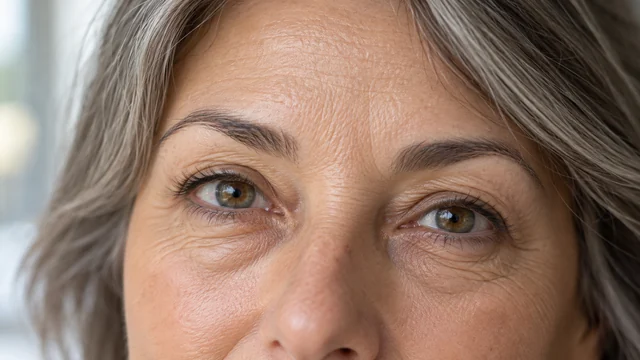
You smile in a photograph and fine lines radiate from the outer corners of your eyes. When your face is relaxed, they are barely visible, but strong lighting makes them stand out. These are called crow's feet. If they appear mainly when you smile, they are dynamic expression lines; if they remain while your face is still, changes in the skin itself contribute too. This distinction matters when choosing skincare or a procedure. You do not have to aim for complete removal: keeping your natural smile while softening deeper creases is a reasonable goal.
The best studied injectable option for prominent dynamic lines is botulinum toxin, which temporarily reduces contraction in particular muscles around the eye. It is not a filler and does not repair skin texture. For fine lines visible at rest, sun protection, gentle skincare and occasionally texture-focused treatments are more relevant. Rashes, inflammation, swelling or other new eye-area symptoms call for a diagnosis before cosmetic intervention.
Why do these lines form at the corners of the eyes?
The orbicularis oculi muscle surrounds the eye and helps with squinting and smiling. As it contracts, the thin skin folds. That is normal facial movement, not proof of 'bad skin'. Over time the folds may become slower to smooth out because of changes in collagen and elasticity, ultraviolet exposure, genetics, dryness and repeated squinting in sunlight or due to uncorrected eyesight.
Crow's feet are not the same as under-eye bags. Bags are more often linked to volume, fat pads, fluid retention or lower-lid anatomy. Dark circles may reflect pigment, vessels or shadows. If your main concern is a bulge below the lower lid, treating expression lines will not remove it. A low brow, hooded lid or dry eye needs separate assessment too: the right treatment for one concern can worsen another.
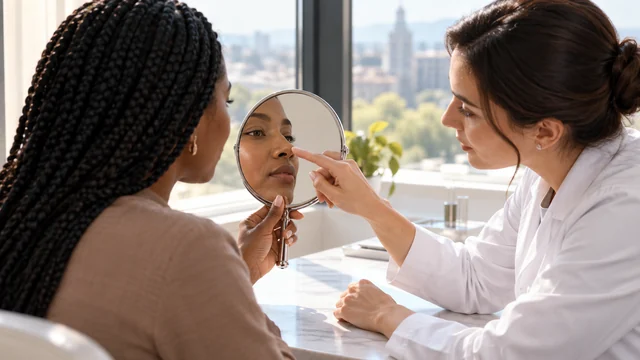
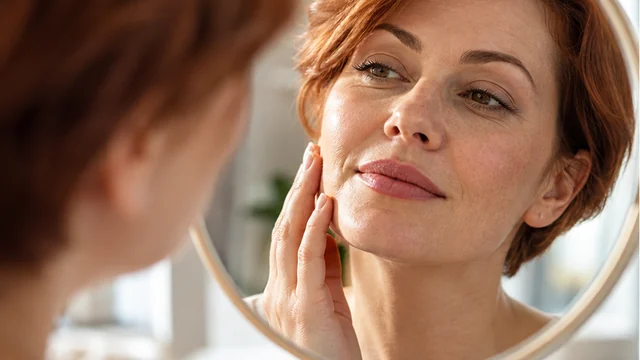
Observe your face calmly in the mirror without stretching the skin. Look straight ahead without smiling, then smile naturally, then squint gently. Note where the line starts, whether it remains at rest, and whether a shadow rather than a crease creates the appearance. This cannot replace a medical examination but can help you describe your concern more accurately. Your smile should still feel like yours if you choose treatment.
| What you see | Most likely contributors | A sensible starting point |
|---|---|---|
| Lines only when smiling or squinting | Dynamic contraction of the orbicularis oculi muscle | Consider whether you mind them; if so, discuss botulinum toxin with a physician |
| A fine web of lines even at rest | Sun damage, dryness and changes in skin texture | Sun protection and skincare; ask about treatments targeting the skin |
| Deep lines both at rest and in movement | Expression plus persistent changes in the skin | Discuss a combined approach and realistic limits |
| New swelling, rash, redness or pain around an eye | Possible inflammatory or ophthalmic condition | Do not conceal it with a cosmetic procedure; seek medical assessment |
What can the different options actually change?
Daily ultraviolet protection is a sensible foundation. Dermatologists recommend broad-spectrum SPF 30 or higher for exposed skin, and UV-blocking sunglasses and avoiding intentional tanning help too. Sunscreen does not turn off a muscle, but helps prevent further photo-damage. Regular moisturizer can make superficial lines less pronounced by retaining water in the outer skin layer; it does not fundamentally change deeper folds.
Retinoids, derivatives of vitamin A, may help some fine lines and signs of photoaging. The eyelids, however, are sensitive: applying too close to the eye, using too strong a formulation or applying it too often can irritate the area. Dry eye or dermatitis demands particular caution and ideally dermatology advice. Do not use retinoids during pregnancy; discuss skincare when planning pregnancy or breastfeeding as well.
Botulinum toxin takes another route: it reduces nerve signalling to a muscle and temporarily softens lines formed by movement. In the United States, one particular product, BOTOX Cosmetic, is approved to temporarily improve moderate-to-severe lateral canthal lines in adults. This is a product- and country-specific indication, not an authorization for every toxin brand in Armenia or a guarantee of response. Potency units of different brands cannot be converted one to one.
Lasers and some other devices target texture and photoaging rather than stopping muscle contraction. They may cause redness, peeling, temporary pigmentation and more visible downtime. Close to the eyes, treatment requires specific eye-protection measures and careful patient selection. Fillers near the eye are not a standard substitute for botulinum toxin to soften dynamic crow's feet: the anatomy is complex and fillers have additional risks, including vascular injury. Do not choose them because an advertisement promises to erase every line in a single injection.
| Approach | Best suited to | What it cannot promise | Practical trade-off |
|---|---|---|---|
| SPF, sunglasses and moisturizer | Limiting new damage and softening dry surface lines | Does not stop expression or erase deep creases | Needs consistency but no injection-related recovery |
| A suitable retinoid after discussion | Some small resting lines and skin quality | Does not instantly smooth pronounced dynamic lines | Gradual effect, possible irritation and pregnancy restrictions |
| Botulinum toxin from a qualified doctor | Lines with smiling or squinting | Does not correct pigmentation, excess skin or every line at rest | Temporary results, injection risks and possible changes in expression |
| Laser or other texture-directed treatments | Persistent creases and appropriate skin damage | Cannot guarantee no lines during a broad smile | More visible after-effects, pigmentation risk and essential eye protection |
| No treatment | If lines do not bother you or risks outweigh the benefit | Does not change the appearance of the lines | Preserves ordinary expression and needs no recovery |
Will I still look like myself after injections?
The answer depends not just on the amount injected but on your anatomy, muscle activity, baseline brow and lid position, and the symmetry of your smile. Lightly softening crow's feet and making the entire outer-eye area almost immobile are different aesthetic objectives. The more muscle movement is restricted, the more your familiar expression may change. Discuss which smile lines you would prefer to keep and which you want less pronounced.
Completely 'freezing' the area is not necessarily attractive or functionally appropriate. The orbicularis muscle helps close the eyelids. Poorly chosen technique or individual susceptibility can cause weakness in nearby muscles, eyelid-position changes, dryness or watering, and asymmetry. A doctor should assess dry eye, contact lenses, eyelid surgery, previous injections and muscular or neurological conditions. Pre-existing weak eyelid closure warrants special caution.
Look at a few ordinary photographs of yourself laughing genuinely and explain what would feel excessive. Ask the clinician to show the relevant muscle areas on your face rather than demand a universal formula in units. Even with careful technique, muscles vary in response; naturalness should be judged while talking, smiling and blinking, not just in a neutral photograph.
When does it work, and what might be visible afterward?
Injections are usually brief and feel like small needle pricks, sometimes with stinging or tenderness. Tiny puncture marks, redness and puffiness can be visible immediately. A bruise, if one develops, may remain longer than the initial redness. Even without needing medical leave, being able to work the following day does not guarantee a flawless close-up photograph.
Botulinum toxin does not take full effect the moment it is injected. The American Academy of Dermatology notes that many people notice change within several days, with fuller assessment at a later agreed follow-up. Effects often last a few months, for many around three to four, but depend on the product, location, muscle activity and individual factors. Do not ask for immediate additional injections simply because lines remain on day one.
Your treating clinician should set aftercare according to the product and site. Avoid forcefully rubbing injection points or performing improvised 'test exercises' that press hard against the eyelids. If advised to avoid workouts, sauna or other cosmetic treatments, ask what comes from the product information and what reflects local practice: there is no single proven regimen for all brands. Also agree on when makeup and skincare can be applied without irritating puncture sites.
Allow time before a major event for the effect to develop, a possible bruise to settle and any unexpected asymmetry to be discussed. An elective injection should not make the week before your wedding an anxious guessing game. Recovery after laser work can be much more obvious; injection downtime should not be treated as interchangeable with resurfacing recovery.
What can go wrong, and when should you seek help?
Common early injection-site effects include redness, slight tenderness, swelling and bruising. More concerning problems include a temporary drooping brow or lid, asymmetry, eye-surface irritation or altered blinking: contact the treating doctor and, if needed, an ophthalmologist. If the eye cannot close fully after an injection, or dryness and a scratchy sensation are getting worse, contact a doctor promptly and, if necessary, an ophthalmologist: the cornea may need protection. New marked double vision, eye pain or reduced vision warrants urgent medical evaluation. Do not dismiss these as an inevitable adjustment period.
Botulinum-toxin prescribing information warns that toxin effects can spread beyond the injection area. Marked generalized weakness or difficulty swallowing, speaking or breathing calls for immediate emergency medical help. Such severe events are uncommon in on-label cosmetic use but must not be overlooked. A product should not be injected into a site with active infection or in someone with known hypersensitivity to its ingredients; certain neuromuscular diseases and medicines affecting neuromuscular transmission require particular risk assessment.
It is sensible to postpone nonessential cosmetic injections during pregnancy or breastfeeding. For BOTOX Cosmetic, available pregnancy data are insufficient to rule out risk with confidence. This does not predict harm to any particular person; it describes an evidence gap. If you had an injection before learning you were pregnant, discuss it with your maternity-care clinician rather than drawing conclusions from online discussions.
New 'wrinkles' accompanied by flaking, itching, redness or dry eyes may instead point to dermatitis or another illness; injections do not treat the underlying condition. Persistent cosmetic irritation, visual changes, painful nodules or swelling on one side should be assessed medically first. Some facial changes accompany ageing; others are symptoms requiring a different response.
How can you judge results without feeling pressured?
Useful crow's-feet before-and-after comparisons show two matched pairs of images: the face relaxed and the face with a similarly strong smile. Lighting, camera distance and gaze direction should match. Comparing hard squinting 'before' with a gentle smile 'after' says little about effectiveness. Ask when the after-photo was taken and whether filters were used.
At an appointment, talk about function and preferences rather than just counting creases. Ask how the treatment might affect your smile and how the clinician will account for asymmetry, dry eyes, brow position and injection history. Confirm the drug's name and official status in Armenia, the clinician's qualifications, possible complications, follow-up plan and what the quoted price includes. US authorization does not establish that a particular toxin is offered in Yerevan.
If someone tells you that every smile 'ages you' and you must start right away, you can say no. Crow's feet are a natural part of facial expression, and reducing them is your choice. You can start with sun protection and gentle care, seek a second opinion or leave them as they are. Waiting is especially reasonable if you would find even temporary changes in your smile, rare complications or repeat sessions unacceptable.
Additional questions
Can under-eye patches remove crow's feet?
Patches and moisturizers may temporarily ease dryness and make superficial lines less prominent, but they do not stop muscle contraction or remove deep creases. Avoid ingredients that irritate your eyes.
Why are the lines different on my left and right sides?
Most faces have some natural asymmetry in expression, eye shape and brow position. Understanding your habitual smile and eyelid movement is more useful for treatment planning than trying to achieve mathematically identical lines.
Should I have my eyesight checked first?
If you squint because of poor vision or bright light, an eye examination and good UV-protective sunglasses may reduce that daily trigger. Existing persistent folds will not disappear simply because your vision is corrected.
Sources and documents
- DailyMed — BOTOX Cosmetic: US prescribing information
- AAD — Botulinum toxin therapy: overview
- AAD — Botulinum toxin: FAQ and risks
- AAD — Wrinkle remedies and sunscreen
- AAD — Retinoid or retinol?
- Cochrane — Botulinum toxin type A for facial wrinkles
- FDA — Dermal filler risks, including around the eyes