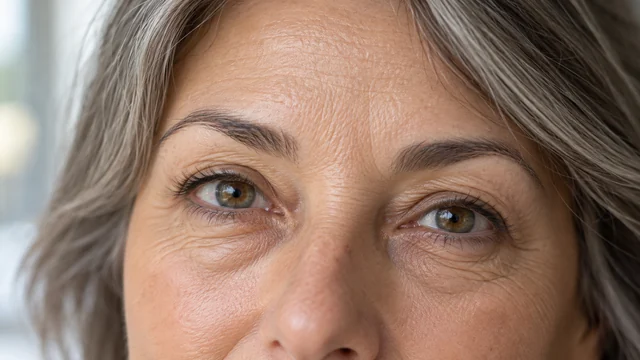

Facial asymmetry: when it is normal and what can be corrected
In a photograph, you notice that one eyebrow sits higher, your smile pulls slightly to one side or your chin line looks uneven. That does not mean you need a filler or “symmetry exercises”. Mild facial asymmetry is common and often part of normal anatomy. Three questions matter: has it always been there, is it changing, and does it come with altered movement, pain or other symptoms?
If one side of your face suddenly droops, or you develop arm weakness, slurred speech or a major change in balance or vision, call emergency services immediately. These may be signs of stroke. Even if the symptoms quickly disappear, urgent assessment is needed; this is not a cosmetic consultation. If the difference has been unchanged for years, the question is usually whether you want to change it at all and which tissues account for it.
Why your face need not be a perfect mirror image
Facial bones, tooth position, soft-tissue volume and the muscles of expression are not two identical halves. One cheekbone may be more prominent; the muscle lifting a mouth corner may be stronger on the other side. Differences can show up more in smiling, talking or video than at rest. Soft tissues may also age at different rates on each side.
Clinicians distinguish features present from birth, differences developing during growth and acquired changes after injury or illness. Asymmetry can be skeletal, dental-jaw related, muscular, soft-tissue based or mixed. You need not diagnose yourself from these categories: they explain why a single injection cannot solve such different problems.
A single selfie is a poor measuring tool. A wide-angle lens held close distorts proportions, while head rotation, side lighting, neck position, habitual expressions and even a raised eyebrow emphasise differences. Flipping the image presents an unfamiliar version of a face you know well. Feeling that it looks strange is not in itself evidence of disease.
What looks different? A map of possible causes
| What you notice | What may contribute | Where to turn |
|---|---|---|
| Eyebrows or eyelids differ only with expression | Muscle activity, habitual expression, sometimes eyelid position | For a longstanding stable difference, assessment by a facial-anatomy clinician if desired; new drooping needs urgent medical assessment |
| The chin is off-centre and dental midlines do not align | Bite, lower-jaw position and bone shape | An orthodontist; a maxillofacial surgeon for complex cases |
| Jaw pain, clicking or trouble opening the mouth | The temporomandibular joint and chewing muscles | A dentist or TMJ specialist; treat the cause before considering appearance |
| One cheek looks fuller without pain or change over time | Fat distribution, bony contours and soft tissue | Observation or an examination if you are considering treatment |
| One side is gradually enlarging or a lump appears | Several possible causes, including inflammation or a growth | Medical assessment before cosmetic procedures |
| A sudden change in the smile or ability to close an eye | Possible facial nerve impairment or another emergency condition | Emergency assessment; you cannot reliably distinguish this from stroke yourself |
If your bite used to feel normal but teeth now meet differently, chewing becomes painful or one side of the jaw visibly changes, do not limit your search to a cosmetic practitioner. Research on facial asymmetry stresses separate assessment of bones, teeth, muscles, soft tissues and function. Identify the source first; only then decide whether treatment is needed.
Which changes call for medical attention rather than aesthetics?
Sudden facial weakness is not a reason to scrutinise photographs. With possible stroke, minutes matter: call your local emergency number and tell the dispatcher when symptoms began. Arm weakness, speech or vision changes, incoordination or a new severe headache are additional warning signs, but their absence does not safely rule out stroke from a message or photo. Do not drive yourself.
Bell's palsy is dysfunction of the facial nerve, often reducing movement on one side and sometimes affecting eye closure, taste or tearing. It can develop over hours or days. A clinician should assess new weakness promptly because early treatment can matter. You cannot reliably distinguish it from other causes at home. Inability to close the eye requires a prompt medical plan to protect its surface.
A new painful swelling, fever, severe tooth pain with swelling, injury or rapidly increasing asymmetry also needs urgent or prompt medical evaluation, depending on severity. Do not massage a painful area or conceal a new lump with filler. A lump that grows, persists or is accompanied by loss of sensation needs diagnosis.
How to decide if an examination is warranted
Start with the timeline. When did you first notice the difference: childhood, orthodontic treatment, a tooth extraction, injury, illness, an injection or simply after switching phones? Older images from comparable angles may help establish change but cannot replace an examination. The clinician will ask about pain, joint noises, limited mouth opening, bite changes, muscle weakness and other symptoms.
An examination may include facial movement and the smile, mandibular movement, whether dental midlines match and how the joints work, not just a front-facing photograph. Not everyone needs a CT scan. X-rays, cone-beam CT or other imaging are justified when the clinician can explain the specific question and how the answer would affect care. Testing just to chase perfect symmetry may add little.
For a stable, mild feature without symptoms, observation is a reasonable option. If there is an objective reason to follow change, take a few neutral images at the same distance without filters, then look at them only occasionally. Zooming into selfies and measuring millimetres daily rarely improves accuracy and may make ordinary features seem much more prominent.
Which correction, if any, fits the source of asymmetry?
When the bite or skeleton is involved, assessment by an orthodontist may come first. Complex bony asymmetry sometimes leads to discussion of maxillofacial treatment, including surgery, which requires its own consideration of function, risks and recovery. Neither filler nor botulinum toxin moves bones or treats a painful joint disorder.
For a small soft-tissue volume difference, carefully placed hyaluronic-acid filler may sometimes be discussed. It can visually balance a particular area, but it adds volume rather than changing bone shape. Overfilling the smaller side can make the face look heavier and less natural. Hyaluronic-acid filler is not invariably completely or easily reversible in practice. Injection risks range from bruising and swelling to rare blood-vessel blockage, skin damage and visual impairment.
If muscles move unequally, a clinician might consider botulinum toxin in a specific muscle. Its effects are temporary, and excessive relaxation can impair your smile or create a new imbalance. Approved indications and anatomical sites differ by product and country; discuss any potential off-label use, likely benefit and alternatives explicitly. A brow sitting higher is not, by itself, a reason to inject. If you develop difficulty swallowing, speaking or breathing, or marked generalised muscle weakness after a botulinum toxin injection, seek emergency medical care: these are not routine cosmetic effects to wait out.
If one side seems to have sagged more, possible contributors include skin quality, volume, connective support and underlying bone. Non-invasive tightening methods do not reliably correct a marked skeletal difference. Decisions about RF skin tightening or HIFU concern tissue quality, not diagnosing the origin of asymmetry; conflating them risks unrealistic expectations.
What might be visible after treatment, and why it matters
Observation itself has no recovery period. Orthodontic treatment and surgery involve very different timelines, which should be explained by the relevant specialist. Injections can cause visible redness, swelling, unevenness and bruises, and the outcome should not be judged in the mirror immediately. You might be physically able to work the next day but still have changes visible to colleagues or in bright-light photographs.
If a wedding, interview or trip is coming up, avoid scheduling your first cosmetic correction close to it. Timing depends on procedure, extent of treatment, tendency to swell and individual healing. Ask not only when you can work, but when the clinician expects the result to be sufficiently settled to assess symmetry. Any intervention needs a plan for what to do if something unexpected appears.
Know the warning signs after filler in particular: unusual severe pain, pale or grey-blue skin, visual changes or new facial weakness require immediate medical help. Do not cover them with makeup or assume they are “normal swelling”. During uncomplicated recovery, follow changes with a qualified clinician rather than adding more product for symmetry too early.
How to preserve natural expression and your right to change your mind
Perfect symmetry in one still image need not look natural in conversation. Your smile, expressions and individual facial structure matter more than the geometry of one selfie. In planning correction, ask how expression will change in motion, which areas will deliberately remain untouched, and whether a small gain is worth a new risk.
Not every visible difference affects function or wellbeing. You can choose no correction, especially if it is stable and physically comfortable. Seek a second professional opinion if someone promises a “completely symmetrical face” or recommends multiple techniques before investigating the cause. Other people's before-and-after images are informative only when the starting tissues, expressions, lighting and post-treatment interval are comparable.
At the consultation, ask: which structure creates the asymmetry; how have disease and joint problems been excluded; what will change at rest and in a smile; how much difference should remain; what is or is not reversible; when can the outcome be judged; and who will help if a complication occurs? For filler, ask the precise product, injection site, its authorised use and the emergency response plan for a vascular event. For jaw treatment, ask about chewing and bite as well as profile.
Finally, separate how you feel about your face from the medical facts. You may like your appearance despite a noticeable difference, or seek advice about a very subtle one. The decision should follow your goals and an accurate explanation of your options, not a filter, an offhand remark or fear that you are obliged to change.
Frequently asked questions
Can sleeping on one side explain asymmetry in an adult face?
There is no reliable evidence that routinely sleeping on one side predictably reshapes adult facial bones. If the difference is progressing, do not blame the pillow without an examination.
Is there a precise “normal” percentage of symmetry?
No single percentage determines whether everyone should have treatment. Clinical importance depends on change over time, function, the tissue responsible and your goals, not a mathematical overlay in an app.
Why does one side of my smile seem more active only on video?
Muscle movement may naturally differ and the camera angle may emphasise it. New weakness, especially developing rapidly, needs urgent evaluation whether it appears on video or in the mirror.
Can massage or facial exercises straighten a jaw?
There is no convincing basis for expecting self-massage to reposition the jawbone. A specialist may advise gentle measures for painful chewing muscles, but these do not treat skeletal asymmetry.
Must I see an aesthetic practitioner first if only my chin bothers me?
No. If dental midlines have shifted or your bite or jaw movement has changed, a dental or orthodontic assessment is more appropriate first. With a stable soft-tissue difference and no functional symptoms, doing nothing is also reasonable.
Sources
- CDC: Signs and Symptoms of Stroke — Emergency warning signs.
- NHS: Bell's palsy — New facial weakness and urgency of assessment.
- Facial asymmetry: a current review — Causes and clinical approach.
- Facial asymmetry revisited: diagnosis and treatment planning.
- NHS: Temporomandibular disorder — Jaw-joint pain and function.
- FDA: Dermal Fillers — Potential benefits and significant injection risks.
- NHS: Transient ischaemic attack — sudden symptoms require urgent assessment even when they resolve.
- FDA (2025): botulinum toxin safety warnings, including swallowing and breathing problems.